RenoHouse

# Ducted vs Ductless Mini-Split Toronto: Which Heat Pump for Your Home
Quick answer. The first technical decision on a Toronto heat pump retrofit is ducted vs ductless. The right answer depends on what is already in the house. A 1990s detached with central forced-air ductwork wants a ducted cold-climate heat pump that ties into existing trunks.The first technical decision on a Toronto heat pump retrofit is ducted vs ductless. The right answer depends on what is already in the house. A 1990s detached with central forced-air ductwork wants a ducted cold-climate heat pump that ties into existing trunks. A 1910 semi with hot-water radiators and no ductwork is almost always a ductless mini-split project. A 1965 bungalow with marginal ductwork is the hardest call — the answer is sometimes a hybrid (central heat pump for main floor, mini-split head for the basement or addition). This post walks through the decision honestly.
For the full conversion path, see Heat Pump Conversion Toronto: The Complete 2026 Guide. For brand selection, see Mitsubishi vs Daikin vs Lennox: Cold-Climate Comparison.
RenoHouse Role
We coordinate with TSSA-G2-licensed gas fitters and HVAC-licensed installers. Our role is project coordination, ductwork assessment, electrical sequencing, and rebate paperwork. The mechanical and electrical sign-off is by the certified specialists.
Quick Decision Framework
| Home Type | Ducted | Ductless | Hybrid |
|---|---|---|---|
| Detached or semi with central forced-air, ductwork in good shape | Yes | No | No |
| Detached or semi with hot-water radiators, no ductwork | No | Yes | Sometimes |
| Older home with electric baseboards | No | Yes | Sometimes |
| Bungalow with restrictive ductwork | Sometimes | Sometimes | Yes |
| Condo with central VRF connection | Yes | No | No |
| Condo without central system | No | Yes (sidewall mounted) | No |
| Addition or basement apartment | No | Yes | Sometimes |
| Garage suite or laneway house | No | Yes | No |
What "Ducted" Means in Toronto Practice
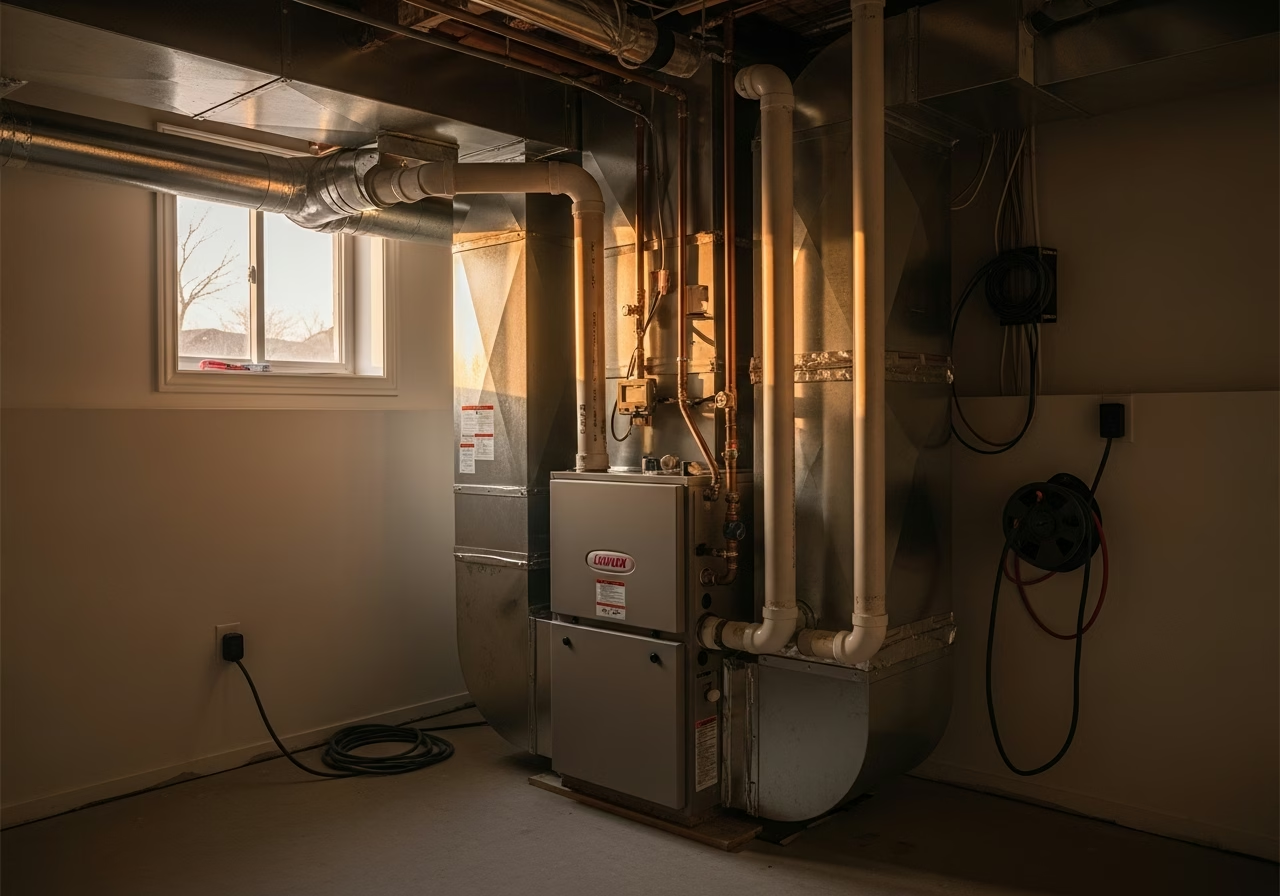
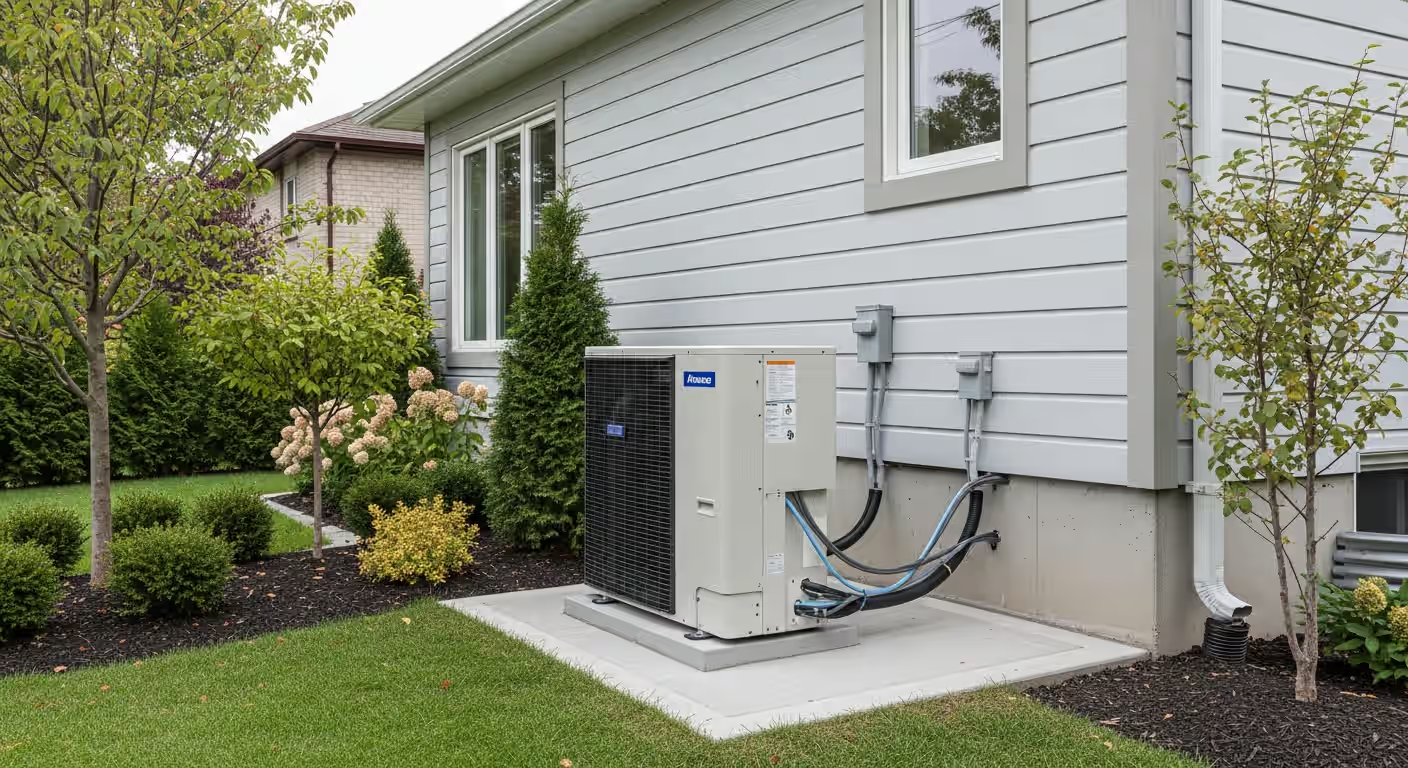
A ducted cold-climate heat pump replaces an existing central gas furnace. The outdoor unit (3-5 ton typical) connects via refrigerant line set to an indoor air handler or coil cabinet that sits where the furnace was. The existing ductwork distributes conditioned air to all registers.
Pros:
- One thermostat, whole-home conditioning.
- No visible indoor units in living spaces.
- Uses existing infrastructure (ductwork, return air, condensate routing).
- Best aesthetics.
- Lowest install complexity if ductwork is adequate.
Cons:
- Requires usable ductwork (CFM and static pressure verified).
- Single zone unless added zoning dampers (added cost).
- May require ductwork upsizing for higher CFM heat pumps need.
- Cannot independently condition rooms with different load profiles.
Cost: $14,500-$24,000 turnkey for typical Toronto retrofit.
What "Ductless Mini-Split" Means
A ductless system uses one outdoor unit (multi-zone variants serve 2-8 indoor heads) connected to wall, ceiling, or floor cassettes via refrigerant line sets. Each cassette has its own thermostat. No ductwork.
Pros:
- Works in homes with no ductwork.
- True per-room zoning.
- Higher seasonal efficiency than ducted (no duct losses).
- Can be installed incrementally (one room at a time).
- Best for additions, basement suites, garage conversions.
Cons:
- Visible indoor cassettes.
- More refrigerant line sets routed through walls.
- Multi-zone outdoor units cost more per BTU than single ducted units.
- Wall cassettes can cycle in/out at low loads.
- Aesthetic is divisive.
Cost: $4,500-$7,500 per zone installed (single zone). Multi-zone systems: $9,500-$22,000.
Ducted Pre-Check: Will Your Ductwork Work?
The single biggest install failure is a ducted heat pump installed on undersized ductwork. Heat pumps move 350-450 CFM/ton; old gas furnaces ran 300-350 CFM/ton. The existing trunks may not deliver.
Check before you commit to ducted:
- Static pressure measurement (HVAC tech tool, $150-$250 service call). Goal: under 0.5 in. wc external static.
- Return air sizing. Many Toronto homes built 1960-1990 have one or two undersized returns.
- Trunk integrity. Crushed flex runs to top-floor bedrooms are common.
- Filter rack. Heat pumps prefer 4-5 inch deep media filters; replace 1 inch slot filters.
Common remediation:
Need professional renovation?
Call RenoHouse at 289-212-2345 or get a free estimate today.
Get Free Estimate →- Add a return duct (often basement or main floor): $800-$1,800.
- Upsize a section of trunk: $1,200-$2,500.
- Replace flex with metal: $400-$900 per branch.
- New 4-inch filter cabinet: $250-$450.
If total remediation exceeds $3,500-$4,000, ductless or hybrid may be the better economic answer.
Ductless Configurations in Toronto
Three configurations dominate:
Single-Zone Mini-Split (One Room)
One outdoor unit + one indoor head. Used for additions, garage suites, or "fix the cold bedroom" projects.
Cost: $4,500-$7,500 installed.
Best for: backyard suite, second-floor bedroom that the existing furnace cannot reach, garage conversion to office.
Multi-Zone Mini-Split (Whole Home, Ductless)
One outdoor multi-zone unit (24-48K BTU) feeding 3-5 indoor heads. Used in older homes converted from radiators to forced-air-equivalent without installing ductwork.
Cost: $13,500-$22,000 installed.
Best for: pre-1940 Toronto semis with hot-water radiators; lofts; homes where ductwork retrofit is impractical.
Concealed-Duct Mini-Split (Hybrid Aesthetic)
Indoor units are short ducted air handlers concealed in soffits or attic, feeding 2-4 supply registers each. Outdoor unit is a multi-zone. Looks like central forced-air but uses mini-split outdoor equipment.
Cost: $11,500-$18,000 per zone installed.
Best for: renovation projects where the homeowner wants no visible cassettes but ducted retrofit is too expensive.
Hybrid Configurations
The configuration we install most often in Toronto's mid-century housing stock:
- Ducted cold-climate heat pump for main floor + second floor (using existing forced-air).
- One single-zone mini-split for finished basement or hard-to-reach addition.
This handles the typical complaint: "the furnace gets the main floor warm but the basement is always cold" — the basement gets its own zone with a wall cassette, while the existing ductwork handles upstairs.
Cost: $19,500-$28,000 turnkey.
Aesthetic Considerations
Ducted is invisible inside living spaces — only the outdoor unit is visible. Ductless puts a visible cassette in each conditioned room. Three options soften the ductless aesthetic:
- Ceiling cassette (recessed). Sits flush in a 2x2 ceiling cutout. Often used in basements and offices.
- Floor-mounted unit (low-profile). Looks like a baseboard radiator.
- Concealed-duct unit (in-soffit). Indoor unit is hidden; only registers are visible.
The choice is highly personal. Some homeowners do not mind wall cassettes; others find them disqualifying.
Toronto Building-Type Recommendations
Pre-1940 brick semi (Roncesvalles, Riverdale, Cabbagetown), hot-water radiators, no ductwork:- Ductless multi-zone (3-5 heads) is the typical answer.
- Concealed-duct option if aesthetic is a priority.
- Keep the boiler if aesthetic of radiators matters; consider hybrid heat pump + boiler.
- Ducted heat pump if static pressure check passes.
- Hybrid (ducted main + mini-split basement) if basement is finished.
- Ducted heat pump replaces existing furnace + AC. Easiest install.
- Often constrained by condo board rules.
- Sidewall or balcony-mounted single-zone mini-split is the typical retrofit.
For the condo path, see Heat Pump Condo Installation Toronto.
Loft conversion (Liberty Village, Distillery, Leslieville):- Open-concept; one or two ductless heads usually sufficient.
- Single-zone ductless. The volume play.
Performance Differences
Both ducted and ductless cold-climate heat pumps publish similar capacity-vs-temperature curves. Ductless typically has 5-10% higher seasonal efficiency due to no duct leakage losses. Ducted has the comfort advantage of even distribution if the duct system is well-designed.
In Toronto cold snaps, ductless wall cassettes can short-cycle in well-insulated rooms with low load. Workaround: oversize one head and use it as the primary, others as supplement.
Rebate Eligibility
Both ducted and ductless cold-climate models qualify for Greener Homes Loan and Ontario HRS if they appear on the NRCan ENERGY STAR Most Efficient list. Verify the AHRI certificate and NRCan listing for the specific outdoor + indoor combination quoted.
Decision Tree Summary
Walk through these in order:
- 1. Does the home have central forced-air ductwork? If no, ductless.
- 2. Does static pressure pass under 0.5 in. wc? If no, ductless or major duct remediation.
- 3. Are there cold rooms the existing ductwork cannot reach? If yes, hybrid.
- 4. Is wall cassette aesthetic acceptable? If no, ducted or concealed-duct.
- 5. Is budget under $15K all-in? If yes, ductless single-zone for the worst room.
Next Steps
A pre-quote ductwork static pressure check ($150-$250) settles the ducted-vs-ductless question for most Toronto homes. Book a scoping visit at /services/hvac-energy/heat-pump-conversion. For the full guide, see [Heat Pump Conversion Toronto: The Complete 2026 Guide](/blog/heat-pump-conversion-toronto-2026-complete-guide). For installation pitfalls, see Heat Pump Installation Mistakes Toronto.
Sources & References
Authoritative sources cited in this guide:
- NRCan — Heating and Cooling — NRCan heating/cooling guidance
- Canada Greener Homes Loan — Federal energy retrofit financing
- CSA F326 (Mechanical Ventilation) — Residential HRV/ERV standard
- Enbridge Home Renovation Savings (HRS) program — Provincial heat pump rebate
- TSSA Fuel Safety — Ontario fuel/gas regulator
Continue Reading