RenoHouse

# Galvanized Water Service Replacement in Toronto: When and Why
Quick answer. Galvanized steel water service lines were installed in Toronto homes from roughly 1900 through 1960. They are not lead, and they are not regulated under the Health Canada lead drinking water guideline, but they have their own replacement story: internal corrosion that progressively narrows the pipe and reduces flow over decades.Galvanized steel water service lines were installed in Toronto homes from roughly 1900 through 1960. They are not lead, and they are not regulated under the Health Canada lead drinking water guideline, but they have their own replacement story: internal corrosion that progressively narrows the pipe and reduces flow over decades. This article explains when galvanized replacement makes sense, how it differs from the lead service replacement program, and what 2026 costs look like.
For full project context, see our pillar guide at Lead and Galvanized Water Service Replacement Toronto: The Complete 2026 Guide.
Honest Positioning
RenoHouse coordinates galvanized service line replacement alongside a licensed plumber who holds the Toronto Water permit. The City of Toronto's Lead Service Replacement Program does not cover galvanized lines — galvanized replacement is fully owner-funded for both city-side and owner-side portions, with one important exception covered below.
How Galvanized Pipe Works (and Stops Working)
Galvanized steel is steel pipe coated with a thin zinc layer. The zinc protects the underlying steel from corrosion in the way the rust protection on a car body is supposed to work. Over decades of contact with water, the zinc coating erodes from the inside, and the underlying steel begins to corrode.
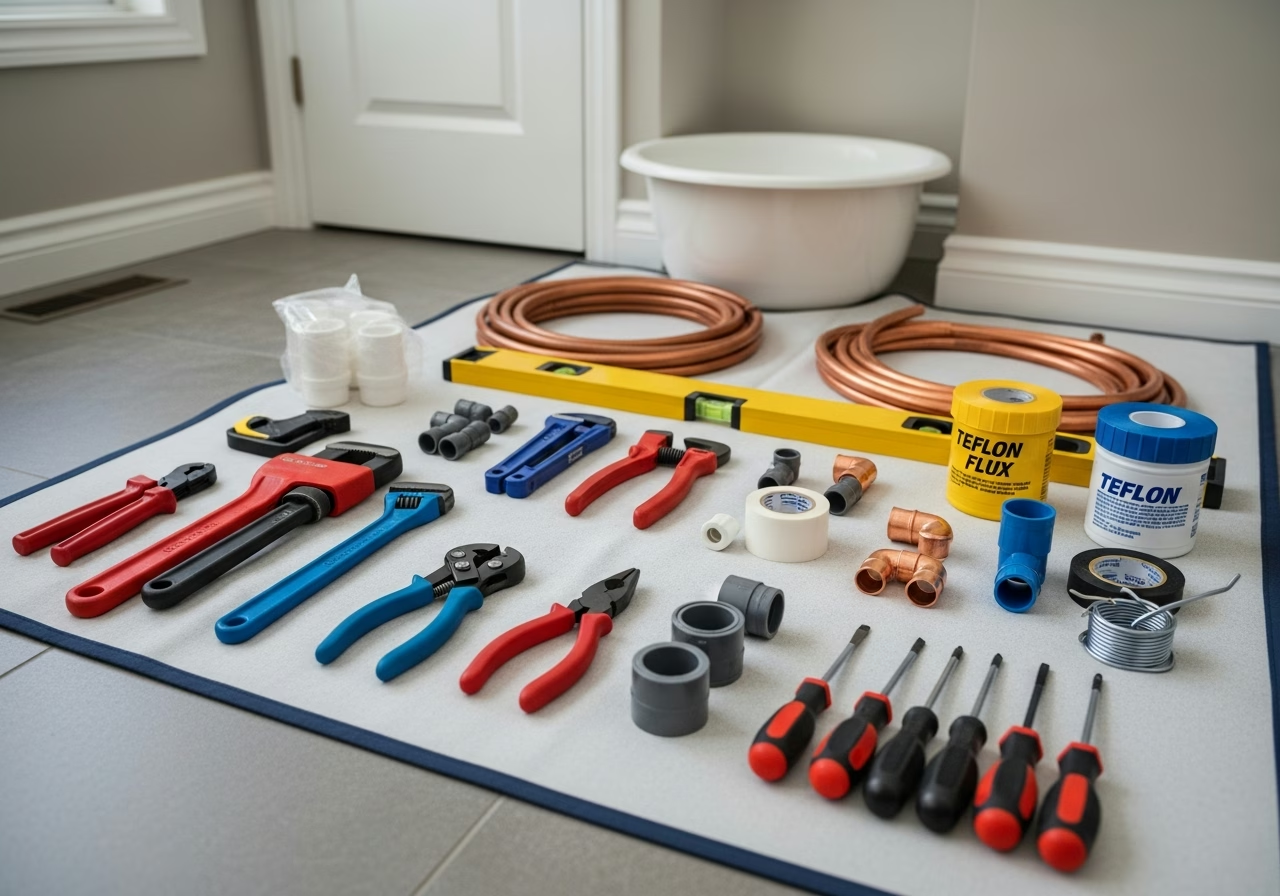
The corrosion product is a hard, scaly buildup on the inside of the pipe. Over 40 to 80 years, this buildup progressively narrows the pipe diameter. A pipe that started at 3/4-inch interior diameter can end up effectively 1/2-inch or less, with rough internal walls that further restrict flow.
The practical consequences:
- Reduced water pressure at fixtures, especially upper-floor fixtures.
- Reduced flow when multiple fixtures are running.
- Brown or rust-coloured water, especially after periods of stagnation.
- Sediment in faucet aerators and showerhead screens.
- Slow filling of toilets, washing machines, and bathtubs.
For the visual signs of failing galvanized, see Signs of Galvanized Pipe Corrosion in Toronto Homes.
Galvanized and Lead: A Linked History
A complication that affects many Toronto homes built between roughly 1920 and 1955: galvanized service lines were sometimes installed downstream of upstream lead piping (either at the city-side or in heritage building plumbing). The internal scale on the galvanized pipe absorbed lead from the upstream lead source, and that absorbed lead can continue to release into drinking water for years after the upstream lead is removed.
This is why partial replacement of a lead service line — replacing only the city-side and leaving downstream galvanized in place — is not the recommended approach. The galvanized portion can act as a continuing source of low-level lead release.
For the regulatory background on lead, see Health Canada's 0.005 mg/L Lead Drinking Water Guideline.
Is Galvanized Eligible for the City Program?
The City of Toronto Lead Service Replacement Program covers lead city-side replacement at no charge to the homeowner. Galvanized lines are not directly covered.
There is one important exception: when a homeowner replaces a confirmed lead owner-side service line under the City's program, and the city-side records show galvanized rather than lead, the City may still coordinate a city-side replacement during the same disturbance window — particularly during Capital Replacement projects (when road or watermain reconstruction is already scheduled on the block).
Need professional plumbing?
Call RenoHouse at 289-212-2345 or get a free estimate today.
Get Free Estimate →This is a coordination question that Toronto Water answers on a per-address basis. The starting point is a service inquiry through 311 or the Toronto Water customer portal.
For the program details, see Toronto Lead Service Replacement Program: How the Free City-Side Replacement Works.
Replacement Methods
The two mainstream methods for galvanized replacement are the same as for lead:
Trenchless pipe-bursting: a bursting head fractures the existing pipe outward and pulls a new HDPE pipe in behind it. Two small access pits are excavated; the run between them is undisturbed. Open-cut excavation: a trench is dug along the full length of the service line. The old pipe is removed and a new copper or HDPE line is laid in.For galvanized specifically, two method considerations:
- Trenchless can be more challenging on heavily corroded galvanized because the bursting head needs to fracture the existing pipe cleanly. Severely scaled or partially collapsed galvanized may not burst cleanly and may require an open-cut transition.
- Open-cut is the fallback when trenchless cannot be guaranteed.
For the method comparison, see Pipe-Bursting Trenchless vs Open-Cut for Toronto Service Lines.
2026 Cost Ranges
Because galvanized replacement is fully owner-funded (both halves), the cost is higher than a lead replacement coordinated with the City program.
Owner-side portion only (when city-side is acceptable, e.g., already copper or scheduled separately):- Trenchless: $5,000 to $9,000.
- Open-cut: $7,000 to $12,000.
- Trenchless: $9,000 to $15,000.
- Open-cut: $12,000 to $20,000.
Full-line numbers include the city-side excavation, road and sidewalk restoration to City standard, and the engineering and traffic control associated with city-side work.
For a detailed line-item breakdown, see Lead Water Service Replacement Cost Toronto: 2026 Breakdown.
Replacement Pipe Material
Two mainstream choices for galvanized replacement:
- Type K copper: residential standard, particularly for open-cut. Long service life, well-understood material.
- HDPE (high-density polyethylene): standard for trenchless pipe-bursting installs. Continuous coil, no joints in the run, excellent corrosion resistance.
For the material discussion, see PEX vs Copper for Replacement Pipe in Toronto.
When to Replace Galvanized
Galvanized replacement is rarely an emergency, but several conditions move it up the priority list:
- Pressure problems that affect daily living: a shower that drops to a trickle when the toilet flushes is a typical sign.
- Brown or rust-coloured water that does not clear after running the tap.
- A lead concern: if the home was once on a lead service line that has since been partially replaced, the galvanized portion may still release lead. Tap-water testing clarifies this.
- A planned major renovation: kitchen or bathroom renovations are a good time to replace the upstream service line because the entire plumbing system is exposed.
- A planned home sale: galvanized service lines are sometimes flagged in pre-sale home inspections and can affect buyer offers.
If the line is functioning, the water is clear, and there is no pressure issue, replacement can wait. The decision is a function of risk tolerance and project timing.
Permits and Inspection
Galvanized replacement requires the same Toronto Water service connection permit as lead replacement. The licensed plumber holds the permit. The City inspects the new line and witnesses the pressure test before backfill.
For the permit process, see Water Service Replacement Permit and Toronto Water Process.
Bundling Opportunity
While the front yard is open for galvanized replacement, several other plumbing upgrades are economical to do at the same time:
- Backwater valve and sump pump bundle, eligible for the City of Toronto basement flooding protection subsidy.
- New pressure-reducing valve at the building entry.
- Whole-home shut-off valve replacement.
- Outdoor hose bibb relocation or addition.
Single open-trench or single restoration cycle is significantly cheaper than three separate projects.
Common Mistakes
After coordinating galvanized replacement projects, the recurring mistakes:
- Treating galvanized like a maintenance issue. The internal corrosion is irreversible — replacement is the only fix.
- Replacing the interior plumbing while leaving the buried service line in place. New copper or PEX inside the house with corroded galvanized feeding it does not solve the pressure or flow problem.
- Skipping the City coordination. Even though galvanized is not directly covered by the lead program, the City service inquiry can reveal whether the city-side is lead and trigger the free city-side path.
For the full mistake list, see Water Service Replacement Mistakes Toronto Homeowners Make.
Next Steps
If your home has galvanized plumbing and you are seeing pressure or flow issues, the practical sequence is:
- 1. Visual identification at the meter.
- 2. Toronto Water service inquiry to check the city-side material.
- 3. Tap-water test if there is any history of lead in the line.
- 4. Coordinated quote from a licensed plumber.
To start the project, visit our service page at /services/plumbing/lead-galvanized-water-service-replacement.
Sources & References
Authoritative sources cited in this guide:
- Toronto Sewer Use Bylaw 681 — Toronto plumbing/sewer regulations
- Ontario Building Code 7 (Plumbing) — OBC plumbing standards
- Health Canada — Drinking Water — Health Canada drinking water guidelines
- CSA B149.1 Natural Gas Code — Canadian gas installation code
Continue Reading