 RenoHouse
HRV / ERV Whole-Home Ventilation Retrofit — Toronto GTA
Professional hrv / erv whole-home ventilation services in Toronto and the Greater Toronto Area. Licensed, insured, and trusted by homeowners across the GTA.
Projects Completed
Years Experience
Client Satisfaction
Google Rating
How It Works
A simple, stress-free process from start to finish.
Send Your Request
Call or WhatsApp us 24/7. Send photos, video, comments about what needs to be done, and your location.
Remote Estimate
We review everything, discuss details, and provide a clear estimate — often within hours, no visit needed.
Repair Process
Our licensed team arrives on the agreed date and completes your hrv / erv whole-home ventilation to the highest standards.
Handover & Warranty
Final walkthrough with you, full cleanup, and warranty documentation provided.
Send Your Request
Call or WhatsApp us 24/7. Send photos, video, and a description of the work + your location.
Remote Estimate
We review everything, clarify details, and give you a price — often within hours.
Repair Process
Licensed team arrives on schedule and completes your hrv / erv whole-home ventilation professionally.
Handover & Warranty
Final walkthrough, full cleanup, and warranty documentation.
HRV / ERV Whole-Home Ventilation in Toronto GTA
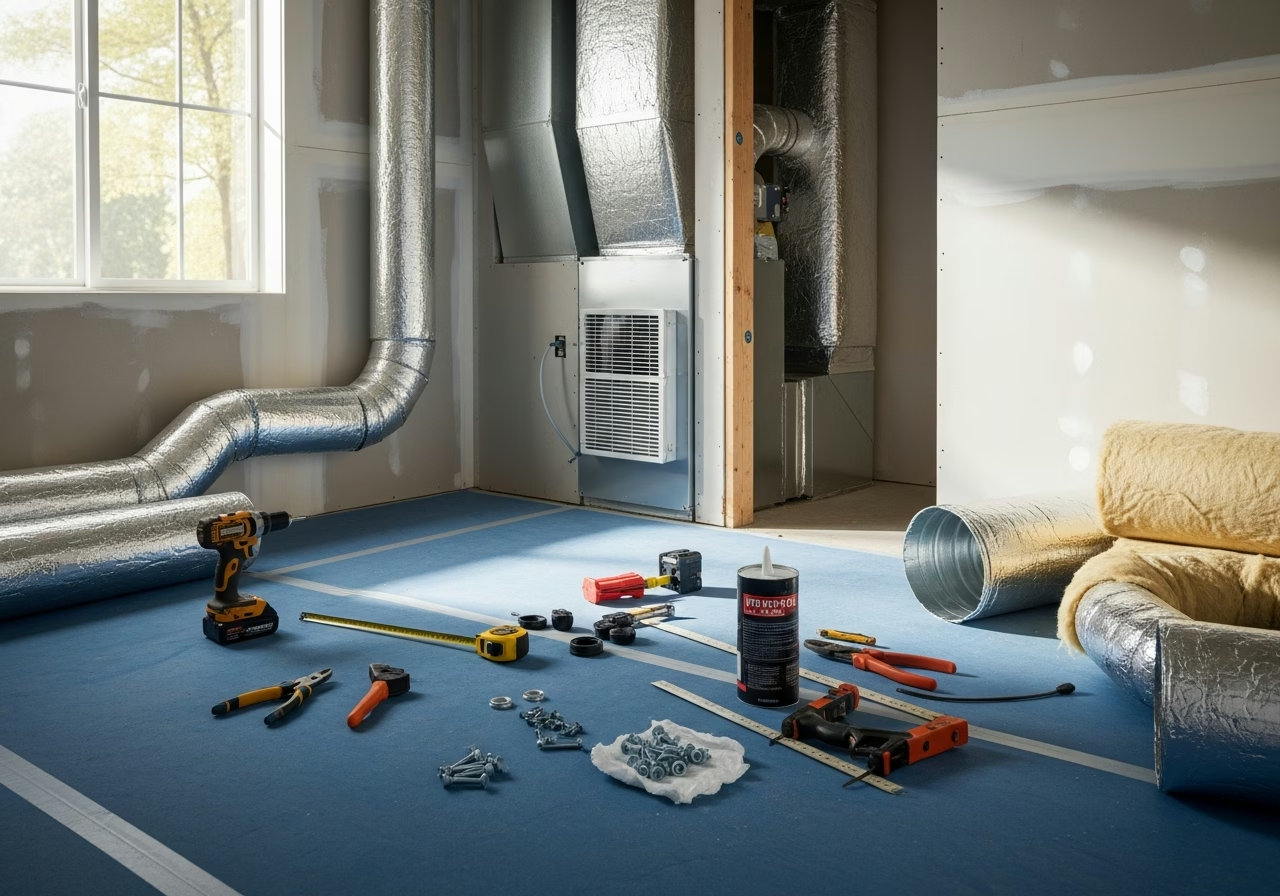
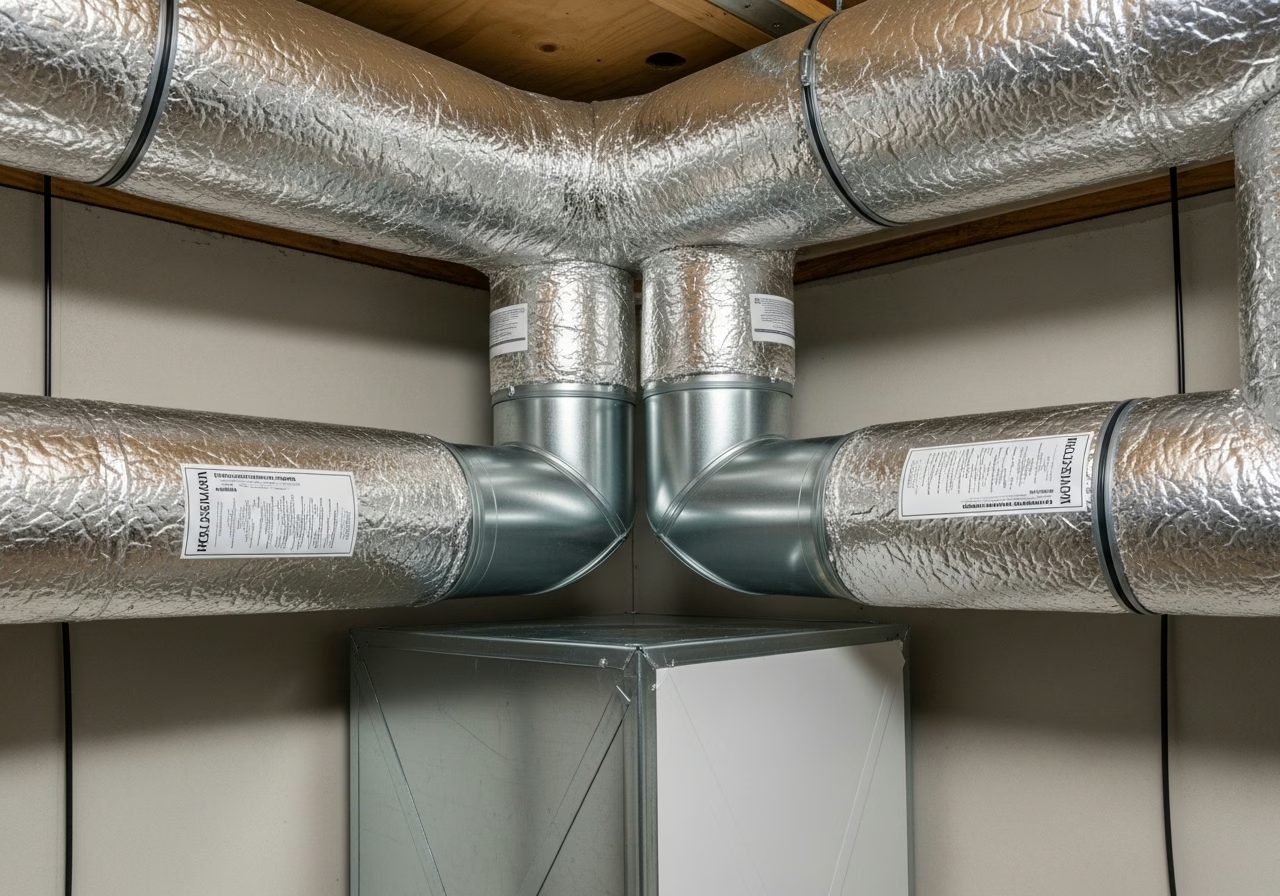
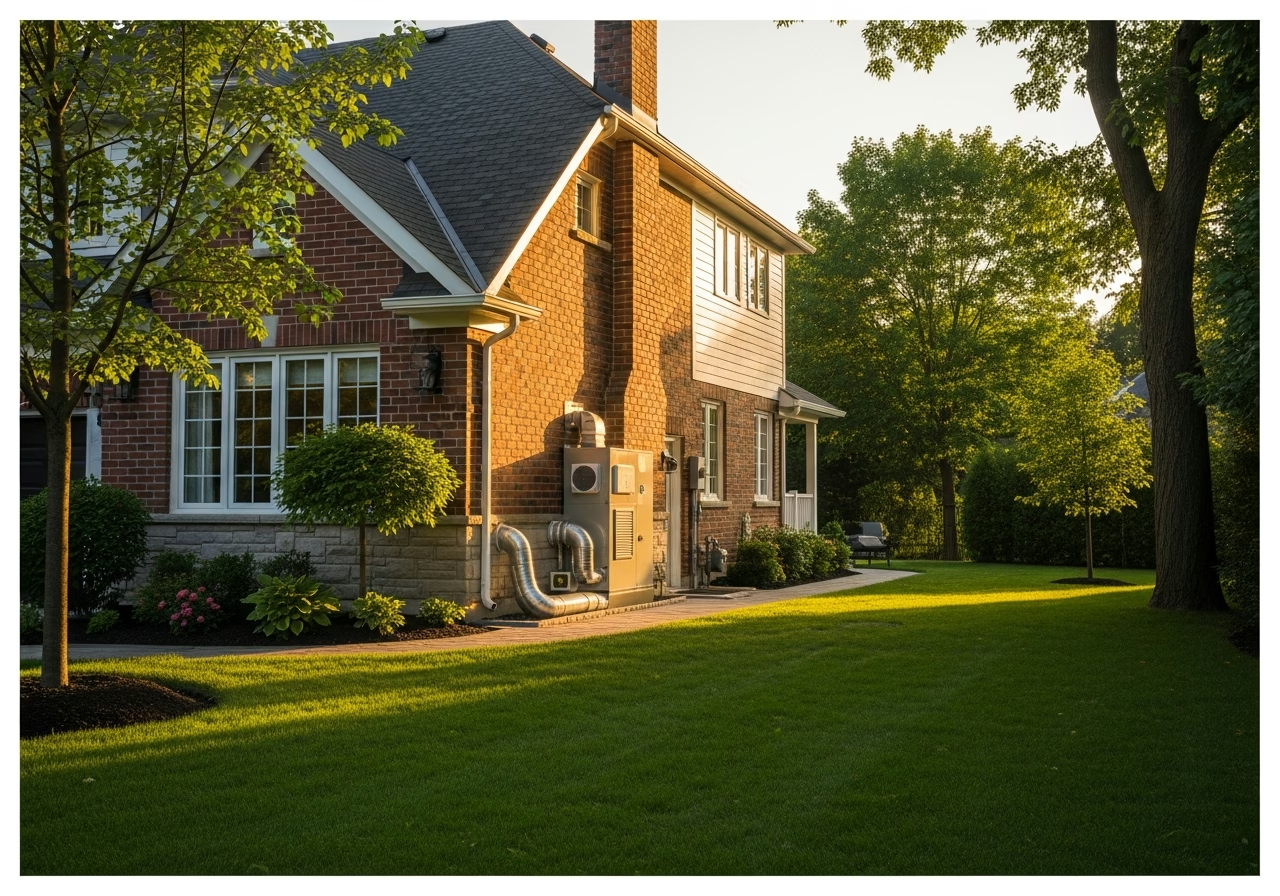
RenoHouse coordinates Heat Recovery Ventilator (HRV) and Energy Recovery Ventilator (ERV) installations and whole-home ventilation retrofits for Toronto and GTA homeowners. Our scope is general-contractor-led project management: we coordinate certified HVAC installer partners (TSSA-licensed where gas equipment is touched, CSA F326 trained for ventilation design), prepare Mechanical Ventilation Design Summary (MVDS) drawings via partner designers, pull building permits when required, manage ductwork integration with existing HVAC, and finish the construction work the retrofit triggers — drywall around new ducting, soffit boxing, paint, and trim. We do NOT install HVAC equipment ourselves — refrigerant, gas, and CSA-F326 ventilation balancing rests with our certified subcontractor partners. We DO sign the contract, hold the schedule, and stand behind the finished result.
Why HRV/ERV matters in Toronto
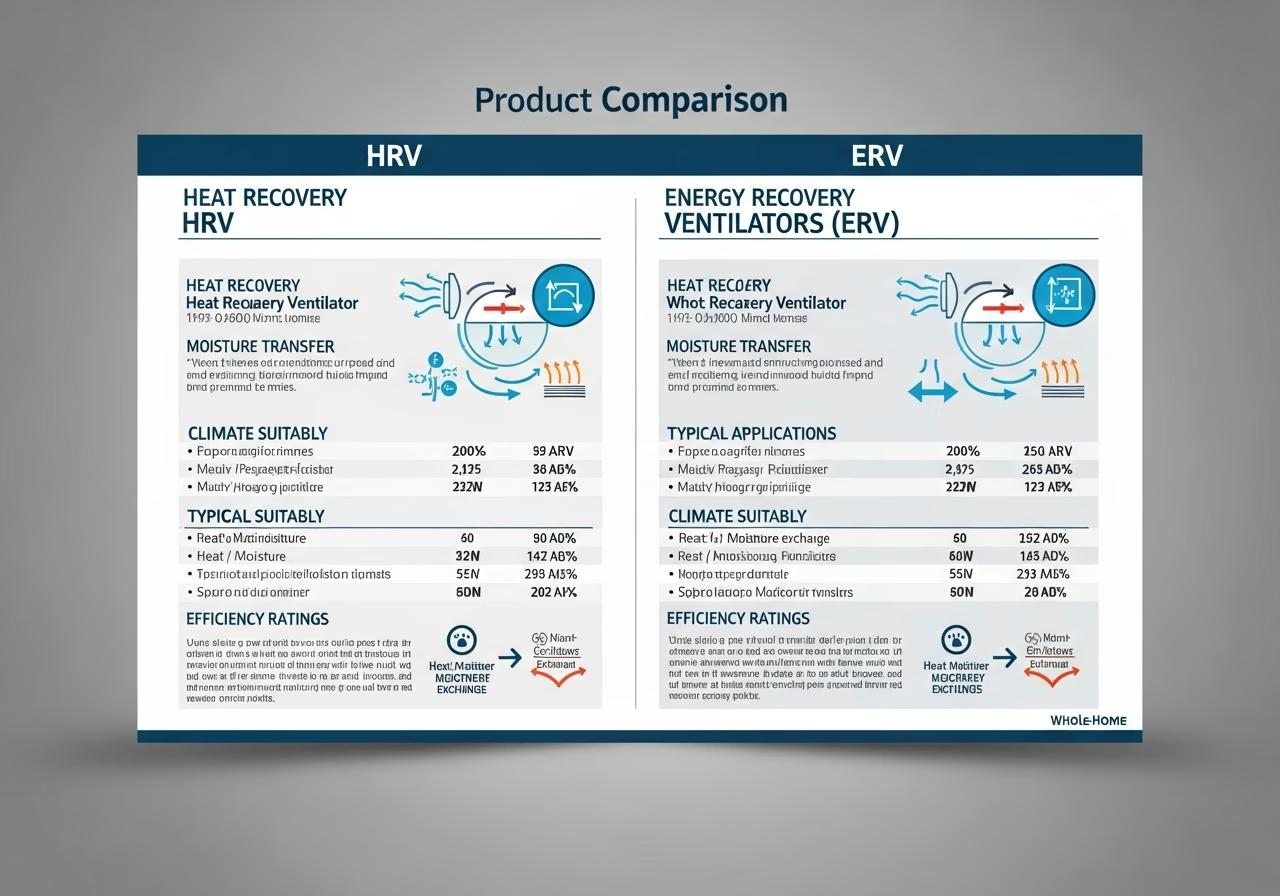
Modern Toronto construction is air-tight. New builds under OBC 2024 typically test below 1.5 ACH50 (air changes per hour at 50 Pascals); deep-retrofit older homes after attic insulation, spray foam, and window replacement frequently hit 2.0–3.5 ACH50 — tight enough that natural air leakage no longer ventilates the building. Without mechanical ventilation, tight homes accumulate humidity (window condensation, attic mould), VOCs (off-gassing furniture, cleaning products), CO2 (drowsy occupants), radon (Toronto has elevated radon zones in Etobicoke and Scarborough), and combustion gases (gas range without proper exhaust). HRV/ERV solves this by mechanically exhausting stale air from kitchens and bathrooms while simultaneously bringing in fresh outdoor air through a heat-exchange core that recovers 70–85% of the heat (HRV) or heat plus humidity (ERV). Toronto's heating-dominated climate with cold dry winters favours HRV in most cases; ERV is preferred for tight homes in humid summer microclimates (waterfront condos, basement-sensitive humidity loads).
OBC 2024 mandate and CSA F326
Ontario Building Code 2024 (Tier 1, effective January 1, 2025) requires balanced mechanical ventilation in all new dwelling units — typically delivered as HRV or ERV sized per CSA F326 (Residential Mechanical Ventilation Systems standard). Existing-home retrofits are required when air-sealing work brings the building below approximately 1.5 ACH50 (the threshold where natural ventilation is insufficient). MVDS drawings — total ventilation rate by floor area and bedroom count, exhaust pickup locations, supply distribution, balanced flow verification — are mandatory at permit submission for new builds and recommended for retrofits. CSA F326 also specifies commissioning: post-install airflow measurements, balance verification, and homeowner training.
Project value and bundle scope
HRV/ERV unit only with existing ductwork integration: $2,800–$4,500. Full retrofit with new dedicated ductwork (fresh-air supply trunk, exhaust pickups in kitchen and baths, condensate drain, electrical tie-in): $3,800–$7,500. Integration with new ducted HVAC during a heat-pump or furnace replacement: $2,500–$5,500 incremental. Premium controls package (dehumidistat, CO2 sensor, smart thermostat integration, boost timer): +$250–$800. Filter upgrade to MERV 13 or HEPA add-on: +$300–$900. Common Toronto installs: Panasonic Intelli-Balance 100/200, Lifebreath RNC10/RNC155, Venmar AVS HEPA, vanEE V100H, Broan AI-Series, Fantech VHR. Our certified HVAC partner sizes the unit per CSA F326 (continuous total airflow = 0.30 L/s per square metre of floor area, plus principal-room and intermittent rates).
Honest scope — HVAC installer required
HRV/ERV installation involves ductwork modifications, electrical tie-in, condensate plumbing, refrigerant work in some heat-pump-integrated systems, and CSA F326 commissioning that requires a flow hood and trained technician. RenoHouse does NOT have a TSSA-licensed gas fitter, an HVAC mechanic, or CSA F326 commissioning equipment in-house. We coordinate certified HVAC installer partners (HRAI member firms with CSA F326 trained technicians) for the regulated work. RenoHouse holds the contract, manages permits and schedule, performs the construction-finish work (drywall around new ductwork, soffits to box new ducts in finished basements, paint, trim), and warrants the wrap. The HVAC subcontractor signs off on CSA F326 compliance, MVDS, and commissioning.
Existing-home retrofit common scenarios
(1) Post-attic-insulation envelope upgrade — homeowner air-sealed and added blown cellulose, now experiencing winter window condensation; HRV solves the moisture and IAQ problem. (2) Heat pump replacement — pairing the new ducted heat pump with HRV captures the deep-retrofit rebate stack (Ontario HRS heat-pump rebate + HRS smart-thermostat $75 + Greener Homes Grant) and eliminates a future return visit. (3) Basement-suite legalization — Bylaw 474-2023 multiplex units typically require dedicated ventilation for OBC compliance; HRV serves both legal-suite ventilation requirements and main-house IAQ. (4) Renovation triggering OBC compliance — major renovation work that touches over 50% of habitable floor area can trigger current-code ventilation requirements; we coordinate the MVDS at permit application stage.
Sequencing and finish work
Existing-home retrofit timeline: site assessment (1 visit, 60–90 min), MVDS and equipment selection (1 week), permit (when required, 2–4 weeks), HVAC installer scheduling (2–4 weeks), install (2–4 days for typical retrofit, longer for new ducting runs), commissioning by HVAC partner (half-day), construction wrap by RenoHouse (1–3 days drywall, paint, trim around new soffits or duct boxing). Total project clock 4–8 weeks from contract signing.
Serving Toronto, Mississauga, Brampton, Vaughan, Markham, Richmond Hill, Oakville, Burlington, Etobicoke, Scarborough, North York, and all GTA communities. Call 289-212-2345 for a free HRV/ERV-feasibility consultation.

Toronto/GTA neighborhood considerations
- Forest Hill / Rosedale / Lawrence Park (heritage): Heritage 1.5-storey balloon-frame — typical retrofit Lifebreath RNC 200 HRV with dedicated 6-inch insulated supply/exhaust through cold-roof or rim-joist. Ducted to dedicated stale-air pickups in bathrooms + fresh-air supply in bedroom returns. Typical $4,800-$7,500.
- North York / Scarborough / Etobicoke (60s-70s): 1960s post-war forced-air with existing HRV stub — typical upgrade to Vanee 70H V or Broan AI 200 ERV (humid-summer optimization). $2,800-$4,200.
- Mississauga / Brampton / Vaughan (90s+): 1990s builder HRV (Lifebreath RNC 95) — typical upgrade to Lifebreath RNC 155 ECM or Broan AI 200 ERV at 20-year mark. $2,400-$3,800.
- Caledon / King City / Aurora (rural well): Rural detached + radiant heat — Lifebreath Max XTR 175 ECM or Zehnder ComfoAir 350 (high-efficiency Passive-House grade) standalone-ducted. $5.8K-$11K installed.
- Downtown condos: Vertical-stack fan-coil — typically no dedicated HRV; in-suite ERV (Panasonic FV-04VE1 InVent) in bathroom or kitchen exhaust replacement. $1,400-$2,800.
Permit + license: OBC 9.32.3 mandatory mechanical ventilation, OBC 9.32.3.6 HRV/ERV minimum at all new dwellings + retrofit on permit work. CSA F326 HRV/ERV standards. ECRA/ESA 309A on hard-wire. Greener Homes Grant up to $750 HRV + HRS EnerGuide pre/post. Save On Energy retrofit rebate.
Why Trust RenoHouse
On-Time Completion
We respect deadlines for hrv / erv whole-home ventilation projects. 95% of jobs finish on or ahead of schedule.
Certified & Insured
Proper licensing, full insurance coverage, and WSIB protection. Your property and our team are completely protected.
Satisfaction Guarantee
We're not done until you're 100% happy with your hrv / erv whole-home ventilation. That's our promise.
Sound Familiar?
These are the most common problems our clients face.
Air-sealed your home after attic insulation and now seeing window condensation every winter?
OBC 2024 requires balanced ventilation in your new build but the HVAC contractor's MVDS isn't ready?
Tight modern construction (under 1.5 ACH50) and worried about IAQ for kids with asthma?
Confused between HRV and ERV — which one fits Toronto's cold dry winters?
Want HEPA filtration during forest-fire smoke days and pollen season?
Pairing a heat pump conversion with HRV but no contractor is quoting both together?
Ready to get started?
Free estimate, no obligation. We respond within 1 hour.
What Our Clients Say
“RenoHouse replaced all our windows in just two days. The new windows are beautiful, energy-efficient, and the team left everything spotless. Highly recommend!”

Michael R.
Oakville
“New windows transformed our home. Quieter, warmer, and our energy bill dropped noticeably. Excellent installation crew.”

David K.
Vaughan
“Professional from start to finish. They replaced 8 windows in one day and cleaned up perfectly. Highly recommend RenoHouse!”

Sandra W.
Burlington
Our HRV / ERV Whole-Home Ventilation Work
Professional hrv / erv whole-home ventilation results from RenoHouse projects across the Toronto GTA.
HRV / ERV Whole-Home Ventilation
Toronto GTA
Quality Workmanship
Licensed & Insured
Like what you see? Let's talk about your project.
🧮 HRV / ERV Whole-Home Ventilation Retrofit — Cost Estimator
GTA / Ontario — 2026 market pricing
⚙️ Add-ons & Options
💰 Subsidies & Rebates Available
Subsidies require eligibility verification, pre/post audits, and proper documentation. Stacking rules apply.
📊 Where the cost goes (typical breakdown)
📋 What affects your price:
💡 Estimates use 2026 GTA/Ontario market data. Actual cost depends on site conditions, material selections, and project scope. Book a free in-home quote for a precise number.
Frequently Asked Questions About HRV / ERV Whole-Home Ventilation
Both transfer heat between exhaust and incoming fresh air, recovering 70–85% of energy. HRV (Heat Recovery Ventilator) transfers heat only — best for Toronto's cold dry winters where you want to keep indoor moisture low. ERV (Energy Recovery Ventilator) transfers heat AND humidity — best for tight new-construction homes, waterfront condos, or homes where winter humidity drops too low and summer humidity is high. Most Toronto retrofits favour HRV; tight new builds often choose ERV. Our certified HVAC partner makes the recommendation based on house tightness, occupant density, and humidity profile.
OBC 2024 (Tier 1, effective January 1, 2025) requires balanced mechanical ventilation in all new dwelling units — typically delivered as HRV or ERV sized per CSA F326. The mandate applies to new construction. Existing homes are not required to retrofit but increasingly must when air-sealing brings the building below approximately 1.5 ACH50 — the threshold where natural ventilation is insufficient and homes develop condensation and IAQ problems. MVDS (Mechanical Ventilation Design Summary) drawings are required at permit submission for new builds.
HRV/ERV unit with existing ductwork integration: $2,800–$4,500. Full retrofit with new dedicated ductwork (fresh-air supply trunk, exhaust pickups, condensate drain, electrical tie-in): $3,800–$7,500. Integration with new ducted HVAC during a heat-pump or furnace replacement: $2,500–$5,500 incremental. Premium controls package: +$250–$800. MERV 13 or HEPA upgrade: +$300–$900. Pricing varies by ducting complexity, unit size (typically 100–200 CFM continuous), and finish-work scope.
Common Toronto installs through our certified HVAC partners: Panasonic Intelli-Balance 100 and 200 (premium controls, quiet), Lifebreath RNC10 / RNC155 (Canadian-made, durable, mid-range), Venmar AVS HEPA (built-in HEPA filtration, premium), vanEE V100H (mid-range workhorse), Broan AI-Series (smart controls, mid-range), Fantech VHR. Selection depends on house size, ducting layout, and feature priorities (HEPA filtration, dehumidistat, CO2 sensor, smart thermostat integration). Our HVAC partner sizes the unit per CSA F326.
No. HRV/ERV installation requires CSA F326 commissioning expertise, ductwork modifications, electrical tie-in, condensate plumbing, and in heat-pump-integrated systems sometimes refrigerant work — all of which require HVAC mechanic certification. RenoHouse does NOT have a TSSA-licensed gas fitter, an HVAC mechanic, or CSA F326 commissioning equipment in-house. We coordinate certified HVAC installer partners (HRAI-member firms with CSA F326 trained technicians) for the regulated work. RenoHouse holds the contract, pulls building permits when required, and performs the construction-finish wrap (drywall, soffit boxing, paint, trim). The HVAC partner signs off on CSA F326 compliance and commissioning.
CSA F326 is the Canadian Standards Association standard for Residential Mechanical Ventilation Systems. It specifies how to size, install, and commission HRV/ERV systems: total continuous airflow = 0.30 L/s per square metre of floor area plus principal-room and intermittent rates, balanced exhaust-to-supply flow within ±10%, post-install airflow measurements with a flow hood, and homeowner training. OBC 2024 references CSA F326. Without CSA F326 commissioning, the system may move air but not deliver the indoor air quality benefit, and warranty claims and rebate close-outs may be denied.
Mechanical Ventilation Design Summary — a single-page or multi-page drawing submitted with building permits showing total ventilation rate by floor area and bedroom count, exhaust pickup locations (kitchen, bathrooms, laundry, mechanical room), fresh-air supply distribution, balanced flow verification, and equipment specifications. MVDS is mandatory at permit submission for new builds under OBC 2024 and recommended for major retrofits. Our HVAC partner's CSA F326 designer prepares the MVDS; we manage the permit submission.
Site assessment 60–90 minutes. MVDS and equipment selection 1 week. Building permit (when required) 2–4 weeks. HVAC installer scheduling 2–4 weeks. Install 2–4 days for typical retrofit (longer for new ducting runs through finished spaces). Commissioning half-day. Construction wrap by RenoHouse (drywall, paint, trim around new soffits or duct boxing) 1–3 days. Total project clock 4–8 weeks from contract signing.
Often yes for retrofits that involve new ductwork through structural or fire-rated assemblies, condensate drain plumbing, or electrical tie-in beyond a simple receptacle. Simple HRV-into-existing-ducted-HVAC swaps sometimes do not require a permit. Toronto Building's plan reviewer makes the call. For multiplex and legal-basement-suite projects, the HRV/ERV is part of the building permit scope. We confirm permit requirements at the site assessment and pull the permit when required.
Yes when sized and commissioned correctly. Typical Toronto retrofit results: window condensation eliminated within 24–48 hours of commissioning, indoor humidity stabilized at 35–45% RH (winter), CO2 levels drop from 1,200–2,000 ppm (closed bedrooms overnight) to 600–800 ppm, VOC levels reduced 50–70% within two weeks. HEPA-filtered models (Venmar AVS HEPA) also reduce PM2.5 from forest-fire smoke days and pollen during allergy season. We can do a post-install IAQ comparison if requested.


You Might Also Need
Customers who looked at hrv / erv whole-home ventilation also asked us about these complementary services.



We Serve All GTA
Professional hrv / erv whole-home ventilation services available across the Greater Toronto Area.
“Heat pump conversion + 200A panel upgrade in our 1970s East York bungalow. Coordinated HVAC sub and ESA electrician under one contract. Greener Homes Loan paperwork submitted correctly first time. Heating bills down ~40%.”
— James & Linda H., East York
Get a Free HRV / ERV Whole-Home Ventilation Estimate
Contact us today for a free, no-obligation quote for your hrv / erv whole-home ventilation project in Toronto GTA. We'll get back to you within 1 hour.