RenoHouse

# PEX vs Copper for Replacement Pipe in Toronto
Quick answer. When a Toronto water service line is being replaced, the homeowner sees three material options on the quote: Type K copper, HDPE (high-density polyethylene), and sometimes PEX (cross-linked polyethylene). This article compares the materials in plain language and explains which is the right choice for which situation in 2026.When a Toronto water service line is being replaced, the homeowner sees three material options on the quote: Type K copper, HDPE (high-density polyethylene), and sometimes PEX (cross-linked polyethylene). This article compares the materials in plain language and explains which is the right choice for which situation in 2026.
For full project context, see our pillar guide at Lead and Galvanized Water Service Replacement Toronto: The Complete 2026 Guide.
Honest Positioning
RenoHouse coordinates water service replacement projects with licensed plumbers. Material choice is partly a method-driven decision (trenchless typically uses HDPE, open-cut typically uses copper) and partly a regional norm. Toronto Water accepts copper, HDPE, and certain PEX products on residential service lines, with code-specified installation requirements for each.
The Three Material Options
Type K copper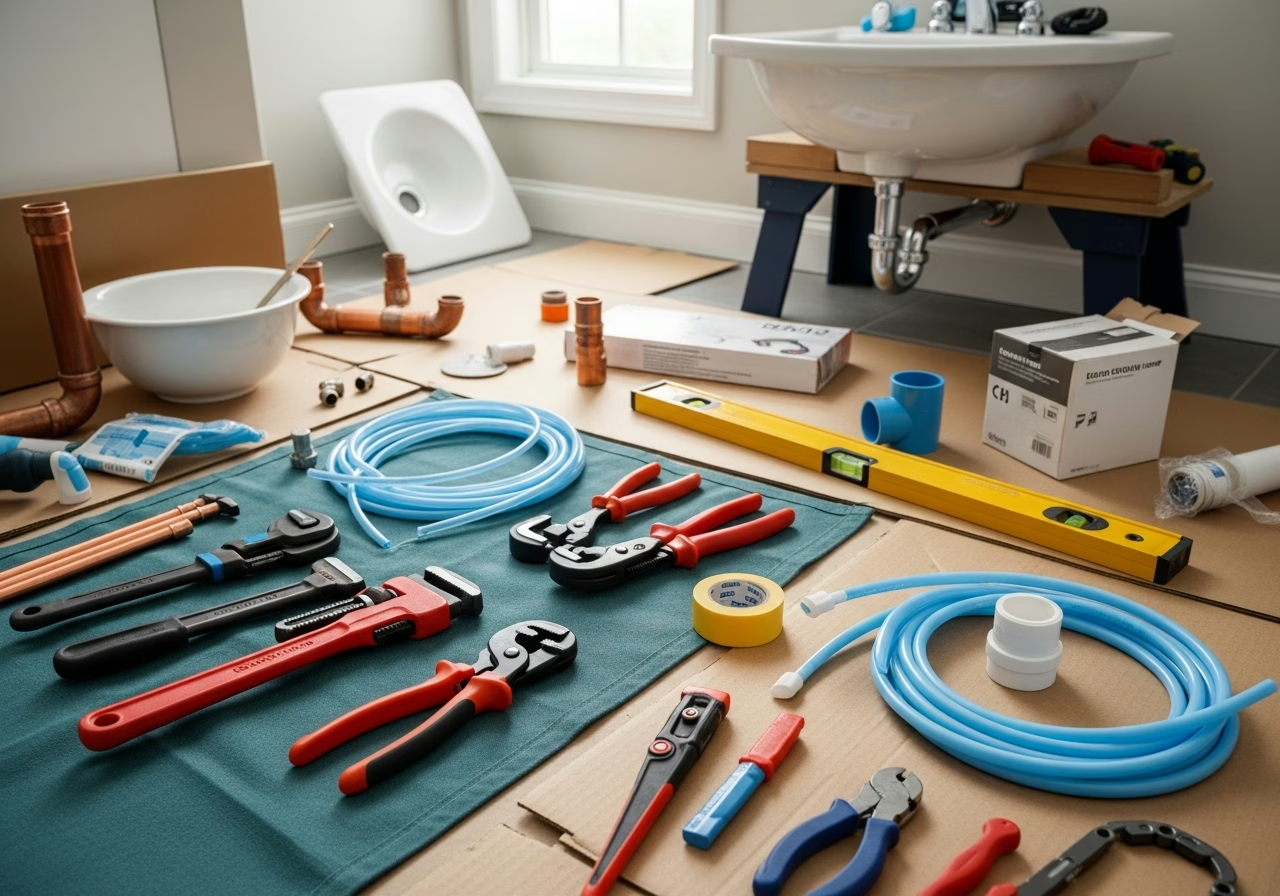
The long-standing residential standard for buried water service lines. Type K is the heavy-wall, soft, annealed copper specifically rated for buried service. It is sold in coils for runs up to 60 feet without joints.
- Melting point and chemical resistance: high.
- Service life: 50 to 100+ years in typical Toronto soil and water.
- Joints: brazed (silver-soldered) or compression-fit at the building entry and meter; no joints in the buried run if installed in a single coil.
The standard material for trenchless pipe-bursting installs. HDPE is sold in continuous coils up to several hundred feet. It is fused at joints (heat-fused or electrofusion), but no joints exist in a single-coil residential run.
- Service life: 50 to 100+ years.
- Joints: heat-fusion welds (essentially monolithic with the pipe).
- Flexibility: high; can be pulled around moderate bends in a pipe-burst path.
- Pressure rating: appropriate for Toronto's residential service pressures.
PEX is most commonly used for interior plumbing (after the meter) in Toronto residential construction. PEX-A 1006 is becoming more common in newer interior installations.
For buried service line use, PEX is less common in Toronto than copper or HDPE. Some specific PEX products designed for buried service exist (with appropriate jacketing and protection), but the residential service standard remains copper or HDPE for the buried run.
Where Each Material Fits
A practical mapping of material to project type:
Open-cut excavation: Type K copper is the default. The copper coil lays into the trench, the pipe is bedded in compacted sand or pea gravel, and the run is connected to the curb stop and the building entry. Type K is forgiving of installation conditions and well-understood by Toronto plumbers and inspectors. Trenchless pipe-bursting: HDPE is the default. The continuous HDPE coil is what the bursting rig pulls through the cleared path. HDPE handles the pull tension and the small bends in the path. Interior plumbing (after the meter): PEX or copper depending on the specific install. PEX-A is increasingly common for new interior runs in Toronto. Service line for new construction or relocation: Type K copper is the most common default. Some installers specify HDPE for new runs as well.Cost Comparison: 2026 Toronto
Material cost differences are modest in the context of a full service line replacement project:
- Type K copper: $8 to $14 per linear foot installed, with coil and fitting costs.
- HDPE: $5 to $9 per linear foot installed, with fusion fitting costs.
- PEX-A 1006 (interior): $3 to $6 per linear foot installed.
For a 25-foot owner-side run, the material delta between copper and HDPE is roughly $75 to $125 — small relative to total project cost.
The material choice is more often driven by method (trenchless requires HDPE; open-cut works with either) than by direct cost.
Need professional plumbing?
Call RenoHouse at 289-212-2345 or get a free estimate today.
Get Free Estimate →For a full cost breakdown, see Lead Water Service Replacement Cost Toronto: 2026 Breakdown.
Durability and Service Life
All three materials are rated for long service life:
- Type K copper: 50 to 100+ years in typical Toronto soil and water. Copper can fail prematurely in highly acidic or aggressive soils, but Toronto's soil chemistry is generally well-tolerated.
- HDPE: rated for 50 to 100+ years; the material does not corrode and is unaffected by mineral content.
- PEX: rated for 50+ years; for interior service the warranty period is typically 25 years on the manufacturer side.
In practice, all three materials outlive the typical homeowner's tenure in the property when correctly installed.
Code Acceptance in Toronto
Toronto Water and the Ontario Building Code accept:
- Type K copper for buried service lines (long-standing standard).
- HDPE rated for potable water service (NSF/ANSI 61 certified) for buried service lines.
- Specific PEX products certified for buried service, where used.
The licensed plumber on the project specifies the material on the permit application. Toronto Water inspects the installed material and the connections during the pre-backfill inspection.
For the permit process, see Water Service Replacement Permit and Toronto Water Process.
Material-Specific Connection Considerations
Copper to copper: standard solder or compression fittings. Straightforward at the building entry and meter. HDPE to copper transition: requires a transition fitting (typically a brass or stainless transition with appropriate seals). The transition is at the building entry and at the curb stop. The transition is a known engineered fitting; correctly installed, it has no special long-term concerns. Dielectric union at meter: when copper service line meets steel or different metal at the meter, a dielectric union prevents galvanic corrosion. Standard requirement on all replacements.Trenchless-Only Considerations: HDPE
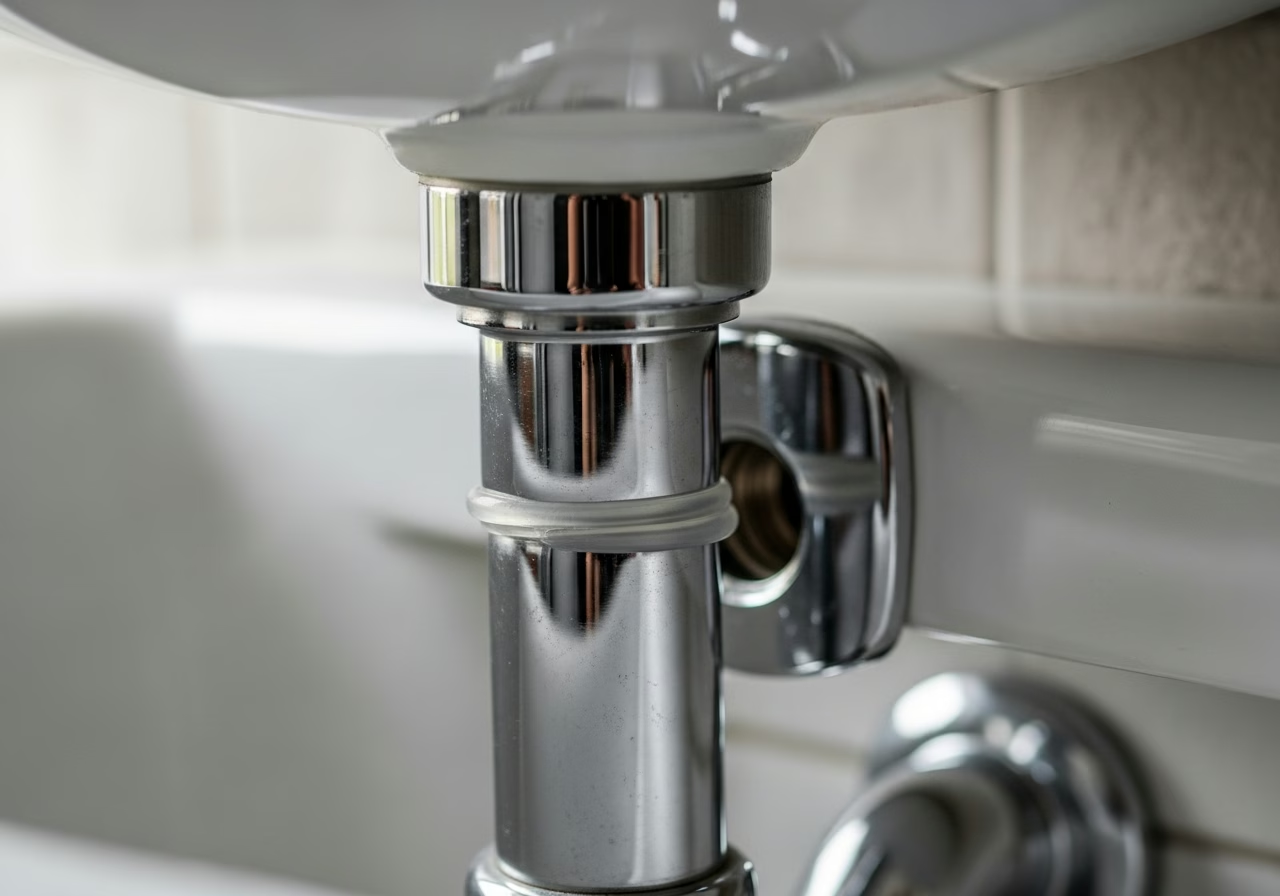
For trenchless pipe-bursting, HDPE has specific advantages:
- Continuous coil: no joints in the buried run.
- Flexibility: handles small bends in the pipe-burst path.
- Pull strength: rated for the tension forces of a pipe-burst pull.
- Surface friction: low, allowing the bursting head to draw it cleanly.
HDPE for trenchless is essentially a method requirement, not a material choice.
For the method comparison, see Pipe-Bursting Trenchless vs Open-Cut for Toronto Service Lines.
Open-Cut Choice: Copper vs HDPE
For open-cut, both Type K copper and HDPE are viable. The choice considerations:
Choose Type K copper when:- The plumber's standard practice is copper.
- The homeowner has a preference for copper based on familiarity.
- The interior plumbing is copper and a fully-copper service is preferred for consistency.
- The pipe path has known soil aggressiveness that could shorten copper service life.
- The cost differential matters on a long owner-side run.
- The plumber's standard practice for the project is HDPE.
In Toronto, Type K copper remains the more common choice for open-cut residential service line replacement. HDPE is gaining share, particularly among plumbers who do significant trenchless work and standardize on HDPE for both methods.
Interior Plumbing: PEX-A 1006
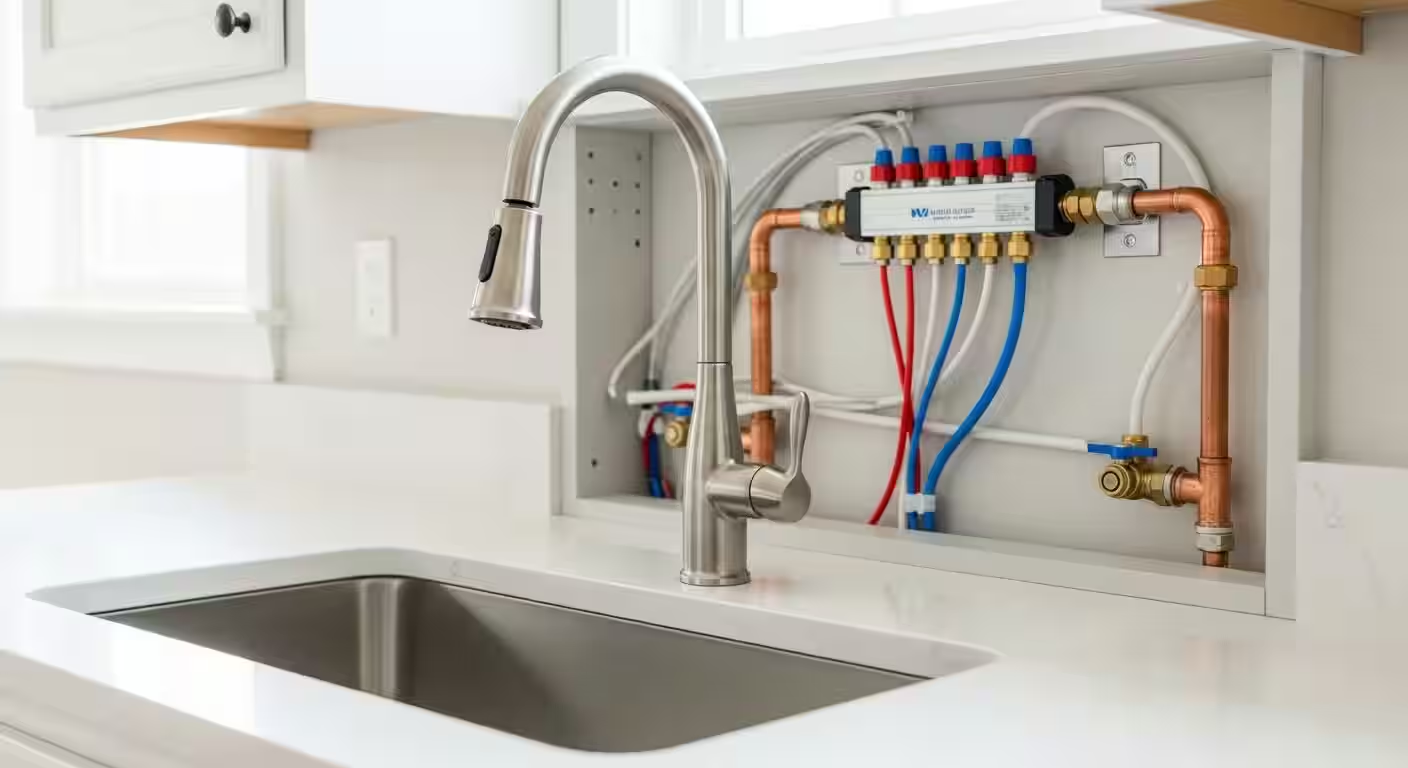
For the interior plumbing after the water meter, PEX-A 1006 has become a common choice in Toronto residential renovation work in 2026. Reasons:
- Flexibility: PEX bends easily, reducing fittings and joints.
- Cost: less expensive than copper per linear foot.
- Freeze tolerance: PEX has more give under freeze conditions than rigid copper, reducing burst risk.
- Fast install: crimp or expansion fittings install quickly.
PEX is not a substitute for copper in the buried service line portion in standard Toronto residential practice — that remains copper or HDPE. PEX is a strong choice for the interior runs.
Material Choice Summary
A simple summary for the Toronto homeowner:
- Trenchless pipe-bursting: HDPE.
- Open-cut, owner preference for copper: Type K copper.
- Open-cut, cost-optimized or aggressive-soil context: HDPE.
- Interior plumbing after the meter: PEX-A 1006 or copper.
The plumber's quote should specify the material clearly. Ask about the choice if the quote is ambiguous.
Bundling and Material Compatibility
When a service line replacement is bundled with interior plumbing work or with the backwater valve and sump pump bundle, the materials at each interface are specified to be compatible — dielectric unions at metal-to-metal transitions, transition fittings at HDPE-to-copper joints, and so on.
Next Steps
For a coordinated quote that specifies the material clearly, visit our service page at /services/plumbing/lead-galvanized-water-service-replacement.
Sources & References
Authoritative sources cited in this guide:
- Toronto Sewer Use Bylaw 681 — Toronto plumbing/sewer regulations
- Ontario Building Code 7 (Plumbing) — OBC plumbing standards
- Health Canada — Drinking Water — Health Canada drinking water guidelines
- CSA B149.1 Natural Gas Code — Canadian gas installation code
Continue Reading