RenoHouse

# Pipe-Bursting Trenchless vs Open-Cut for Toronto Service Lines
Quick answer. There are two mainstream methods for replacing a residential water service line in Toronto: open-cut excavation and pipe-bursting trenchless. They produce different cost profiles, different timelines, and very different impacts on the front yard. This article compares the two methods and explains when each is the right call.There are two mainstream methods for replacing a residential water service line in Toronto: open-cut excavation and pipe-bursting trenchless. They produce different cost profiles, different timelines, and very different impacts on the front yard. This article compares the two methods and explains when each is the right call.
For full project context, see our pillar guide at Lead and Galvanized Water Service Replacement Toronto: The Complete 2026 Guide.
Honest Positioning
RenoHouse coordinates these projects alongside a licensed plumber who holds the Toronto Water permit. Pipe-bursting equipment is often subcontracted on Toronto residential projects because the rig and operator skill are specialized. Method selection should always involve the plumber's site assessment — pipe path, condition, and access dictate what is feasible.
The Two Methods in Plain Language
Open-cut excavation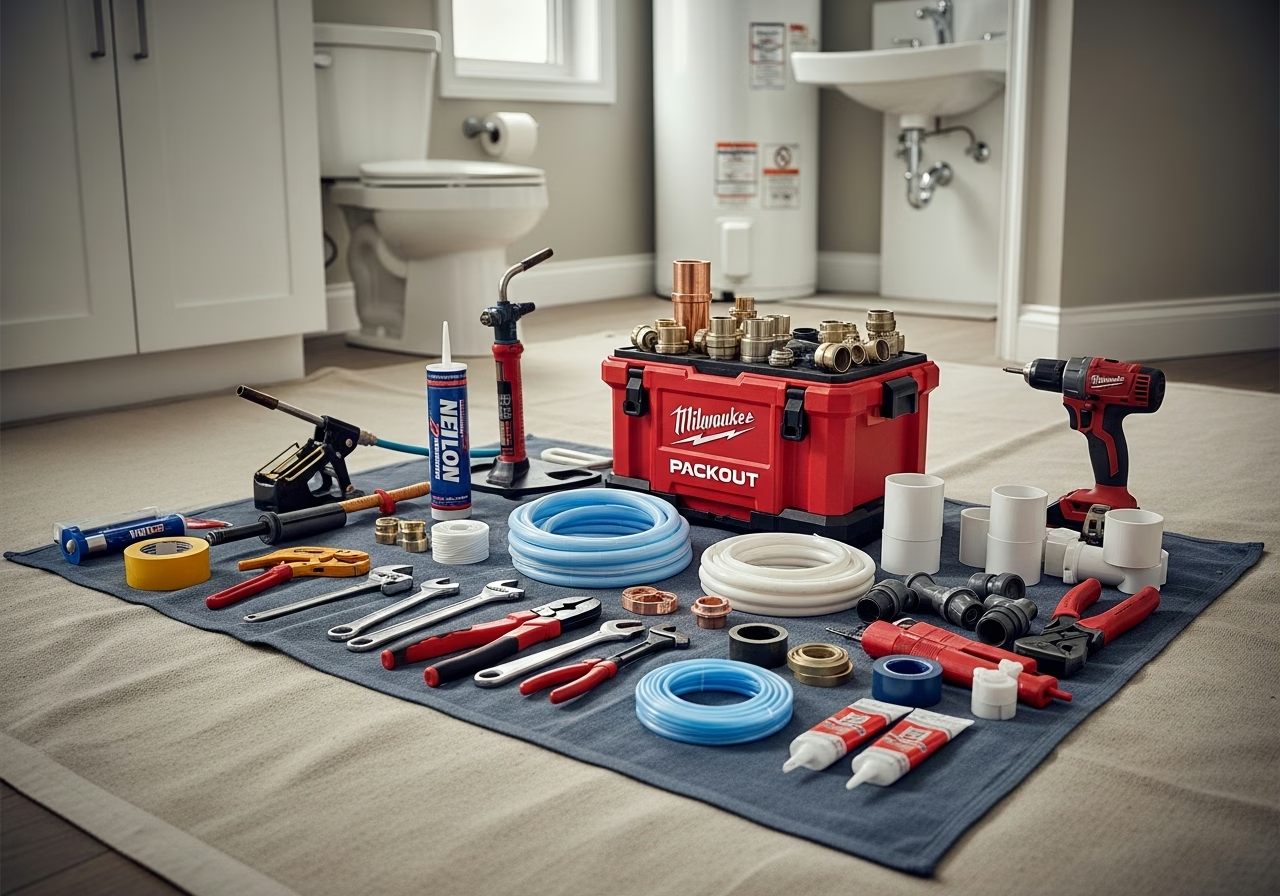
A mini-excavator digs a trench from the foundation entry to the property line (and onward to the curb stop if the city-side is being replaced at the same time). The old pipe is removed. A new pipe — Type K copper or HDPE — is laid in the trench. The trench is backfilled in lifts, compacted, and the surface is restored.
The full pipe path is opened. Anything in the trench path — driveway, walkway, paver patio, lawn, mature tree roots — is disturbed.
Pipe-bursting trenchlessTwo access pits are excavated, one near the foundation entry and one near the property line. A steel cable is fed through the existing pipe from one pit to the other. A bursting head is attached to the cable, and a hydraulic winch pulls the head through the pipe path. The bursting head fractures the old pipe outward into the surrounding soil, and a new HDPE pipe is pulled through the cleared path behind it.
The pipe path between the two pits is undisturbed. Only the two pit areas need restoration.
Cost Comparison: 2026 Toronto Owner-Side
For a standard Toronto lot with 5 to 30 feet of owner-side service line:
Trenchless pipe-bursting: $5,000 to $9,000- Plumbing labour and materials: $3,500 to $5,500.
- Pipe-bursting equipment and operator: $2,000 to $3,500.
- Pit restoration: $300 to $1,500.
- Permit and inspection: $300 to $600.
- Plumbing labour and materials: $3,000 to $5,000.
- Excavation equipment and trench: $1,500 to $2,500.
- Trench restoration: $1,500 to $4,000+.
- Permit and inspection: $300 to $600.
The headline difference: open-cut has lower equipment cost but significantly higher restoration cost when the trench crosses hardscape. Trenchless has higher equipment cost (the rig is specialty equipment) but minimal restoration.
For the full cost breakdown, see Lead Water Service Replacement Cost Toronto: 2026 Breakdown.
Need professional plumbing?
Call RenoHouse at 289-212-2345 or get a free estimate today.
Get Free Estimate →When Trenchless Wins
Trenchless is the clear choice when:
- The front yard has significant hardscape: asphalt driveway, concrete walkway, interlock paver patio, stamped concrete, or expensive flagstone.
- The yard has mature trees with root systems near the pipe path.
- The yard has a complex, expensive landscape design.
- The pipe path is reasonably straight and the existing pipe is intact enough to burst cleanly.
- The homeowner wants the project completed quickly with minimal site disturbance.
A typical trenchless project on a hardscaped Toronto lot saves $2,000 to $4,000 in restoration cost compared to open-cut. The trenchless equipment premium of $500 to $1,500 is more than offset.
When Open-Cut Wins
Open-cut is the right call when:
- The pipe path has significant bends that cannot be navigated by a bursting cable.
- The existing pipe has partially collapsed and may not fracture cleanly.
- The pipe is severely corroded galvanized that may scale outward unpredictably.
- The homeowner wants to relocate the service line on the property (different entry point, route around new construction).
- The lot has minimal hardscape — bare lawn or a small natural-grass front yard where trenching restoration is cheap.
- The pipe path runs under a structure or addition where trenchless cannot lift the bursting rig.
Open-cut is also the standard choice when the City is doing capital road reconstruction on the block — the road is already open, and the boulevard restoration is part of the city work, so the marginal cost of an open-cut owner-side run during the same window is low.
What Trenchless Cannot Do
Trenchless pipe-bursting has known limits:
- Severe bends: a 90-degree corner with no access pit option cannot be navigated with a bursting head.
- Pipe-on-pipe contact: where the service line runs alongside another buried utility (gas main, hydro feed) very tightly, the bursting expansion can damage the adjacent service.
- Collapsed sections: if the existing pipe has collapsed, the cable cannot be fed through it.
- Material mismatch: bursting some materials (cast iron, certain heavily reinforced pipes) requires different rigs than the standard residential setup.
A reputable plumber will identify these issues during the site assessment and quote open-cut where trenchless is not feasible.
Restoration Impact: A Concrete Example
Consider a Toronto detached home with:
- 25-foot front yard.
- Asphalt driveway crossing the pipe path (10 feet of pipe under driveway).
- Interlock paver walkway crossing the pipe path (4 feet of pipe under walkway).
- Lawn for the remaining 11 feet.
- 10 feet of asphalt patch: $1,500 to $2,000.
- 4 feet of interlock re-lay (matched pattern): $800 to $1,500.
- 11 feet of lawn re-sod: $300 to $500.
- Total: $2,600 to $4,000.
- One pit at the foundation, in lawn area: $200 to $400.
- One pit near property line, possibly cutting a small portion of driveway or walkway: $400 to $1,000.
- Total: $600 to $1,400.
The restoration delta on this lot is roughly $2,000 to $3,000 in favour of trenchless. The trenchless equipment premium is roughly $1,000 to $1,500. Net advantage to trenchless: $500 to $1,500 on this representative lot.
Timeline Comparison
Open-cut: typically 3 to 5 working days from start of excavation to final restoration.
- Day 1: excavation and trench prep.
- Day 2: pipe install and connections.
- Day 3: City inspection and pressure test, backfill begins.
- Days 4-5: surface restoration.
- Day 1: pit excavation, cable feed, pipe-burst pull.
- Day 2: connections, City inspection, pressure test.
- Day 3: pit backfill and small restoration.
Trenchless saves 1 to 2 days on a typical project. For homeowners who want minimal disruption, this matters.
Permits Are the Same
Both methods require the same Toronto Water service connection permit, held by the licensed plumber. Both methods require City inspection before backfill and a pressure test. The City does not preference one method over the other.
For the permit process, see Water Service Replacement Permit and Toronto Water Process.
Material Choice
Both methods can use Type K copper or HDPE, but in practice:
- Open-cut typically uses Type K copper (standard residential install).
- Trenchless uses HDPE because the continuous coil is what the pipe-bursting rig pulls.
Both materials are durable and rated for Toronto residential service. For the material decision, see PEX vs Copper for Replacement Pipe in Toronto.
Decision Framework
A simple framework for the method decision:
- 1. Is the pipe path straight and the existing pipe intact? If no, open-cut.
- 2. Is significant hardscape (driveway, paver, mature landscape) in the pipe path? If yes, trenchless.
- 3. Is the City doing capital reconstruction on the block? If yes, open-cut may be efficient given the existing disturbance.
- 4. Is the lot a simple lawn-only front yard? Open-cut is competitive on price.
The plumber's site assessment confirms feasibility. Most Toronto residential projects on hardscaped lots are trenchless when the pipe path supports it.
Bundling
Both methods support bundling with related plumbing work — see /services/plumbing/backwater-valve-sump-pump-bundle. Open-cut bundling is generally easier because the open trench provides direct access for additional work.
Next Steps
For a coordinated quote that compares both methods on your specific lot, visit our service page at /services/plumbing/lead-galvanized-water-service-replacement.
Sources & References
Authoritative sources cited in this guide:
- Toronto Sewer Use Bylaw 681 — Toronto plumbing/sewer regulations
- Ontario Building Code 7 (Plumbing) — OBC plumbing standards
- Health Canada — Drinking Water — Health Canada drinking water guidelines
- CSA B149.1 Natural Gas Code — Canadian gas installation code
Continue Reading