RenoHouse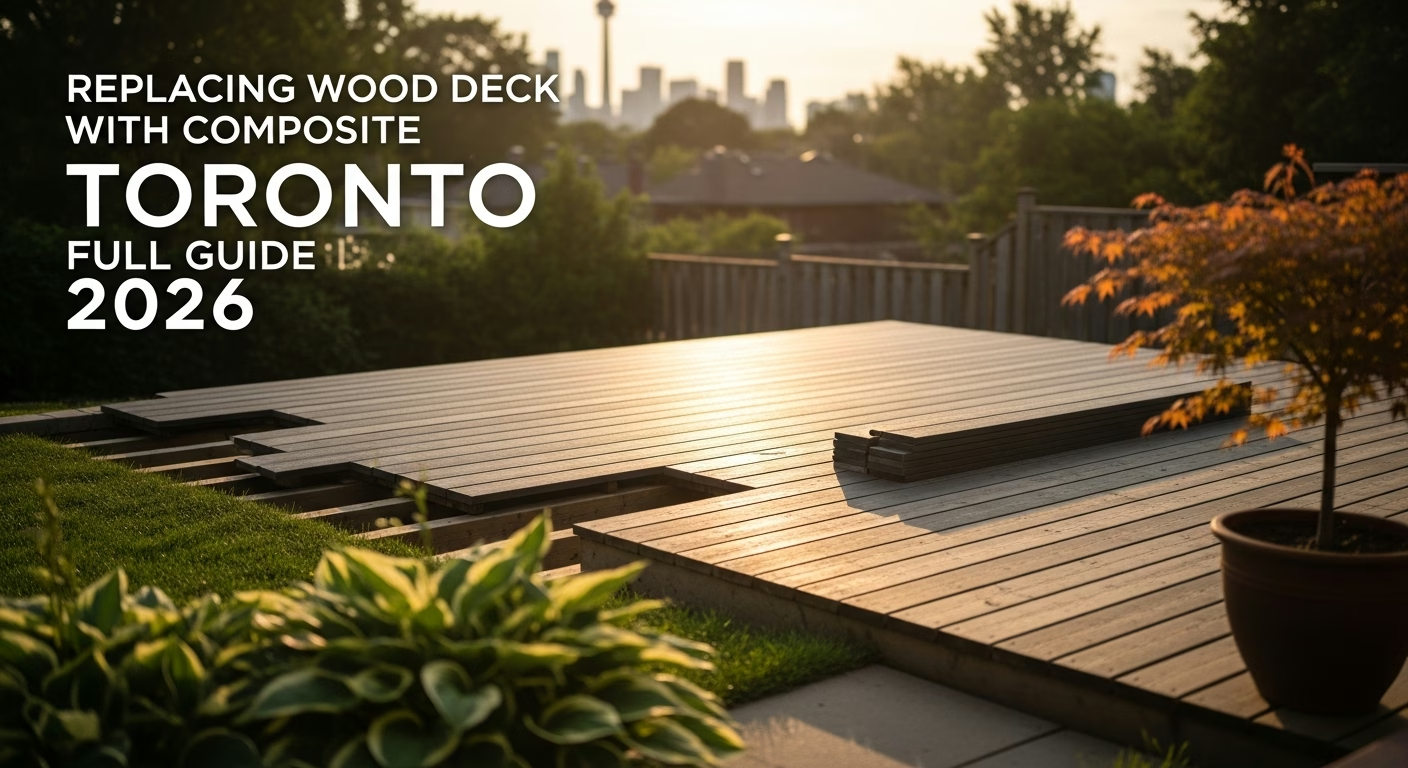

# Replacing Wood Deck with Composite Toronto: Full Guide 2026
Quick answer. Toronto homeowners with pressure-treated cedar decks built between 2008 and 2015 are now staring at end-of-life surfaces — splintered boards, popped fasteners, cupping that traps water, and the resigned ritual of yet another stain weekend.Toronto homeowners with pressure-treated cedar decks built between 2008 and 2015 are now staring at end-of-life surfaces — splintered boards, popped fasteners, cupping that traps water, and the resigned ritual of yet another stain weekend. The next decision is whether to re-stain (delaying the reckoning), build new wood (familiar but committed to another 10-year stain cycle), or upgrade to composite (premium upfront, fewer headaches across the next 25 years).
This is the comprehensive 2026 guide to replacing your existing wood deck with composite, including the critical decision of whether to keep your current substructure or do a full demo. For the broader composite framework, see composite decking Toronto 2026. For the cost-of-ownership math, see composite vs wood deck Toronto comparison.
The Big Decision: Re-Deck or Full Demo
Two paths:
Path A: Re-Deck on Existing Substructure
Replace surface boards only. Keep existing joists, beams, posts, footings.
Path B: Full Demo + New Build
Demolish entire deck, rebuild substructure and surface from scratch.
The financial difference is significant: re-deck on existing structure is typically $10K–$22K for a 300 sq ft deck. Full demo + new build is $22K–$35K. Saving $10K+ is real money.
The constraint: you can only re-deck if the existing substructure is structurally sound and meets composite installation requirements.
Substructure Inspection Checklist
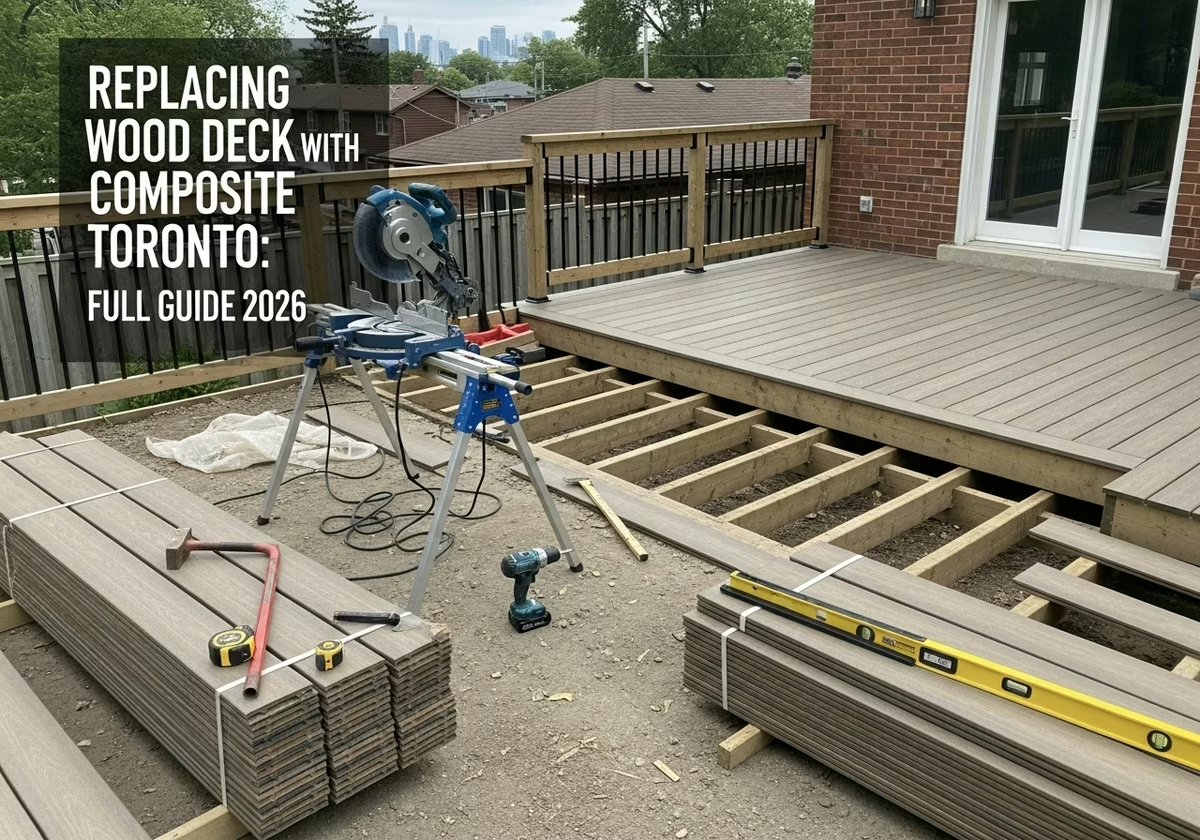
Before deciding, inspect (or have us inspect) every element:
1. Joist Condition
- Probe with awl every 24" along each joist, especially at the rim joist.
- No soft spots or rot.
- No visible decay at joist hangers.
- Joists rated for composite span (typically 16" OC for residential capped composite, sometimes 24" OC for premium PVC with spec-supported boards).
2. Ledger Attachment
- Lag bolts visible and secure (typically 1/2" lag every 16" staggered).
- Flashing in place above ledger (most pre-2010 Toronto decks lack this — major water-entry path).
- No rot at house attachment.
3. Posts and Footings
- Pull a paver near a post base; verify sonotube depth to 1.2m frost line.
- Posts plumb, no significant sag.
- Post bases not corroded through.
4. Beam-Post Connections
- Hangers galvanized G185 minimum (or stainless), no rust through.
- Through-bolts intact.
5. Joist Spacing
- Composite typically requires 16" OC for residential.
- Some premium PVC tolerates 24" OC.
6. Permit and Code Compliance
- Original permit on file (Toronto Building can verify).
- Guard heights and stair compliance current with 2026 code.
Re-Deck Decision Tree
Run through inspection above. Then:
All Pass → Re-Deck on Existing Structure ($10K–$22K)- Substructure remediation: $400–$2,500.
- Joist tape application.
- New composite surface, fasteners, fascia.
- Aluminum picket railing (if upgrading from wood railing).
- Sister or replace 1–3 rotten joists: $400–$1,500.
- Replace ledger flashing: $300–$700.
- Replace corroded post base: $200–$500.
- Then proceed as Path A.
- Old structure not worth saving. Don't put $20K of new composite on a $5K-of-remediation needed structure.
- New substructure + new surface.
When Re-Deck Saves Real Money: Real Toronto Examples
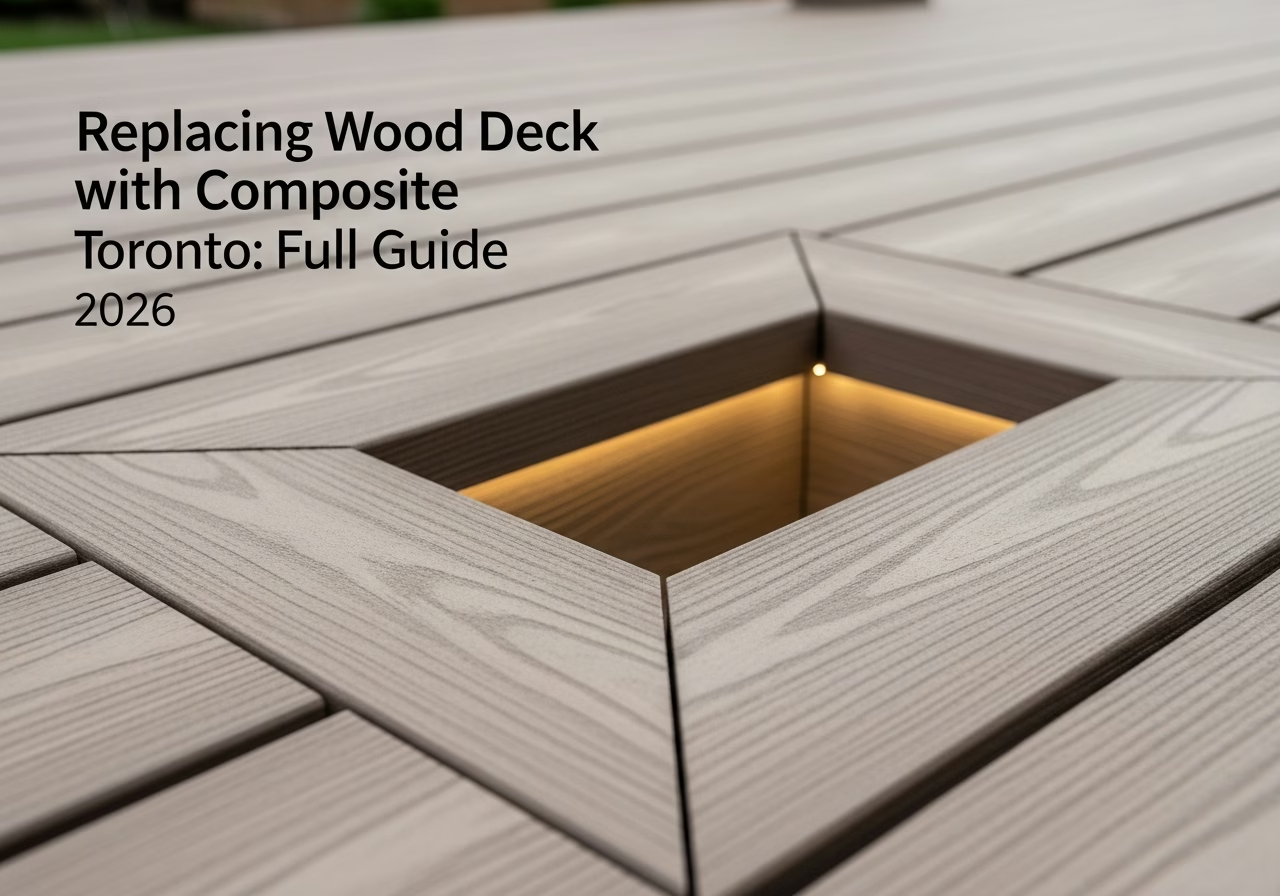
Example 1: Mississauga, 2024 Re-Deck (Trex Enhance Naturals)
- Existing: 350 sq ft 2012 PT cedar deck. Surface failing (cupped boards, split rails, popped fasteners).
- Substructure inspection: all joists sound, ledger flashed, posts and footings to 1.2m, joist spacing 16" OC. Pass.
- Scope: Strip surface boards, apply joist tape, install Trex Enhance Naturals, replace railing with aluminum picket, replace fascia.
- Cost: $19,400 (vs $30K for full demo + new).
- Savings: $10,600.
Example 2: Toronto Riverdale, 2025 Re-Deck (TimberTech AZEK Vintage)
- Existing: 220 sq ft 2014 PT cedar deck. Surface failing.
- Substructure inspection: ledger flashing missing (pre-2010 build). Joists sound. Posts plumb but slightly undersized.
- Scope: Retrofit ledger flashing ($600), reinforce one beam ($350), strip surface, joist tape, install TimberTech AZEK Vintage, new aluminum railing.
- Cost: $17,800 (vs $26K for full demo + new with same materials).
- Savings: $8,200.
Example 3: Markham, 2024 Full Demo
- Existing: 380 sq ft 1998 PT cedar deck. Surface bad. Joists soft at multiple points. Footings unclear depth (probe failed). Ledger had rot.
- Substructure inspection: Multiple fails. Substructure not worth saving.
- Scope: Full demo, helical pile installation, new substructure, Trex Transcend Lineage surface with composite-clad railing.
- Cost: $48,200.
- Re-deck attempt would have been false economy: $4K–$8K of remediation on top of surface install = inflated re-deck cost approaching $25K, with surviving components only marginally extending life.
Re-Deck Step-by-Step Process
If you proceed with Path A (re-deck on existing structure):
Day 1: Site Prep + Demo
- Permit on file (if required for re-deck).
- Photograph existing deck for inspection records.
- Strip surface boards. Stack for disposal in 14-yard bin ($350–$550).
- Inspect every joist as you go. Mark any concerns with chalk.
- Strip railing, fascia, stair treads if replacing.
Day 2: Substructure Remediation
- Sister or replace flagged joists.
- Replace any rusted hardware.
- Retrofit ledger flashing if missing.
- Reinforce undersized beams.
- Photograph substructure post-remediation for permit record.
- Have structural inspection if scope required it.
Day 3: Joist Tape + Layout
- Apply Trex Protect or equivalent butyl flashing tape to every joist top.
- Press with J-roller or hand for full adhesion.
- Plan board layout, picture frame border placement, butt-joint stagger.
Day 4: Picture Frame + First Field Boards
- Install picture frame perimeter board if specified. Mitered corners, glued, face-fastened with plugs.
- Begin field boards from house side. Hidden fastener clips at every joist intersection.
- Maintain 4mm end gaps.
Day 5: Field Boards Completion
- Complete remaining field boards.
- Stair treads (face-fasten with plugs).
- Stair riser face boards.
Day 6: Railing + Fascia
- Set railing posts (surface-mount with through-bolts to joist or load-rated mounting block).
- Install pickets, top rail, bottom rail.
- Install fascia.
Day 7: Lighting + Final
- Install riser, post-cap, or rail lighting (if scope).
- Caulk all transitions with composite-compatible caulk.
- Wash deck.
- Final inspection and brand registration.
Total: 5–7 working days for 300 sq ft re-deck.
Cost Comparison: Re-Deck vs Full Demo (300 sq ft Mid-Tier Composite)
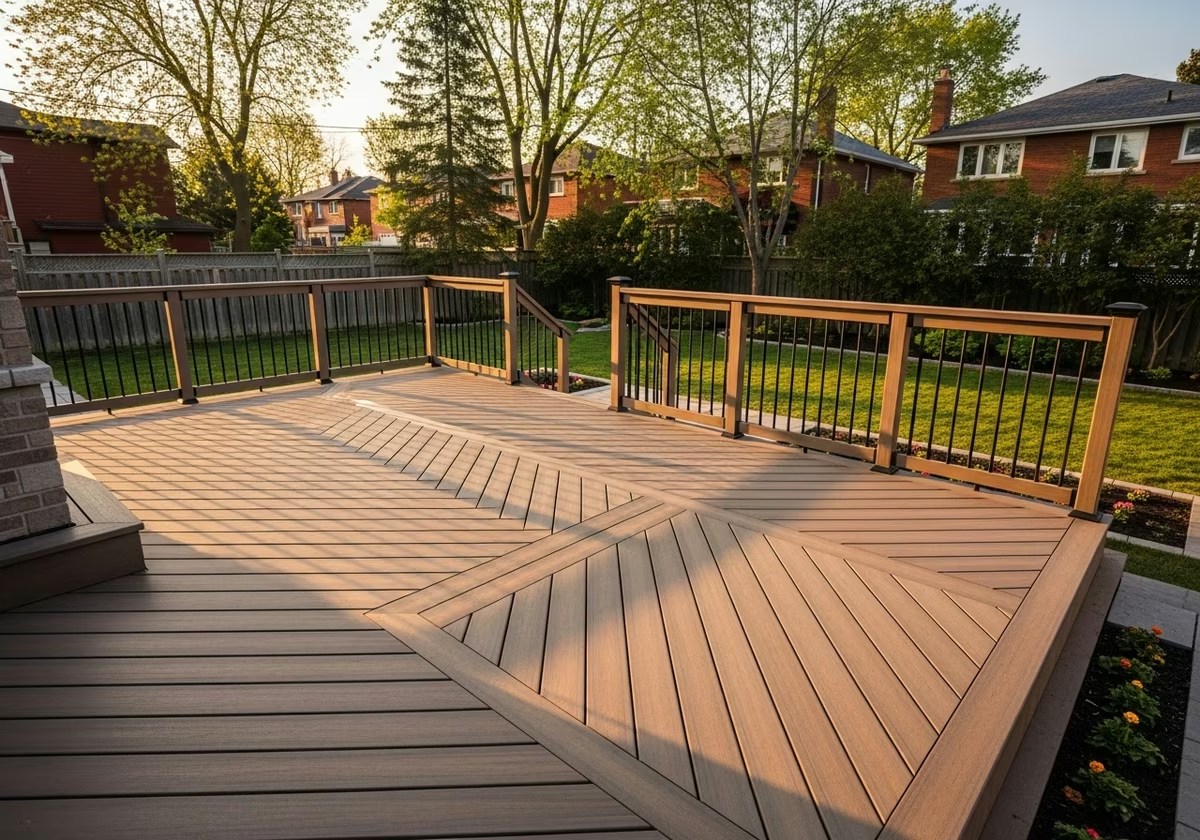
Path A: Re-Deck on Existing Structure
| Component | Cost |
|---|---|
| Permit (if pulled) | $250–$500 |
| Demolition + bin | $1,200–$1,800 |
| Substructure remediation | $400–$2,500 |
| Joist tape | $250–$400 |
| Composite boards (mid-tier capped) | $2,400 |
| Hidden fasteners + screws | $400 |
| Picture frame border | $700 |
| Stairs | $1,800 |
| Fascia | $500 |
| Aluminum picket railing (35 LF) | $4,200 |
| Labor | $5,500 |
| Total Path A | $17,600–$22,300 |
Path B: Full Demo + New Build
| Component | Cost |
|---|---|
| Permit | $400–$700 |
| Demolition + bin | $2,000–$3,500 |
| New substructure (helical piles, beams, joists) | $5,800–$8,000 |
| Joist tape | $250–$400 |
| Composite boards (mid-tier capped) | $2,400 |
| Hidden fasteners + screws | $400 |
| Picture frame border | $700 |
| Stairs | $2,400 |
| Fascia | $700 |
| Aluminum picket railing (35 LF) | $4,200 |
| Labor | $7,500 |
| Total Path B | $26,750–$30,900 |
Substructure Remediation Cost Detail
If you proceed with Path A but need targeted remediation:
| Issue | Remediation | Cost |
|---|---|---|
| 1–2 rotten joists | Sister or replace | $400–$1,000 |
| Rusted joist hangers (5–10) | Replace with stainless or G185 galv | $200–$500 |
| Missing ledger flashing | Retrofit flashing | $400–$700 |
| Beam undersized for span | Sister beam | $500–$1,200 |
| Undersized post (4x4 borderline) | Replace with 6x6 | $300–$700 each |
| Unknown footing depth | Excavate, pour proper sonotube | $700–$1,500 each |
| Stair stringer rot | Replace stringer | $200–$500 each |
If remediation totals exceed $4K–$5K, full demo becomes economically equivalent and structurally cleaner. Don't put $25K of new material on $5K of patches.
Need professional exterior renovation?
Call RenoHouse at 289-212-2345 or get a free estimate today.
Get Free Estimate →Brand Selection for Re-Deck
For the surface composite, see Trex vs TimberTech vs Fiberon vs AZEK. Quick guidance:
- Mid-budget re-deck: Trex Enhance Naturals or Fiberon Sanctuary.
- Premium re-deck: Trex Transcend Lineage or TimberTech AZEK Vintage.
- Pool/lakeshore: AZEK Vintage or TimberTech AZEK PVC.
Re-deck doesn't constrain brand choice. Whatever brand suits your budget and aesthetic works.
Common Re-Deck Mistakes
1. Assuming Substructure is Sound Without Inspection
Don't trust visual inspection alone. Probe with awl. Pull a paver to confirm footing depth.
2. Skipping Joist Tape Because "Joists Look Fine"
Joist tape is mandatory regardless of joist age. Existing joists with screw holes from old deck boards are the most vulnerable to moisture.
3. Reusing Old Joist Hangers
Pull a hanger and inspect. If any rust through, replace all hangers.
4. Reusing Old Railing Posts
PT cedar railing posts are typically end-of-life if surface boards are. Replace with aluminum or new composite-clad posts.
5. Mixing Old Cedar Stair Stringers with New Composite Treads
Composite treads on rotting stringers fail. Replace stringers if even slight softness.
6. Not Pulling Permit for Re-Deck
Some Toronto inspectors don't require it for surface-only replacement. Always confirm with your inspector. Always document scope in writing.
For the full mistakes catalog, see composite decking mistakes Toronto.
Re-Deck Timeline vs New Build
Re-Deck Timeline
- 5–7 working days for 300 sq ft.
- No structural inspection wait (if substructure unmodified).
- Family disrupted for 1 week.
Full Demo + New Build Timeline
- 8–14 working days for 300 sq ft.
- Helical pile install: 1 day, then frame next day.
- Sonotube cure: 4–7 days, then frame.
- Substructure inspection (mid-build).
- Family disrupted for 2–3 weeks.
Re-deck is faster and less disruptive. Practical advantage for working families.
Re-Deck Warranty Considerations
Brand warranties (Trex Pro, TimberTech, Fiberon, AZEK) cover the boards regardless of substructure age. But the warranty registration requires:
- Install date documented.
- Brand-certified installer (for full warranty).
- Compliant joist spacing and span.
- Joist tape applied.
- Stainless fasteners specified.
- Brand-matched hidden clip system.
Substructure failure during the warranty period is NOT covered by the brand. If your re-deck fails in year 8 because of substructure rot you didn't fix, that's on you, not Trex.
For warranty deep-dive, see composite decking warranty comparison 2026.
Re-Deck ROI
Re-deck is the highest-ROI composite project type in Toronto:
- Cost: $17K-$22K for 300 sq ft mid-tier.
- Resale impact: $14K–$18K added value.
- ROI: 75–95%.
Why so high? You're replacing a clearly-failing surface with a 25-50 year warranted feature, without paying for the structural work the original owner already paid for. Maximum value capture.
For full ROI breakdown, see composite deck ROI Toronto home value.
When Re-Deck Doesn't Make Sense
Despite the financial attractiveness, full demo wins in these scenarios:
- 1. Substructure significantly compromised. $5K+ remediation needed.
- 2. Code non-compliance. Original deck has 32" guards or stair-handrail issues. Updating to 2026 code while preserving substructure is awkward and limits design.
- 3. Layout change desired. New deck needs different shape, multi-level, larger footprint. Substructure can't be modified to accommodate.
- 4. Permit issues. Original deck unpermitted; coming clean now (good idea) typically requires inspector evaluation that may demand structural upgrades.
- 5. Adding hot tub or other heavy load. Substructure was designed for a deck-only; needs reinforcement for spa weight.
In any of these scenarios, full demo + new build is cleaner and cheaper long-term than fighting the existing structure.
Decision Framework Summary
- 1. Inspect substructure thoroughly. Awl-probe every joist. Pull a paver to verify footing depth. Photograph everything.
- 2. Cost out remediation. Tally all needed fixes.
- 3. If remediation is < $3K and substructure is fundamentally sound → Re-deck (Path A).
- 4. If remediation is $3K–$5K → Marginal call. Get full-demo quote and compare end-state pricing.
- 5. If remediation > $5K, code issues, layout change desired, or major rot → Full demo (Path B).
The right answer is whichever delivers a structurally sound deck with a 25-50 year surface in your budget. Sometimes that's path A; sometimes B.
For the brand selection that follows the substructure decision, see best composite deck brands 2026 Canada. For the installation procedure regardless of path, see how to install composite decking Toronto.
---
Trying to decide whether to re-deck or full-demo your existing wood deck? RenoHouse offers free Toronto deck assessments — we measure, probe, photograph, and quote both options. You see the trade-offs in writing and pick the path that suits your budget and priorities. Book on our composite decking upgrade service page.
Sources & References
Authoritative sources cited in this guide:
- Toronto Building Permits — Permit info
- Ontario Building Code 9.27 (Cladding) — Exterior cladding standards
- NRC Building Codes — National building codes