RenoHouse

# Signs of Galvanized Pipe Corrosion in Toronto Homes
Quick answer. Galvanized steel water service lines installed in Toronto homes from the early 1900s to the 1960s reach end-of-life through internal corrosion. Unlike a leak that announces itself loudly, galvanized corrosion progresses quietly over decades, narrowing the pipe interior until the pressure and flow effects become impossible to ignore.Galvanized steel water service lines installed in Toronto homes from the early 1900s to the 1960s reach end-of-life through internal corrosion. Unlike a leak that announces itself loudly, galvanized corrosion progresses quietly over decades, narrowing the pipe interior until the pressure and flow effects become impossible to ignore. This article covers the practical signs Toronto homeowners can look for, what they mean, and when replacement becomes the sensible response.
For full project context, see our pillar guide at Lead and Galvanized Water Service Replacement Toronto: The Complete 2026 Guide.
Honest Positioning
RenoHouse coordinates galvanized service line replacement projects with licensed plumbers who hold the Toronto Water permit. The signs in this article are diagnostic indicators, not certainties — a confirmed diagnosis comes from a plumber's site assessment and (where appropriate) tap-water testing.
How Galvanized Fails: The Mechanism
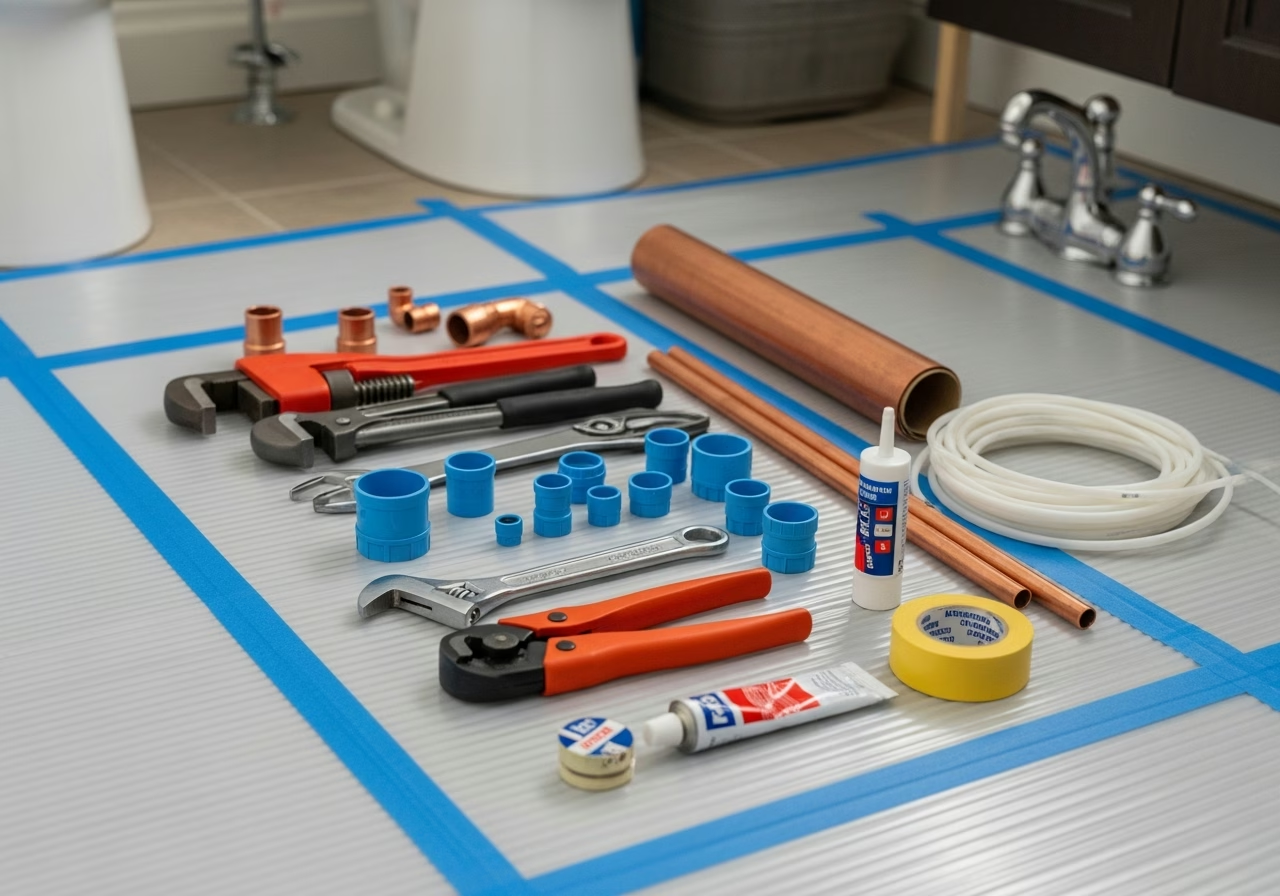
A galvanized steel pipe is steel with a thin zinc coating on the inside and outside. The zinc protects the steel from corrosion. Over time, the interior zinc layer erodes from continuous water contact, and the underlying steel begins to corrode.
The corrosion product — iron oxide and other compounds — accumulates on the pipe's interior wall as a hard, scaly buildup. Over 40 to 80 years, this buildup:
- Progressively narrows the pipe's effective interior diameter.
- Roughens the interior surface, increasing flow friction.
- Periodically dislodges in flakes, releasing rust and sediment downstream.
The end-state is a pipe that may have a 3/4-inch nominal diameter but only 1/4-inch or less of actual flow area, with rough internal walls.
Sign 1: Low Water Pressure
The most common first complaint with failing galvanized is low water pressure, particularly at upper-floor fixtures and during multi-fixture use.
Specific patterns:
- A shower that drops to a trickle when the toilet flushes. The galvanized service cannot supply two fixtures simultaneously without significant pressure drop.
- Slow fill of upstairs tubs. Filling a second-floor tub takes noticeably longer than expected.
- Weak flow at the kitchen sink when the dishwasher or laundry is running on the same line.
- Pressure that has slowly declined over years rather than a sudden drop.
A static pressure check at an outdoor hose bibb can establish whether the issue is the service line or interior plumbing. If the static pressure at the hose bibb is healthy (50 to 70 psi typical) but flow drops dramatically with multiple fixtures running, the bottleneck is the service line.
Sign 2: Brown or Rust-Coloured Water
Galvanized corrosion releases iron oxide and rust into the water stream. Visible discolouration can appear:
- After the line has been stagnant overnight or longer (first-draw water has accumulated released material).
- Following any disturbance to the line — a nearby excavation, a heavy equipment vibration, or a partial repair.
- More noticeably on hot water, because hot water absorbs more dissolved iron.
- In the toilet tank, where stagnant water sits between flushes.
A useful test: fill a clear glass with cold water from the kitchen tap first thing in the morning. If the water has a brown or rust tint, the line is releasing corrosion product.
Brown water is not the same as lead release. Iron oxide is not toxic at the concentrations typical from galvanized corrosion, but it is an indicator that the pipe is significantly degraded.
Sign 3: Sediment in Aerators and Showerheads
When the corrosion product flakes off the interior pipe wall, it travels downstream and lodges in fixture aerators (the small mesh screens at faucet tips), showerhead screens, and supply-line filters at appliances.
Need professional plumbing?
Call RenoHouse at 289-212-2345 or get a free estimate today.
Get Free Estimate →Practical check:
- Unscrew the aerator from the kitchen tap (it usually unscrews counter-clockwise by hand).
- Look at the screen. A small amount of accumulated sediment is normal in any home; a thick deposit of orange or brown granules is a sign of upstream corrosion.
- Repeat at multiple fixtures. If multiple fixtures show heavy sediment, the source is upstream — likely the service line.
Sediment that requires aerator cleaning every few months is a strong indicator of advanced galvanized corrosion.
Sign 4: Slow Fill of Toilets and Appliances
Toilets, washing machines, and bathtubs all rely on flow rate to fill in a reasonable time. Failing galvanized produces:
- Toilet refill that takes 60+ seconds for a standard 1.6-gallon tank (healthy is under 30 seconds).
- Washing machine fill that triggers low-flow alerts on newer machines with electronic flow sensing.
- Bathtub fill that takes 6+ minutes for a standard tub (healthy is 3 to 4 minutes).
A new appliance installation can sometimes reveal long-running flow problems that were tolerated with older equipment.
Sign 5: Visible External Corrosion at the Meter
Look at the visible portion of the service line just before the water meter in the basement.
External corrosion indicators:
- Rust streaks running down the pipe.
- Crusty, flaky deposits on the pipe surface, particularly at fittings.
- Bulged or pitted areas.
- Active dripping or weeping at fittings (advanced failure stage).
External corrosion suggests the pipe is at end-of-life from both directions — interior and exterior. Once active leaking starts at the meter, replacement becomes urgent.
Sign 6: Pressure-Test Results
A licensed plumber can install a pressure gauge at the meter and conduct a flow test:
- Static pressure: water sitting still in the line.
- Dynamic pressure under load: pressure when a known flow rate is drawn.
The difference between static and dynamic pressure indicates the pipe's flow capacity. A large pressure drop under modest flow indicates significant interior restriction.
Toronto's static pressure at the city main is typically 50 to 80 psi. A healthy service line preserves most of that pressure under typical residential flow rates. A failing galvanized line can drop to 20 psi or lower under modest load.
What the Signs Mean Together
Multiple signs reinforce each other:
- Low pressure plus brown water plus aerator sediment: confident diagnosis of advanced galvanized corrosion.
- One sign in isolation: possible galvanized corrosion, possible something else (interior plumbing, pressure-reducing valve issue, fixture problem).
The diagnostic sequence:
- 1. Visual identification at the meter (galvanized vs lead vs copper). See Lead Pipe in Pre-1955 Toronto Homes: How to Identify Your Service Line.
- 2. Static pressure check at outdoor hose bibb.
- 3. Aerator inspection at multiple fixtures.
- 4. First-draw water clarity check.
- 5. Plumber site assessment if multiple signs are positive.
Lead Concern with Galvanized
A specific concern in Toronto homes: galvanized service lines that were once downstream of upstream lead piping. The internal corrosion scale on the galvanized pipe absorbed lead from the upstream source over decades, and that absorbed lead can continue to release into drinking water for years.
If the home was built before 1955 and the service line is galvanized, a tap-water lead test is recommended in addition to the corrosion diagnosis. See Lead in Tap Water Testing Toronto: How and Where.
When to Replace
The decision to replace failing galvanized depends on the severity of the signs and the homeowner's tolerance:
- Mild signs only (occasional sediment, slightly slow fills): replacement is not urgent. Plan for replacement during a future renovation cycle.
- Moderate signs (consistent pressure issues, regular brown water): replacement is warranted within 1 to 2 years.
- Severe signs (pressure under 30 psi, persistent brown water, external leaking at meter): replacement should be scheduled in the current season.
- Active leak: emergency repair or replacement. Toronto Water can issue an emergency service permit for urgent work.
For 2026 cost ranges, see Lead Water Service Replacement Cost Toronto: 2026 Breakdown.
Replacement Method Considerations for Galvanized
Galvanized has specific considerations for method choice:
- Trenchless pipe-bursting: works well on intact galvanized; can be challenging on heavily scaled or partially collapsed galvanized where the bursting head may not produce a clean fracture.
- Open-cut: reliable on any galvanized condition; preferred when the pipe is severely degraded.
The plumber's site assessment determines which method is feasible. See Pipe-Bursting Trenchless vs Open-Cut for Toronto Service Lines.
Bundling Opportunity
When the front yard is open for galvanized replacement, the backwater valve and sump pump bundle is a natural pairing. Both projects share excavation and restoration costs.
Next Steps
If you suspect galvanized corrosion, the practical sequence is:
- 1. Visual identification at the meter.
- 2. Aerator and water-clarity check.
- 3. Plumber site assessment.
- 4. Coordinated replacement quote.
To start the project, visit our service page at /services/plumbing/lead-galvanized-water-service-replacement.
Sources & References
Authoritative sources cited in this guide:
- Toronto Sewer Use Bylaw 681 — Toronto plumbing/sewer regulations
- Ontario Building Code 7 (Plumbing) — OBC plumbing standards
- Health Canada — Drinking Water — Health Canada drinking water guidelines
- CSA B149.1 Natural Gas Code — Canadian gas installation code
Continue Reading