RenoHouse

# Water Service Replacement Permit and Toronto Water Process
Quick answer. Replacing the water service line on a Toronto residential property requires a service connection permit issued by Toronto Water. This article walks through what the permit covers, who holds it, the inspection and pressure-test sequence, and what the homeowner can expect from initial application to final sign-off in 2026.Replacing the water service line on a Toronto residential property requires a service connection permit issued by Toronto Water. This article walks through what the permit covers, who holds it, the inspection and pressure-test sequence, and what the homeowner can expect from initial application to final sign-off in 2026.
For full project context, see our pillar guide at Lead and Galvanized Water Service Replacement Toronto: The Complete 2026 Guide.
Honest Positioning
The water service connection permit is held by the licensed plumber on the project, not the homeowner and not RenoHouse. Toronto Water requires that the permit applicant be a licensed plumber authorized to work on the City water system. RenoHouse coordinates the homeowner side of the project; the licensed plumber holds the permit and signs off on the technical work.
What the Permit Covers
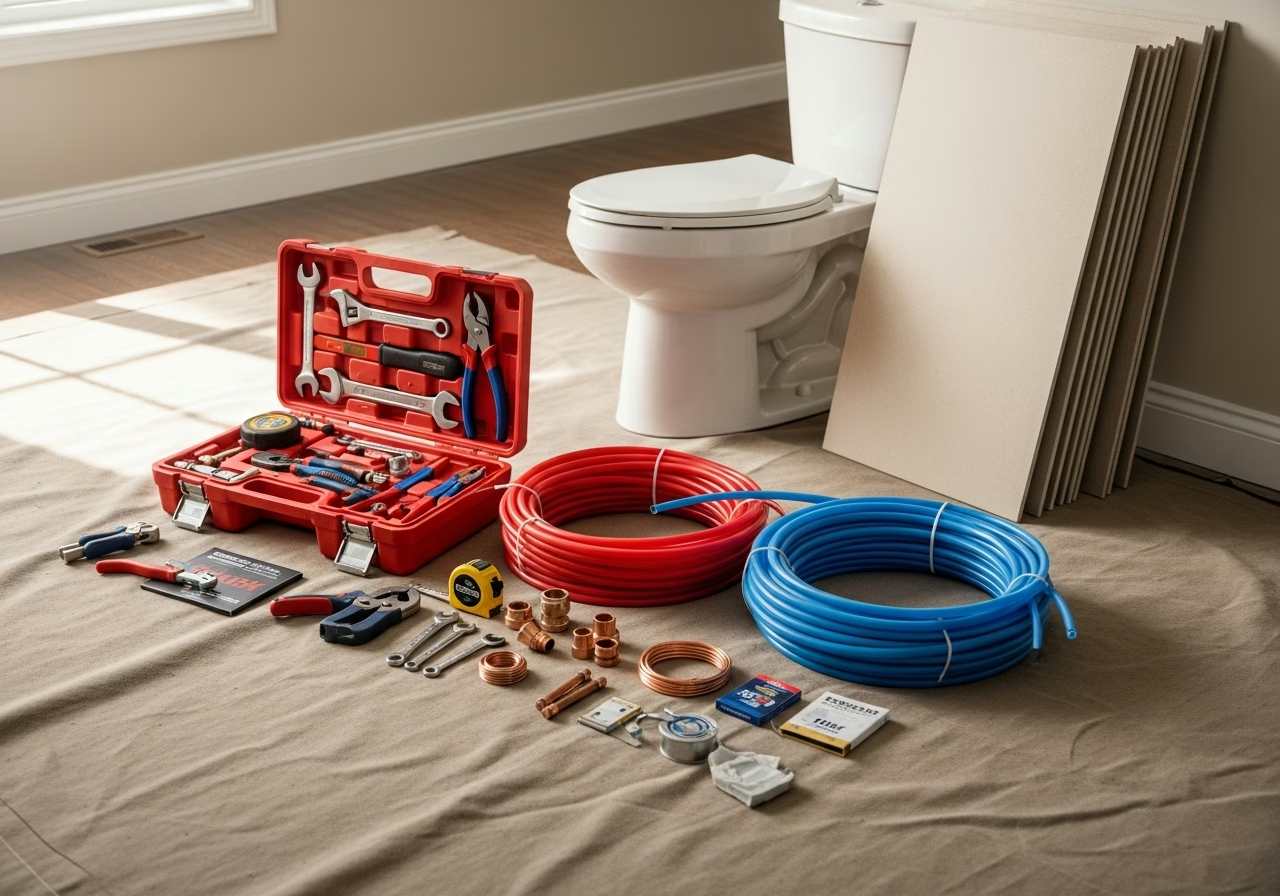
A Toronto Water service connection permit authorizes the licensed plumber to:
- Disconnect the existing service line at the curb stop and at the building entry.
- Install a new service line per City material and sizing specifications.
- Connect the new line to the City main at the curb stop (when the city-side is included).
- Reconnect the new line at the water meter inside the building.
- Submit the new line for City inspection and pressure test.
The permit does not authorize work on the City main itself — only on the service line connection. Work on the main is City crew work.
Permit Application Components
A typical permit application includes:
- Property address and legal description.
- Owner contact information.
- Plumber license number and contact.
- Site sketch showing the proposed pipe route from curb stop to building entry.
- Specification of the new pipe material and size (Type K copper or HDPE; standard residential is 3/4-inch or 1-inch diameter).
- Specification of the replacement method (open-cut or pipe-bursting trenchless).
- Estimated start date.
Permit Fees in 2026
Residential service connection permit fees in 2026 fall in the $300 to $600 range. The exact fee depends on:
- Pipe diameter (larger diameters carry higher fees).
- Whether the city-side replacement is included (the City handles the city-side work directly under the Lead Service Replacement Program when applicable).
- Any expedited processing requested.
The fee is part of the project quote, paid through the licensed plumber as part of the overall plumbing labour and materials.
Lead Service Replacement Program Coordination
When the project involves a confirmed lead service line, the homeowner can apply to coordinate the city-side replacement under the Lead Service Replacement Program. The coordination application is separate from but related to the service connection permit:
- 1. Service connection permit: held by the plumber, covers the owner-side and the connection at the curb stop.
- 2. Lead Service Replacement Program application: held by the homeowner, requests City crew replacement of the city-side at no charge.
Toronto Water schedules the city-side work to align with the plumber's scheduled owner-side work. For the program details, see Toronto Lead Service Replacement Program: How the Free City-Side Replacement Works.
Need professional plumbing?
Call RenoHouse at 289-212-2345 or get a free estimate today.
Get Free Estimate →Locates Required Before Excavation
Before any excavation, the plumber must request locates through Ontario One Call. The locate request triggers field marking by:
- Enbridge Gas: yellow paint or flags marking gas lines.
- Toronto Hydro: red marks for electrical.
- Bell, Rogers, and other telecoms: orange marks for communication lines.
- Toronto Water: blue marks for water main and city-side service line.
Locates are free but require lead time — Ontario One Call legislated turnaround is up to 5 business days. The plumber typically requests locates 1 to 2 weeks before the scheduled excavation date.
The Day of Work: Inspection Sequence
A typical work-day sequence with City inspection:
Morning:- Plumber confirms locates are marked.
- Excavation or pit prep begins.
- Old pipe disconnected at the curb stop and meter.
- New pipe installed (open-cut: laid in trench; trenchless: pulled through bursting path).
- Connection points prepared.
- Plumber calls Toronto Water inspection line to request inspection.
- City inspector arrives (typically within 2 to 4 hours during business hours).
- Inspector visually checks the new pipe, fittings, depth, and bedding before backfill.
- If the inspection passes, the plumber proceeds to pressure test.
- Pressure test conducted at the City-specified pressure (typically 100 to 150 psi) for the duration specified in the permit (typically 15 to 30 minutes).
- Inspector witnesses the pressure test or accepts a recorded test result depending on procedure.
- If pressure test passes, backfill is authorized.
- Backfill begins.
- Surface restoration scheduled for following days.
What Happens If the Inspection Fails
Inspection failure on a residential service line replacement is uncommon when a licensed plumber executes the work, but it can happen. Typical failure causes:
- Insufficient bedding: the pipe is not properly bedded in compacted sand or pea gravel.
- Inadequate depth: the pipe is shallower than the City-specified frost depth (typically 5.5 feet in Toronto).
- Improper fittings: a non-approved fitting or transition.
- Pipe damage: a kink, scratch, or fracture in the new pipe.
When the inspection fails, the plumber corrects the issue and re-requests inspection. The corrective work is the plumber's cost, not the homeowner's, when the failure is due to plumber error.
Pressure Test Details
The pressure test confirms that the new line and its connections hold pressure without leaks. Toronto Water specifies:

- Test pressure: typically 100 to 150 psi (the exact value is in the permit).
- Test duration: typically 15 to 30 minutes.
- Acceptable pressure drop: zero or minimal drop indicating no leaks.
The test is conducted by isolating the new line, charging it with water at the test pressure using a pump, and monitoring pressure on a calibrated gauge. A passing test is documented on the inspection form and the line is approved for service.
Timeline from Application to Completion
For a Lead Service Replacement Program coordinated project, the typical 2026 timeline:
- Weeks 0-1: homeowner consultation, plumber site visit, quote.
- Weeks 1-3: Toronto Water service inquiry response, owner-side quote finalized.
- Weeks 2-4: permit application by plumber, City Lead Service Replacement Program application by homeowner.
- Weeks 4-8: permit approval, City scheduling of city-side work.
- Weeks 1-2 before scheduled date: locates requested.
- Day 0: scheduled work day. Excavation, pipe install, City inspection, pressure test.
- Days 1-3: backfill and surface restoration.
- Weeks 1-4 after completion: City restoration of boulevard and road.
Total: 8 to 12 weeks from initial inquiry to project completion. Faster timelines are possible during lower-volume months or for stand-alone owner-side projects without City coordination.
What the Homeowner Provides
The homeowner's contribution to the permit process:
- Property authorization: signed authorization for the plumber to apply for the permit on the homeowner's behalf.
- Site access: availability for locates, excavation, and inspection.
- Coordination with City application (Lead Service Replacement Program): the homeowner submits the program application; the plumber provides supporting documentation.
- Payment of permit fees: typically rolled into the plumber's invoice.
After the Final Inspection
Once the new line passes inspection and pressure test, and backfill is complete:
- Documentation: the plumber provides the homeowner with a copy of the inspection sign-off, the pressure test result, and the as-built sketch.
- Water meter re-set: the existing or new water meter is set to record the new line.
- Flush: the building's interior plumbing is flushed for several minutes per fixture to clear any sediment from the construction work.
The final documentation is important for resale — future home inspections and buyer's lawyers will look for the inspection record.
Common Permit Mistakes
After coordinating these projects, the recurring permit-process mistakes:
- Working without a permit: an unlicensed installer or an unpermitted job creates title issues for the property and can result in stop-work orders and re-do requirements.
- Skipping locates: hitting a gas line during excavation is a serious safety event and a regulatory violation.
- Backfilling before inspection: the inspection must occur before the trench or pit is closed. Closing it before inspection results in re-opening the trench.
- Skipping the pressure test: the pressure test is not optional.
For the full list of mistakes to avoid, see Water Service Replacement Mistakes Toronto Homeowners Make.
Bundling with Other Permits
When the front yard is open for the service line replacement, related work that can be done under the same permit window:
- Backwater valve and sump pump bundle: requires a separate plumbing permit but can be scheduled in the same site visit.
- New pressure-reducing valve at building entry: typically covered under the same plumbing permit umbrella.
Bundling reduces total permit fees and concentrates the disturbance into one window.
Next Steps
For a coordinated quote that includes the permit and inspection process, visit our service page at /services/plumbing/lead-galvanized-water-service-replacement.
Sources & References
Authoritative sources cited in this guide:
- Toronto Sewer Use Bylaw 681 — Toronto plumbing/sewer regulations
- Ontario Building Code 7 (Plumbing) — OBC plumbing standards
- Health Canada — Drinking Water — Health Canada drinking water guidelines
- CSA B149.1 Natural Gas Code — Canadian gas installation code
Continue Reading