RenoHouse

# Whole-Home Water Filter After Lead Replacement
Quick answer. After a lead water service line is replaced, interior plumbing can still contain residual lead sources — brass fixtures, lead-tin solder used in copper joints (legal until 1986), and any galvanized portions that absorbed lead during the line's previous life.After a lead water service line is replaced, interior plumbing can still contain residual lead sources — brass fixtures, lead-tin solder used in copper joints (legal until 1986), and any galvanized portions that absorbed lead during the line's previous life. This article covers the practical filtration options for Toronto homeowners post-replacement, what each addresses, and when each is appropriate.
For full project context, see our pillar guide at Lead and Galvanized Water Service Replacement Toronto: The Complete 2026 Guide.
Honest Positioning
RenoHouse coordinates lead service replacement projects with licensed plumbers. Filtration installation is generally a separate scope but can be coordinated with the replacement project. Filter products vary; the certification standard to look for is NSF/ANSI 53 for lead reduction. Marketing claims without NSF/ANSI 53 certification should be treated skeptically.
Why Filtration After Replacement?
The service line replacement removes the largest lead source in a pre-1955 home, but several other potential sources remain:
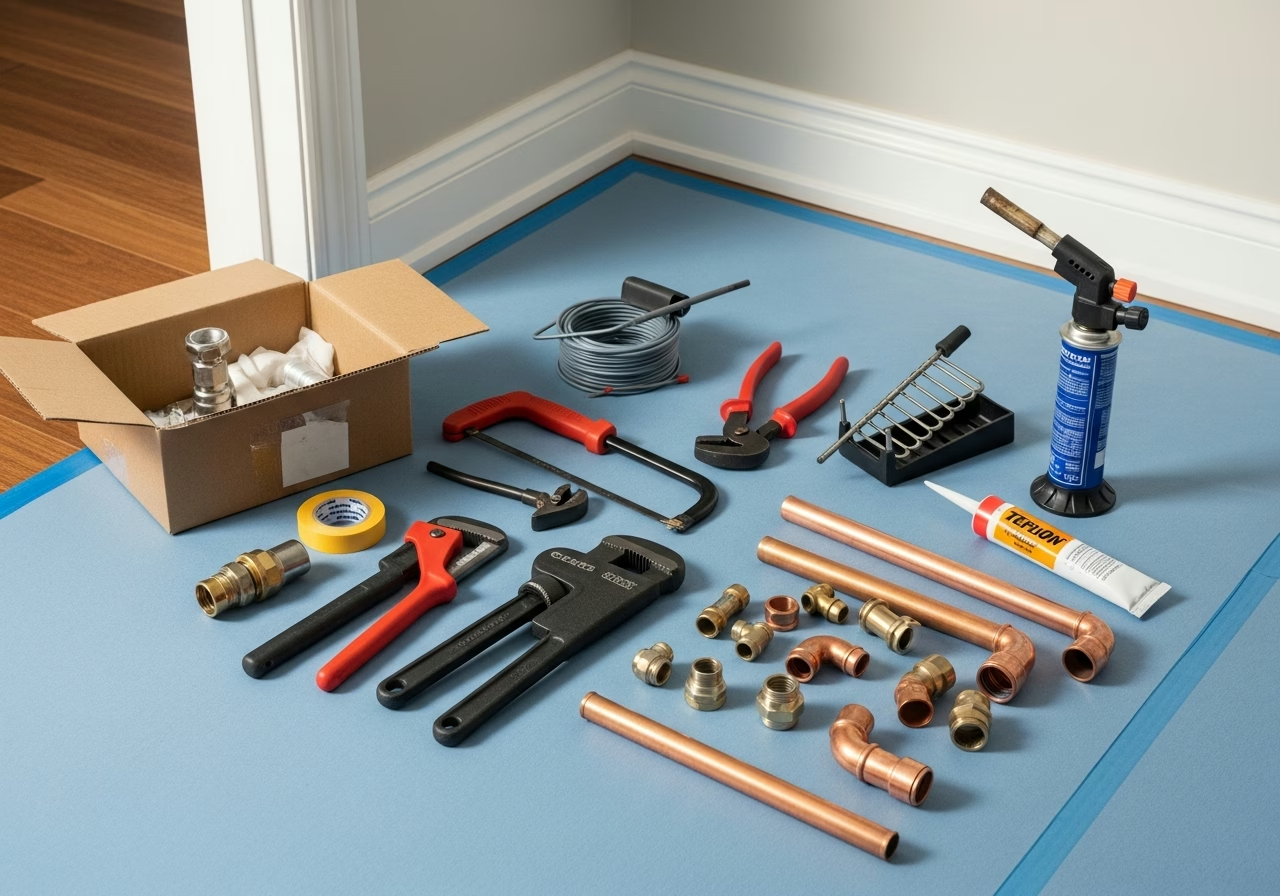
- Lead-tin solder: standard for joining copper plumbing until 1986. Many Toronto homes have copper plumbing with original lead-tin solder at joints.
- Brass fixtures: faucets, valves, and fittings made of brass alloys can contain lead. The federal Reduction of Lead in Drinking Water regulations limit lead content in fixtures sold today, but legacy fixtures can be a source.
- Galvanized stubs: short sections of galvanized pipe that may remain in the interior plumbing.
- Recently disturbed scale: even after a clean full-line replacement, brief disturbance to interior plumbing can release small amounts of accumulated lead from any of the above sources.
A post-replacement tap-water test confirms whether residual sources are contributing measurably. See Lead in Tap Water Testing Toronto: How and Where.
NSF/ANSI 53: The Lead Certification Standard
The NSF/ANSI 53 standard tests filter products specifically for lead reduction. A filter that is NSF/ANSI 53 certified for lead has been independently tested and verified to reduce lead concentrations below the standard's threshold.
When choosing a filter:
- Look for "NSF/ANSI 53 certified for lead reduction" on the packaging or product specification sheet.
- Look for the actual NSF certification mark.
- Be skeptical of claims like "filters lead" without specific certification — the language is unregulated and can mean anything.
NSF/ANSI 53 is the relevant standard for lead. Other NSF standards address other contaminants:
- NSF/ANSI 42 covers chlorine and aesthetic effects.
- NSF/ANSI 58 covers reverse osmosis systems.
- NSF/ANSI 401 covers emerging contaminants.
A multi-standard certification (e.g., NSF/ANSI 42 + 53 + 401) covers a broader contaminant range.
Option 1: Pitcher Filters
A countertop pitcher with a replaceable filter cartridge is the lowest-cost lead filtration option. Several major manufacturers offer NSF/ANSI 53 certified pitcher filters specifically for lead reduction.
Cost: $30 to $80 for the pitcher; $20 to $40 per replacement cartridge; cartridge life typically 2 to 4 months for a typical household.
Pros:
- Low cost.
- No installation.
- Portable.
Cons:
- Manual fill cycle.
- Limited capacity (typical pitcher is 8 to 12 cups).
- Only filters water that goes through the pitcher; tap water at fixtures is unfiltered.
Best for: drinking water and infant formula preparation in a household with low to moderate post-replacement lead concentrations.
Option 2: Faucet-Mount Filters
A small filter unit attaches directly to the kitchen faucet, with a switch to direct water through the filter or through the unfiltered tap. NSF/ANSI 53 certified faucet-mount filters are available from major manufacturers.
Need professional plumbing?
Call RenoHouse at 289-212-2345 or get a free estimate today.
Get Free Estimate →Cost: $30 to $80 for the unit; $20 to $40 per replacement cartridge; cartridge life typically 2 to 4 months.
Pros:
- Low cost.
- Simple install (screws onto faucet aerator threading).
- Filters at the point of use.
- Switchable for filtered drinking water vs unfiltered for dishes.
Cons:
- Only one fixture filtered (typically kitchen).
- Cartridge replacement schedule can lapse.
Best for: drinking water at the kitchen tap, similar use case to a pitcher filter but with continuous-flow convenience.
Option 3: Under-Sink Filtration Systems
A larger filter system installs under the kitchen sink, with a dedicated filtered-water tap on the countertop or island. Two main types:
Carbon block filtration (NSF/ANSI 53 certified versions): cartridge-based system, similar filtration to faucet-mount but higher capacity and slightly better contaminant removal. Reverse osmosis (RO) (NSF/ANSI 58 certified, often also NSF/ANSI 53): membrane-based system that produces very pure water by forcing water through a fine membrane. Typically includes pre-filter, RO membrane, post-filter, and storage tank.Cost ranges:
- Under-sink carbon block: $200 to $500 installed; $50 to $150 per cartridge replacement annually.
- Under-sink RO: $400 to $1,500 installed; $100 to $300 per replacement cycle (membrane every 2 to 5 years, pre/post filters annually).
Pros:
- Higher capacity, slower cartridge replacement cycle.
- Dedicated filtered tap is convenient.
- RO produces very pure water (not just lead-reduced).
Cons:
- Installation cost.
- Under-sink space requirement.
- RO produces wastewater (1.5 to 4 gallons of waste per gallon of filtered water depending on system).
- RO removes minerals; some homeowners add a remineralization stage.
Best for: households with consistent post-replacement lead concerns or general drinking-water-quality preferences.
Option 4: Whole-Home Filtration
A whole-home system installs at the water meter and filters all incoming water before it enters the building's interior plumbing. Several configurations:
Whole-home carbon filtration: large carbon-block or granular activated carbon (GAC) tank with a 5- to 10-micron pre-filter. NSF/ANSI 53 certified systems are available, but most whole-home systems are aimed at sediment, chlorine, and aesthetic effects rather than lead specifically. Whole-home with downstream point-of-use: a sediment + carbon whole-home system at the meter, plus an NSF/ANSI 53 under-sink filter at the kitchen for lead-specific filtration.Cost: $1,500 to $4,000+ for whole-home installation; $200 to $500 annual filter replacement.
Pros:
- All taps in the house deliver filtered water (sediment, chlorine, aesthetics).
- Bath and shower water is filtered (relevant for chlorine, less for lead).
- Single system maintenance schedule.
Cons:
- Higher upfront cost.
- Most whole-home systems do not specifically certify for lead reduction at the whole-home level — point-of-use is still recommended for lead.
- Filter replacement labour for the larger filter cartridges.
Best for: households that want comprehensive water-quality improvement beyond just lead, or households with multiple drinking-water fixtures across the house.
What the Filtration Needs to Do
The level of filtration needed depends on:
- Post-replacement tap-water test results: if both first-draw and flushed are below 0.005 mg/L (the Health Canada guideline), filtration is optional. If first-draw is above 0.005 mg/L, lead-certified filtration is warranted at drinking-water taps.
- Household sensitivity: families with infants, young children, or pregnant individuals may want filtration even at concentrations below the guideline.
- Other water-quality concerns: chlorine taste, sediment, hardness — these drive non-lead filtration choices.
Decision Framework
A simple framework for the post-replacement filtration decision:
- 1. Tap-water test post-replacement.
- 2. If below 0.005 mg/L on both first-draw and flushed: no lead-specific filtration required; consider taste/aesthetic filtration if desired.
- 3. If first-draw above 0.005 mg/L: NSF/ANSI 53 certified filtration at drinking-water taps. Pitcher, faucet-mount, or under-sink based on household preference and budget.
- 4. If both first-draw and flushed above 0.005 mg/L: investigate the source (likely interior fixtures or an upstream issue) before filtration choice. Toronto Water can advise.
Maintenance Discipline
The single most common filtration failure: not replacing cartridges on schedule. A filter past its rated capacity does not warn the user — it just stops filtering effectively.
Practical maintenance:
- Calendar reminder for cartridge replacement based on the manufacturer's schedule.
- Bulk-purchase cartridges to reduce friction.
- Flush new cartridges per the manufacturer's instructions before drinking the first water through them.
Cost Comparison: 5-Year Total
Approximate 5-year total cost (purchase + replacements) for a typical household:
- Pitcher filter: $200 to $400.
- Faucet-mount filter: $200 to $400.
- Under-sink carbon block: $400 to $1,250.
- Under-sink RO: $700 to $2,500.
- Whole-home + point-of-use: $2,000 to $5,000.
The decision is not just upfront cost — ongoing replacement discipline matters as much as the initial purchase.
Bundling with Service Line Replacement
When the service line replacement is being planned, point-of-use or whole-home filtration can be quoted as part of the same project. The advantages:
- Single contractor coordination.
- Filtration installed before the building is brought back into use.
- Test results pre- and post-replacement validate filter selection.
For coordinated quotes, see our service page at /services/plumbing/lead-galvanized-water-service-replacement.
Next Steps
After service line replacement, the practical sequence:
- 1. Tap-water test 2 to 4 weeks post-replacement.
- 2. Filter selection based on results.
- 3. Install and follow maintenance schedule.
The combination of replacement plus appropriate filtration brings post-replacement lead exposure to very low levels in the typical Toronto pre-1955 home.
Sources & References
Authoritative sources cited in this guide:
- Toronto Sewer Use Bylaw 681 — Toronto plumbing/sewer regulations
- Ontario Building Code 7 (Plumbing) — OBC plumbing standards
- Health Canada — Drinking Water — Health Canada drinking water guidelines
- CSA B149.1 Natural Gas Code — Canadian gas installation code
Continue Reading