 RenoHouse
Load-Bearing Wall Removal — Toronto GTA Open-Concept Renovation
Professional load-bearing wall removal services in Toronto and the Greater Toronto Area. Licensed, insured, and trusted by homeowners across the GTA.
Projects Completed
Years Experience
Client Satisfaction
Google Rating
How It Works
A simple, stress-free process from start to finish.
Send Your Request
Call or WhatsApp us 24/7. Send photos, video, comments about what needs to be done, and your location.
Remote Estimate
We review everything, discuss details, and provide a clear estimate — often within hours, no visit needed.
Repair Process
Our licensed team arrives on the agreed date and completes your load-bearing wall removal to the highest standards.
Handover & Warranty
Final walkthrough with you, full cleanup, and warranty documentation provided.
Send Your Request
Call or WhatsApp us 24/7. Send photos, video, and a description of the work + your location.
Remote Estimate
We review everything, clarify details, and give you a price — often within hours.
Repair Process
Licensed team arrives on schedule and completes your load-bearing wall removal professionally.
Handover & Warranty
Final walkthrough, full cleanup, and warranty documentation.
Load-Bearing Wall Removal in Toronto GTA
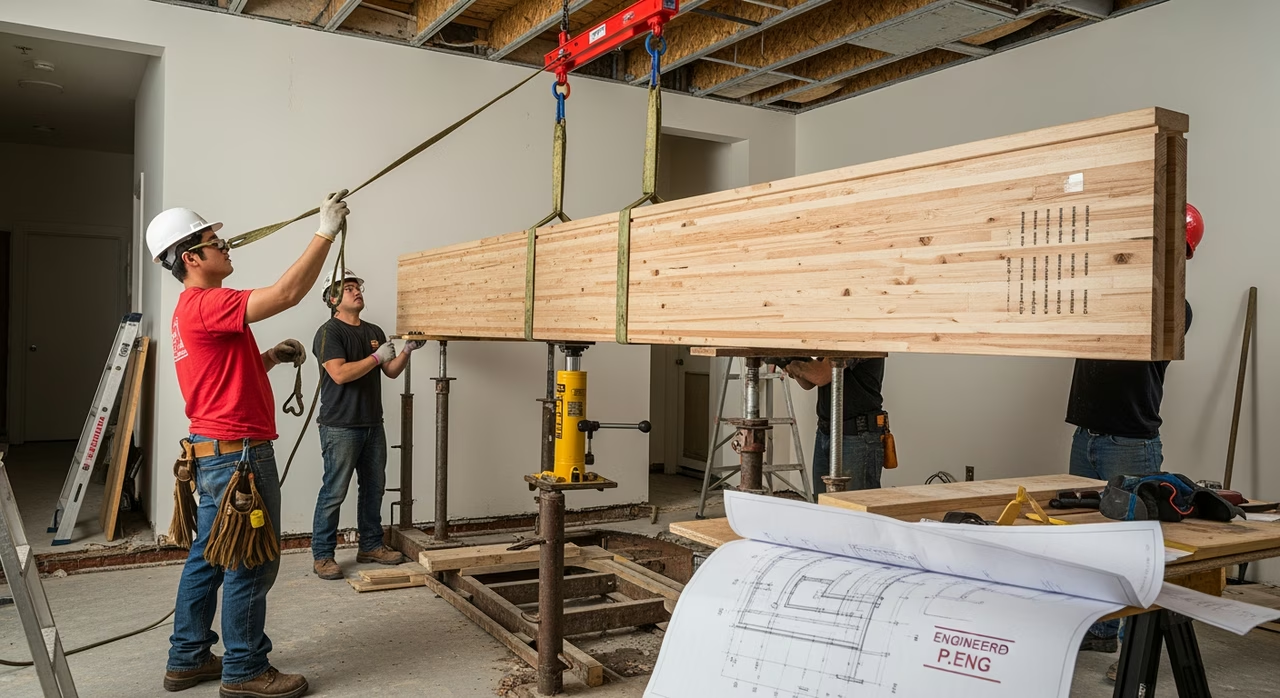
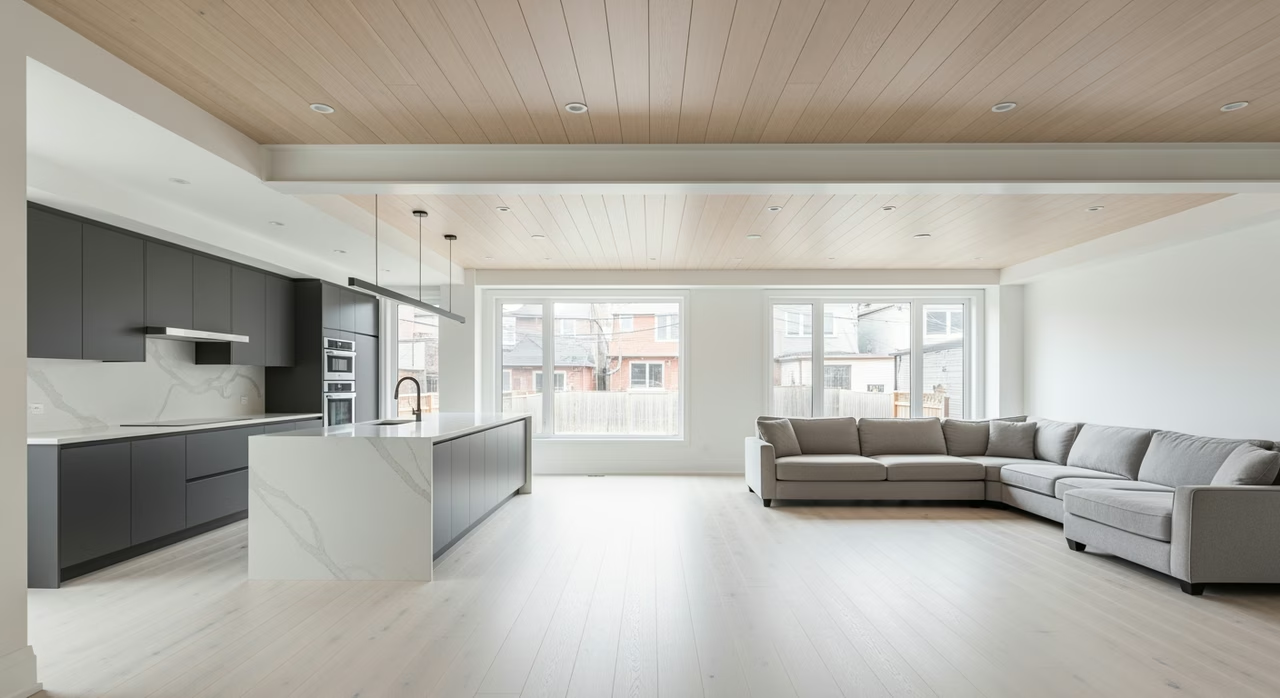
RenoHouse delivers load-bearing wall removal for Toronto and GTA homeowners opening up cramped semi-detached and detached homes into modern open-concept layouts. Our scope is general-contractor-led project management: structural engineer (PEng) coordination for the beam design, building permit application, temporary support shoring during demolition, beam installation (LVL, microllam, steel I-beam, or glulam per engineer's drawing), drywall and ceiling repair, electrical and HVAC reroute where needed, and full finish to restore a seamless ceiling and wall plane. Load-bearing wall removal is the single most common open-concept renovation request in Toronto — typical between kitchen and dining room, between living and dining, or between a family-room addition and the original main floor.
How to identify a load-bearing wall
Three primary signals: (1) Joist direction — joists span perpendicular to load-bearing walls; if you can see the joists in the basement ceiling and they run perpendicular to the wall above, that wall is supporting them. (2) Wall stack — load-bearing walls typically stack vertically through the home (basement post, main-floor wall, second-floor wall, roof load above). (3) Plumbing and HVAC patterns — exterior walls and central interior walls (often the wall between kitchen and dining room) are the common load-bearing locations. A PEng structural engineer is required to confirm load-bearing status before any cuts; visual identification is a starting point, not a final answer.
Beam selection — what each option does
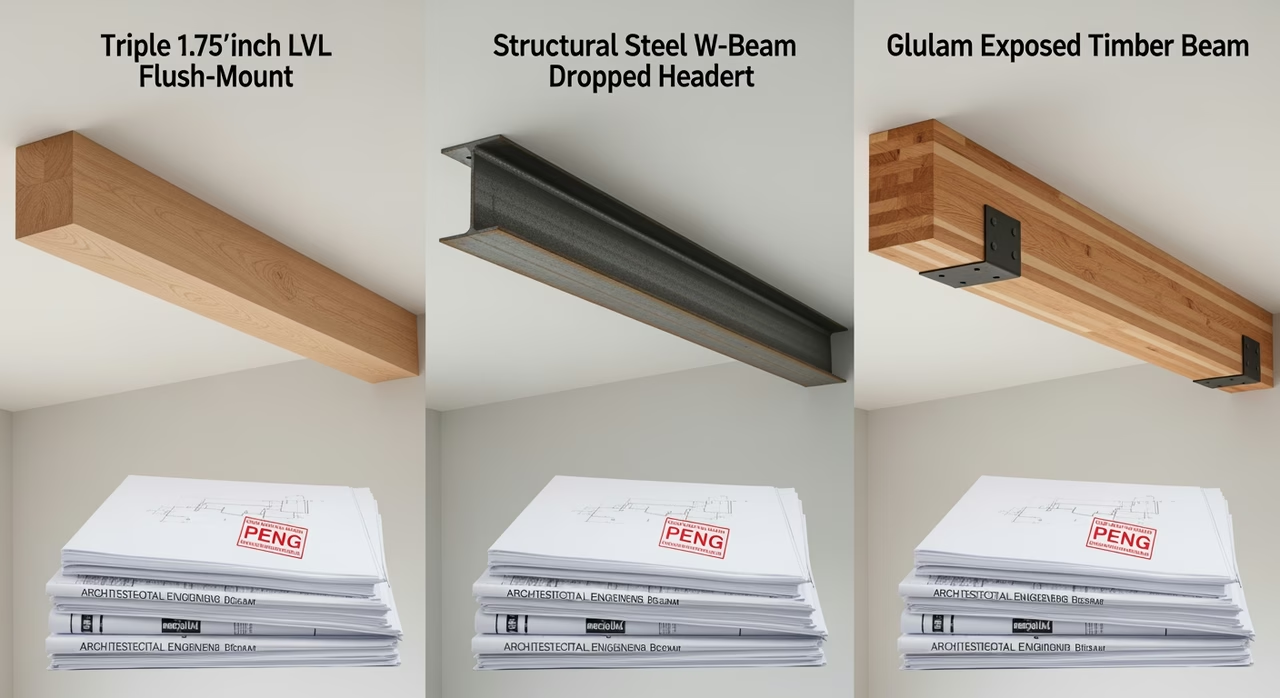
LVL (Laminated Veneer Lumber) — the workhorse of residential beam design. 2-ply or 3-ply 1.75" x 9.5", 11.875", or 14" depth. Spans 8–18 feet typical. Cost: $400–$1,200 in beam material. Pro: fits within standard ceiling cavity, no profile drop, moderate cost. Con: limited to medium spans. Microllam (LVL micro-laminated) — narrow-profile premium variant of LVL. Span similar to LVL but cleaner appearance for visible-beam applications. Steel I-beam (W-section, e.g., W8x21, W10x33) — required for longer spans (typically over 18 feet) or for heavy loads (multiple stories above, point loads from posts). Cost: $1,500–$4,500 in steel material plus engineer-specified bearing plates. Pro: handles any residential span, narrow profile possible. Con: requires welding for connections, fireproofing if exposed below code-required rating, heavier installation. Glulam — premium engineered laminated wood, used for visible-beam applications where aesthetics matter. Parallam — premium parallel-strand lumber, similar to glulam in performance and aesthetics.
Construction process
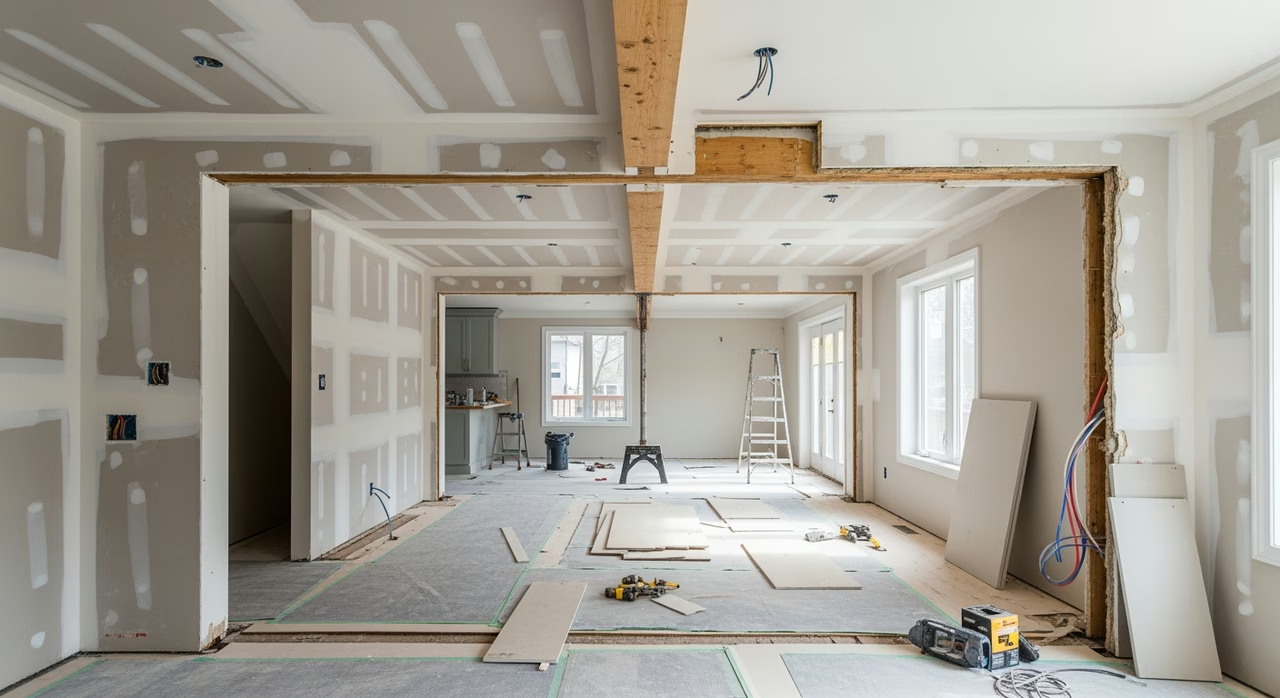
Step 1: PEng structural assessment — engineer confirms wall is load-bearing, calculates the new beam size, designs the bearing posts and connection details, stamps the permit drawings. Step 2: Building permit — RenoHouse pulls the permit; permit review 4–8 weeks. Step 3: Temporary support shoring — telescoping steel posts and glulam waler installed perpendicular to the wall on both sides, creating a redundant load path during the demolition. Step 4: Selective demolition — wall framing removed, electrical and plumbing in the wall identified for reroute. Step 5: Beam installation — beam lifted into position, fastened to bearing points per engineer's drawing, connection bolts and bearing plates installed. Most LVL installs complete in 1 day; steel I-beam 1–2 days. Step 6: Electrical reroute — outlets and switches that were in the wall relocated; 120V circuits routed around the now-open span. Step 7: HVAC reroute if needed — supply or return ducts that ran through the wall rerouted. Step 8: Ceiling and drywall repair — beam wrapped in drywall (or left exposed for industrial aesthetic), ceiling drywall patched and skim-coated, walls finished and painted. Step 9: Final inspection.
Project value
Typical kitchen-to-dining wall removal in semi-detached, 12-foot LVL beam, drywall repair both rooms, electrical relocation: $4,000–$7,500. Larger 18-foot opening with double LVL or steel beam, more rooms affected, HVAC reroute: $7,500–$12,000. Full open-concept main-floor renovation (multiple walls removed, beam network, full ceiling repair, electrical and plumbing relocations, finish work): $12,000–$25,000+ for the structural and beam work alone, often coordinated with kitchen renovation ($25,000–$80,000 combined) for one-project economics. Engineering fees: $1,200–$2,500 typical Toronto PEng (Glogowski, Cunningham, BGE) included in project price. Permit fees: $400–$1,200 included.
Honest scope and coordination
RenoHouse holds a renovation general-contractor license and coordinates the regulated trades. Required licensed parties: (1) PEng structural engineer (we coordinate Glogowski, Cunningham, BGE) — designs the beam, sizes the bearing posts, stamps the permit drawings, attends the framing inspection. We do NOT design the beam or stamp the drawings — that is the engineer's role. (2) Master Electrician (ECRA/ESA-licensed partner) — for outlet and switch relocations, lighting circuit reroute, ESA permit closure. (3) Master Plumber if plumbing in the wall must be rerouted. (4) HVAC tradesperson for ductwork reroute. RenoHouse self-performs the framing, beam installation (under engineer's drawing), drywall, paint, and finish work. We sign the construction contract, pull the building permit, manage the schedule, and deliver a single point of contact.
Why most loads work with LVL — when steel is needed
Most Toronto residential spans (10–18 feet, single-storey-above load) can be handled with double or triple LVL (cost $400–$1,200 in beam material, fits within standard ceiling cavity). Steel becomes mandatory when (a) span exceeds 18 feet, (b) point loads from above (e.g., a 2nd-storey post-and-beam roof landing on the new beam mid-span), (c) heavy loads from multiple stories above, or (d) the architect/owner wants a truly slim profile (a W8 steel beam is half the depth of an equivalent LVL). Steel is more expensive in material and welding cost, plus it requires fireproofing (intumescent paint or drywall encasement) if exposed below the code-required fire rating. For 80% of Toronto open-concept projects, double or triple LVL is the right answer.
Pairing with kitchen renovation
Load-bearing wall removal is most often combined with a kitchen renovation — and this combination is dramatically cheaper than the two projects done separately. Reasons: (1) Drywall, paint, and finish work are already in scope for the kitchen reno — beam wrap and ceiling patching add minimal incremental cost. (2) Electrical and plumbing relocations are coordinated with the kitchen rough-in. (3) HVAC reroute is one trade visit instead of two. (4) Permit and inspection visits are bundled. Combined kitchen + open-concept project: $35,000–$80,000 typical, vs. $50,000–$110,000 if done separately 12 months apart.
Toronto-specific considerations
Narrow Toronto semi-detached homes (16–20 ft wide) crave open-concept conversion — opening between kitchen and dining transforms a cramped feel into a spacious main floor. Heritage Conservation District homes (Cabbagetown, Wychwood, Beach Heights) have additional constraints — interior structural changes typically allowed but must respect HCD review for any work that affects the interior architectural character. Older 1900s–1950s homes often have dropped headers (load supported on header beam at ceiling level rather than fully concealed); these can sometimes be removed entirely for a fully flush ceiling. Pre-1980 plaster ceilings may contain asbestos in textured plaster — we coordinate with HCRA-licensed asbestos abatement when sampling indicates.
Serving Toronto, Mississauga, Brampton, Vaughan, Markham, Richmond Hill, Oakville, Burlington, Etobicoke, Scarborough, North York, and all GTA communities. Call 289-212-2345 for a free open-concept consultation.

Service detail and neighbourhood context for Toronto and the GTA.
Toronto/GTA neighborhood considerations
- Forest Hill / Rosedale / Lawrence Park (heritage 1920s+): Heritage 1920s — masonry-bearing OR balloon-framed bearing walls. PEng structural engineer (OSPE-registered) mandatory $1,800-$4,800 design + sealed drawings. Steel-flitch / LVL header sized to span. Heritage Permit Bylaw 813 if visible-from-street structure. Toronto Building Permit + inspection. $14K-$48K total scope.
- North York / Scarborough / Etobicoke (post-war 1950s-70s): Post-war 50s-70s — balloon-framed or platform-framed. PEng + permit standard. LVL or steel-beam header. $9K-$24K.
- Mississauga / Brampton / Vaughan (1990s+ subdivisions): 1990s+ — platform-framed typical. PEng + permit. LVL header. $8K-$18K.
- Caledon / King City / Aurora (rural / well water / large lot): Rural estate — post-and-beam or platform-framed. PEng + permit. Steel-beam or glulam. $14K-$48K.
- Downtown condos (King West / Liberty Village / Yorkville): Condo — load-bearing-walls are concrete shear-walls or columns. Form 1 condo-board + Reserve-fund-study impact + property-management PEng approval mandatory. Very limited scope.
OBC 4.1 structural-engineer stamp. PEng sealed drawings + Building Permit + framing-inspection + final-inspection. Steel-beam / LVL / glulam per CSA O86 wood + CSA S16 steel.
The RenoHouse Difference
11+ Years Experience
Over a decade of expertise in load-bearing wall removal. We've seen it all and know how to handle any challenge.
Warranty Protected
All work comes with comprehensive warranty coverage. We stand behind our craftsmanship and use quality materials that last.
Competitive Rates
Fair pricing on load-bearing wall removal without compromising quality. We match or beat competitor quotes.
Sound Familiar?
These are the most common problems our clients face.
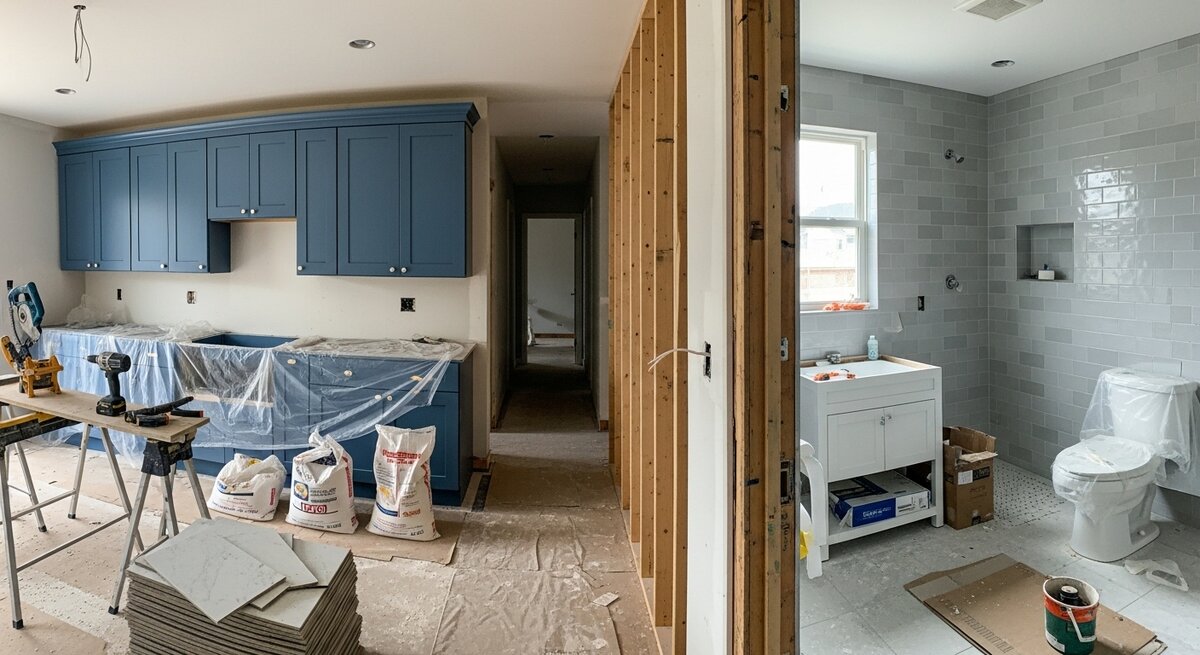
Cramped semi-detached and dreaming of an open-concept kitchen-to-dining layout?
Confused about LVL beam vs steel I-beam vs glulam for your span?
Need a PEng structural engineer (Glogowski, Cunningham, BGE) to stamp the permit drawings?
Worried about a dropped beam ruining the flush-ceiling look?
Want to bundle wall removal with a kitchen renovation to save 25-30%?
Heritage Conservation District home in Cabbagetown / Wychwood and worried about HCD review?
Ready to get started?
Free estimate, no obligation. We respond within 1 hour.
What Our Clients Say
“RenoHouse replaced all our windows in just two days. The new windows are beautiful, energy-efficient, and the team left everything spotless. Highly recommend!”

Michael R.
Oakville
“New windows transformed our home. Quieter, warmer, and our energy bill dropped noticeably. Excellent installation crew.”

David K.
Vaughan
“Professional from start to finish. They replaced 8 windows in one day and cleaned up perfectly. Highly recommend RenoHouse!”

Sandra W.
Burlington
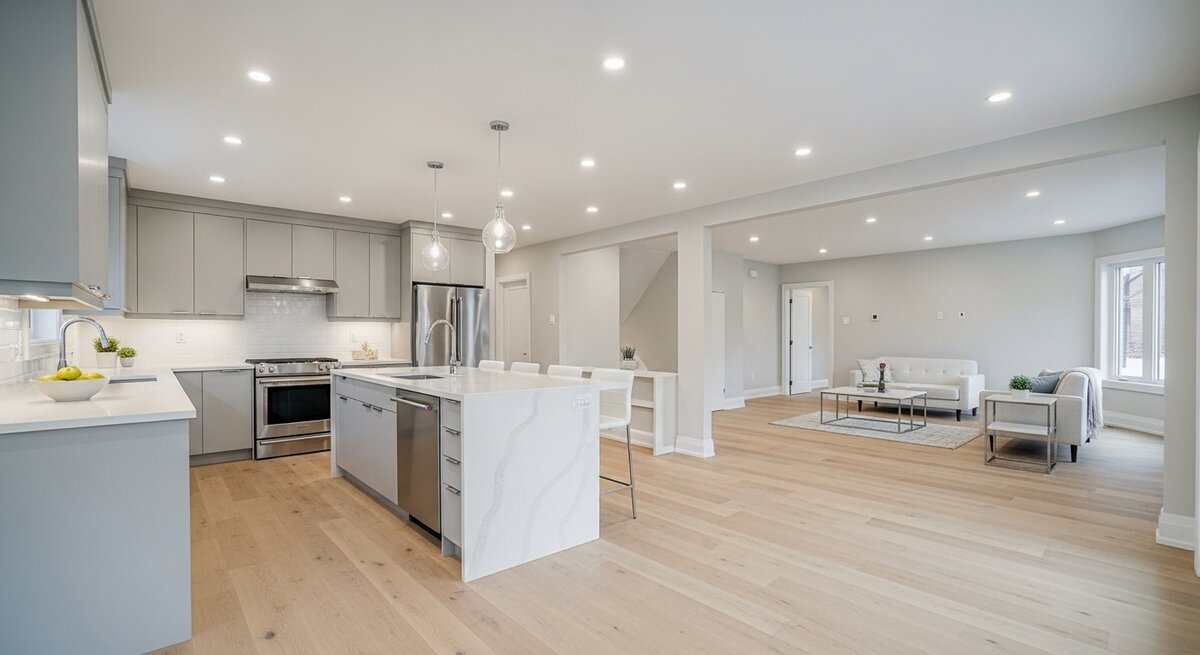
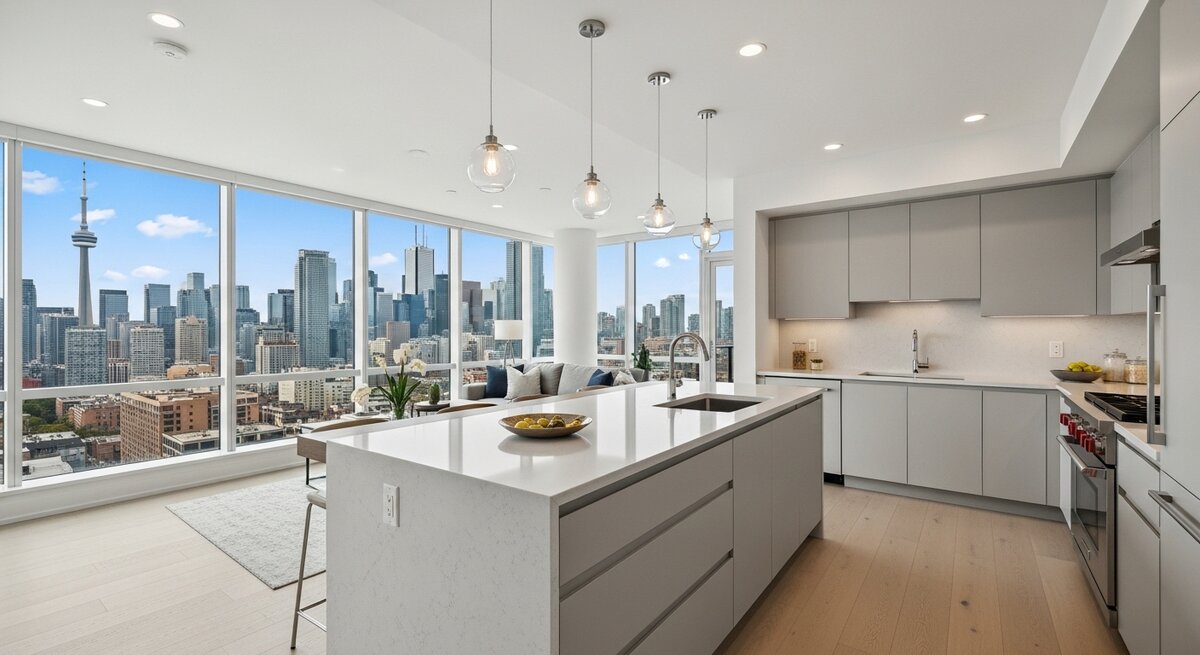
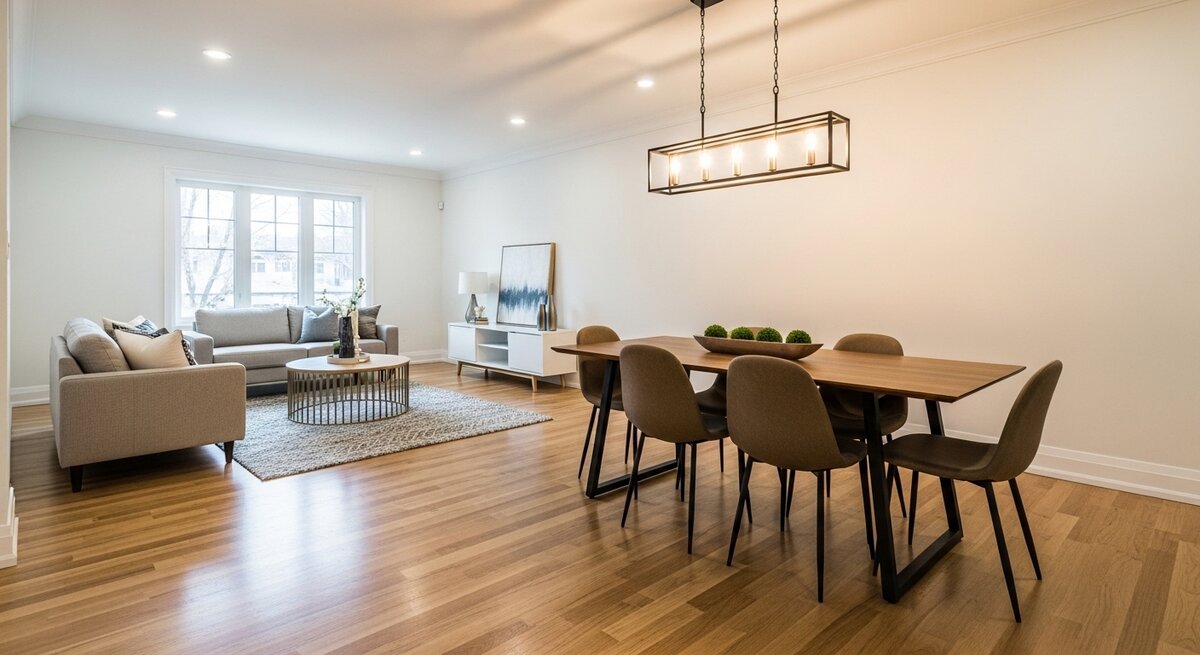
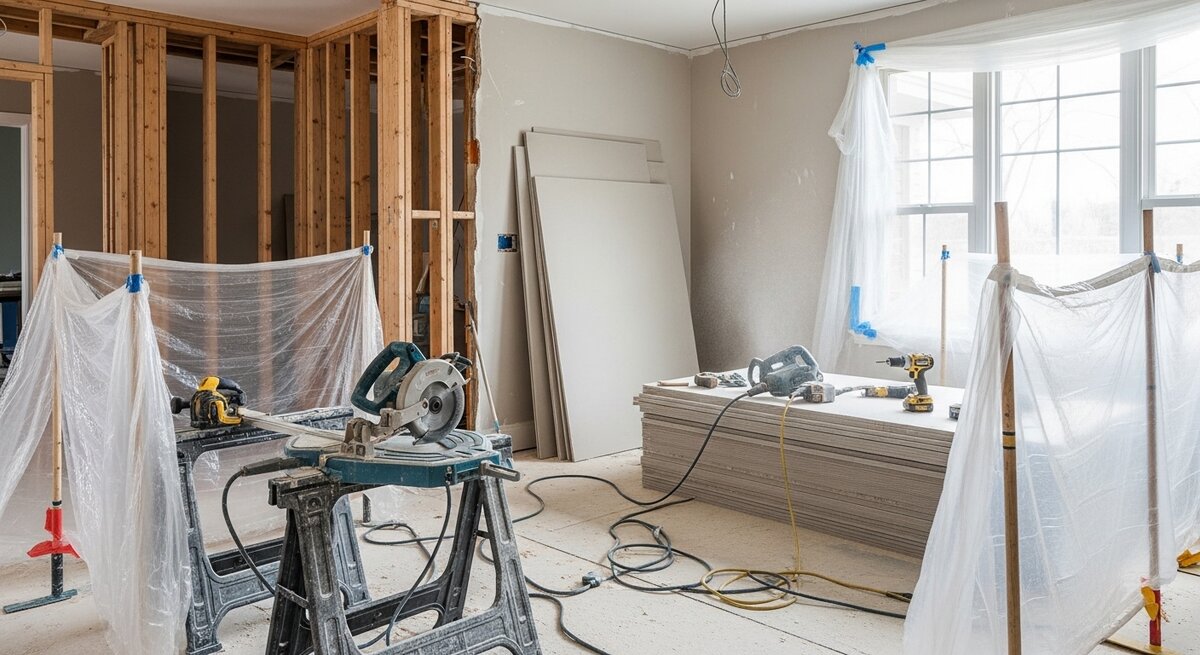
Our Load-Bearing Wall Removal Work
Professional load-bearing wall removal results from RenoHouse projects across the Toronto GTA.
Load-Bearing Wall Removal
Toronto GTA
Quality Workmanship
Licensed & Insured
Like what you see? Let's talk about your project.
🧮 Load-Bearing Wall Removal — Cost Estimator
GTA / Ontario — 2026 market pricing
⚙️ Add-ons & Options
📊 Where the cost goes (typical breakdown)
📋 What affects your price:
💡 Estimates use 2026 GTA/Ontario market data. Actual cost depends on site conditions, material selections, and project scope. Book a free in-home quote for a precise number.
Frequently Asked Questions About Load-Bearing Wall Removal
Typical kitchen-to-dining wall removal in semi-detached, 12-foot LVL beam, drywall repair both rooms, electrical relocation: $4,000–$7,500. Larger 18-foot opening with double LVL or steel beam, more rooms affected, HVAC reroute: $7,500–$12,000. Full open-concept main-floor renovation (multiple walls, beam network, full ceiling repair, electrical and plumbing relocations, finish work): $12,000–$25,000+. Coordinated with kitchen renovation: combined $35K–$80K vs. $50K–$110K if done separately.
Yes — every load-bearing wall removal in Toronto requires a PEng structural engineer to (1) confirm the wall is load-bearing, (2) design the new beam (LVL, steel, microllam, glulam) and bearing posts, (3) stamp the permit drawings, and (4) attend the framing inspection. Toronto Building will not issue a permit without engineer-stamped drawings. RenoHouse coordinates Glogowski Engineering, Cunningham Engineering, BGE Engineering, or your preferred PEng. Engineering fees: $1,200–$2,500 typical, included in project price. We do NOT design or stamp drawings ourselves — that is the engineer's role and licensure.
LVL (laminated veneer lumber) is the workhorse — handles 80% of Toronto residential spans (10–18 feet, single-storey-above load), fits within standard ceiling cavity, $400–$1,200 in beam material. Steel I-beam (W-section, e.g., W8x21) becomes mandatory when span exceeds 18 feet, when point loads from above land on the beam mid-span, or when narrow profile is required for aesthetics. Steel costs $1,500–$4,500 in material plus welding, plus fireproofing if exposed below code-rated rating. Microllam (narrow LVL) for visible beams. Glulam for premium visible-beam aesthetics. Engineer specifies which based on load, span, and aesthetics.
Yes — every load-bearing wall removal requires a Toronto Building permit. Permit drawings include the engineer-stamped beam design, bearing post details, electrical and plumbing relocations, and the structural calculations. Permit review 4–8 weeks typical. RenoHouse pulls the permit. Final inspection by Toronto Building closes the permit. Doing wall removal without permit creates legal liability, makes the home difficult to insure, and complicates resale (home inspectors and appraisers flag unpermitted structural changes).
PEng engineering and permit drawings: 1–3 weeks. Permit review by Toronto Building: 4–8 weeks. Construction (temporary shoring, demolition, beam install, drywall and finish): 1–2 weeks for typical kitchen-to-dining wall, 2–4 weeks for full open-concept multi-wall removal. Total project clock: 6–12 weeks contract-to-completion. Coordinated with kitchen renovation: clock extends to 8–16 weeks total but combined cost is dramatically lower than separate projects.
RenoHouse coordinates Master Electrician (ECRA/ESA-licensed partner) for outlet and switch relocations, lighting circuit reroute, ESA permit closure. Master Plumber for any plumbing relocations. HVAC tradesperson for ductwork reroute. Common in Toronto open-concept projects: outlets in the wall are relocated to flanking walls or to floor outlets, light switches relocated to the perimeter, supply/return ducts rerouted through the open ceiling cavity above. All bundled into the project scope under one contract.
It depends on the beam profile and where it sits. For 80% of Toronto residential projects, an LVL beam fits within the existing ceiling cavity (the joists span perpendicular to the wall) and the ceiling can be made fully flush after drywall finish — you wouldn't know a wall was ever there. When the beam is deeper than the ceiling cavity (longer spans needing double-LVL 14" depth or steel beams) the beam may need to project below the ceiling 4–8 inches; this can be wrapped in drywall as a clean architectural feature, or left exposed for industrial aesthetic. Engineer designs to flush-ceiling where structurally possible.
Strongly recommend — and dramatically cheaper. Combined kitchen + open-concept project: $35,000–$80,000 typical, vs. $50,000–$110,000 if done separately 12 months apart. Drywall, paint, and finish are already in scope for the kitchen reno; beam wrap and ceiling patching add minimal incremental cost. Electrical and plumbing relocations are coordinated with the kitchen rough-in. HVAC reroute is one trade visit. Permit and inspection visits are bundled. Most Toronto open-concept projects are bundled with kitchen reno for this reason.
Three primary signals: (1) Joist direction — joists span perpendicular to load-bearing walls; if joists in the basement ceiling run perpendicular to the wall above, that wall is supporting them. (2) Wall stack — load-bearing walls typically stack vertically (basement post, main-floor wall, second-floor wall, roof above). (3) Common locations — exterior walls and central interior walls (often the wall between kitchen and dining room) are the typical load-bearing locations. A PEng structural engineer confirms before any cuts. Visual identification is a starting point — only the engineer can confirm load-bearing status.
Heritage Conservation District (HCD) homes — Cabbagetown, Wychwood, parts of the Annex, parts of the Beach — typically allow interior structural changes (load-bearing walls are not heritage features), but the HCD overlay may add review for work that affects interior architectural character (original wood mouldings, plaster ceilings, original room layouts in landmarked properties). RenoHouse navigates HCD review where applicable and coordinates with Heritage Toronto. We have Cabbagetown, Riverdale, Annex, and Wychwood projects on file.



You Might Also Need
Customers who looked at load-bearing wall removal also asked us about these complementary services.




We Serve All GTA
Professional load-bearing wall removal services available across the Greater Toronto Area.
“Renovated our entire main floor — kitchen, living room, flooring, paint, lighting. They coordinated everything perfectly. One contractor for the whole project.”
— Anthony G., North York
Get a Free Load-Bearing Wall Removal Estimate
Contact us today for a free, no-obligation quote for your load-bearing wall removal project in Toronto GTA. We'll get back to you within 1 hour.