 RenoHouse
Multigenerational / Main-Floor In-Law Suite — Toronto GTA
Professional multigenerational / in-law suite services in Toronto and the Greater Toronto Area. Licensed, insured, and trusted by homeowners across the GTA.
Projects Completed
Years Experience
Client Satisfaction
Google Rating
How It Works
A simple, stress-free process from start to finish.
Send Your Request
Call or WhatsApp us 24/7. Send photos, video, comments about what needs to be done, and your location.
Remote Estimate
We review everything, discuss details, and provide a clear estimate — often within hours, no visit needed.
Repair Process
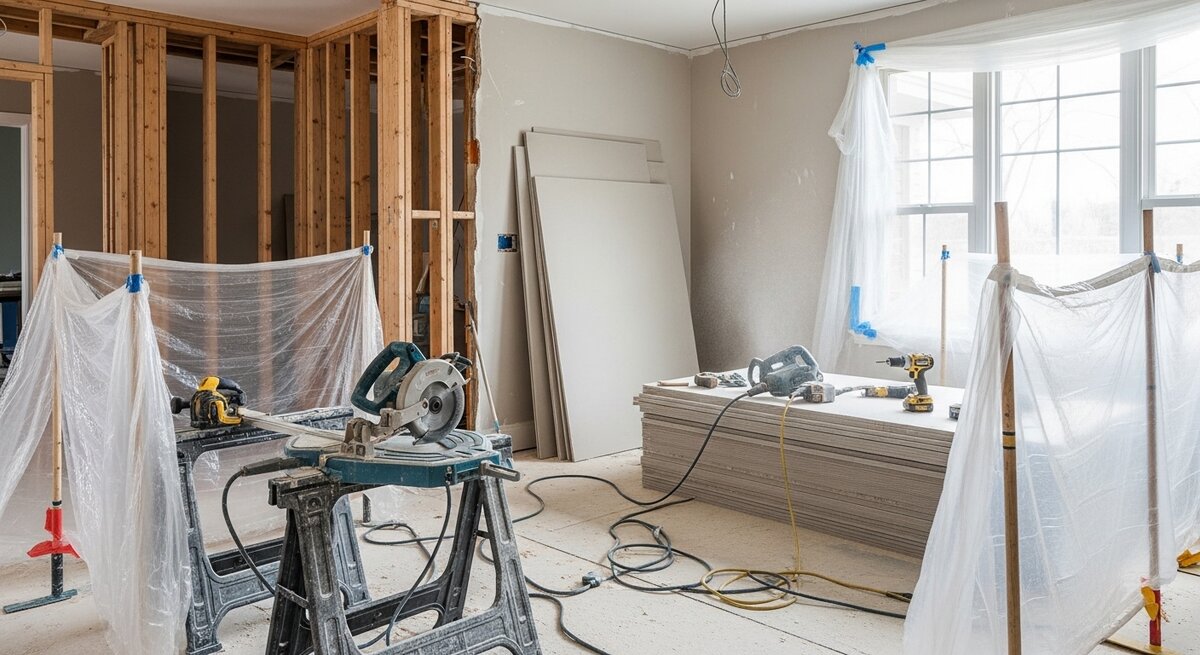
Our licensed team arrives on the agreed date and completes your multigenerational / in-law suite to the highest standards.
Handover & Warranty
Final walkthrough with you, full cleanup, and warranty documentation provided.
Send Your Request
Call or WhatsApp us 24/7. Send photos, video, and a description of the work + your location.
Remote Estimate
We review everything, clarify details, and give you a price — often within hours.
Repair Process
Licensed team arrives on schedule and completes your multigenerational / in-law suite professionally.
Handover & Warranty
Final walkthrough, full cleanup, and warranty documentation.
Multigenerational / In-Law Suite in Toronto GTA
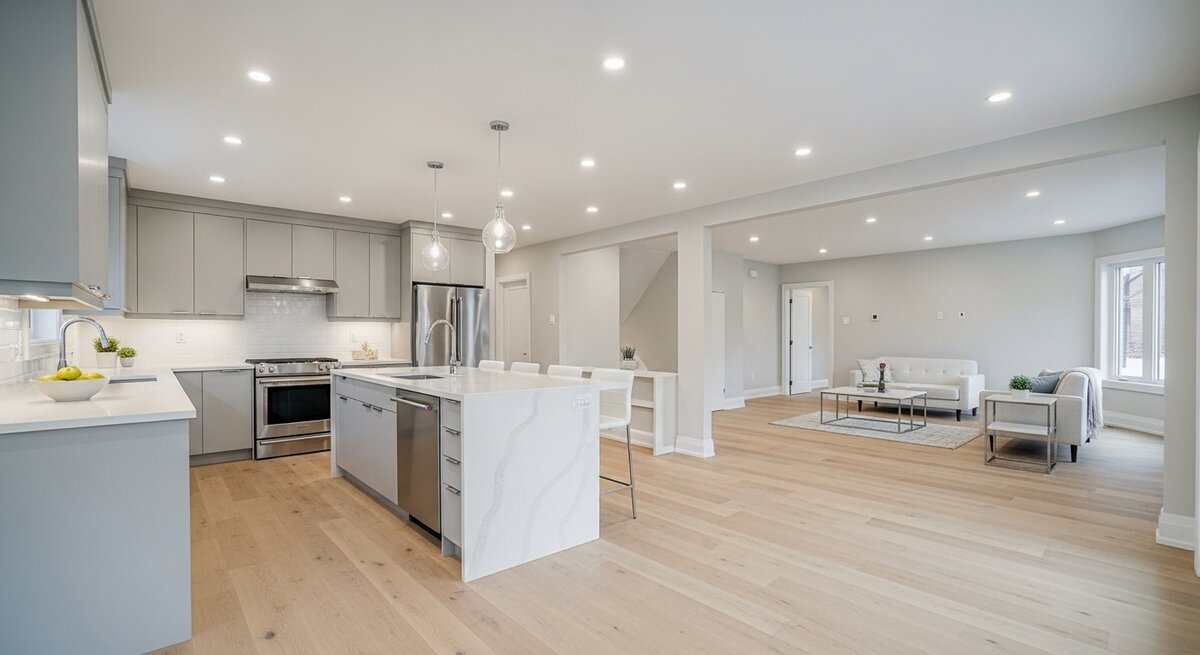
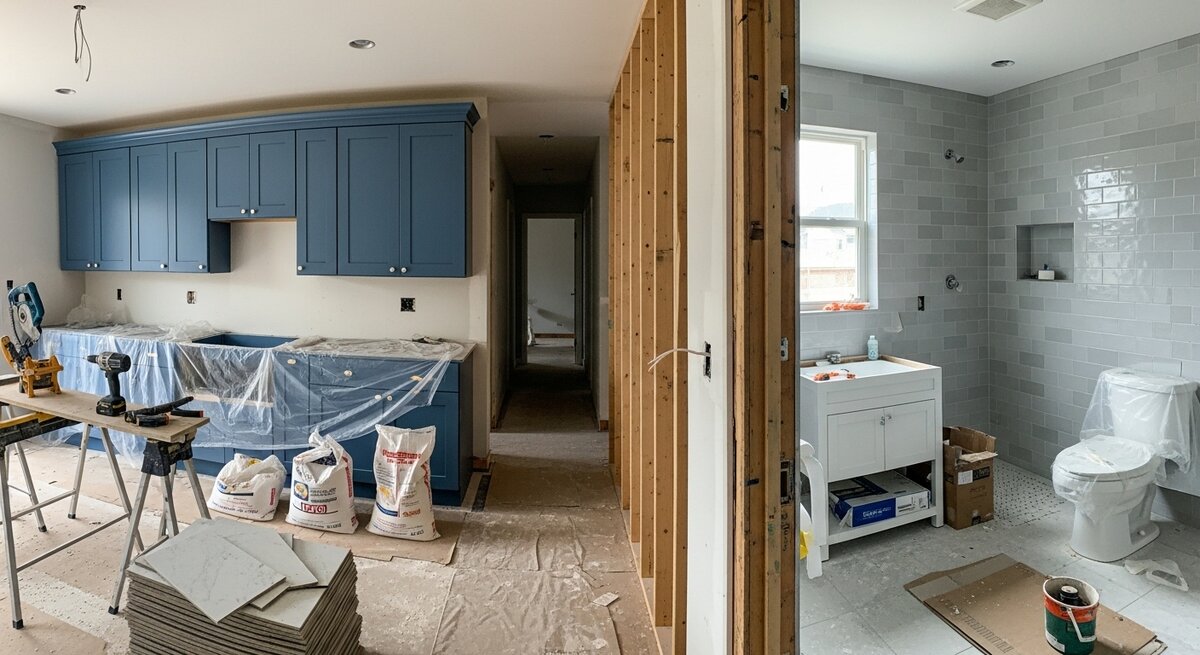
RenoHouse coordinates multigenerational and main-floor in-law suite renovations for Toronto and GTA homeowners — self-contained dwelling units within an existing home for elderly parents, adult children with disabilities, or qualifying relatives under the federal Multigenerational Home Renovation Tax Credit (MHRTC). Our scope is end-to-end construction project management: design coordination with named OAA architect or BCIN designer partners, building permit submission, ESA-permitted electrical, plumbing under trade permit, fire separation per Ontario Building Code, accessibility design (curbless showers, grab bars, comfort-height fixtures, lever handles), kitchen and bathroom installation, finishing, and final occupancy inspection. The output is a self-contained unit (separate kitchen, bathroom, sleeping area, and entrance access) within the existing main dwelling — distinct from a separate Additional Residential Unit (ARU) such as a basement apartment or garden suite.
MHRTC and the financial driver
The federal Multigenerational Home Renovation Tax Credit (MHRTC) became permanent in the 2023 federal budget and is administered by CRA on Schedule 12 of the T1 Personal Income Tax return. MHRTC provides a 15% refundable credit on up to $50,000 of eligible renovation costs — maximum credit $7,500 — for the construction of a self-contained secondary suite within an existing dwelling for a qualifying relative aged 65+ or with a Disability Tax Credit certificate (any age). The credit is claimable in the year construction is completed. Eligibility requires: (1) the suite is self-contained (separate kitchen, bathroom, sleeping area, and a separate entrance — though the entrance can be through the main home, not necessarily a separate exterior door); (2) the qualifying relative is a Canadian resident relative of the homeowner (parent, grandparent, child, grandchild, sibling, aunt, uncle, nephew, niece, or in-law equivalent); (3) the qualifying relative resides or intends to reside in the suite within 12 months of construction completion. RenoHouse does NOT provide tax advice — we recommend engaging a CPA familiar with MHRTC at the planning stage to confirm eligibility for your specific family situation; we provide the construction documentation (invoices, permit, engineering, and as-built drawings) the CPA needs to support the claim.
Toronto demographics and Bylaw 474-2023 context
StatsCan 2024 reports 27% of Toronto households are now multigenerational — driven by housing affordability, aging-in-place trends, and immigration patterns. Toronto's Bylaw 474-2023 made multiplex conversion as-of-right for most lots — but multigenerational in-law suites are usually NOT built as separate ARUs (they're built as part of the main household). Distinction matters: a separate ARU (basement apartment, garden suite, laneway house) is a legal separate dwelling unit; a multigenerational in-law suite is integrated into the main household with shared exterior entry and usually shared utilities, but with separate kitchen and bath. The MHRTC requires the latter — a self-contained unit within the main dwelling. We help homeowners decide between (1) separate ARU under Bylaw 474-2023 (qualifies for HELP loan financing, may not qualify for MHRTC depending on configuration); (2) integrated in-law suite within main home (qualifies for MHRTC, simpler permitting); (3) hybrid — integrated suite that could later convert to separate ARU.
Project value and configurations
Main-floor in-law suite (carve out from existing main floor — bedroom, ensuite bath, kitchenette, separate sitting area): $40,000–$80,000. Basement-level in-law suite (use existing basement footprint with kitchen, bath, bedroom, separate access): $60,000–$120,000. Addition-based in-law suite (small addition added to main home for accessibility unit on grade): $80,000–$150,000+. Accessibility upgrade scope often included: curbless walk-in shower with linear drain ($3,500–$8,000), comfort-height toilet ($600–$1,200), grab bars rated to 250 lb at WC, tub, and shower ($150–$400 per location), lever handles throughout ($100–$300), 36" doorways (vs standard 32") for walker/wheelchair clearance, no-threshold transitions, GFCI receptacles at accessible heights. Universal Design baseline adds $5,000–$15,000 to project depending on scope. Eligible renovation costs under MHRTC include construction labour and materials, permits, design, plumbing and electrical, finishing — most of the project. Eligible expenses do NOT include appliances, furniture, financing costs, security systems, recurring services, or work performed by the homeowner themselves.
Honest scope — tax advice not provided
RenoHouse is a construction company, not a tax advisor. MHRTC eligibility, claim mechanics, interaction with other credits (Home Accessibility Tax Credit, Medical Expense Tax Credit), and the specific definition of "self-contained" for your project should be confirmed by a CPA before construction starts. We've seen homeowners assume eligibility, complete construction, and then learn at tax time that some configuration choice (e.g., not having a separate kitchen, sharing the bath with the main household) disqualified the claim. We strongly recommend a $300–$800 CPA consult at the planning stage. We provide the construction documentation the CPA needs (contractor invoices itemised, building permit, ESA permit, plumbing permit, as-built drawings, photos of separate kitchen and bath) to support the Schedule 12 claim. Our scope is the renovation work — design coordination, permits, all trades, finishing — under one contract.
Permit and inspection coordination
Building permit required when adding a kitchen, structural alterations, or significant electrical/plumbing changes. ESA permit required for the electrical scope (separate kitchen circuit, additional GFCI/AFCI receptacles per OBC 9.34, accessibility-height switches). Plumbing trade permit required for new kitchen and bathroom rough-in. Fire separation between the in-law suite and the main household is NOT required when the suite is part of a single dwelling unit (vs a separate ARU which requires 45-min fire separation under OBC 9.10.9). MPAC reassessment may apply when the renovation increases assessed value — supplementary tax bill typically modest ($500–$2,000/year).
Common Toronto scenarios
(1) Aging parent moving in — main-floor ensuite bedroom with kitchenette, accessibility upgrades, separate sitting area; $50,000–$80,000. (2) Adult child with Disability Tax Credit certificate moving in — basement self-contained suite with full kitchen and accessibility bath; $60,000–$100,000. (3) Couple prepping for parents to retire to Toronto — converting den to bedroom + ensuite + kitchenette on main floor; $40,000–$60,000. (4) Multi-gen home from new construction — main-floor accessibility suite designed-in from the start; $80,000–$150,000 incremental over base home cost. We've delivered all four configurations. The MHRTC $7,500 refundable credit is a meaningful offset on every one.
Serving Toronto, Mississauga, Brampton, Vaughan, Markham, Richmond Hill, Oakville, Burlington, Etobicoke, Scarborough, North York, and all GTA communities. Call 289-212-2345 for a free multigenerational-suite consultation.

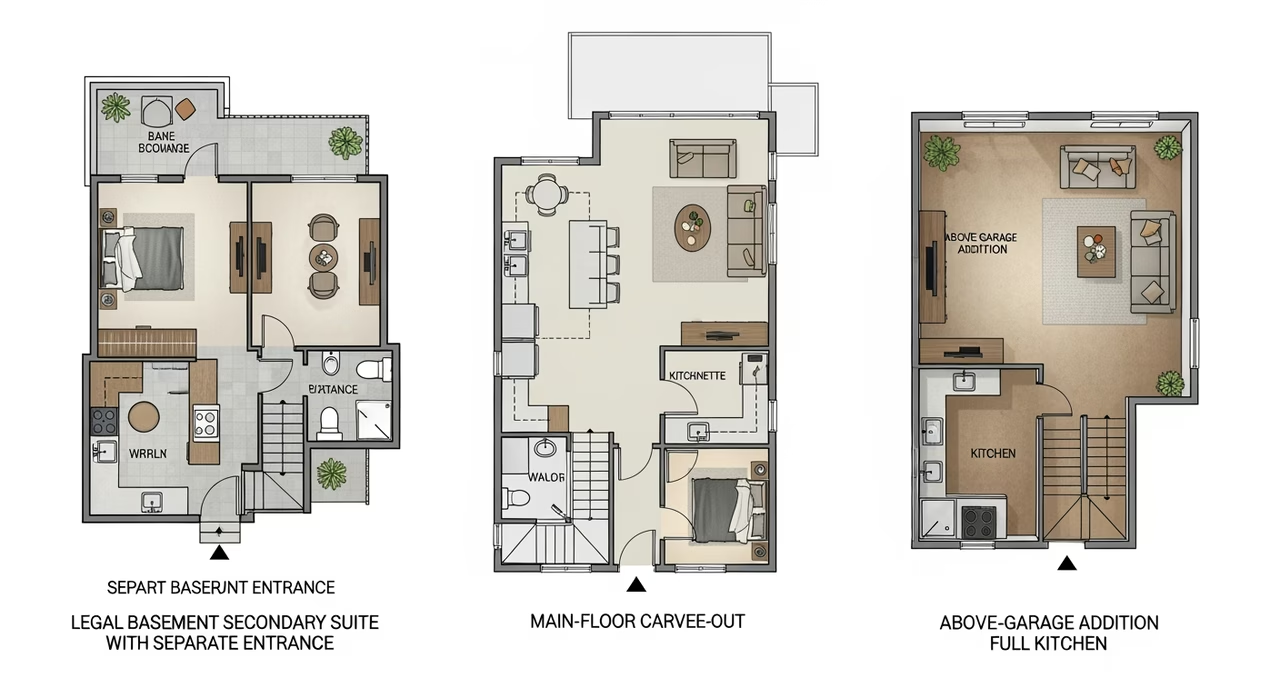
A legal multigenerational or in-law suite in a Toronto home is one of the most strategically valuable renovations of the decade. Done right, it provides comfortable independent living for an aging parent or adult child, satisfies the requirements of the federal Multigenerational Home Renovation Tax Credit (MHRTC) for a $7,500 refundable credit, and adds long-term resale value in a market where multigenerational living is increasingly the norm. At RenoHouse the 2026 pricing tiers are: a legal basement secondary suite at $60,000 to $85,000, a main-floor in-law addition with full kitchen and 3-piece bath at $110,000 typical mid, and an above-garage suite or ground-floor accessible unit at $150,000 to $180,000 or more.
The key word in "legal in-law suite" is legal. A non-conforming suite — one that lacks proper egress, fire separation, separate HVAC zoning, or municipal registration — is functionally worthless from a tax-credit, resale, and insurance perspective, and it exposes the homeowner to municipal stop-work orders, by-law fines, and the possibility of forced demolition. Every RenoHouse in-law suite is built to Ontario Building Code Section 9.36 second-suite requirements and registered with the City of Toronto Second Suites program (or the equivalent municipal program for Mississauga, Vaughan, Markham, Brampton, and elsewhere in the GTA).
What a proper legal in-law suite requires
A code-compliant Toronto basement secondary suite requires the following: a clear egress route — typically an OBC 9.9.10 egress window in each bedroom with 0.35 square metres of unobstructed open area and a maximum sill height of 1.5 metres, or a separate exterior door; a minimum 7-foot-6-inch ceiling height in habitable rooms (achievable in most Toronto homes; older 1950s and earlier housing stock often requires basement underpinning to gain head height); fire-resistance rated separation between the suite and the main dwelling per OBC 9.10 (typically a 30-minute or 45-minute rated drywall ceiling and stair enclosure); independent HVAC zoning so the suite has its own thermostat control (typically a separate forced-air system or a heat-pump mini-split); a separate kitchen with at least a 24-inch range, sink, refrigerator space, and adequate counter; a separate full bathroom (3-piece minimum, 4-piece preferred); independent or dedicated-load electrical with its own circuit panel sub-feed; interconnected hard-wired smoke and carbon monoxide alarms on both the main dwelling and the suite side; and registration with the municipal Second Suites program.
For main-floor and above-garage suites the requirements are similar but the egress geometry is easier (existing main-floor windows usually meet the 9.9.10 area requirement) and the fire separation is often less demanding when the suite is structurally independent.
Accessibility upgrades and AODA Built Environment compliance
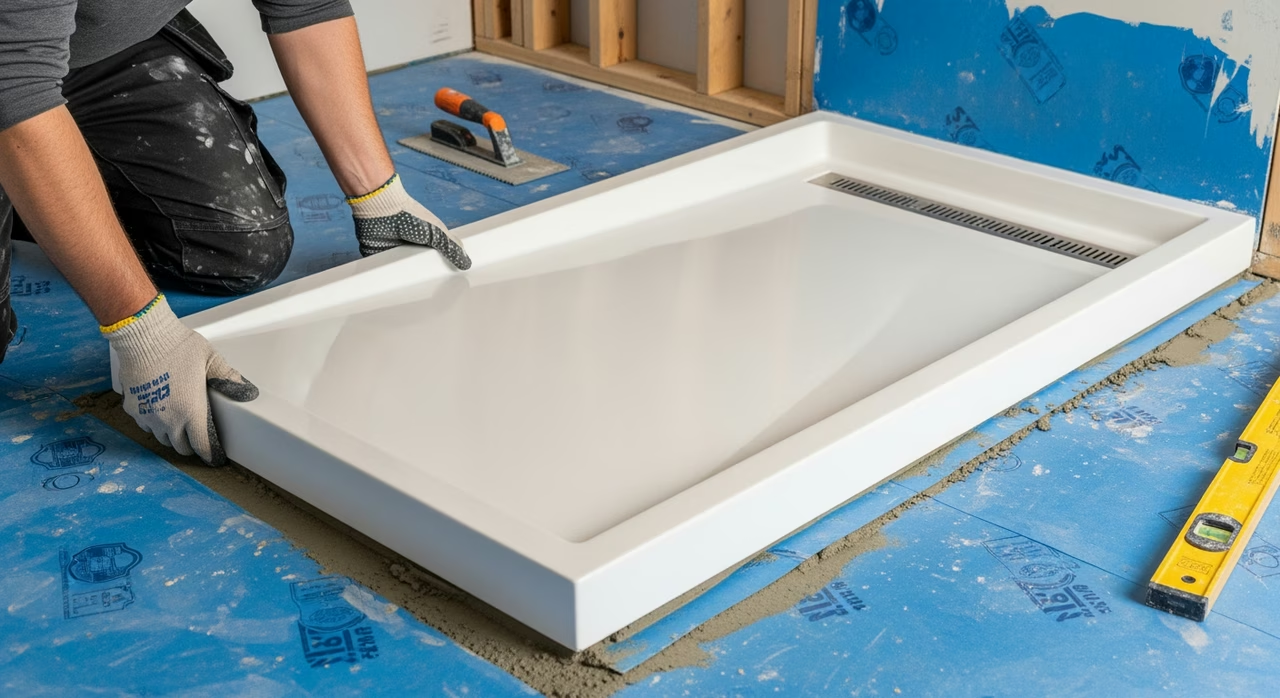
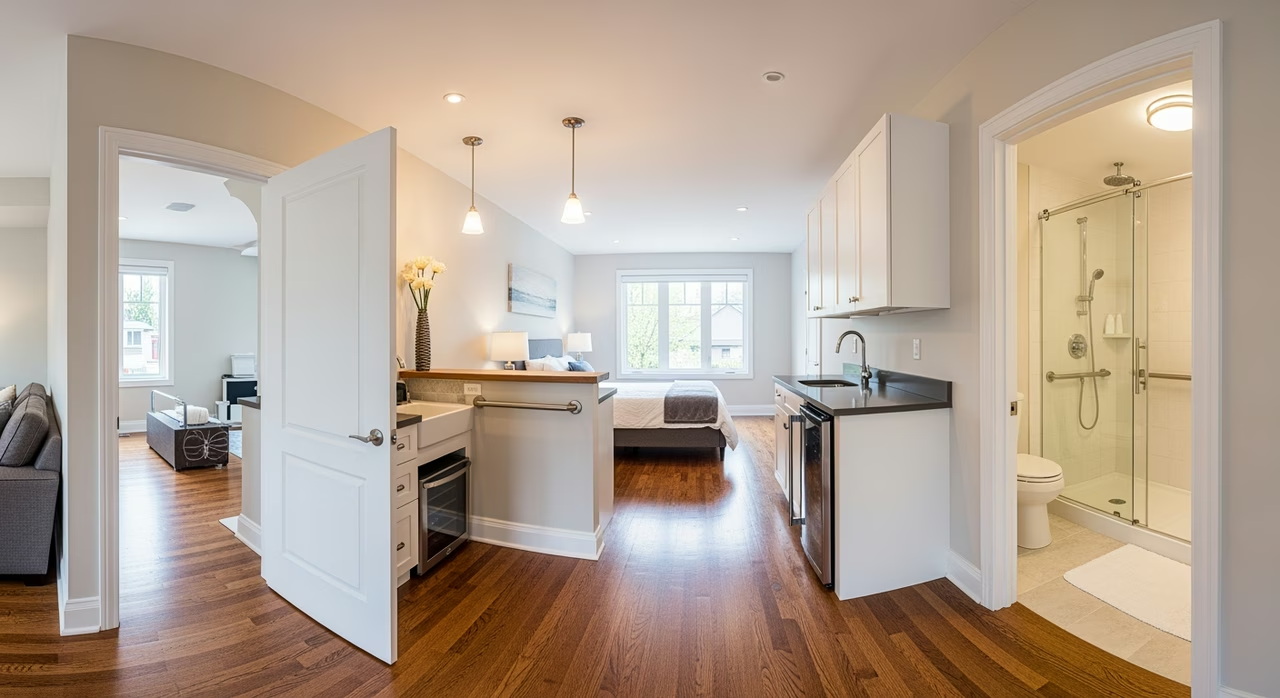
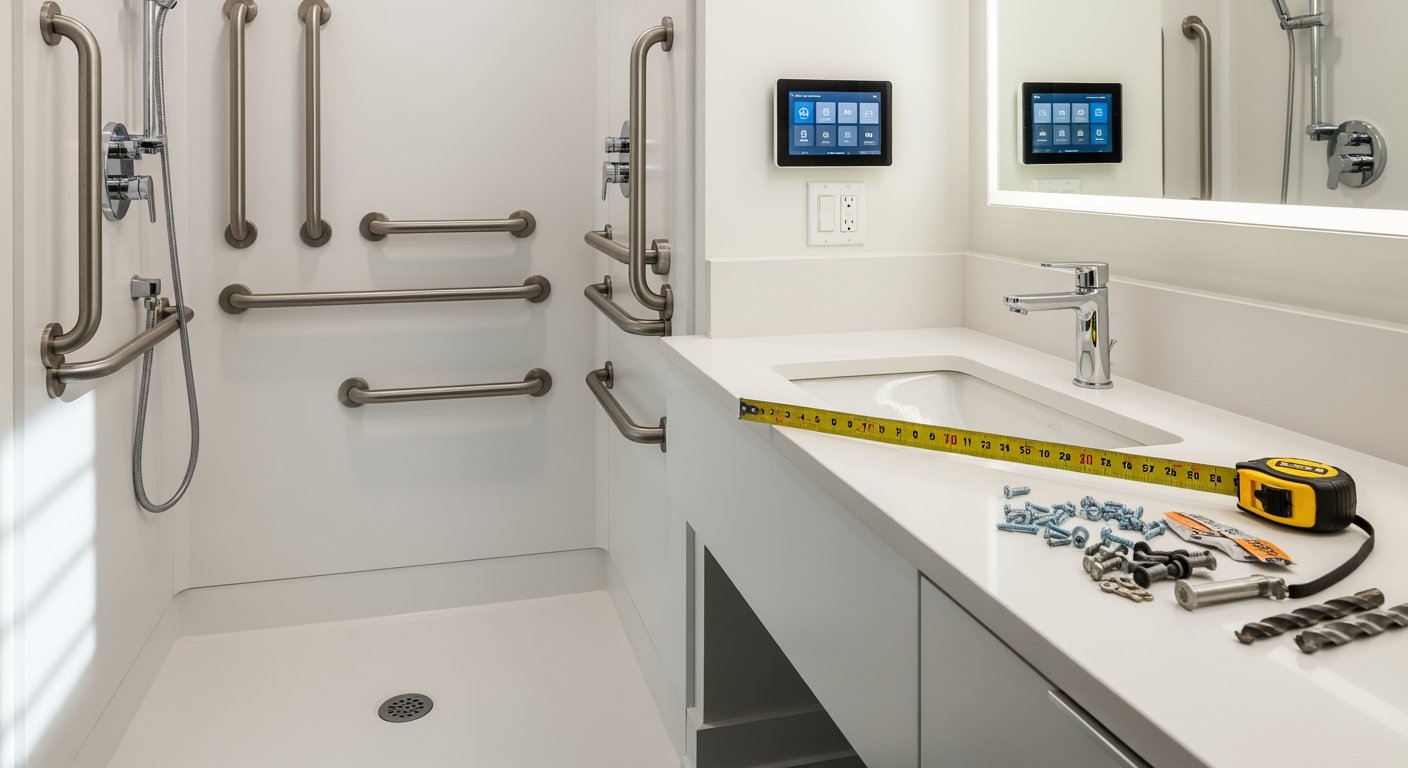
A growing share of our in-law suites are built specifically for an aging parent and the accessibility design is the most important spec decision. RenoHouse follows AODA Built Environment Standards plus the additional barrier-free design guidance in OBC 3.8. Key accessibility upgrades typically include: a curbless walk-in shower with linear drain and slip-resistant porcelain tile floor sloped to the drain, mounted grab bars on shower walls and beside the toilet, 36-inch clear-width doorways (compared to the standard 32-inch), lever-handle door hardware (not knobs), at least one accessible route from suite entry through every habitable space, lowered counter sections in the kitchenette, and an accessible-rated bathroom vanity with knee clearance. Each accessibility upgrade adds between $5,000 and $15,000 to the base scope but is genuinely transformative for the lived experience.
Permits, compliance, MHRTC, and the inspection schedule
A legal in-law suite in Toronto requires a Toronto Chapter 363 building permit and registration with the City's Second Suites program. The permit application includes architectural drawings, structural drawings (typically with a P.Eng. seal for any structural modifications), mechanical drawings for the HVAC zoning, and the second-suite registration package. The Skilled Trades Ontario 306A plumber must perform any rough-in or fixture work. The 309A Master Electrician must file the ECRA/ESA Notification of Work for the panel sub-feed and the suite's circuits. TSSA G2 gas-fitter must perform any gas-line modification (for a separate range, for example).
Inspections happen at framing, plumbing rough-in, electrical rough-in, insulation, drywall, and final. ESA inspections happen at electrical rough-in and final. The Second Suites registration is finalised after municipal final inspection and triggers the property's official designation as a two-unit dwelling.
The Multigenerational Home Renovation Tax Credit (MHRTC) provides a 15 percent refundable tax credit on up to $50,000 of eligible costs, capped at $7,500. Eligibility requires that the suite is for a qualifying relation (typically a parent, grandparent, or adult relative with a disability), that the work creates a complete secondary dwelling unit, and that the renovation is documented with itemised invoices and as-built drawings. We strongly recommend that homeowners review the MHRTC eligibility with a CPA at the planning stage — RenoHouse does not provide tax advice.
Why RenoHouse builds in-law suites across the GTA
We have completed legal in-law suites in Toronto (Scarborough, North York, Etobicoke, Junction, Riverdale, East York), Mississauga, Vaughan, Markham, Richmond Hill, Oakville, Burlington, Aurora, King City, Caledon, and Brampton. Every project carries a $5 million liability policy, full WSIB coverage, a fixed-price written scope, the Second Suites registration package, and a two-year workmanship warranty.
Our typical timeline runs 42 days for a basement secondary suite, 60 to 90 days for a main-floor carve-out or addition prep, and 90 to 150 days for an above-garage suite or accessible ground-floor unit. Call 289-212-2345 for a no-obligation on-site assessment, code-feasibility review, and fixed-price written scope.
Toronto/GTA neighborhood considerations
- Forest Hill / Rosedale / Lawrence Park (heritage): Heritage Permit on exterior — no street-facing addition allowed; lower-level or coach-house only. Coach-house Additional Residential Unit (ARU) on lots over 0.4 ha allowed under Toronto Zoning By-law 569-2013 with side-yard 1.2m minimum. Typical scope $380K-$680K with HCD-compliance premium $40K-$80K.
- North York / Scarborough / Etobicoke (post-war): Highest-volume ARU/in-law suite market. Walkout basement conversion to legal Second Suite under Toronto Bylaw 169-2014 — egress window 3.8 sq ft openable per OBC 9.9.10.1, ceiling height 1.95m minimum per OBC 9.7.1.1, 25 minute fire-separation between units per OBC 9.10.9.14, 60 minute on stairs. Typical scope $140K-$280K. 60-100 amp panel upgrade to 200A often required to add 100A subpanel for in-law unit.
- Mississauga / Brampton / Vaughan (90s subdivision): Strong demand from South Asian and Italian-Canadian multigenerational households. Garden-suite + basement in-law combo common. Walkout backyard ARU (Detached Additional Dwelling Unit) under Mississauga Bylaw 0225-2007 — up to 75 sq m, separate metering, full kitchen + bath. Typical combined scope $220K-$440K.
- Caledon / King City / Aurora (rural): Coach-house or detached secondary dwelling on lots over 0.8 ha. Septic system capacity-increase (Reg 332/12 Class 4 septic — daily flow recalculation, weeping-bed expansion) at $18K-$42K added scope. Well-yield retest mandatory before approval.
- Downtown condos: ARU not applicable in condo. Multigen scope = bedroom split, partition wall, hallway-bath conversion to ensuite. Condo Board Form 1 required for any plumbing relocation. Typical $80K-$180K.
The RenoHouse Difference
11+ Years Experience
Over a decade of expertise in multigenerational / in-law suite. We've seen it all and know how to handle any challenge.
Warranty Protected
All work comes with comprehensive warranty coverage. We stand behind our craftsmanship and use quality materials that last.
Competitive Rates
Fair pricing on multigenerational / in-law suite without compromising quality. We match or beat competitor quotes.
Sound Familiar?
These are the most common problems our clients face.
Aging parent moving in and you want to claim the $7,500 MHRTC refundable tax credit?
Adult child with Disability Tax Credit certificate moving home and needs an accessible self-contained suite?
Confused whether your project qualifies as 'self-contained' under CRA Schedule 12 rules?
Not sure if to build an in-law suite (MHRTC eligible) or a separate ARU (HELP loan eligible)?
Need accessibility design (curbless shower, grab bars, 36" doorways) for an elderly parent?
Worried about getting MHRTC eligibility wrong and needing to amend your tax return later?
Ready to get started?
Free estimate, no obligation. We respond within 1 hour.
What Our Clients Say
“RenoHouse replaced all our windows in just two days. The new windows are beautiful, energy-efficient, and the team left everything spotless. Highly recommend!”

Michael R.
Oakville
“New windows transformed our home. Quieter, warmer, and our energy bill dropped noticeably. Excellent installation crew.”

David K.
Vaughan
“Professional from start to finish. They replaced 8 windows in one day and cleaned up perfectly. Highly recommend RenoHouse!”

Sandra W.
Burlington
Our Multigenerational / In-Law Suite Work
Professional multigenerational / in-law suite results from RenoHouse projects across the Toronto GTA.
Multigenerational / In-Law Suite
Toronto GTA
Quality Workmanship
Licensed & Insured
Like what you see? Let's talk about your project.
🧮 Multigenerational / In-Law Suite Renovation — Cost Estimator
GTA / Ontario — 2026 market pricing
⚙️ Add-ons & Options
💰 Subsidies & Rebates Available
Subsidies require eligibility verification, pre/post audits, and proper documentation. Stacking rules apply.
📊 Where the cost goes (typical breakdown)
📋 What affects your price:
💡 Estimates use 2026 GTA/Ontario market data. Actual cost depends on site conditions, material selections, and project scope. Book a free in-home quote for a precise number.
Frequently Asked Questions About Multigenerational / In-Law Suite
MHRTC is a federal refundable tax credit administered by CRA on Schedule 12 of the T1 return. It provides 15% of up to $50,000 of eligible renovation costs — maximum credit $7,500 — for the construction of a self-contained secondary suite within an existing dwelling for a qualifying relative aged 65+ or with a Disability Tax Credit certificate (any age). The credit became permanent in the 2023 federal budget. Eligibility requires a self-contained unit (separate kitchen, bathroom, sleeping area, and a separate entrance — which can be internal). RenoHouse does NOT provide tax advice; consult a CPA before construction.
Main-floor in-law suite (carve out existing main floor — bedroom, ensuite, kitchenette, sitting area): $40,000–$80,000. Basement-level in-law suite (existing footprint with kitchen, bath, bedroom, separate access): $60,000–$120,000. Addition-based suite (small addition for grade-level accessibility unit): $80,000–$150,000+. Accessibility upgrades add $5,000–$15,000. The MHRTC $7,500 refundable credit offsets a meaningful portion of every project.
Per CRA rules, a qualifying relative includes the homeowner's parent, grandparent, child, grandchild, sibling, aunt, uncle, nephew, niece, or the equivalent in-law (e.g., parent-in-law, sibling-in-law). The relative must be 65 years of age or older OR hold a valid Disability Tax Credit certificate (any age). They must be Canadian residents. They must reside or intend to reside in the suite within 12 months of construction completion. Confirm specific eligibility with a CPA before construction.
CRA requires four elements: (1) a separate kitchen with sink, cooking facility, and food storage; (2) a separate bathroom with sink and toilet (shower or tub); (3) a separate sleeping area; (4) a separate entrance — though the entrance can be through the main home, it is NOT required to be a separate exterior door. The suite must function as an independent living unit. Sharing a kitchen or bathroom with the main household disqualifies the claim. Storage, laundry, and utility rooms can be shared.
A multigenerational in-law suite is integrated into the main household with usually shared exterior entry, shared utilities, and a separate kitchen and bath — the suite is part of the main dwelling unit. An ARU (basement apartment, garden suite, laneway house) under Bylaw 474-2023 is a legal SEPARATE dwelling unit with its own address and meter and tenant. MHRTC applies to the in-law suite (within main dwelling). HELP loan and ARU financing apply to the separate ARU. Same construction work, different legal classification — choose at the design stage based on financial and family goals.
No. RenoHouse is a construction company, not a tax advisor. MHRTC eligibility, claim mechanics, interaction with other credits (Home Accessibility Tax Credit, Medical Expense Tax Credit), and the specific definition of 'self-contained' for your project should be confirmed by a CPA BEFORE construction starts. We've seen homeowners assume eligibility, complete construction, then learn at tax time that some configuration choice disqualified the claim. We strongly recommend a $300–$800 CPA consult at planning. We provide the construction documentation the CPA needs (itemised invoices, permits, as-built drawings, photos of separate kitchen and bath) to support the Schedule 12 claim.
Universal Design baseline: curbless walk-in shower with linear drain ($3,500–$8,000), comfort-height toilet ($600–$1,200), grab bars rated to 250 lb at WC, tub, and shower ($150–$400 per location), lever handles throughout ($100–$300), 36" doorways for walker/wheelchair clearance, no-threshold transitions, GFCI receptacles at accessible heights, wider hallways, lever taps. Optional: roll-under sink, motion-sensor lighting, pull-out shelves, induction cooktop (no flame). Accessibility scope adds $5,000–$15,000 to project. Most accessibility upgrades are MHRTC-eligible when within the qualifying suite.
Building permit required when adding a kitchen, doing structural alterations, or significant electrical/plumbing changes (almost all in-law suite projects). ESA permit required for the electrical scope (separate kitchen circuit, GFCI/AFCI receptacles per OBC 9.34). Plumbing trade permit required for new kitchen and bathroom rough-in. Fire separation between the in-law suite and the main household is NOT required when the suite is part of a single dwelling unit. The OBC 9.10.9 fire-separation rules apply only to separate ARUs. MPAC reassessment is possible when assessed value increases — supplementary tax bill typically $500–$2,000/year.
Main-floor carve-out (no addition, no major structural): 6–10 weeks construction + 2–4 weeks permit. Basement-level full suite (new kitchen, bath rough-in, separate access): 10–16 weeks construction + 4–6 weeks permit. Addition-based ground-floor accessibility suite: 16–24 weeks construction + 6–10 weeks permit. Accessibility design and CPA tax review at planning stage adds 2–3 weeks before contract signing. Total project clock 3–8 months for most configurations.
Sometimes — depends on the specific costs and the CPA's read of CRA rules. The Home Accessibility Tax Credit (HATC) provides 15% on up to $20,000 for accessibility renovations for seniors or disability-tax-credit holders — different scope, sometimes overlapping with MHRTC scope. The Medical Expense Tax Credit may apply to medically-required renovations. Some costs may qualify for one credit but not another, and double-claiming the same expense is prohibited. This is exactly why a CPA review at planning is critical — RenoHouse does not provide this analysis. The construction work itself is the same regardless of which credit(s) you claim.



You Might Also Need
Customers who looked at multigenerational / in-law suite also asked us about these complementary services.


We Serve All GTA
Professional multigenerational / in-law suite services available across the Greater Toronto Area.
“Renovated our entire main floor — kitchen, living room, flooring, paint, lighting. They coordinated everything perfectly. One contractor for the whole project.”
— Anthony G., North York
Get a Free Multigenerational / In-Law Suite Estimate
Contact us today for a free, no-obligation quote for your multigenerational / in-law suite project in Toronto GTA. We'll get back to you within 1 hour.