RenoHouse

# Aluminum Wiring vs Knob & Tube in Toronto: What's the Difference
Quick answer. Toronto homeowners often confuse two distinct legacy wiring problems: knob and tube (K&T) and aluminum wiring. They were installed in different eras, fail in different ways, and are treated differently by insurers and by the Ontario Electrical Safety Code.Toronto homeowners often confuse two distinct legacy wiring problems: knob and tube (K&T) and aluminum wiring. They were installed in different eras, fail in different ways, and are treated differently by insurers and by the Ontario Electrical Safety Code. If you have one, you do not necessarily have the other, but if your home was built before 1975 you should rule out both before assuming your wiring is straightforward.
This post compares aluminum wiring to K&T, explains how to identify each, and clarifies the remediation options. For the full K&T rewiring guide, see Knob & Tube Rewiring Toronto: Complete 2026 Guide.
Eras and Toronto Housing Stock
- Knob and tube: 1900–1945, with some installations stretching into the early 1950s in slow-to-modernize areas. Common in Riverdale, Beaches, Cabbagetown, the Annex, Roncesvalles, the Junction, Parkdale, Wychwood.
- Aluminum wiring: 1965–1973 (peak), with some installations as late as 1976. Common in post-war Scarborough, North York, Etobicoke bungalows, and 1970s-built homes throughout the GTA suburbs.
The two periods rarely overlap in the same neighbourhood. A pre-1945 home has K&T; a 1968 bungalow has aluminum; a 1985 home has neither.
Why Aluminum Was Used
In the late 1960s, copper prices spiked. Aluminum was adopted as a lower-cost alternative for residential branch wiring. The aluminum used (AA-1350 alloy) had different mechanical and electrical properties than copper:
- Higher coefficient of thermal expansion — connections loosen with thermal cycling.
- Surface oxidation — aluminum oxide is non-conductive, increasing connection resistance.
- Creep — aluminum slowly deforms under mechanical stress, loosening clamping pressure on terminals.
These three factors combine at devices (outlets, switches, breakers) and produce overheated terminations. The wire itself in the middle of the run is not the problem; the connections are.
How Aluminum and K&T Fail Differently
| Failure mode | Knob & Tube | Aluminum Wiring |
|---|---|---|
| Primary failure point | Open splices and degraded rubber insulation | Terminations at devices and breakers |
| Insulation issue | Rubber becomes brittle, cracks | Insulation usually fine; aluminum oxide builds at terminations |
| Heat source | Splice resistance, smothered by added insulation | Loose terminal screws, oxidized contact surface |
| Equipment ground | Absent | Present in modern aluminum NMD cable |
| Fire risk pattern | Hidden splices in walls and attics | Outlet and switch boxes |
The remediation strategies are also different.
Insurer Treatment
Most Canadian insurers treat aluminum wiring less severely than K&T:
Need professional electrical services?
Call RenoHouse at 289-212-2345 or get a free estimate today.
Get Free Estimate →- K&T: Aviva, Intact, TD, Wawanesa, Belair, and most major insurers refuse outright. Full rewire required.
- Aluminum: most major insurers cover aluminum-wired homes if the connections have been inspected and remediated. Common requirements include CO/ALR-rated devices throughout, or AlumiConn / COPALUM connector pigtails at every device.
Aluminum is therefore a fixable problem at $1,500 to $4,000 (full pigtail remediation), while K&T is rarely fixable except by full rewire at $8,000 to $25,000+.
The exception: some insurers (especially since 2020) have begun treating aluminum more aggressively, particularly when paired with a Federal Pioneer Stab-Lok panel or evidence of past device fires. Always confirm with your broker.
How to Identify Aluminum
Look at the wire entering the panel and the wire at any open device:
- Aluminum wire is silver / dull grey. Copper is reddish.
- Modern aluminum NMD cable is jacketed like Romex but the conductors inside are aluminum.
- The cable jacket often has "AL" or "ALUMINUM" printed on it in the era markings.
- Aluminum wire is one gauge size larger than the equivalent copper for the same ampacity. 12 AWG aluminum carries the same load as 14 AWG copper.
If you are unsure, an electrician with a cable identifier or visual inspection at any device can confirm in 5 minutes.
How to Identify K&T
K&T is much more visually distinctive:
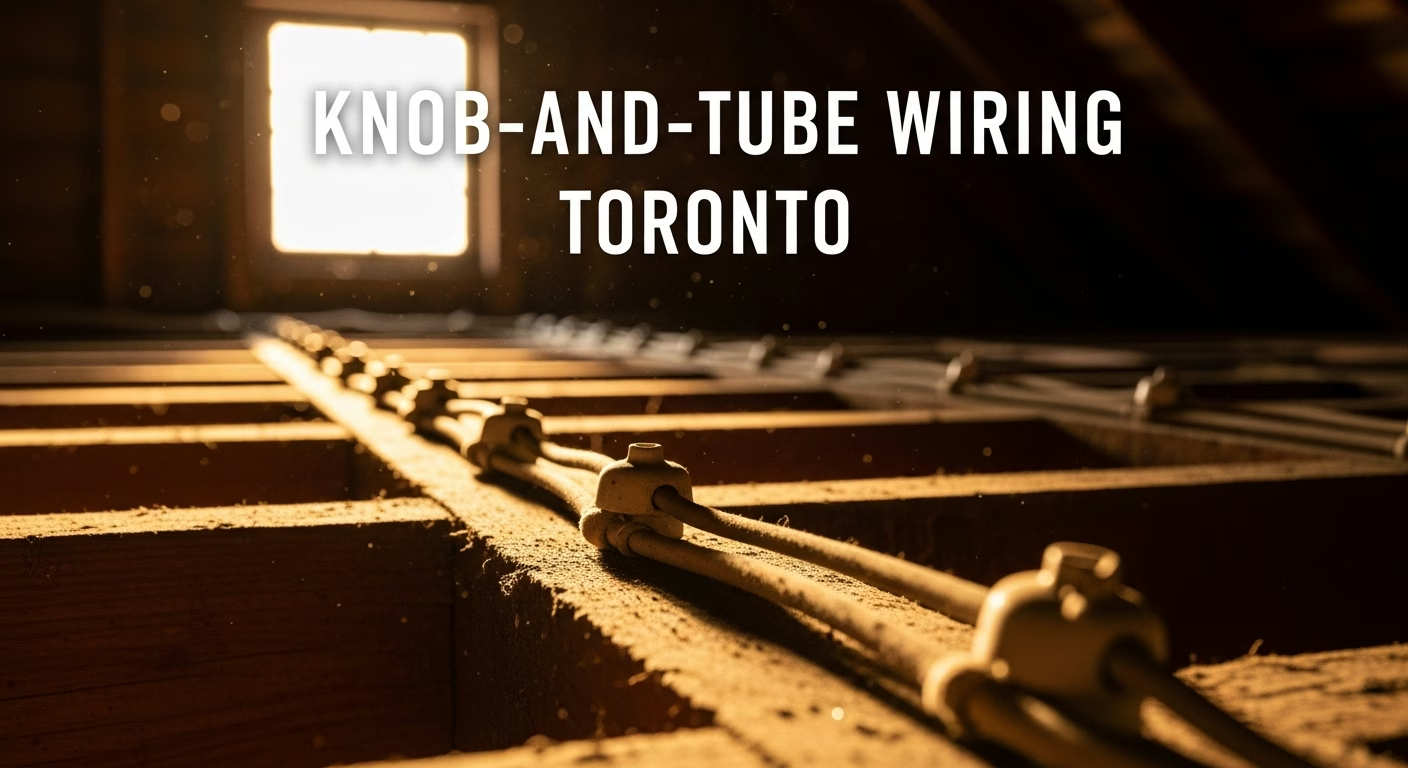
- Single conductors running parallel, not bundled in a jacket.
- Porcelain knobs and tubes anchoring the wires.
- Cloth-covered insulation (often degraded).
- Open splices in the basement or attic.
See Signs You Have Knob & Tube Wiring Toronto for the full identification checklist.
Remediation Options
Aluminum: Three Approaches
- 1. CO/ALR device replacement — replace every outlet and switch with CO/ALR-rated devices, retorque all panel and device connections. Lowest cost, but device-level remediation only. Some insurers accept; others require pigtails.
- 2. AlumiConn pigtail — at every device, splice a short copper "pigtail" to the aluminum branch wire using an AlumiConn connector (a purple wire-nut-style connector with an internal anti-oxidation paste). The device sees only copper. Insurer-accepted by most major Canadian insurers.
- 3. COPALUM crimp pigtail — a special crimp connector applied with a calibrated tool, considered the gold standard. Few Toronto electricians offer it because the tooling is expensive; AlumiConn has largely replaced it for residential.
Cost: $1,500–$4,000 for typical 1,500–2,500 sq ft home depending on device count.
K&T: One Approach
Full rewire. There is no equivalent to pigtailing for K&T because the failure is the splices and insulation throughout the wire's length, not just terminations. Cost: $8,000–$45,000+ depending on home size and conditions.
Mixed Buildings: K&T and Aluminum Together
Some Toronto homes have a mix — a 1925 home with original K&T, partially rewired in 1968 with aluminum during a kitchen renovation, then again partially rewired in 1995 with copper Romex. These layered renovations are common in long-tenured Toronto homes. The implication is:
- The K&T must come out (insurer-forced).
- The aluminum requires pigtailing or replacement.
- The 1995 Romex stays in service if it tested well.
A full audit by an LEC is necessary to map what is what and price the scope correctly.
How RenoHouse Handles Mixed Wiring
Our scope through our ECRA/ESA-licensed electrical contractor partner includes:
- Full audit of existing wiring before quote.
- K&T removal and replacement with modern Romex NMD90.
- Aluminum pigtailing with AlumiConn at every device, or full aluminum replacement if scope justifies.
- Federal Pioneer or Wadsworth panel replacement.
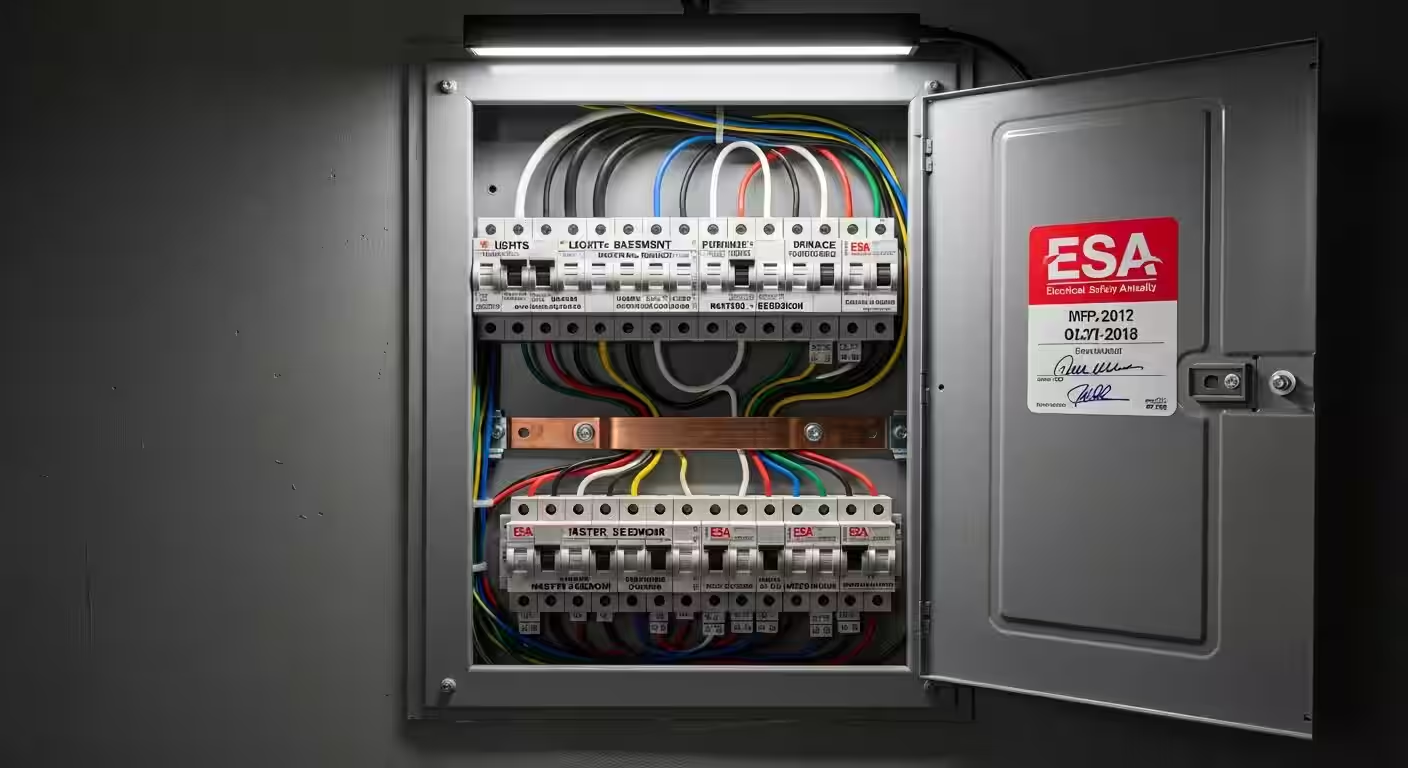
- Single ESA permit covering all scope, single Certificate of Inspection at completion.
See the Knob & Tube Rewiring Service Page and the Electrical Hot Spot Inspection service for thermal imaging of suspect terminations.
Related Reading
Knob & Tube Rewiring Toronto: Complete 2026 Guide, Knob & Tube vs Modern Wiring Comparison, Signs You Have Knob & Tube Wiring Toronto.Sources & References
Authoritative sources cited in this guide:
- Electrical Safety Authority (ESA) — Ontario electrical regulator
- Ontario Electrical Safety Code — OESC Section 26 / latest amendments
- Canadian Electrical Code Part I (CSA C22.1) — CEC standard
- NRCan — Electric Vehicle Resources — NRCan EV/charging programs
Continue Reading