RenoHouse

# Attic Conversion Mistakes Toronto: 12 Costly Errors to Avoid
Quick answer. Most Toronto attic conversion mistakes are not technical errors — they're sequencing or scoping decisions that cost owners $10,000 to $40,000 in rework, delays, or insurance and resale problems years later. After 200+ attic and dormer projects across the GTA, the same twelve mistakes appear again and again, almost always upstream of construction.Most Toronto attic conversion mistakes are not technical errors — they're sequencing or scoping decisions that cost owners $10,000 to $40,000 in rework, delays, or insurance and resale problems years later. After 200+ attic and dormer projects across the GTA, the same twelve mistakes appear again and again, almost always upstream of construction. Here they are, in order of cost impact.
For the broader framework, see the pillar Attic Conversion Toronto 2026: Complete Guide.
Mistake 1: Skipping the Asbestos Pre-Test
Cost when it goes wrong: $20,000 to $60,000 plus 2 to 6 weeks of relocation.Pre-1990 Toronto attics frequently contain vermiculite insulation (potentially asbestos-contaminated tremolite), asbestos pipe-wrap on plumbing risers, and asbestos-containing textured ceilings. A demolition crew that rips into these without testing first contaminates the entire house — every horizontal surface, every HVAC duct, every textile.
The fix once contamination has happened is Type 3 abatement: full home isolation, negative-pressure containment, HEPA cleaning of every surface, and family relocation for 2 to 6 weeks. Cost: $20,000 to $60,000.
The prevention is a $300 to $500 asbestos pre-test before any demo. See Asbestos Abatement Toronto 2026 Complete Guide.
Mistake 2: Designing a Dormer Without a P.Eng
Cost when it goes wrong: $5,000 to $12,000 plus 8 to 12 weeks of permit delay.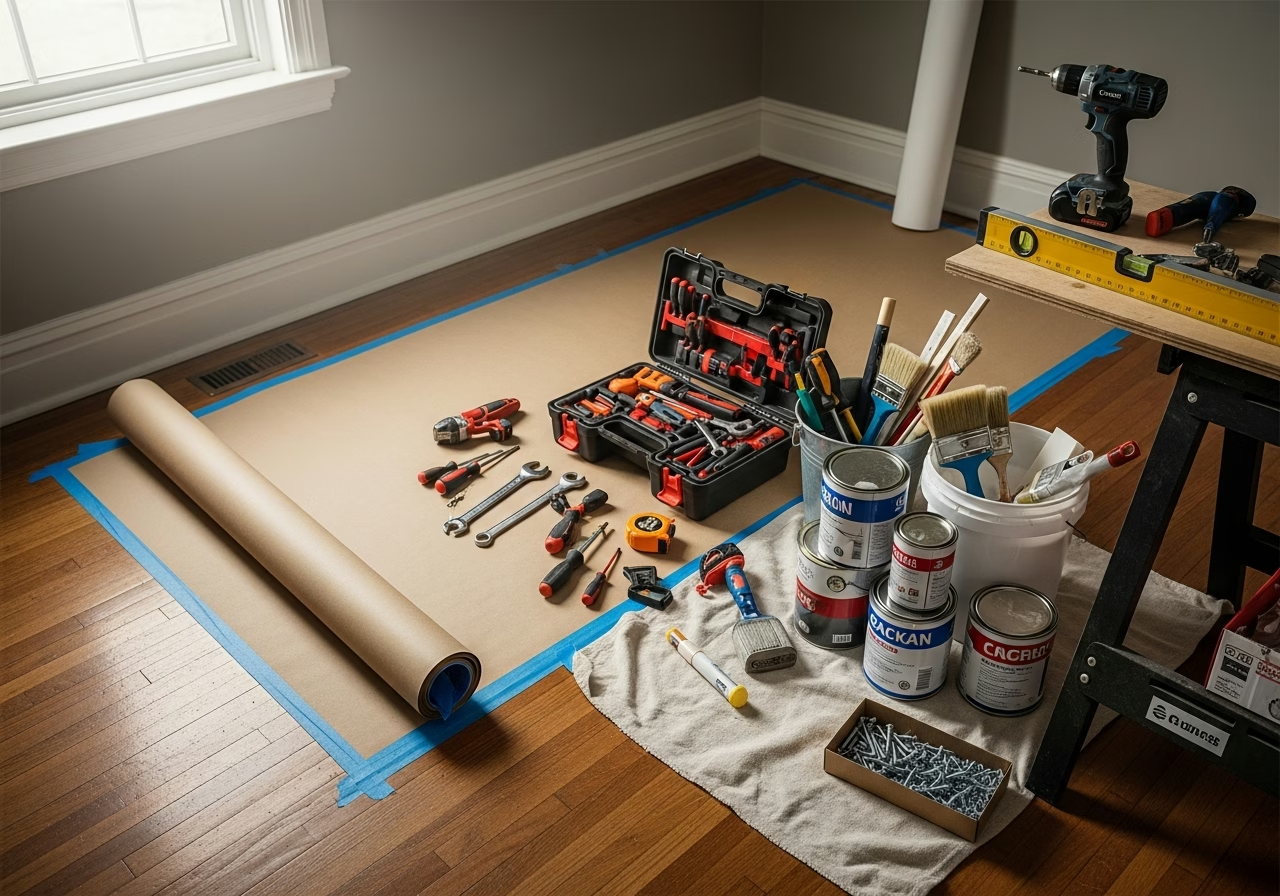
Toronto Building rejects any dormer permit application that doesn't include a stamped P.Eng letter for the structural beam and any joist reinforcement. Owners who try to use only architect drawings discover this on the first plan-review comment, then scramble to find an engineer, get the design done, and resubmit. The engineer often catches issues the architect didn't (like undersized existing joists), which can require redesigns of the architect's drawings too.
The prevention is engaging the P.Eng during the design phase, not after permit submission. See Attic Conversion Permits Toronto Process.
Mistake 3: Submitting Building Permit Before Heritage Permit
Cost when it goes wrong: 6 to 12 weeks of permit delay.Homeowners in Cabbagetown, Old Riverdale, Wychwood Park, and other HCDs often submit the Building Permit application first because they didn't know Heritage applies. Toronto Building flags the HCD address, holds the Building Permit, and requires Heritage Preservation Services approval before processing. The Heritage Permit application then takes 6 to 12 weeks on its own — time that could have been parallel-processed if started first.
The prevention is checking HCD status at the feasibility stage. The Toronto Heritage Register and HCD maps are public. See Dormer Heritage Permit Toronto: HCD Restrictions.
Mistake 4: Ignoring Existing Floor Joist Capacity
Cost when it goes wrong: $8,000 to $20,000 in late-stage joist sistering.Pre-1960 Toronto homes have ceiling joists below the attic sized for a 0.5 kPa attic load (storage, no occupancy). A bedroom requires 1.9 kPa live load capacity. The existing joists are often 2x6 or 2x8 spaced 16" or 24" o.c. — short of the new requirement.
If the structural assessment is skipped, the contractor builds the new floor over inadequate joists, the floor bounces and sags, and the owner discovers it months after move-in. The fix is sistering 2x10s or 2x12s along every existing joist — much harder after the new floor is in place than before.
The prevention is P.Eng review of existing joists during design, with sister-joist installation built into the construction sequence.
Mistake 5: Thermal Bridging Through Sloped Rafters
Cost when it goes wrong: $15,000 to $40,000 in mold remediation 3 to 7 years post-conversion.Sloped attic ceilings have rafters at 16" or 24" spacing. If you fill the cavity between rafters with R31 batt insulation, the rafters themselves bridge cold from outside to inside. In Toronto's freeze-thaw climate, this creates condensation along the inside surface of the rafters — invisible behind the drywall — and the moisture eventually grows mold inside the assembly.
Need professional home renovation?
Call RenoHouse at 289-212-2345 or get a free estimate today.
Get Free Estimate →The fix is continuous rigid foam on the interior or exterior side of the rafters, combined with the cavity insulation. Closed-cell spray foam in the cavity also works because it acts as a vapour-impermeable layer, so moist interior air can't reach the cold rafter surface.
The prevention is correct insulation strategy at design. See Attic Insulation During Conversion: Toronto Strategy.
Mistake 6: Undersized or Non-Compliant Stair
Cost when it goes wrong: $8,000 to $18,000 to rebuild.OBC residential stair geometry: 200 mm rise max, 220 mm tread min, 860 mm width min, 1.95 m headroom over the nosing line. Many existing stairs in 1.5-storey homes were built to older code or as informal "attic stairs" — too steep, too narrow, or with too little headroom.
Owners who try to keep an existing non-compliant stair fail the final inspection and have to rebuild. The rebuild often requires demolishing finished walls and ceilings on the second floor that are already complete.
The prevention is measuring the existing stair against OBC at design, and budgeting for replacement if non-compliant. See Attic Stairs vs Pull-Down: Toronto Code Comparison.
Mistake 7: Pull-Down Ladder for "Just an Office"
Cost when it goes wrong: Permit denied or final inspection failed.Pull-down attic ladders are explicitly not permitted as access to habitable rooms in Ontario. If the converted attic is permitted as an office or den (or is later treated as one by an inspector or insurer), the pull-down access fails the OBC.
Owners sometimes try to argue "it's just storage" while planning to use it as an office. The inspector decides based on what's installed (closet? finished floor? receptacle every 3.6 m?), not what the owner says.
The prevention is a permanent OBC-compliant stair from the start.
Mistake 8: Egress Window That Doesn't Open Enough
Cost when it goes wrong: $2,500 to $6,000 to replace, plus inspection delay.OBC 9.9.10 requires the egress window's clear opening to be at least 0.35 m², with no dimension less than 380 mm. An awning window with restrictive opening hardware, a small decorative gable window, or a fixed-pane "for light only" window all fail.
The prevention is specifying egress-rated windows during permit drawings — typically casement windows with full-pivot hardware. See Attic Bedroom Conversion: OBC 9.9.10 Compliance.
Mistake 9: Forgetting HVAC Capacity
Cost when it goes wrong: $4,000 to $10,000 plus comfort issues.
Adding 500 to 750 sqft of new conditioned space adds 12,000 to 18,000 BTU/hr of heating and cooling load. Many existing furnaces are sized for the original home only, with no spare capacity. The new attic space ends up cold in winter and hot in summer.
The fix is either upsizing the furnace, adding a mini-split for the attic floor, or upgrading the duct distribution. The prevention is HVAC load calculation during design, with the system upgrade built into the permit and budget.
Mistake 10: Smoke and CO Alarm Non-Compliance
Cost when it goes wrong: $400 to $1,500 plus failed final inspection.Adding a bedroom triggers updated alarm requirements: hard-wired interconnected smoke alarms in every bedroom and the corridor outside, plus CO alarms within 5 m of every sleeping room. Many older homes have only stand-alone battery alarms or none at all in some bedrooms.
The fix is hard-wiring all alarms during the conversion electrical work. Skipping it means a re-inspection and 1 to 2 weeks of delay before occupancy.
Mistake 11: Insulation Without Air Sealing
Cost when it goes wrong: $400 to $1,200 per year in lost energy efficiency, plus ice dam risk.Insulation slows heat transfer by conduction. Air sealing stops heat transfer by air movement. They're complementary, not substitutes. A converted attic with R60 insulation but unsealed top plates, electrical penetrations, and bath fan boots is still a leaky building envelope — and it's the most common form this mistake takes.
The fix is air-sealing every penetration during framing inspection (before insulation), and verifying with a blower door test. Toronto's Greener Homes Grant rebate program can subsidize the air sealing component.
Mistake 12: Working Without a Permit
Cost when it goes wrong: 5 to 10% of resale value plus retroactive permitting headache.Some homeowners try to skip permits to "save time and money." Three outcomes follow:
- Stop work order. Toronto Building responds to neighbour complaints, and a visible dormer being framed without a permit gets reported within days.
- Retroactive permit. Same drawings, same P.Eng, same fees — plus an "as-built" inspection of work in progress.
- Resale problem. Buyer's lawyer searches permits, finds the unpermitted addition, and demands a price reduction or "remove or legalize" condition.
The "savings" from skipping the permit ($5,000 to $15,000) are dwarfed by the eventual cost. See Attic Conversion Permits Toronto Process.
How to Avoid All Twelve
The pattern across all twelve mistakes is the same: shortcut at the planning stage, expensive correction at the construction or post-construction stage. The right mitigation is a thorough feasibility and design phase that includes:
- 1. Asbestos pre-test before any demo
- 2. P.Eng involved during design, not after permit rejection
- 3. HCD status confirmed at feasibility
- 4. Existing structural capacity assessed by P.Eng
- 5. Insulation strategy specified to address thermal bridging
- 6. Stair and pull-down geometry confirmed against OBC at design
- 7. Egress windows sized for OBC 9.9.10 at design
- 8. HVAC load calculation during design
- 9. Smoke and CO alarm scope included in electrical
- 10. Air sealing scope included in insulation
- 11. Building Permit (and Heritage Permit if HCD) submitted before construction starts
A complete feasibility-and-design phase costs $5,000 to $15,000. It prevents $50,000 to $200,000 of potential rework. The math is straightforward.
Next Steps
If you're planning a Toronto attic conversion, the right way to avoid these twelve mistakes is a thorough feasibility-and-design phase. This is what RenoHouse does first on every attic project: asbestos test, P.Eng pre-review, HCD check, full design before any demo.
Book an attic conversion feasibility visit — RenoHouse runs the full pre-construction process so the construction phase has no surprises.Return to the pillar: Attic Conversion Toronto 2026: Complete Guide. Related: Attic Conversion Permits Toronto Process, [Asbestos Abatement Toronto 2026](/blog/asbestos-abatement-toronto-2026-complete-guide), Load-Bearing Wall Removal Toronto 2026.
Sources & References
Authoritative sources cited in this guide:
- Ontario Building Code — OBC official text
- Toronto Building Permits — City permit portal
- Tarion New Home Warranty — Ontario new-build warranty regulator
- HCRA — Home Construction Regulatory Authority — Ontario builder/vendor licensing
Continue Reading