RenoHouse

The Decision That Shapes Your Ceiling
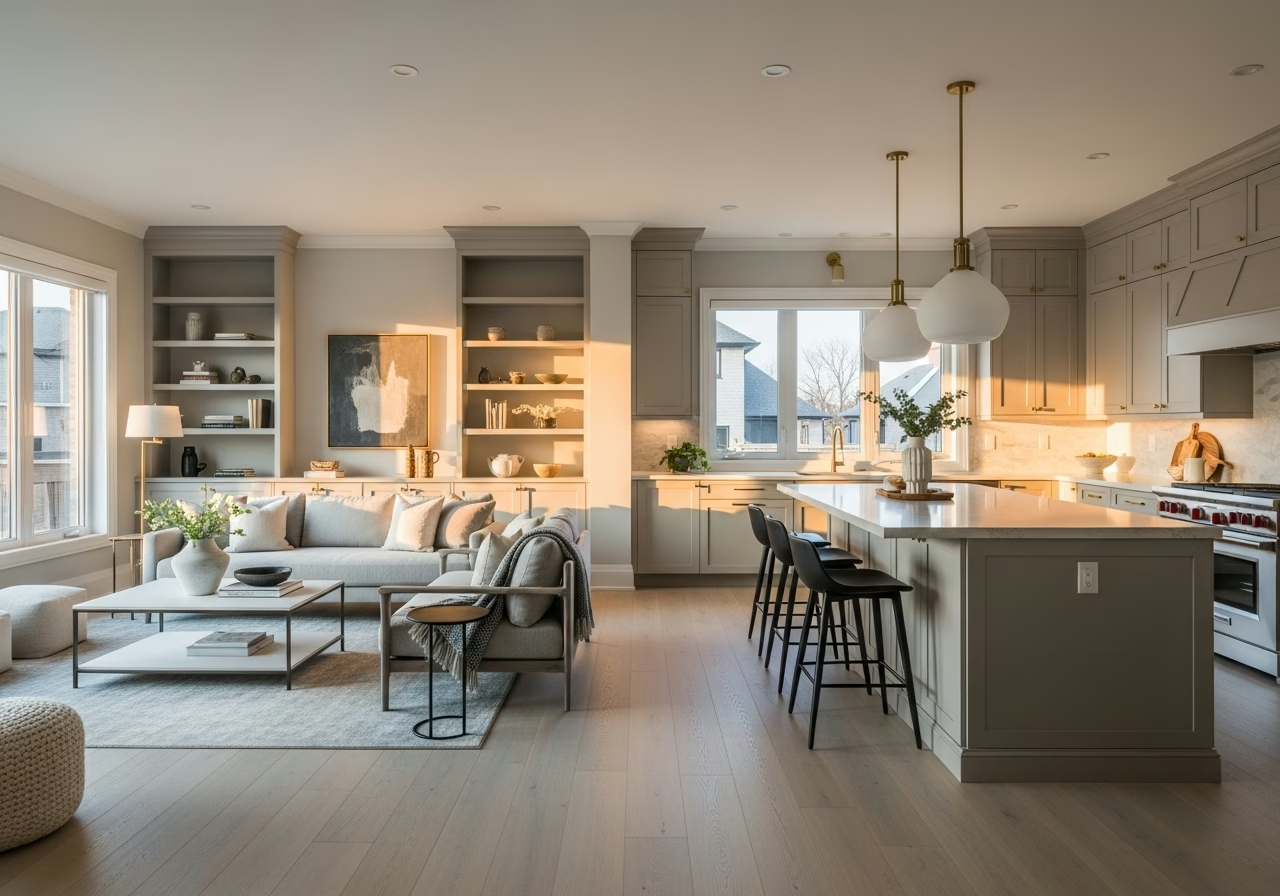
Once your engineer has confirmed beam size and material for a load-bearing wall removal, you and your contractor face the design decision that affects every photo of your finished open-concept: bulkhead or flush beam. The choice impacts ceiling height, finish strategy, install cost, and the design language of the entire space.
This post covers the trade-offs honestly so you can make the call before drawings are sealed. For broader context start with the pillar guide. For beam material decisions see LVL vs Steel vs Glulam.
What Each Means Physically
Bulkhead beam sits below the existing ceiling joists. The ceiling stays at its existing height; the beam drops 8–14 inches below ceiling depending on beam depth, painted to match the ceiling or wrapped in trim as a feature.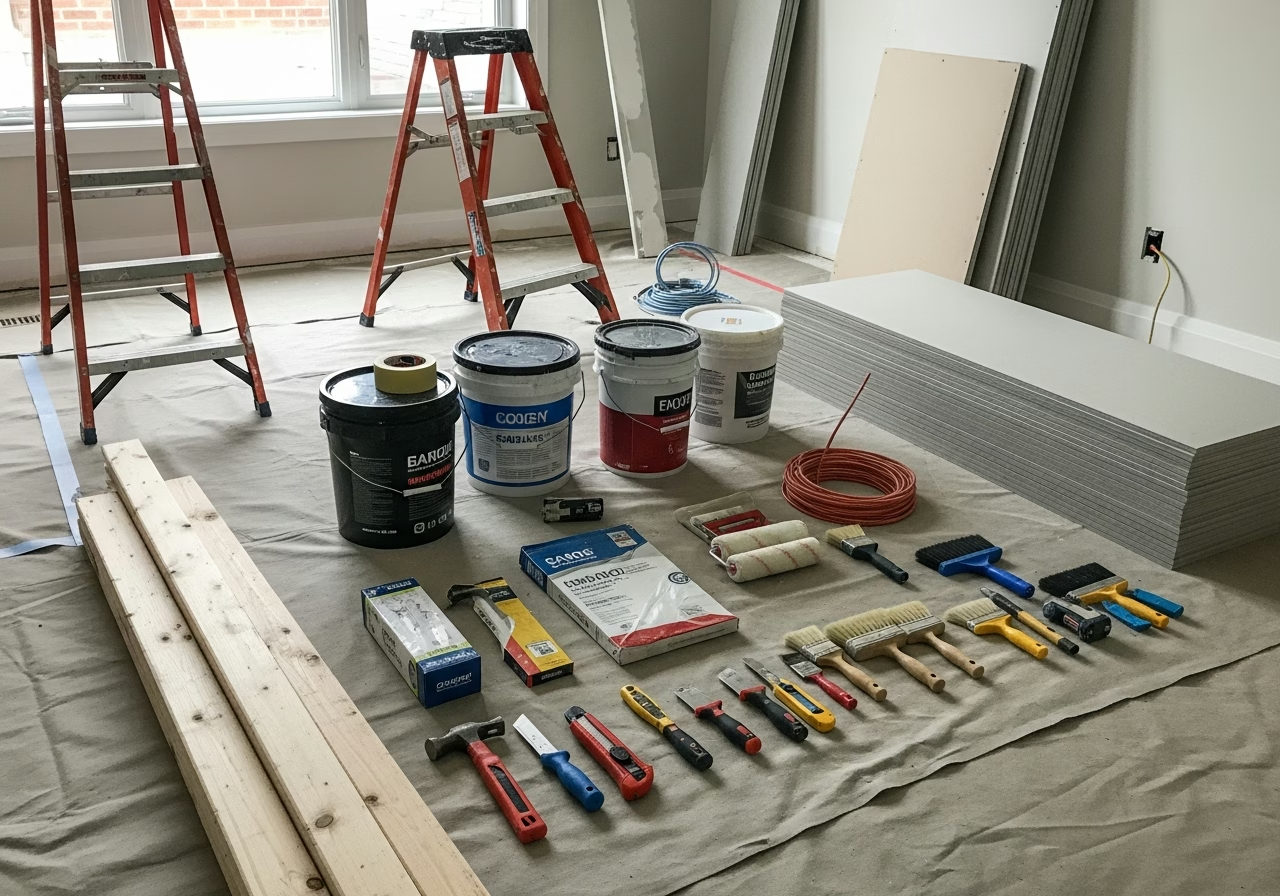
The difference is structural carpentry: with a bulkhead, the beam is added below; with a flush beam, the joists are cut and re-supported by the new beam.
Cost Comparison
For the same span, same beam material, same load:
Bulkhead beam install: typically the simpler of the two. Lift beam into place, post at each end, post bears down to foundation. One-day install for a typical 12 ft LVL. Flush beam install: requires cutting joists, supporting them temporarily, installing the new beam at joist depth, and connecting every cut joist back to the new beam with metal hangers. Two-to-three day install. Beam ends still need posts to foundation.The cost delta in 2026 Toronto:
- 10 ft span, 2-ply LVL: bulkhead $4,500–$6,500 / flush $7,000–$10,500. Delta $2,500–$4,000.
- 14 ft span, 3-ply LVL: bulkhead $7,500–$10,500 / flush $11,500–$15,500. Delta $4,000–$5,000.
- 18 ft span, steel W10x26: bulkhead $13,000–$16,500 / flush $17,500–$22,000. Delta $4,500–$5,500.
Roughly: flush adds $3,000–$5,500 to the same span and material, mostly in additional labour for joist hanger work and finish drywall.
Ceiling Height Reality
Toronto's typical bungalow and 1960s-1980s detached ceiling height is 8 ft (96 inches). Some 1990s and newer homes go to 9 ft. Older Victorian semis often have 8 ft 6 inches or 9 ft on the main floor.
A bulkhead beam drops 12–14 inches typically. Under an 8 ft ceiling, the bulkhead clearance is 6 ft 10 inches to 6 ft 11 inches — passable for walking under but visually low if the beam is centred in the room. Under a 9 ft ceiling, clearance under bulkhead is 7 ft 10 inches — feels normal.
Need professional home renovation?
Call RenoHouse at 289-212-2345 or get a free estimate today.
Get Free Estimate →For 9 ft+ ceilings, bulkhead is usually visually fine — it reads as a deliberate feature, especially if the beam is wrapped in trim or used as a lighting rail.
When Flush Wins
Flush beam is preferred when:
- Ceiling height is 8 ft and the beam location is over a primary walking or seating zone
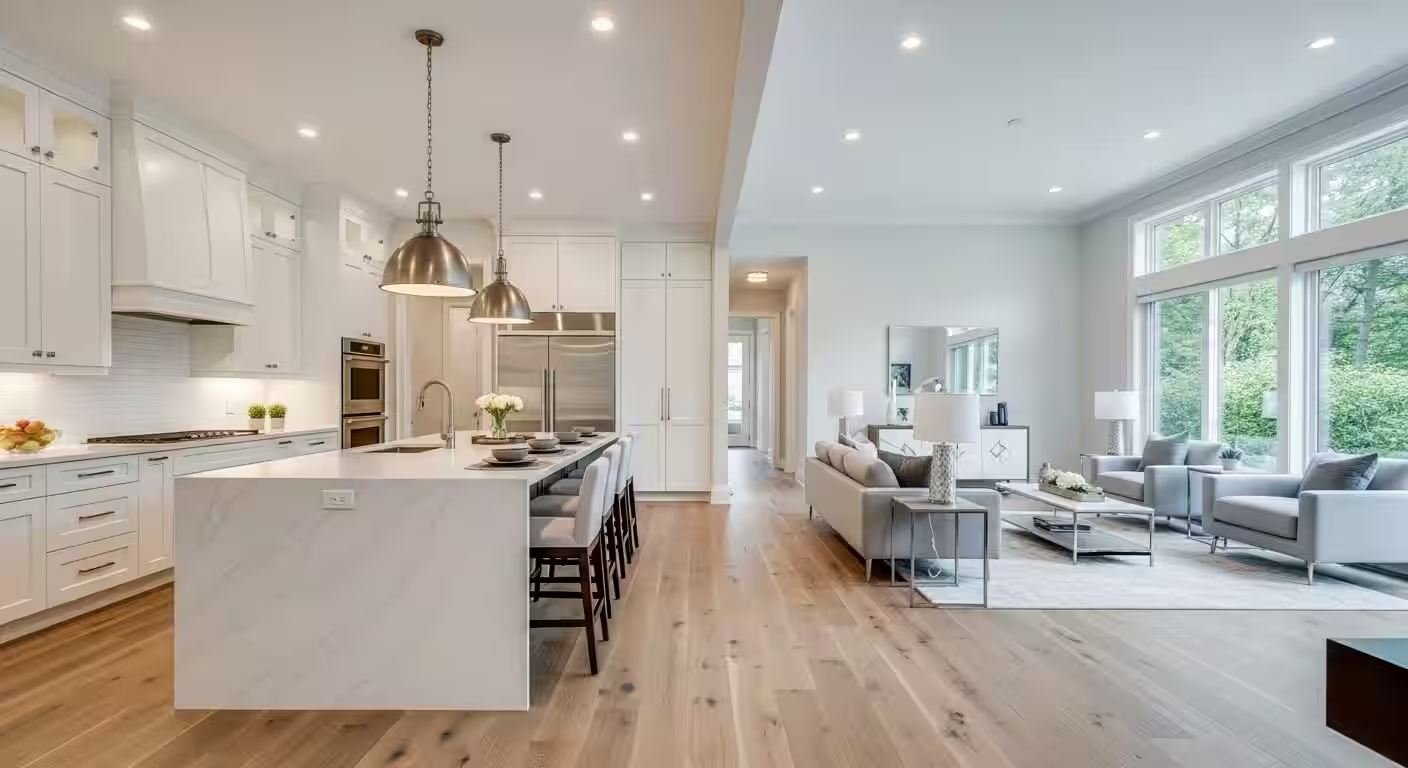
- The design language is contemporary minimalist — clean ceiling lines without interruption
- The beam location would put a bulkhead awkwardly across a kitchen-to-living sight line
- Multiple beams (multi-wall removal) would create a visually busy ceiling with bulkheads
- The home will be photographed for resale and clean ceilings improve marketing photos
When Bulkhead Wins
Bulkhead is preferred when:
- Budget is tight and the $3,000–$5,500 saving matters
- Beam location is over a transitional zone (between rooms) where a deliberate ceiling step is fine
- The home aesthetic embraces architectural beams (modern farmhouse, industrial, exposed-feature looks)
- Ceiling has 9 ft+ clearance and bulkhead doesn't compress space
- The beam is going to be wrapped as a feature — coffered ceiling, lighting rail, paint contrast
Hybrid Approach: The Decorative Wrap
For homeowners who want the cleaner look but can't justify flush beam cost, a popular Toronto compromise is the decorative wrapped bulkhead. The bulkhead is treated as a deliberate architectural element:

- Wrapped in poplar or pine trim, painted to match ceiling or contrast
- Used to house pendant or recessed lighting on each side
- Sometimes chamfered, beadboarded, or coffered to integrate with millwork
- Painted in bold contrasting colour (deep navy on white ceiling) to feel intentional
A wrapped bulkhead with lighting integration adds $800–$2,500 to the basic bulkhead install but transforms the visual reading. Many Toronto open-concept renovations end up here as the best-of-both-worlds answer.
See Built-Ins and Millwork in Toronto for similar trim integration approaches.
Layout-Specific Considerations
Kitchen island under or near the beam
If your island will sit directly under the beam line, flush beam usually wins. Pendants over a bulkhead-with-island feels cluttered; pendants over a clean ceiling feels intentional.
Sight lines from front door
If the beam is visible the moment someone walks in your front door, the design language of the beam (bulkhead vs flush vs wrapped) is the first thing visitors notice. We often recommend flush or beautifully wrapped bulkhead in this case.
Multiple beams (two-wall removal)
If you're removing two walls (kitchen-dining and dining-living, the typical bungalow scope), two parallel bulkheads can feel visually heavy. Flush for both, or one flush and one wrapped feature, usually reads cleaner.
HVAC and ductwork
If the beam location coincides with HVAC trunk ductwork, sometimes the duct must run alongside the beam. A bulkhead can absorb the duct above it (wider but no taller); flush beam means re-routing ducts, which adds complexity and cost. We coordinate this in design.
What We Recommend in Common Toronto Scenarios
- 1960s bungalow, single wall, 8 ft ceiling, mid-budget kitchen reno: wrapped bulkhead with pendant lighting integration.
- Two-storey 1970s detached, two walls, 8 ft ceiling, premium open-concept: double flush beam for clean ceiling, budget reflects it.
- 1900 Victorian semi, single wall, 9 ft ceiling, character home: bulkhead with millwork wrap that matches existing trim profiles.
- 1980s North York detached, multi-wall, 9 ft ceiling: flush for the main span, wrapped bulkhead at the perpendicular for definition.
The Conversation We Have With Every Client
Before we finalize beam strategy, we mock up the bulkhead and flush options in your space — sometimes literally with painters tape on the ceiling, sometimes in 3D rendering, sometimes by walking you through a recently completed project of each type. The decision should be visceral, not abstract.
Book a load-bearing wall consultation and we'll bring photos of recently completed Toronto open-concepts using each strategy so you can see the visual reading before you commit.Sources & References
Authoritative sources cited in this guide:
- Ontario Building Code — OBC official text
- Toronto Building Permits — City permit portal
- Tarion New Home Warranty — Ontario new-build warranty regulator
- HCRA — Home Construction Regulatory Authority — Ontario builder/vendor licensing
Continue Reading