RenoHouse

# Crawl Space Encapsulation Mistakes Toronto: 12 Errors That Sink the System
Quick answer. We have inspected dozens of Toronto crawl spaces that were encapsulated by other contractors and failed within five years. The patterns repeat. This post lists the twelve most common errors, why each one fails in the Toronto climate, and the right spec or sequence that prevents the issue.We have inspected dozens of Toronto crawl spaces that were encapsulated by other contractors and failed within five years. The patterns repeat. This post lists the twelve most common errors, why each one fails in the Toronto climate, and the right spec or sequence that prevents the issue.
For the full project context, see the pillar Crawl Space Encapsulation Toronto Complete Guide. For the cost band that proper spec falls in, see Crawl Space Encapsulation Cost Toronto.
1. 6-Mil Poly on the Floor
The single most common mistake. Construction-grade 6-mil poly is the cheap default at Home Depot. It tears at the first plumbing service call, gets walked on during HVAC maintenance, and degrades from minor abrasion over years.
Right answer: 20-mil reinforced poly with string-grid scrim (Americover XaviRox, Stego Wrap, or Viper CS). See Crawl Space Vapor Barrier Toronto Comparison.
2. No Dehumidifier
If you seal the vents and install a vapor barrier without active dehumidification, Toronto summer humidity will push the crawl above 65% RH within a week. Condensation forms on the membrane and on cold metal (gas lines, water lines, ductwork).
Right answer: Aprilaire E080, Santa Fe Compact 70, or AlorAir Sentinel HDi65, ducted, with condensate pump or gravity drain. See Crawl Space Dehumidifier Toronto Comparison.
3. Encapsulating Over Visible Mold
Sealing mold under the membrane traps it but does not remove it. Spores remain in joists, subfloor, and any remaining insulation. The musty smell continues, now coming from a sealed substrate that is harder to fix.
Right answer: third-party air sampling (Pinchin, EHS), CCMI-certified remediation, post-remediation verification, then encapsulation. See Crawl Space Mold Removal Toronto.
4. Encapsulating Over Active Pest Activity
Mice and rats nest in the warm, dry space behind foam board. They chew through poly. They contaminate insulation with droppings.
Right answer: licensed pest firm (Orkin, Terminix, Abell) trap-out and clean-cycle sign-off, exclusion with 1/4-inch hardware cloth, then encapsulation. See Crawl Space Pest Control Rodent Toronto.
5. Foam Board Without Rim-Joist Treatment
The rim joist is the single largest air leak in any older Toronto home. Insulating the foundation walls without sealing the rim leaves 40% to 60% of the energy benefit on the table.
Need professional home renovation?
Call RenoHouse at 289-212-2345 or get a free estimate today.
Get Free Estimate →Right answer: 2-inch closed-cell spray foam at the rim joist (R-12 to R-14), with a thermal barrier where required by OBC 9.10.17. See Crawl Space Insulation R-Value Toronto.
6. Skipping the Radon Suction Tee
A sealed crawl is the perfect substrate for sub-membrane radon depressurization. Adding the suction tee during the encapsulation costs $300 to $500. Cutting and re-sealing the membrane to retrofit it later costs $1,500 to $3,000.
Right answer: install the suction tee under the membrane during encapsulation even if current radon is low. Add the fan only if testing later shows levels above 200 Bq/m3. See Crawl Space Radon Mitigation Toronto.
7. Asbestos Pipe Wrap Disturbed
Pre-1985 Toronto homes often have asbestos pipe wrap on heating supply and return lines. Cutting, removing, or even brushing against friable wrap during encapsulation releases fibers. Insurance liability is substantial.
Right answer: stop, test, abate. Pinchin, EHS, or another DOP-certified abatement firm performs Type 2 or Type 3 abatement under O. Reg. 278/05 before encapsulation. See Crawl Space Asbestos [Vermiculite Toronto](/blog/crawl-space-asbestos-vermiculite-toronto).
8. Vermiculite (Zonolite) Ignored
Loose-fill vermiculite in floor cavities or wall pockets often contains tremolite asbestos. Disturbing it during foam-board install is the highest-risk activity in older Toronto crawls.
Right answer: visual identification on first inspection, lab test if uncertain, Type 3 abatement before any encapsulation work begins.
9. Vapor Barrier Terminated With Tape Alone
A run of seam tape at the wall termination fails within months. Tape adhesive cannot resist the long-term peel forces of poly under thermal cycling.
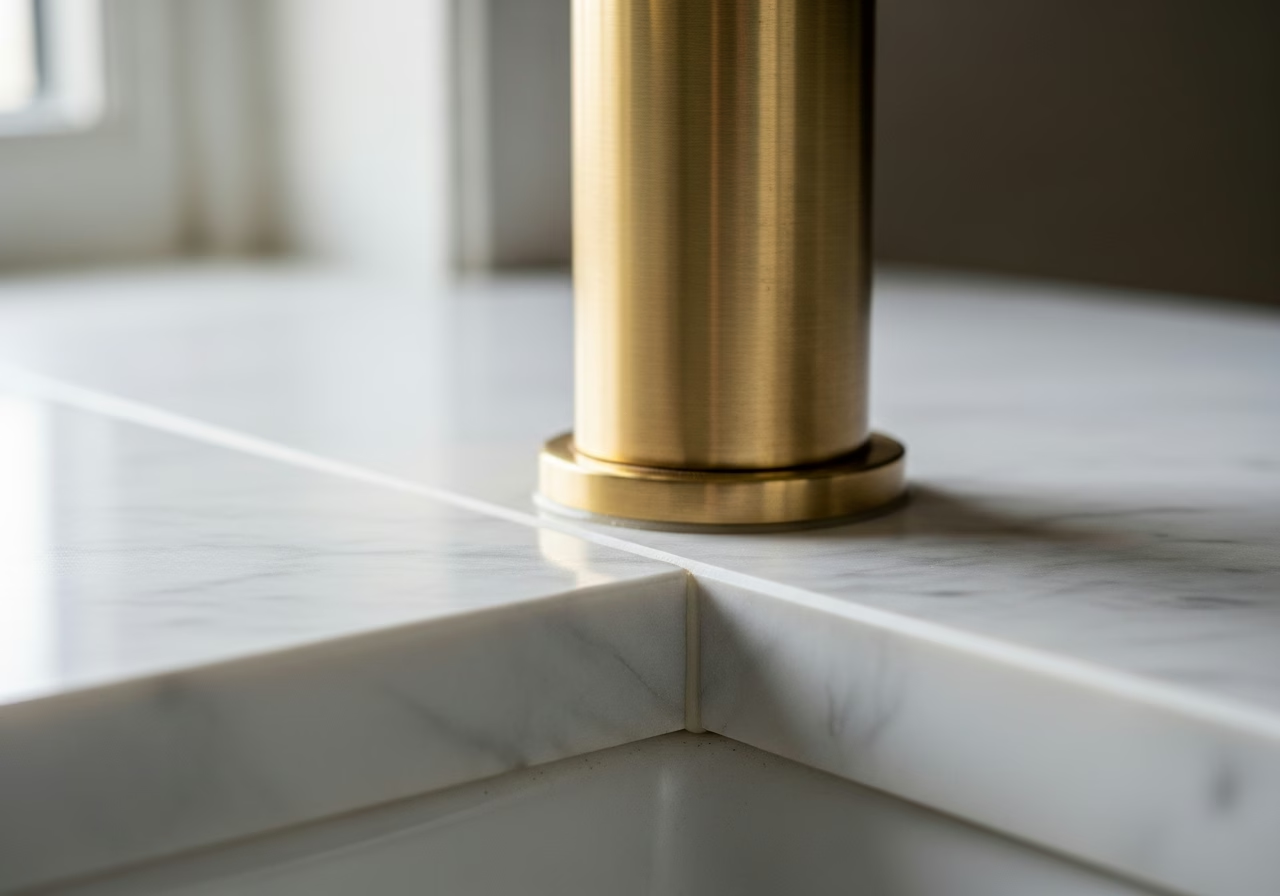
Right answer: mechanical termination bar with stainless or galvanized fasteners at 6 to 8 inch spacing, polyurethane sealant under and over the bar.
10. Wrong Foam Board Thickness on Stone Foundations
Pre-1930 Toronto stone foundations contribute near-zero R-value. A 1-inch foam board (R-5) leaves the wall at well below code-effective R-10.
Right answer: 2-inch Foamular 150 minimum, 2.5-inch Foamular 250 preferred for stone or rubble walls. See Crawl Space Insulation R-Value Toronto.
11. No Thermal Barrier on Foam
OBC 9.10.17 requires a thermal barrier (1/2-inch drywall or intumescent coating) over foam plastic in accessible spaces. Toronto inspectors increasingly enforce this even on service-only crawls.
Right answer: confirm with the inspector before installation; default to intumescent coating (DC315 or FireFree FX) on all foam-board surfaces.
12. No Documentation Pack at Resale
A great encapsulation with no paperwork is worth half its potential at sale. Buyers and inspectors want to see the spec sheet, manufacturer warranty, abatement clearance letter (if any), pest exclusion sign-off (if any), mold PRV (if any), and humidity log.
Right answer: every RenoHouse crawl encapsulation ends with a documentation pack including all manufacturer warranties, abatement and remediation letters, photographs of every layer, and 90-day humidity log data.
How to Audit an Existing Encapsulation
If you bought a Toronto home where the previous owner encapsulated the crawl, here is the 30-minute audit:
- 1. Look at the membrane. Is it 20-mil with visible scrim grid, or thin clear poly? If thin, plan to redo.
- 2. Run a humidity meter. Above 60% RH means no working dehumidifier or insufficient capacity.
- 3. Sniff. Musty smell means mold under the membrane or unaddressed source.
- 4. Check the rim joist. Bare wood means the highest-leverage upgrade was skipped.
- 5. Look for radon-tee stub. A capped 4-inch pipe under the membrane is the right spec.
- 6. Ask for documentation. No spec sheets, no warranties, no clearance letters means the work is unverified.
Honest Positioning
We have rebuilt encapsulations done by competitors more than once. The remediation is not always cheap — typically $4,000 to $12,000 to peel the existing membrane, address the underlying issue (mold, pests, water, asbestos), and re-encapsulate to the right spec. We are blunt with homeowners about whether to remediate or simply rebuild from scratch, depending on what is salvageable.
Get an Audit
Free audit of an existing encapsulation at /services/home-renovation/crawl-space-encapsulation. We bring moisture meter, humidity reader, and a flashlight, and we tell you in writing what is sound and what needs to come out.
Sources & References
Authoritative sources cited in this guide:
- Ontario Building Code — OBC official text
- Toronto Building Permits — City permit portal
- Tarion New Home Warranty — Ontario new-build warranty regulator
- HCRA — Home Construction Regulatory Authority — Ontario builder/vendor licensing
Continue Reading