RenoHouse

# Heat Pump Condo Installation Toronto: The Constraints and Paths 2026
Quick answer. Condo heat pump installation in Toronto is technically feasible but operationally complex. The condo corporation owns the building envelope, the outdoor walls, and (in most cases) the central HVAC distribution. The unit owner owns whatever is inside the suite.Condo heat pump installation in Toronto is technically feasible but operationally complex. The condo corporation owns the building envelope, the outdoor walls, and (in most cases) the central HVAC distribution. The unit owner owns whatever is inside the suite. That ownership boundary determines what kind of heat pump you can install, where the outdoor unit goes, and whether the project happens at all. This post covers the four configurations that work in 2026 Toronto condos, the approval process, and the buildings where heat pump retrofit is realistically achievable.
For the full conversion guide, see Heat Pump Conversion Toronto: The Complete 2026 Guide. For the ducted vs ductless decision, see Ducted vs Ductless Mini-Split Toronto.
RenoHouse Role on Condo Retrofits
We coordinate condo heat pump installations with TSSA-G2 / HVAC-licensed installers and (where required) the condo corporation's approved contractor list. Our role on condos: liaise with property management, secure board approval, draft the contractor scope to corporation specifications, and manage the install timeline around building access rules. The mechanical and electrical work is done by certified specialists.
Building Type Determines What Is Possible
| Building Type | Heat Pump Path | Notes |
|---|---|---|
| 2010s+ high-rise with central VRF | Limited (work with existing VRF) | Owner cannot install separate outdoor unit |
| 1990s-2000s high-rise with PTAC (window/wall units) | Replace PTAC with cold-climate PTAC heat pump | Most accessible path |
| Stacked townhome | Sidewall or rear-yard outdoor unit | Most flexible |
| Mid-rise 2000s+ with hydronic + central AC | Mini-split with sidewall outdoor unit | Approval-dependent |
| Loft conversion (Liberty Village, Distillery, King West) | Ductless mini-split, sidewall mount | Aesthetic constraints |
| Pre-1990 high-rise with central HW + window AC | PTAC heat pump replacement | Very accessible |
Configuration 1: PTAC Heat Pump Replacement
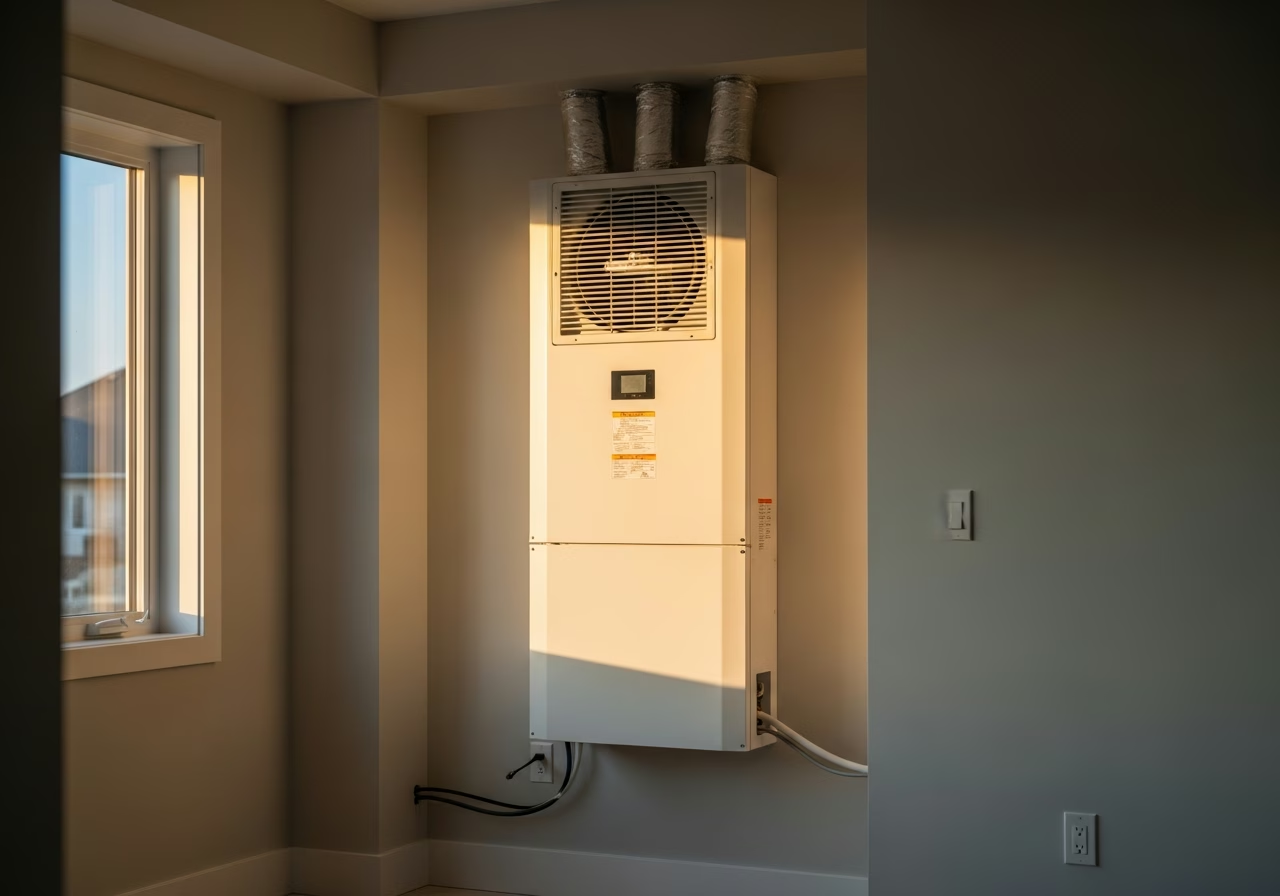
PTAC (packaged terminal air conditioner) units are the through-wall sleeves common in 1980s-2000s high-rises. Modern cold-climate PTAC heat pumps slot into the same sleeves and replace both heating and cooling.
Pros:
- Direct one-for-one replacement; no envelope penetration changes.
- No condo board approval typically required (in-suite swap).
- $1,800-$3,500 per unit installed.
- Operates as primary heat in shoulder seasons; existing baseboard or building hydronic covers cold snaps.
Cons:
- PTAC heat pump capacity (8-14K BTU) is suitable for one room or open suite up to 600 sqft.
- Aesthetics — the unit is at the wall opening, not hidden.
- Older buildings sometimes have non-standard sleeve dimensions.
- Cold-climate PTAC models are limited; verify -15C performance.
Best for: 1980s-2000s high-rises with existing PTAC sleeves.
Configuration 2: Sidewall-Mounted Single-Zone Mini-Split
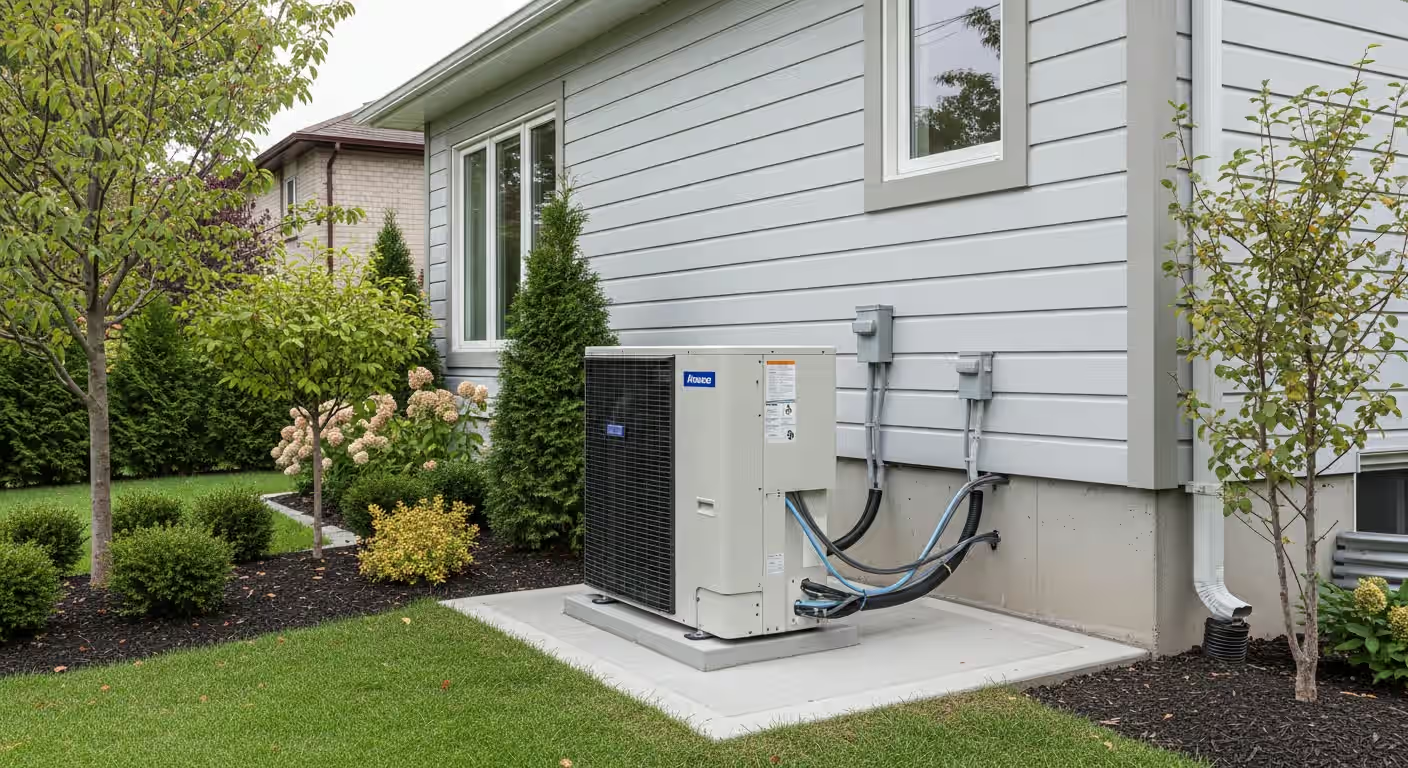
For condos with a balcony or accessible exterior wall, a sidewall-mounted outdoor unit feeds one or two indoor heads. The outdoor unit is small (typically 24-36 inches wide by 12-16 inches deep) and mounts via a dedicated bracket.
Pros:
- True cold-climate performance.
- Owner-controlled thermostat.
- Integrates with smart home systems.
- $5,500-$9,500 installed.
Cons:
- Requires condo board approval (modification to common-element exterior wall).
- Must comply with building's exterior aesthetic guidelines.
- Bracket and refrigerant routing must avoid drilling structural beams.
- Sound limits enforced by some boards (rare for variable-speed CCHP units, which are quiet).
Best for: stacked townhomes, podium-level condos, side-mounted balcony layouts.
Configuration 3: Balcony-Mounted Single-Zone Mini-Split
Most common Toronto condo retrofit configuration. Outdoor unit sits on the balcony floor or on a wall-mounted bracket on the balcony's interior wall (not the exterior). Refrigerant lines route through the wall to the indoor head.
Pros:
Need professional renovation?
Call RenoHouse at 289-212-2345 or get a free estimate today.
Get Free Estimate →- No exterior modification (depending on condo rules).
- Easier approval — many boards have a standard form for balcony HVAC.
- Strong cold-climate performance.
- $5,500-$9,500 installed.
Cons:
- Balcony footprint reduced by unit (~3-4 sqft).
- Requires balcony floor structural sufficiency.
- Building's outdoor air may be enclosed (some balconies are partially glassed) — verify ventilation.
- Cold weather operation produces some defrost noise.
Best for: typical 2000s-2010s Toronto high-rise condos with open balconies.
Configuration 4: Multi-Zone Mini-Split for 2-Bed Suites
Larger condos (1,000+ sqft, 2-3 bedrooms) benefit from a multi-zone outdoor unit feeding 2-3 indoor heads — primary living area + bedrooms.
Pros:
- True per-room zoning.
- Better load matching for variable suite occupancy.
Cons:
- Larger outdoor unit footprint.
- Multiple refrigerant penetrations through exterior wall.
- $11,500-$18,000 installed.
- Higher approval complexity.
Best for: 2-3 bedroom condos and stacked townhomes with multiple zones to condition.
Condo Board Approval Process
Typical approval flow in 2026:
- 1. Review condo rules and declarations. Many boards have specific clauses governing HVAC modifications, exterior unit placement, refrigerant types, and noise thresholds.
- 2. Request information from property management. Get the corporation's HVAC modification application form, list of approved contractors (some boards limit to a vetted list), and timing rules (some buildings limit work hours).
- 3. Submit application. Includes:
- Outdoor unit placement diagram.
- Refrigerant routing through wall.
- Electrical load impact.
- Sound rating (dB at 1m).
- Contractor credentials (TSSA-G2, ECRA, insurance).
- 4. Board review. 4-12 weeks typical. Some boards require physical site walk by property manager or board representative.
- 5. Approval letter. Specifies work hours, common element protection requirements, deposit amounts (some boards hold $500-$2,000 refundable deposit until completion).
- 6. Schedule install. Coordinate with property management for elevator booking, freight elevator access, parking permits.
- 7. Post-install verification. Property management may inspect; deposit refunded.
What Boards Approve Most Readily
In 2026, condo boards in Toronto are increasingly receptive to heat pump retrofits because:
- Provincial energy efficiency mandates pressure boards to support electrification.
- Insurance discounts available for buildings with documented sustainability projects.
- Resale value of suites with modern HVAC is higher.
Most receptive: 2010s+ buildings with sustainability committees, LEED-certified buildings, mid-rise stacked townhome corporations.
Most resistant: pre-1990 high-rises with high-pressure central systems where individual unit modification could affect building balance.
What Boards Often Reject
- Outdoor unit placement on roof (almost always common element, off-limits to individual owners).
- Drilling into structural exterior walls without engineering review.
- Units exceeding building's noise threshold (some boards cap at 50 dB at 1m).
- R-410A units (some progressive boards now require R-454B or R-32).
- Contractors not on the building's approved list.
Electrical Considerations
Most condo suites have 100-200A panels. A single-zone mini-split adds 15-30A draw. Multi-zone adds 30-50A. Verify panel capacity before committing.
If panel upgrade is needed, the condo's electrical service may not support increased suite-level capacity (limited by building feeder). Check with property management.
Refrigerant Lines Through Walls
Refrigerant penetrations through exterior walls require:
- Sleeved and sealed (no air infiltration).
- Insulated to prevent thermal bridging.
- Protected from rodent / pest entry.
- Approved by structural engineer if penetration is in a load-bearing wall.
Cost Summary for Condo Retrofits
| Configuration | Cost Range |
|---|---|
| PTAC heat pump replacement | $1,800-$3,500 per unit |
| Single-zone mini-split (balcony) | $5,500-$9,500 |
| Single-zone mini-split (sidewall) | $6,500-$11,000 |
| Multi-zone mini-split (2-3 zones) | $11,500-$18,000 |
Plus condo deposit ($0-$2,000, refundable).
Rebates for Condo Retrofits
- Greener Homes Loan: yes, condo owner-occupants qualify. Up to $40K interest-free.
- Ontario HRS: yes, if suite is on Enbridge gas (rare in newer condos).
- HRS: yes, condo retrofits qualify.
- Condo-specific incentives: some Toronto condos run building-wide retrofit programs with corporation-funded rebates.
When Heat Pump Retrofit Is Not Realistic
Skip the project if:
- Building is in active receivership or has special-assessment battles.
- Corporation's by-laws prohibit any exterior unit (rare; usually a workaround exists).
- Suite has no exterior wall access (interior-facing studio in some atrium-style buildings).
- Owner is selling within 18 months.
Next Steps
A scoping visit at the condo, plus a review of the corporation's HVAC modification rules, settles the question of whether heat pump retrofit is achievable. RenoHouse handles the property management coordination and contractor selection from the corporation's approved list.
Book at /services/hvac-energy/heat-pump-conversion. For the full guide, see [Heat Pump Conversion Toronto: The Complete 2026 Guide](/blog/heat-pump-conversion-toronto-2026-complete-guide). For ducted vs ductless guidance, see Ducted vs Ductless Mini-Split Toronto.
Sources & References
Authoritative sources cited in this guide:
- NRCan — Heating and Cooling — NRCan heating/cooling guidance
- Canada Greener Homes Loan — Federal energy retrofit financing
- CSA F326 (Mechanical Ventilation) — Residential HRV/ERV standard
- Enbridge Home Renovation Savings (HRS) program — Provincial heat pump rebate
- TSSA Fuel Safety — Ontario fuel/gas regulator
Continue Reading