RenoHouse

# In-Law Suite Private Entrance Toronto: Options and Costs 2026
Quick answer. A separate entrance is one of the four pillars of the MHRTC self-contained suite test (along with kitchen, bathroom, and sleeping area). For most Toronto homes, the entrance is also the single most location-constrained design decision: lot width, side-yard setbacks, grade, and existing exterior wall conditions narrow the options quickly.A separate entrance is one of the four pillars of the MHRTC self-contained suite test (along with kitchen, bathroom, and sleeping area). For most Toronto homes, the entrance is also the single most location-constrained design decision: lot width, side-yard setbacks, grade, and existing exterior wall conditions narrow the options quickly.
This post walks through every viable private entrance option for a Toronto in-law suite, the cost range for each, the permit requirements, and the accessibility implications.
Honest Positioning
RenoHouse coordinates the building permit, structural design, and trade execution for new entrances. The MHRTC eligibility of any specific entrance configuration is confirmed by the homeowner's CPA. Excavation near a foundation requires structural engineering review.
Option 1: Existing Side Door (Re-Designated)
The cheapest and fastest path. Many Toronto detached and semi-detached homes have an existing side door (often opening into a hallway or kitchen). The door is re-purposed as the dedicated suite entrance, with an interior wall reconfiguration to direct traffic into the suite vestibule.
Option 2: New Side Door (Cut Into Existing Wall)
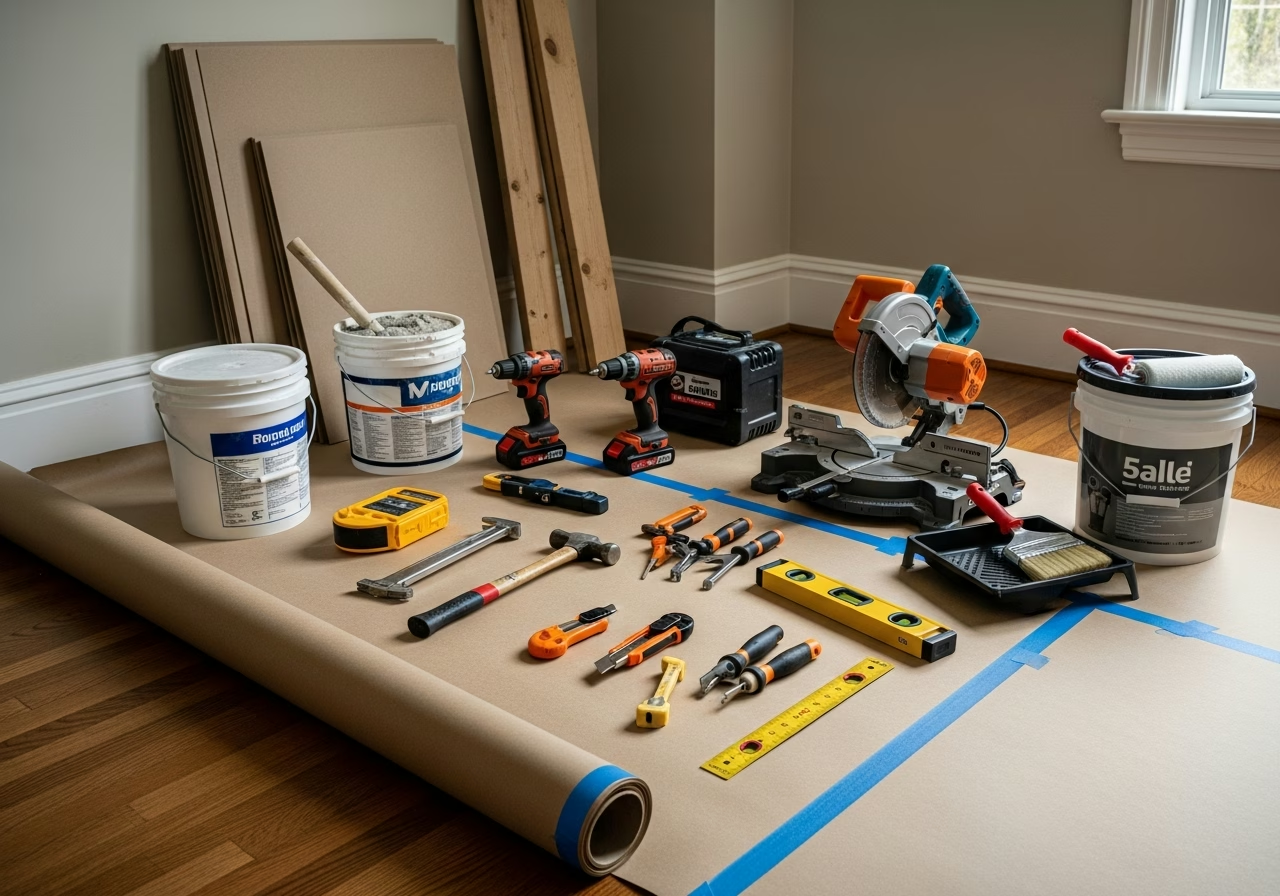
A new exterior door cut into an existing exterior wall, typically on the side of the home. Used when no existing side door exists or when the existing one is too far from the suite.
Cost: $5,500-$10,500 depending on framing complexity, header sizing, and finish detailing.Itemized:
- Demolition and opening cut: $1,200-$1,800.
- Header (typically 2x10 or 2x12 doubled, structural engineer review for any opening over 4'): $400-$1,200.
- Door and frame (insulated steel, accessible threshold): $1,500-$3,500.
- Exterior finish patch (siding, brick, stucco): $1,000-$2,500.
- Interior finish patch (drywall, paint, trim): $800-$1,500.
- Stoop or landing: $600-$1,500.
Option 3: New Side Walkout (Excavated)
The classic Toronto basement in-law suite entrance. An excavation outside the foundation creates a stairwell down to a new exterior door at the basement level. Often combined with a small concrete or masonry retaining wall on each side and a roof or canopy over the stair.
Need professional home renovation?
Call RenoHouse at 289-212-2345 or get a free estimate today.
Get Free Estimate →Itemized:
- Excavation: $3,500-$6,500.
- Retaining walls (concrete or block): $2,500-$5,000.
- Stair (concrete or pressure-treated): $1,500-$2,800.
- Door and frame: $1,500-$3,000.
- Drainage (interior weeping tile tie-in or sump pump line): $800-$1,500.
- Canopy or shed roof (recommended): $1,500-$3,200.
- Engineering and waterproofing detail: $800-$1,500.
Option 4: Existing Walkout (Lower-Cost Path)
If the home already has a walkout basement (e.g., back-yard sloped lot with at-grade or near-grade door), the suite entrance is essentially free.
Cost: $0-$2,500 (door upgrade if needed). Best for: homes on sloped lots where the basement floor meets grade at the rear. Permit: building permit if the door is upgraded; nothing additional otherwise. Accessibility: if the existing walkout is at grade with no-step threshold, this is the most accessible basement option in Toronto stock.Option 5: Front-Yard Areaway (Converted)
Some older Toronto homes have an existing front-yard areaway (a shallow excavation in front of the basement window). This can sometimes be expanded into a code-compliant entrance with a stair down from grade.
Cost: $7,500-$14,000. Best for: older Toronto stock (1900s-1950s semi-detached) with existing areaways. Limitations: front-yard appearance can be visually heavy; some neighbourhoods discourage front-of-house basement entrances. Permit: building permit. Toronto zoning bylaw 569-2013 may have specific provisions for front-yard areaways and stairwells.Option 6: Rear Walkout
Similar to a side walkout but in the rear yard. Can be combined with a deck or patio for a softer transition. Often the best aesthetic option when the rear yard supports it.
Cost: $10,500-$19,500 (similar to side walkout, slightly more for landscape integration). Best for: wider rear yards with no obstructions; integrated with deck/patio. Permit: building permit. Setback compliance check.Option 7: Second-Floor Exterior Stair / Deck Access
For second-floor in-law suites, a private exterior staircase up to a second-floor entrance — often integrated with an existing or new deck.
Cost: $14,000-$28,000.Itemized:
- Pressure-treated stair structure: $4,500-$8,000.
- Deck/landing at top: $3,500-$6,500.
- Door and frame: $1,800-$3,500.
- Footings and railings: $2,000-$4,500.
- Permit and engineering: $1,200-$2,500.
Option 8: Garage Conversion Entrance
If the home has an attached garage and the in-law suite is on the main floor adjacent to it, the existing garage exterior door can become the suite entrance with minor modification.
Accessibility Comparison
| Option | No-Step Possible | Stair Risk | Winter Snow Burden |
|---|---|---|---|
| Existing side door | Yes (with threshold work) | Low | Low |
| New side door | Yes | Low | Low |
| New side walkout | No | High | High |
| Existing walkout | Yes (at-grade) | Variable | Medium |
| Front areaway | No | High | High |
| Rear walkout | Variable | Medium | Medium |
| Second-floor stair | No | High | High |
| Garage entrance | Yes | Low | Low |
For aging parents with mobility concerns, the at-grade options (existing side door, new side door, existing walkout, garage entrance) are dramatically safer than any stair-required option.
Building Code Considerations
Every entrance to a self-contained dwelling unit must:
- Be a minimum of 32" clear opening (36" door preferred).
- Have a non-slip exterior landing/stoop, minimum 36" x 36".
- Have weather protection (canopy, roof overhang, or covered porch — recommended though not always strictly required).
- Have an exterior light (fixture and switch).
- Have an interconnected smoke alarm in the suite.
- Comply with Ontario Building Code egress and fire separation requirements.
For new walkouts and excavations, foundation drainage must be maintained and structural engineering review is mandatory.
MHRTC Eligibility Note
The MHRTC self-contained test requires a separate entrance for the qualifying individual. The CRA does not specify a particular configuration — the test is whether the qualifying individual can come and go without passing through the main household's primary living space. All of the options above can satisfy the test if the interior layout is right.
The homeowner's CPA confirms the specific eligibility chain. Document the entrance with as-built drawings and photographs as part of the construction record.
Common Entrance Mistakes
- New walkout where rainwater pools at the base — drainage tie-in is non-negotiable.
- No canopy over the stair — winter ice and rain make daily use miserable.
- Door without a no-step threshold — locks the home into a non-accessible configuration.
- Smart lock with no manual key backup — battery failure during a power outage strands the parent.
- Exterior light on a switch only inside — defeats the safety purpose.
Next Steps
Book a scoping visit at /services/home-renovation/multigenerational-inlaw-suite. RenoHouse will assess your specific lot and recommend the best entrance option. For the full pillar guide, see Multigenerational In-Law Suite Toronto: 2026 Complete Guide. For permit timelines, see Multigen Suite Permits Toronto: Process. For accessibility-first design, see In-Law Suite Design for an Aging Parent in Toronto.
Sources & References
Authoritative sources cited in this guide:
- Ontario Building Code — OBC official text
- Toronto Building Permits — City permit portal
- Tarion New Home Warranty — Ontario new-build warranty regulator
- HCRA — Home Construction Regulatory Authority — Ontario builder/vendor licensing
Continue Reading