RenoHouse

# In-Law Suite vs Garden Suite vs Basement Apartment: Toronto Decision Guide 2026
Quick answer. When a Toronto family decides to bring an aging parent or DTC-eligible relative into the home, three real options sit on the table: an in-law suite within the existing dwelling, a garden suite (separate ARU on the same lot), or a legal basement apartment.When a Toronto family decides to bring an aging parent or DTC-eligible relative into the home, three real options sit on the table: an in-law suite within the existing dwelling, a garden suite (separate ARU on the same lot), or a legal basement apartment. Each has different cost, different MHRTC eligibility, different privacy profile, and different resale impact.
This post is a decision guide — not a sales pitch for any one path. We will say where each option wins and where it loses.
Honest Positioning
RenoHouse builds all three configurations. The right answer depends on the qualifying individual's mobility, the household's privacy needs, the lot, and the budget. We do not provide tax advice; MHRTC eligibility is confirmed by the homeowner's CPA.
The Three Options at a Glance
| Dimension | In-Law Suite | Garden Suite | Basement Apartment |
|---|---|---|---|
| Cost | $50K-$120K | $250K-$450K | $40K-$80K |
| MHRTC eligible | Yes (typically) | Sometimes | Yes (if self-contained) |
| Daily contact with main household | High | Low | Medium |
| Accessibility (no-step) | Easy on main floor | Possible | Hard |
| Privacy for qualifying individual | Medium | High | Medium |
| Permit complexity | Medium | High | Medium |
| Construction timeline | 12-20 weeks | 6-9 months | 10-16 weeks |
| Resale impact | +15-25% | +20-30% | +10-18% |
| Heating cost | Shared HVAC | Separate (own meter) | Shared HVAC |
Option 1: In-Law Suite (Within the Existing Dwelling)
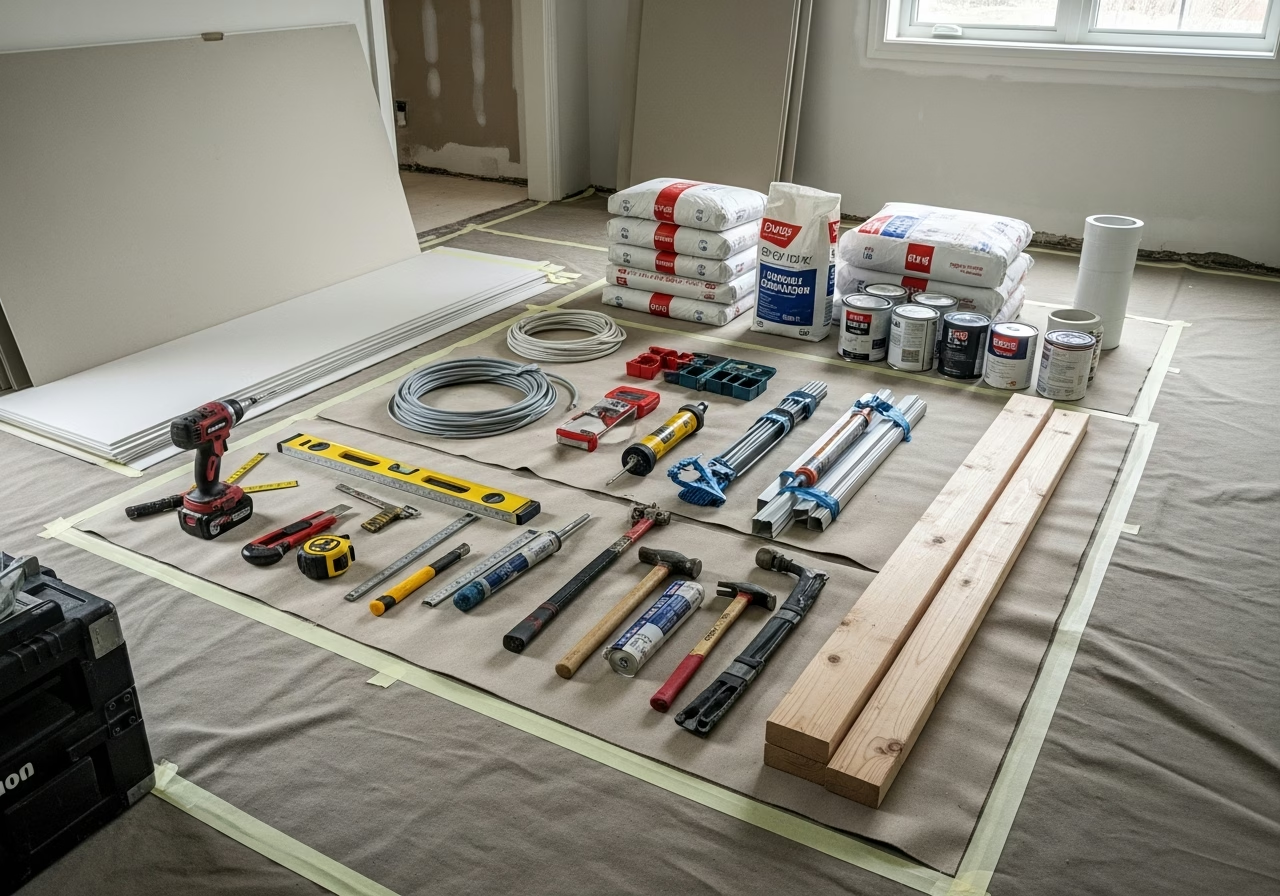
A self-contained suite carved from existing space — typically the basement, a portion of the main floor, or a second-floor reconfiguration.
Wins:- Lowest construction cost.
- Closest daily contact with main household — important if the qualifying individual needs check-ins or has memory/cognitive concerns.
- MHRTC eligibility is straightforward when the suite is properly self-contained.
- No separate utility metering required; HVAC and electrical can extend from the main system.
- Faster permit and construction timeline.
- Less privacy — both the qualifying individual and the main household share walls and floors. Soundproofing matters.
- Reduces square footage available to the main household (especially main-floor suites).
- Basement options have stair access, cooler temperatures, lower light.
Option 2: Garden Suite (Separate ARU on Same Lot)
A standalone Additional Residential Unit (ARU) built in the rear yard — a small house. Permitted in most Toronto residential zones under the city's garden suite framework.
Wins:- Maximum privacy — separate building, separate door, separate small yard.
- Strong resale impact (a properly built garden suite is essentially a second house on the same lot).
- Fully accessible from day one (single-storey, no-step entry).
- Separate utility metering possible (own electrical service, own gas).
- Highest cost. A typical Toronto garden suite is $250,000-$450,000.
- Long permit timeline (Committee of Adjustment may be required for variances).
- Construction timeline 6-9 months minimum.
- MHRTC eligibility on a separate ARU is more nuanced — confirm with CPA.
- Yard is consumed — typically need at least a 30' x 50' rear yard to fit a 600-800 sq ft garden suite with required setbacks.
- Less daily contact, which is a feature for some families and a problem for others.
For the full garden suite path, see Garden Suite Toronto: 2026 Complete Guide.
Option 3: Legal Basement Apartment
A legal secondary suite in the basement, typically rented to non-family tenants but viable as an in-law suite. The construction is essentially identical to a basement in-law suite, but the design intent often defaults to "rentable apartment" rather than "accessible suite for an aging parent".
Need professional home renovation?
Call RenoHouse at 289-212-2345 or get a free estimate today.
Get Free Estimate →- Lowest cost when ceiling heights are adequate (no underpinning).
- Optionality — can house family today, rent to a tenant later (or vice versa).
- Strong rental income potential ($1,800-$2,500/month in most Toronto neighbourhoods).
- Standard permit path.
- Stair access. A 75-year-old with mobility issues climbing basement stairs daily is a real concern.
- Lower natural light, cooler temperatures, more humidity management.
- Less accessibility-friendly by default.
Decision Framework by Qualifying Individual Profile
"Mobile parent in their late 60s, drives, active"
Garden suite or main-floor in-law suite. Garden suite if budget and yard permit; main-floor in-law suite if not. Basement is fine but accessibility-aware design is recommended for the next decade.
"Aging parent with mobility limitations, walker or wheelchair"
Main-floor in-law suite is the strong default. No stairs, accessibility features designed in, close to main household for daily check-ins. Avoid basement unless a residential elevator is in scope (rare).
"DTC-eligible adult relative (sibling, child, niece/nephew)"
Depends on independence level. Higher independence: garden suite. Lower independence with daily support needs: main-floor or basement in-law suite.
"Adult child priced out of the housing market"
Basement apartment is the default. Often built with the option to convert back to family use later. MHRTC does not apply unless the adult child is DTC-eligible.
Cost Comparison Worked Examples
| Scenario | In-Law Suite (basement) | Garden Suite | Basement Apartment |
|---|---|---|---|
| Construction | $80,000 | $325,000 | $65,000 |
| MHRTC | -$7,500 | -$7,500 (if eligible) | -$7,500 (if eligible) |
| Net cost | $72,500 | $317,500 | $57,500 |
| Annual rental income (if rented) | $0 (family) | $0 (family) | $0 (family) |
| Resale uplift | $90K-$140K | $200K-$350K | $70K-$120K |
The garden suite has the highest gross cost but also the highest resale uplift. The in-law suite within the dwelling has the best ratio of cost to family functionality. The basement apartment has the best ratio of cost to optionality.
Permit Complexity Ranked
- 1. Basement apartment — most established Toronto permit path; the city has clear secondary suite guidance.
- 2. In-law suite (basement or main-floor) — same building permit framework as a secondary suite when self-contained.
- 3. Garden suite — most complex. Requires zoning compliance check, often Committee of Adjustment for setbacks, separate building permit, separate electrical service connection, separate plumbing connection.
For the multiplex path (4-unit conversion that may include an in-law unit), see Multiplex Conversion Toronto: 2026 Complete Guide.
MHRTC Nuances Across the Three
- In-law suite (within dwelling): MHRTC eligibility is straightforward when the suite meets the self-contained test (separate entrance, kitchen, bathroom, sleeping area).
- Basement apartment: Eligible if used for a qualifying individual; not eligible if rented to a non-family tenant.
- Garden suite: Eligibility depends on the structural and tax characterization. CPA review is essential.
In all cases, the credit caps at $7,500. Confirm eligibility with the homeowner's CPA before sequencing the build.
A Pragmatic Recommendation
If the qualifying individual will likely live with the family for 10+ years and the budget is constrained, the main-floor in-law suite or accessibility-prepared basement in-law suite is the strongest default. It hits the MHRTC eligibility cleanly, costs $50K-$120K, takes 12-20 weeks, and integrates with the existing home.
If the qualifying individual values autonomy and the rear yard supports it, the garden suite wins on privacy and long-term flexibility but costs 3-4x more.
The basement apartment is a third path that maximizes optionality but tends to be the weakest accessibility option.
Next Steps
Book a scoping visit at /services/home-renovation/multigenerational-inlaw-suite to walk through your home's specific options. For the full pillar guide, see Multigenerational In-Law Suite Toronto: 2026 Complete Guide. For aging-in-place pairings, see Aging-in-Place Renovation Toronto 2026. For the cost-only comparison, see In-Law Suite Cost Toronto: Comparison.
Sources & References
Authoritative sources cited in this guide:
- Ontario Building Code — OBC official text
- Toronto Building Permits — City permit portal
- Tarion New Home Warranty — Ontario new-build warranty regulator
- HCRA — Home Construction Regulatory Authority — Ontario builder/vendor licensing
Continue Reading