RenoHouse

# Knob & Tube + Asbestos & Vermiculite Coordination in Toronto
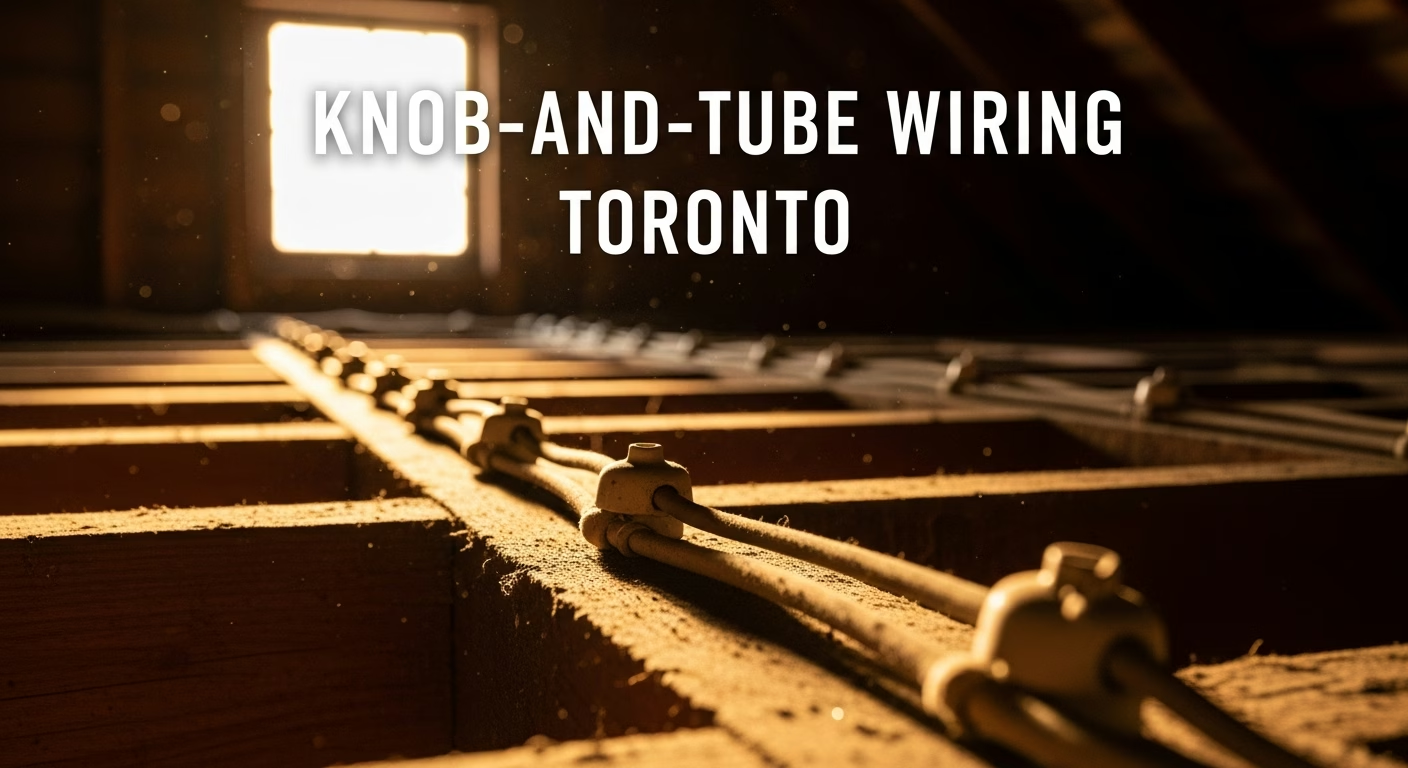
Quick answer. Most Toronto homes built before 1980 have at least one of three asbestos-containing materials present: asbestos paper or millboard wrap on basement HVAC ducts and pipes, vermiculite attic insulation contaminated with asbestos, and asbestos-containing plaster or drywall mud.Most Toronto homes built before 1980 have at least one of three asbestos-containing materials present: asbestos paper or millboard wrap on basement HVAC ducts and pipes, vermiculite attic insulation contaminated with asbestos, and asbestos-containing plaster or drywall mud. When the home also has knob and tube wiring requiring removal, the two scopes must be coordinated carefully. Disturbing asbestos during electrical fishing creates legal exposure under Ontario Reg 278/05 and health exposure for the LEC's workers and the homeowner's family.
This post explains how RenoHouse coordinates K&T rewiring with asbestos and vermiculite abatement. For the full rewiring guide, see Knob & Tube Rewiring Toronto: Complete 2026 Guide. For the broader asbestos service overview, see [Asbestos Abatement](/services/home-renovation/asbestos-abatement).
Where Asbestos Lives in Pre-1980 Toronto Homes
The most common asbestos-containing materials encountered during K&T rewiring:
Vermiculite Attic Insulation
Loose granular insulation, often dark grey, brown, or gold-flecked, poured into attic joist bays. Common in homes insulated 1940s–1990. The dominant brand was Zonolite, sourced primarily from the Libby, Montana mine, which was contaminated with asbestos until production ended in 1990.
Disturbing vermiculite — by walking on it, vacuuming it, or fishing wires through it — releases asbestos fibres. Reputable LECs will not work in a vermiculite attic without prior abatement.
Asbestos Paper Duct Wrap
Heavy fibrous paper or millboard wrapped around basement HVAC trunk ducts. Common in homes with original pre-1980 forced-air systems. Visually similar to corrugated cardboard but denser.
Drilling joists adjacent to wrapped ducts can release fibres. Removing or relocating ducts to access wiring requires Type 1 abatement.
Asbestos Pipe Insulation
Hard insulation around old steam or hot water heating pipes, often in basements. White or grey, sometimes covered with cloth or paper. Common in homes with original boiler heating.
Drilling adjacent to insulated pipes is the most common disturbance scenario.
Plaster and Drywall Mud
Some pre-1980 plaster and drywall joint compounds contained asbestos. Encountered when opening walls for electrical work. Sampling determines whether the specific plaster or mud in your home is asbestos-containing; not all are.
Vinyl Floor Tile (9"x9")
Old 9-inch by 9-inch vinyl floor tile (vintage 1950s–1970s) often contains asbestos. Less commonly an issue during K&T work, but matters if floors are being lifted to access circuits.
Popcorn Ceilings (Pre-1990)
Popcorn ceiling texture installed before 1990 often contains asbestos. Not directly an electrical issue but matters if ceiling work is required to access wiring or if the homeowner wants ceiling refinishing during the project.
Ontario Reg 278/05: The Legal Framework
Ontario Regulation 278/05 (Designated Substance — Asbestos on Construction Projects and in Buildings and Repair Operations) governs asbestos work in Ontario. Key provisions for residential rewiring:
- Pre-renovation Designated Substance Survey (DSS) is required for any building constructed before 1986 where renovation or demolition will disturb suspect materials.
- Type 1 (small-scale), Type 2 (medium-scale), and Type 3 (large-scale) abatement procedures are defined based on quantity and material type.
- Worker certification is required — Type 3 work requires asbestos-trained workers.
- Air sampling is required during and after Type 2/3 work.
- Disposal must be at licensed sites with proper documentation.
LECs and electrical workers are not exempt. If a Toronto LEC enters a vermiculite attic to fish wires without prior abatement, they are in violation of Reg 278/05 and the homeowner shares legal exposure.
Need professional electrical services?
Call RenoHouse at 289-212-2345 or get a free estimate today.
Get Free Estimate →Sequencing K&T Work with Abatement
The correct sequence:
Step 1: Pre-Project Visual Inspection
RenoHouse and the LEC walk the home together during the quote phase. Visual inspection identifies suspect materials:
- Vermiculite in attic.
- Paper or millboard on ducts and pipes.
- 9"x9" vinyl floor tile.
- Pre-1990 popcorn ceiling texture.
- Plaster age and visible patching.
Step 2: Sampling (Where Flagged)
Suspect materials sampled by a qualified asbestos surveyor (DSS — Designated Substance Survey level work). Samples sent to a CALA-accredited lab. Results in 24–72 hours. Cost: $400–$1,500 depending on sample count.
If sampling confirms asbestos, the abatement scope is defined.
Step 3: Abatement Scope and Quote
Type 1 abatement (small scale, glove-bag work):
- Cost: $1,500–$3,500.
- Timeline: 1–2 days.
- Use cases: removing a few feet of pipe wrap, small duct wrap section.
Type 2 abatement (medium scale, partial enclosure):
- Cost: $3,000–$8,000.
- Timeline: 2–4 days.
- Use cases: full vermiculite attic removal, larger duct wrap removal.
Type 3 abatement (large scale, full enclosure with negative pressure):
- Cost: $10,000–$25,000+.
- Timeline: 5–10 days.
- Use cases: extensive plaster abatement, full popcorn ceiling removal across multiple rooms.
For typical K&T projects, Type 1 or Type 2 covers the asbestos scope.
Step 4: Abatement Work
Performed by certified abatement contractor with own permits, worker certifications, and Ministry of Labour notifications where required. RenoHouse and the LEC do not enter the work area during abatement.
Step 5: Air Clearance Testing
Independent third-party air sampling confirms fibre count below regulatory thresholds (typically <0.01 f/cc in Toronto). Results in 4–24 hours.
Step 6: Electrical Fishing Begins
Once cleared, the LEC begins fishing wires. The previously-vermiculite attic is now clean fibreglass or cellulose insulation (typically blown in fresh during abatement). Pipes that had wrap are now bare metal or have fresh non-asbestos insulation.
Step 7: Drywall and Plaster Patching
RenoHouse completes drywall and plaster patching. Any plaster work that disturbs asbestos-containing material requires Type 1 abatement during the patching phase, which is rare but possible.
Step 8: ESA Final Inspection and Certificate
LEC completes trim, ESA inspects, Certificate issued.
Common Coordination Failures
Three failure patterns RenoHouse has seen on poorly coordinated projects:
Failure 1: LEC Started Fishing Before Sampling
LEC begins work in attic, encounters vermiculite, project halts. Vermiculite has been disturbed during the early fishing, requiring expanded abatement scope. Schedule slips 2–4 weeks; cost increases 30–60% over original quote.
Failure 2: Abatement Done But Air Clearance Skipped
Abatement contractor completes work but skips air clearance testing. LEC enters and fishes. Months later during home sale, buyer's environmental review finds no air clearance documentation. Buyer requires re-testing and possibly remediation.
Failure 3: Plaster Disturbance Not Anticipated
LEC and RenoHouse begin drywall openings without sampling pre-1980 plaster. Plaster contains asbestos. Mid-project Type 1 abatement requires expensive emergency scheduling. Better: sample plaster as part of pre-project DSS.
How RenoHouse Coordinates the Three-Trade Sequence
Our project structure:
- Single project manager owns the full sequence: LEC → abatement contractor → drywall → paint.
- Pre-project DSS when visual inspection flags any suspect materials.
- Type 1/2 abatement through specialist subcontractor with verified certifications, worker training, and Ministry of Labour notifications.
- Air clearance as a defined milestone before electrical fishing resumes.
- Documentation of all abatement work, sampling, and clearance preserved for homeowner records and future home sale.
We do not perform the asbestos abatement ourselves. We coordinate with abatement specialists who have the certifications, equipment, and training. RenoHouse acts as general coordinator, and the LEC partner provides the electrical work.
For more on the broader asbestos service approach, see Asbestos Abatement.
Cost Implications
The bundled K&T + abatement project cost:
- Tier 1 (small home, no abatement needed after sampling): rewire cost only, $8,000–$15,000.
- Tier 2 (mid home, Type 1 asbestos): rewire $12,000–$22,000 + abatement $1,500–$3,500.
- Tier 3 (large home, Type 2 vermiculite + asbestos): rewire $20,000–$35,000 + abatement $4,500–$12,000.
Total project: $25,000–$45,000 for the most complex coordinated scope.
Related Reading
Knob & Tube Rewiring Toronto: Complete 2026 Guide, Knob & Tube Cost Rewiring Toronto, Knob & Tube Old Toronto Neighborhoods 1900-1940.Sources & References
Authoritative sources cited in this guide:
- Electrical Safety Authority (ESA) — Ontario electrical regulator
- Ontario Electrical Safety Code — OESC Section 26 / latest amendments
- Canadian Electrical Code Part I (CSA C22.1) — CEC standard
- NRCan — Electric Vehicle Resources — NRCan EV/charging programs
Continue Reading