RenoHouse

# Knob & Tube Rewiring Toronto: Complete 2026 Guide
Quick answer. If you own a Toronto home built between 1900 and 1945 and just received a non-renewal letter from your insurer, you are part of the largest electrical rewiring wave the city has seen since aluminum wiring was phased out.If you own a Toronto home built between 1900 and 1945 and just received a non-renewal letter from your insurer, you are part of the largest electrical rewiring wave the city has seen since aluminum wiring was phased out. Major insurers — Aviva, Intact, TD Insurance, Wawanesa, Belair Direct — have spent the last decade tightening underwriting on knob and tube wiring (K&T), and in 2026 most of them refuse coverage outright on any property where K&T circuits remain energized. The rewiring is no longer optional. It is a binary insurance question, and the answer determines whether your home is mortgageable, sellable, and insurable in the GTA market.
This is the RenoHouse pillar guide for knob and tube rewiring in Toronto for 2026. We cover what K&T actually is, why insurers refuse it, real CAD pricing for the GTA, ESA permit and Master Electrician requirements, the Toronto neighbourhoods most affected, panel upgrade coordination, asbestos and vermiculite sequencing, and the realistic project timeline from quote to insurance reinstatement. For a deeper dive on insurer-by-insurer policy, see Knob & Tube Insurance Companies Refuse Toronto. For cost-only breakdowns, see Knob & Tube Rewiring Cost Toronto.
How RenoHouse Handles Knob & Tube Projects
We want to be transparent about scope. RenoHouse is not the licensed electrical contractor (LEC) that pulls the ESA permit. We coordinate the project end-to-end and partner with ECRA/ESA-licensed electrical contractors who hold a valid Master Electrician certification on staff. That partner pulls the permit under their ECRA/ESA licence number, performs the work to OESC (Ontario Electrical Safety Code) standards, and signs off on the ESA Certificate of Inspection at completion. RenoHouse handles drywall opening and patching, asbestos and vermiculite coordination through Type 1/2 abatement specialists, fixture and trim, and the homeowner-facing project management layer that makes the rewire bearable to live through. If you want to read about how the inspection side connects, see Electrical Hot Spot Inspection. For asbestos coordination, see [Asbestos Abatement](/services/home-renovation/asbestos-abatement).
What Knob & Tube Wiring Actually Is
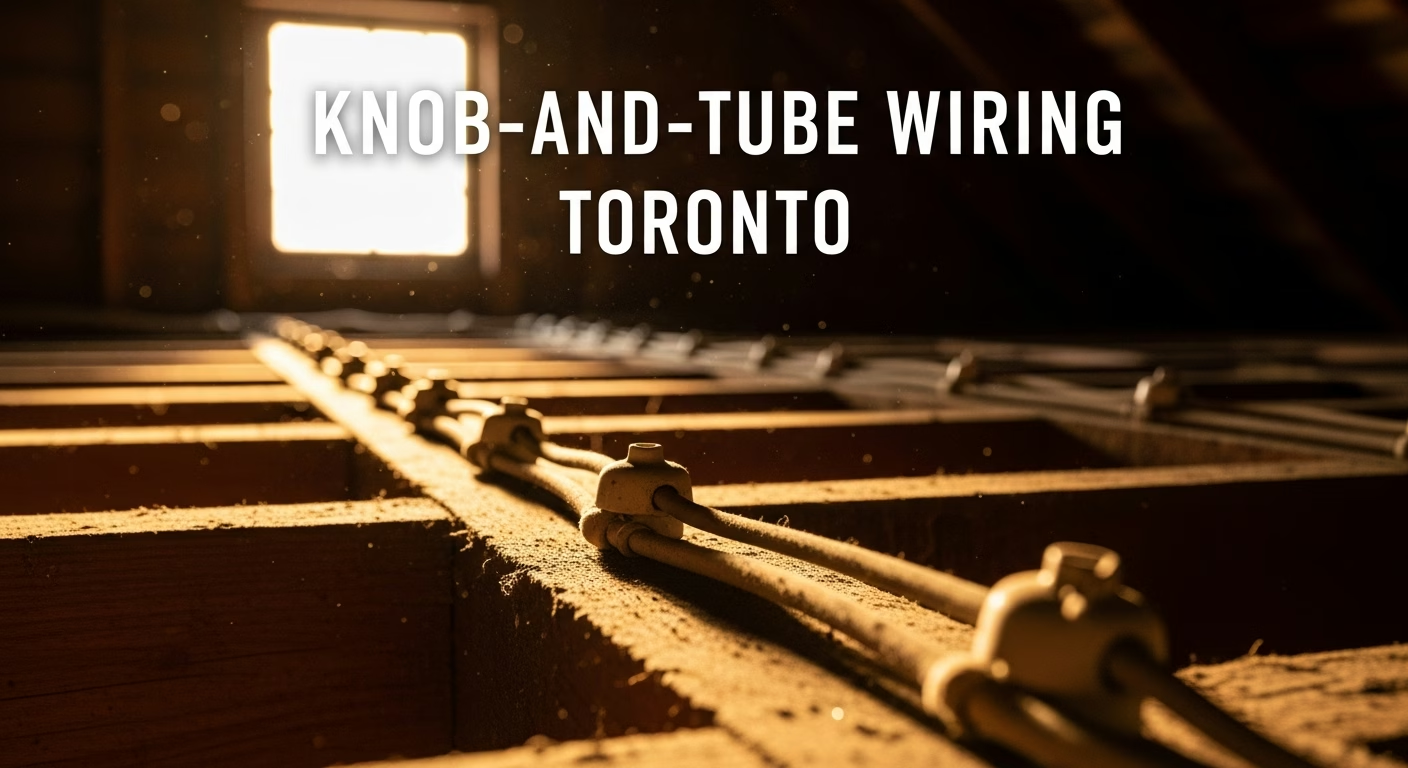
Knob and tube was the dominant residential wiring method in North America from roughly 1880 to the late 1940s. The system uses single-conductor copper wires (one for hot, one for neutral) supported through framing by porcelain insulators — knobs (cylindrical, used to anchor wire along framing) and tubes (hollow, used to pass wire through joists and studs). The wires are insulated in rubber and cotton braid, and there is no equipment grounding conductor. Splices are made with twisted-and-soldered joints wrapped in friction tape, often inside open-air junctions rather than enclosed boxes.
When K&T was installed, the loads it served were small — a few incandescent fixtures per circuit, occasional toaster, no air conditioner, no microwave, no entertainment system. The wire gauge (typically 14 AWG) and the open-air heat dissipation of the system worked because the homes drew 30 to 60 amps total.
The modern Toronto home runs 100 to 200 amp service with dozens of branch circuits feeding kitchen appliances, laundry, central air, hair dryers, electric vehicle chargers, and a continuously loaded entertainment ecosystem. K&T was never designed for this. The rubber insulation degrades over 60 to 100 years, becoming brittle and falling away from the conductor. Open splices that were safe under 60-amp service overheat under modern loads. Insulation has been blown into attic and wall cavities over the decades, smothering the heat dissipation the design depended on.
Why Toronto Insurers Refuse Knob & Tube
The insurance industry's position on K&T hardened from 2010 onward. Three factors drove the change:
- 1. Claims data. Electrical fires originating from degraded K&T splices and overheated insulated wire produced a disproportionate share of total-loss residential claims relative to the percentage of the housing stock involved.
- 2. Reinsurance pricing. As reinsurers (the wholesalers behind Canadian property insurers) added K&T surcharges and exclusions, primary insurers passed the friction through to homeowners by simply refusing the risk.
- 3. Building science research. Insulation upgrades pushed by every major utility rebate program ironically made K&T more dangerous. Homeowners insulated attics for energy savings, smothering the wires the system needed to dissipate heat.
By 2026 the major Canadian insurers' positions on K&T are roughly as follows:
- Aviva, Intact, TD Insurance, Wawanesa, Belair Direct — refuse to bind coverage on any home with energized K&T. New policies require ESA Certificate of Inspection confirming all K&T removed.
- Square One Insurance — covers with surcharge ($800–$2,000/year) and visible-K&T inspection requirement.
- Allstate Canada — covers with surcharge in some provinces, refuses in others; underwriter discretion.
- Specialty/non-standard insurers (Echelon, Pafco) — cover at materially higher premiums, often as a one-year bridge until rewiring completes.
The pattern is clear: most homeowners with K&T can no longer find mainstream coverage. The insurance market itself is the forcing function for the rewire.
Toronto Neighbourhoods Most Affected
K&T was the standard wiring method when most of inner Toronto was built. The neighbourhoods with the highest density of remaining K&T circuits are those built between 1900 and 1945:
- Riverdale (east of the Don Valley, south of the Danforth) — extensive Victorian and Edwardian rowhouse stock.
- The Beaches / Beach — pre-WWI summer cottages converted to year-round homes.
- Cabbagetown — Toronto's largest Victorian neighbourhood, much of it pre-1910.
- Leslieville — workers' cottages and semis from 1890–1930.
- Roncesvalles — Edwardian semis and detached homes 1905–1925.
- High Park / Bloor West Village — interwar bungalows and two-storeys.
- The Annex — large Victorian and Edwardian homes 1885–1915.
- Wychwood — 1910s–1920s housing stock.
- The Junction — workers' housing 1900–1930.
- Parkdale — extensive 1890–1920 detached and semi housing.
If your home was built before 1945 in any of these neighbourhoods, the probability of K&T being present somewhere — even partially, even after past renovations — is high. Past renovation is not a guarantee of full removal; partial rewiring (kitchen and bath only) was the historical norm, and insurers do not accept partial K&T removal as a clearance.
Real CAD Costs in Toronto for 2026
Pricing depends on five variables: house size, number of storeys, finished or unfinished basement and attic access, panel upgrade requirement, and asbestos or vermiculite encountered during fishing.
Tier 1: Small Detached or Semi, 1,200–1,500 sq ft — $8,000–$15,000
Typical scenario: 1.5 or 2 storey semi or detached, 1,200–1,500 sq ft, 60 or 100 amp service, partially renovated previously, K&T remaining in second floor and attic. Includes:
- ESA permit and inspection.
- Master Electrician oversight (LEC partner).
- All K&T removal and replacement with Romex 12-2 NMD90 (general-purpose) and 14-2 NMD90 (lighting).
- Equipment grounding throughout.
- Minor drywall openings and patching (by RenoHouse).
- Existing panel reused if 100A and modern brand; replaced if 60A or Federal Pioneer.
Project length on site: 5–8 working days.
Need professional electrical services?
Call RenoHouse at 289-212-2345 or get a free estimate today.
Get Free Estimate →Tier 2: Detached 2-Storey, 1,500–2,500 sq ft, with Panel Upgrade — $12,000–$25,000
Typical scenario: full Edwardian detached, 60A or 100A service requiring upgrade to 200A, asbestos paper around basement ducts, vermiculite in attic. Includes everything in Tier 1 plus:
- 100A or 200A panel upgrade with new Eaton, Schneider Square D, or Siemens panel.
- Service mast and meter base replacement if required.
- Toronto Hydro service disconnect/reconnect coordination.
- Type 1 or Type 2 asbestos abatement coordination through specialist (priced separately by abatement contractor, typically $1,500–$6,000 added).
- Vermiculite attic abatement coordination if required ($3,000–$8,000 added).
- Major drywall and plaster patching.
Project length on site: 8–14 working days, plus 2–5 days for asbestos/vermiculite abatement window.
Tier 3: Large Pre-War Detached, 2,500–4,000+ sq ft — $20,000–$45,000+
Typical scenario: large Annex or Forest Hill pre-1930 home, 100A service requiring upgrade to 200A, multiple decades of partial renovations, mix of K&T and modern wiring requiring full audit. Often includes finished attic conversions, secondary panels, and integrated low-voltage systems that complicate the rewire.
Project length on site: 14–25 working days.
What Drives Cost Up
- Plaster walls (pre-1930 homes) make fishing wires materially harder than drywall. Add 15–25% labour.
- Hardwood floors over plaster ceilings — accessing second-floor circuits without lifting floors requires more openings from below.
- Asbestos in basement duct wrap, vermiculite in attic — both block easy fishing routes and require abatement before electrical work continues.
- Federal Pioneer Stab-Lok panel — must be replaced regardless of capacity; insurers and ESA both flag these.
- Knob & tube fed from service entrance — service entrance conductors often need replacement at the same time, adding $1,500–$3,500.
Why "Partial Rewiring" Is Not the Answer
Some Toronto electricians offer partial K&T removal — visible circuits in the basement only, leaving hidden K&T in walls and attics intact for $4,000–$8,000. This is a false economy. ESA inspections do not certify partial removal. Insurers do not reinstate coverage on partial removal. The homeowner pays $6,000 for work that does not solve the insurance problem and that future buyers' inspectors will flag during sale. RenoHouse does not recommend partial removal except in narrow circumstances (e.g., a circuit in a sealed slab) where ESA and the insurer both accept the abandonment with documented disconnection.
For a deeper analysis, see Partial vs Full Knob & Tube Removal Toronto.
ESA Permit Process and Master Electrician Oversight
In Ontario, residential rewiring is regulated under the Ontario Electrical Safety Code (OESC) and administered by the Electrical Safety Authority (ESA). Three things are non-negotiable:
- 1. An ESA permit must be pulled before any electrical work begins. The permit is pulled by the licensed electrical contractor (LEC) holding an ECRA/ESA licence number. RenoHouse coordinates this through our LEC partner.
- 2. A Master Electrician must oversee the work. The Master Electrician is a person, not a company — the individual holds an Ontario Master Electrician certificate and is named on the LEC's licence.
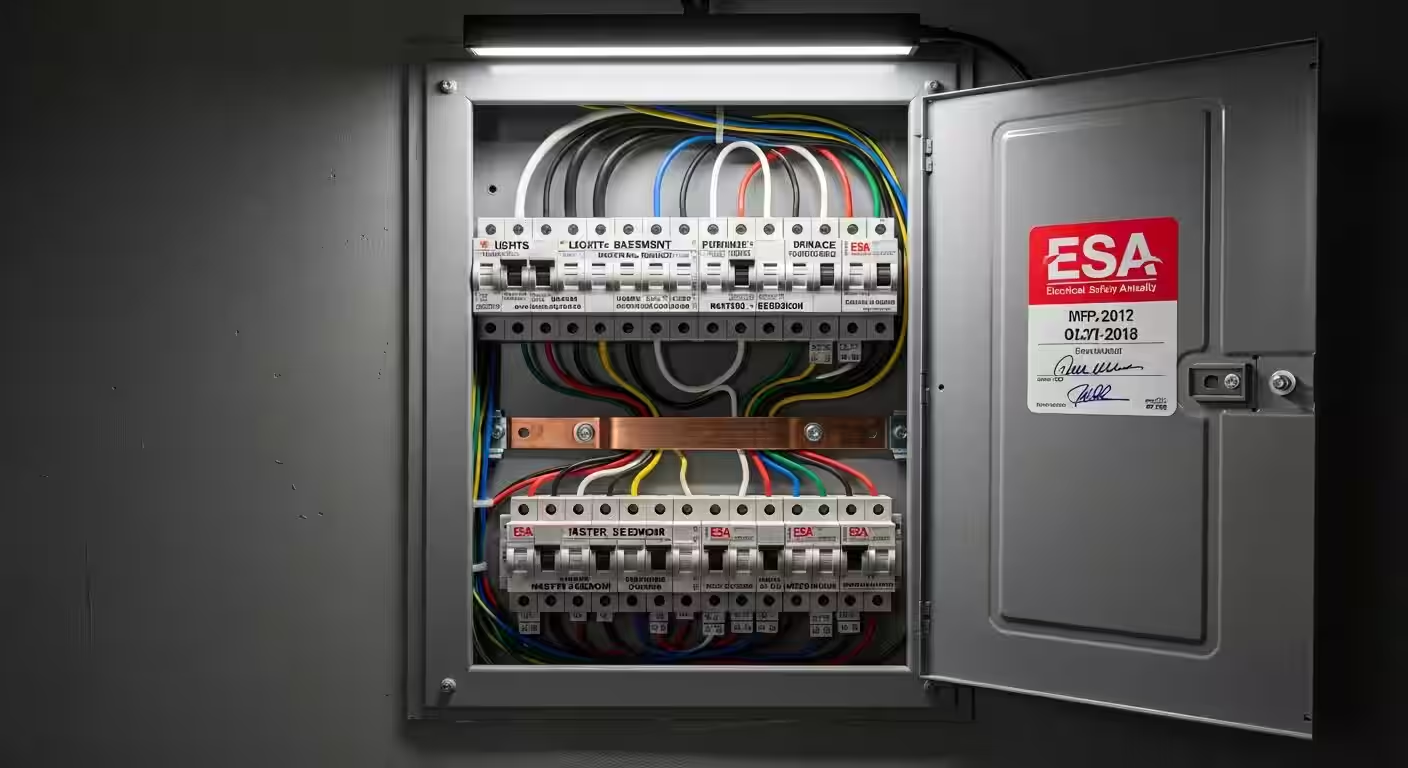
- 3. An ESA inspection is performed at rough-in and final. Rough-in checks all wiring before drywall closure. Final checks devices, panel work, and grounding. The Certificate of Inspection issued at final is the document insurers require for coverage reinstatement.
The Certificate of Inspection is the deliverable that ends the insurance problem. Without it, the rewiring did not happen as far as your insurer is concerned. For the full process timeline, see Knob & Tube Permit ESA Toronto Process.
Coordination with Asbestos and Vermiculite
In pre-1980 Toronto homes, two common materials block the easy paths electricians use to fish wires:
- Vermiculite attic insulation (Zonolite brand was the dominant supply, much of it asbestos-contaminated until 1990) is loose granular insulation poured into attic joist bays. Disturbing it releases asbestos fibres. Fishing wires through a vermiculite attic without abatement is not done by reputable LECs.
- Asbestos paper or millboard wrap around basement HVAC ducts and around old boiler pipes. Drilling through joists adjacent to wrapped pipes can disturb the asbestos.
RenoHouse coordinates Type 1 (small-scale, glove-bag) or Type 2 (medium-scale, partial enclosure) abatement through specialist contractors before the LEC begins fishing. The sequencing is: abatement → air clearance → electrical fishing → drywall → final inspection. Skipping the abatement step exposes the LEC's workers and the homeowner's family to inhalation risk and creates legal liability under Ontario Reg 278/05.
For more on this sequencing, see Knob & Tube + Asbestos & Vermiculite Coordination.
Project Timeline From Quote to Insurance Reinstatement
A typical full-house rewire in Toronto runs 4 to 8 weeks from initial quote to insurance reinstatement:
- Week 1: Site visit, scope walk, panel inspection, asbestos/vermiculite assessment, written quote.
- Week 2: Contract signed, ESA permit application by LEC partner, asbestos sampling if visual inspection flagged anything.
- Week 3: Asbestos/vermiculite abatement (if required), 2–5 day window.
- Week 4–5: Electrical rough-in, drywall openings, ESA rough-in inspection.
- Week 6: Drywall patching, finishing, panel and device installation.
- Week 7: ESA final inspection, Certificate of Inspection issued.
- Week 8: Certificate sent to insurer, coverage reinstated or new policy bound.
For a more detailed breakdown, see Knob & Tube Rewiring Timeline Toronto.
What You Should Avoid
Common mistakes Toronto homeowners make when navigating the K&T rewire:
- 1. Hiring an unlicensed electrician. ESA permits cannot be pulled by anyone other than a licensed LEC. Work without a permit is uninsurable, unsellable, and may trigger ESA enforcement.
- 2. Skipping the panel upgrade when the panel is Federal Pioneer Stab-Lok. Insurers flag these panels almost as aggressively as K&T itself. Upgrading the panel during the rewire is materially cheaper than doing it later.
- 3. Trusting "partial removal" pricing. Insurance does not recognize it.
- 4. Forgetting drywall costs. A bare-bones electrical quote often excludes drywall patching, which can add $2,000–$6,000.
- 5. Disturbing vermiculite without abatement. The legal and health exposure is significant.
For more, see Knob & Tube Removal Mistakes Toronto.
Home Value and ROI
A complete K&T rewire with ESA Certificate of Inspection materially affects resale value in Toronto. The Certificate is now a standard document requested during pre-listing legal review and during buyer financing. Homes without it sell at a 5 to 12 per cent discount versus comparable rewired homes, with longer days-on-market and frequent buyer financing failures (since most major lenders require insurance, and most insurers require the Certificate).
For the full ROI analysis, see Knob & Tube Rewiring ROI Home Value Toronto.
Ready to Plan Your Rewire?
RenoHouse coordinates full knob and tube rewiring projects across the GTA, partnering with ECRA/ESA-licensed electrical contractors with Master Electrician oversight, plus Type 1/2 abatement specialists for asbestos and vermiculite encountered during fishing. Visit our Knob & Tube Rewiring Service Page to start the conversation.
Related Guides in This Series
Continue reading our complete coverage of this niche:
- Signs You Have Knob & Tube Wiring in Your Toronto Home
- Knob & Tube vs Modern Wiring: Toronto Homeowner Comparison (2026)
- Aluminum Wiring vs Knob & Tube in Toronto: What's the Difference
- Knob & Tube in Old Toronto Neighbourhoods: 1900-1940 Housing Stock
- Electrical Panel Upgrade During Knob & Tube Rewiring Toronto
Sources & References
Authoritative sources cited in this guide:
- Electrical Safety Authority (ESA) — Ontario electrical regulator
- Ontario Electrical Safety Code — OESC Section 26 / latest amendments
- Canadian Electrical Code Part I (CSA C22.1) — CEC standard
- NRCan — Electric Vehicle Resources — NRCan EV/charging programs
Continue Reading
- Knob-and-Tube Wiring Toronto
- Which Insurance Companies Refuse Knob & Tube Coverage in Toronto (2026)
- Knob & Tube vs Modern Wiring: Toronto Homeowner Comparison (2026)
Frequently Asked Questions
How much does knob and tube rewiring cost in Toronto?
Full rewiring in Toronto ranges from $8,000 to $15,000 for small bungalows and $12,000 to $25,000 for larger homes. Costs depend on home size, panel condition, and whether a service upgrade is needed. Most homes with K&T also require panel upgrades from 100 amps to 200 amps, adding $3,500 to $7,000. Get quotes from licensed electricians—pricing varies by neighbourhood and existing electrical infrastructure.
Do I need an ESA permit to rewire knob and tube wiring?
Yes. In Ontario, all rewiring work requires an ESA (Electrical Safety Authority) permit and inspection. Your licensed electrician must pull the permit before starting. The ESA inspection occurs after wiring is complete and passing inspection is mandatory before work is legally done. ESA permit fees range from $150 to $300. Without ESA approval, insurance claims may be denied and the home will not meet code standards at time of sale.
How long does a full knob and tube rewiring take?
Full rewiring in a Toronto home takes 1 to 3 weeks depending on size, complexity, and panel upgrades. Small 800 sq ft bungalows need 5 to 7 business days; larger 2,500 sq ft homes need 3 weeks. ESA inspection scheduling also affects timeline. Expect 60 to 80 hours of electrician time. Wall opening and patching add days. Plan for temporary power solutions during work if needed.
Does my insurance company force me to rewire knob and tube?
Most major insurers in Toronto—Aviva, Intact, TD Insurance, Wawanesa, Belair Direct—have stopped renewing policies for homes with knob and tube wiring. You won't be forced, but your policy will not renew come renewal date. New insurers will deny coverage or charge significantly higher premiums. Some insurers give 1 to 3 years notice before non-renewal. If your insurer sends a non-renewal letter, you must get ESA-approved rewiring done before the deadline or go uninsured.