RenoHouse

# Knob & Tube vs Modern Wiring: Toronto Homeowner Comparison (2026)
Quick answer. Toronto homeowners researching K&T rewiring often hear conflicting things — from neighbours, online forums, and the occasional vintage-housing enthusiast. "K&T is fine if it's not disturbed." "Modern wiring is just plastic that melts when stressed." "Old copper is better than new copper." Some of these contain a grain of truth in narrow c...Toronto homeowners researching K&T rewiring often hear conflicting things — from neighbours, online forums, and the occasional vintage-housing enthusiast. "K&T is fine if it's not disturbed." "Modern wiring is just plastic that melts when stressed." "Old copper is better than new copper." Some of these contain a grain of truth in narrow circumstances. None of them apply to insurance underwriting in 2026, and none of them apply to the OESC standards your home is required to meet.
This post is a side-by-side technical comparison of K&T and modern Romex NMD90 wiring as they exist in Toronto homes. For the full project guide, see Knob & Tube Rewiring Toronto: Complete 2026 Guide.
Side-by-Side Comparison
| Feature | Knob & Tube (1900–1945) | Modern Romex NMD90 (1980–present) |
|---|---|---|
| Conductor count | 2 single conductors (hot, neutral) | 2 or 3 conductors in shared jacket (hot, neutral, ground) |
| Equipment ground | None | Bare copper ground throughout |
| Insulation | Rubber + cotton braid | Cross-linked polyethylene (XLPE) or PVC, jacketed |
| Insulation rating | ~60°C (degrades to brittle over decades) | 90°C continuous |
| Splices | Open-air, twisted, soldered, friction tape | Inside enclosed boxes only, wire nuts |
| Heat dissipation | Open-air design (degrades when buried in insulation) | Self-contained, rated for in-wall installation |
| Common gauge | 14 AWG (15A circuits) | 14 AWG (15A) or 12 AWG (20A) |
| Code compliance (OESC 2024) | Existing-installation grandfathered, no new K&T allowed | Required for all new and replacement work |
| Insurer acceptance (2026) | Refused by Aviva, Intact, TD, Wawanesa, Belair, others | Standard, no surcharge |
| Typical lifespan | Original installations 80–120 years old, insulation degraded | 50–80 year design life |
| Resale impact | 5–12% discount, longer DOM, financing failures | Neutral, baseline |
Capacity and Load
K&T was designed when typical residential service was 30 to 60 amps, supplying a few incandescent fixtures and minimal appliances. The 14 AWG conductor on a 15A breaker is the same gauge as modern 15A circuits, but the comparison stops there:
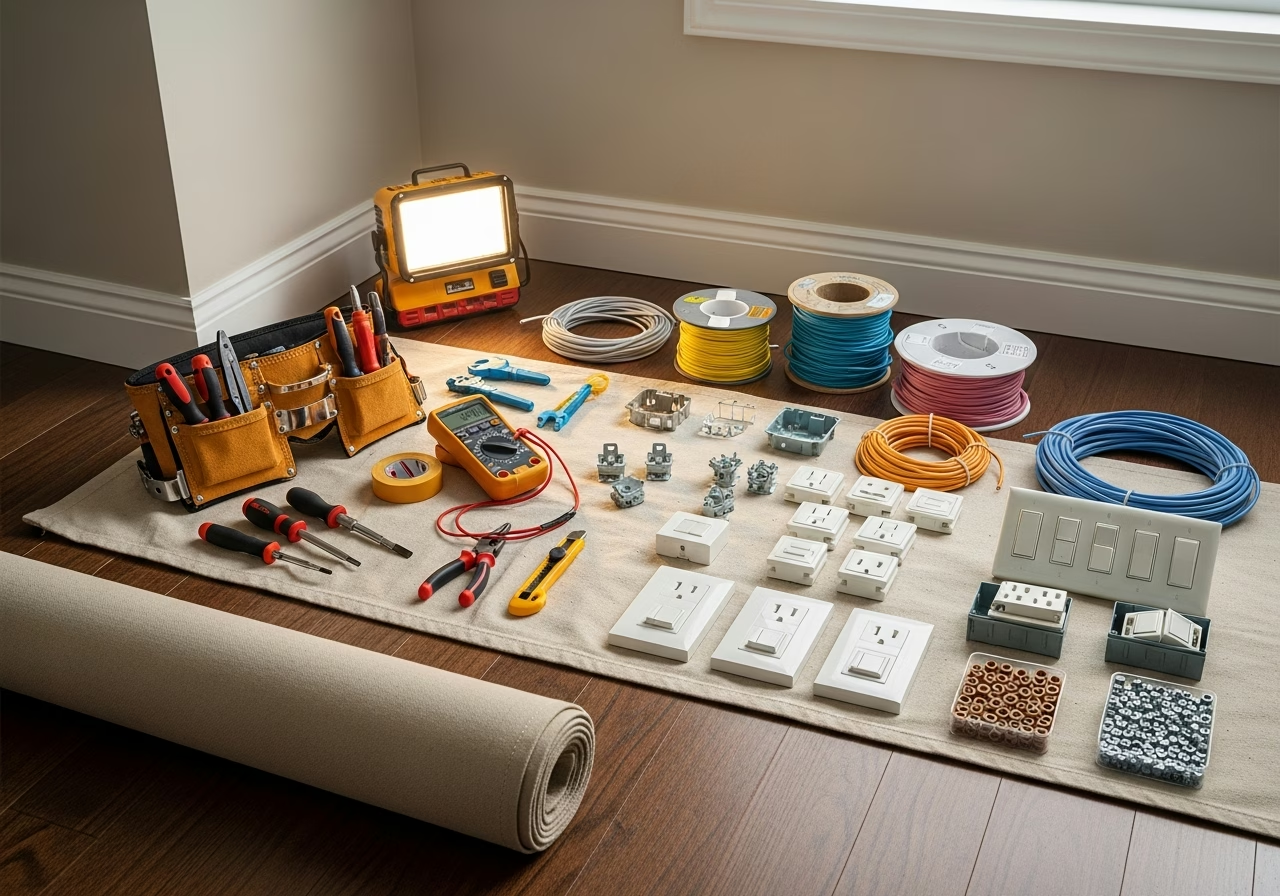
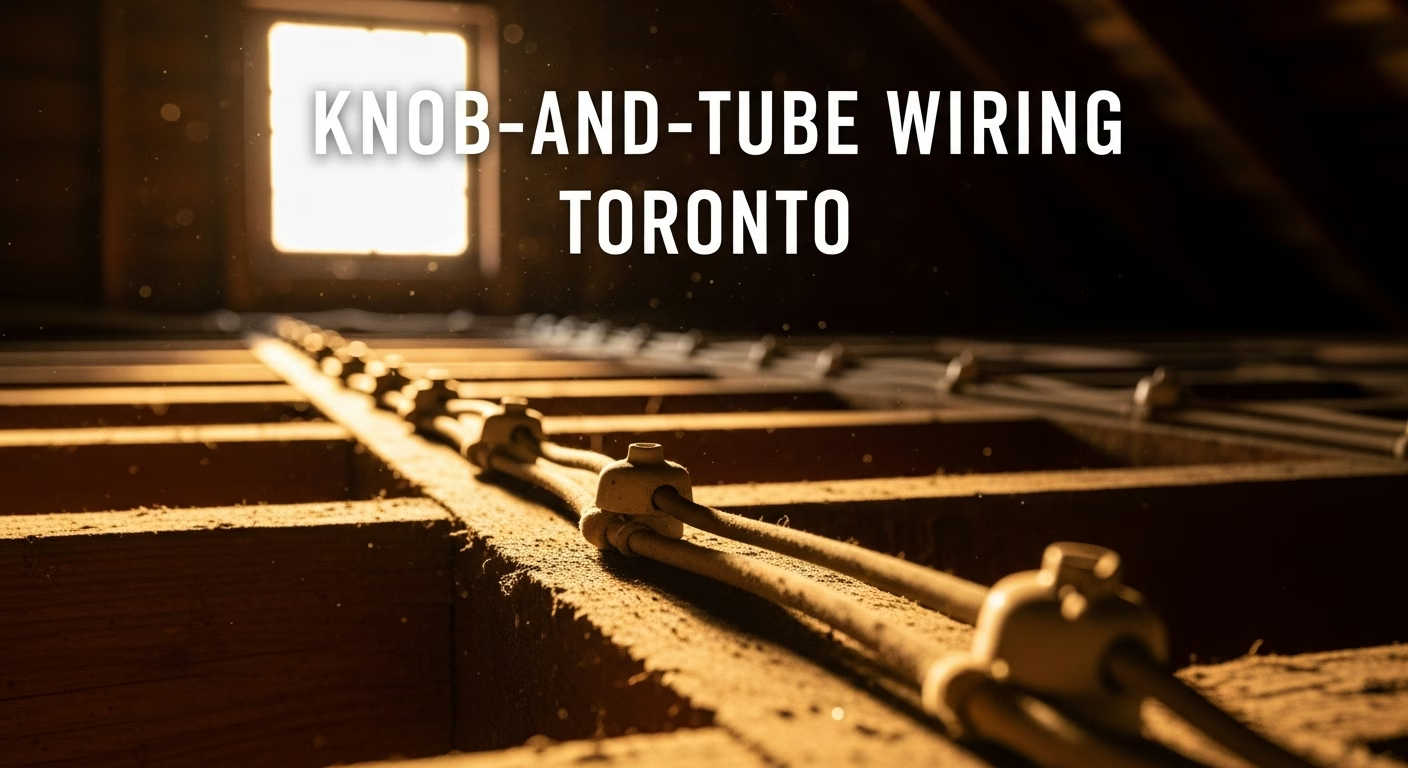
- K&T splices are open-air twisted joints. Under modern continuous loads (microwave running while toaster runs while space heater runs), the joint resistance generates heat. The brittle rubber insulation around the joint cracks, exposing copper.
- Modern Romex uses pre-tinned wire nuts inside enclosed plastic or metal boxes. The box contains heat and arc-flash if a splice fails.
The math is identical at the conductor level. The failure modes are completely different at the splice level.
Grounding
Modern wiring includes an equipment grounding conductor (the bare copper wire) that bonds device boxes, metal fixtures, appliance chassis, and the neutral bus at the panel. The ground wire provides:
Need professional electrical services?
Call RenoHouse at 289-212-2345 or get a free estimate today.
Get Free Estimate →- Fault current path — if a hot wire shorts to a metal appliance chassis, the breaker trips immediately because the ground gives the fault a low-impedance path back to the panel.
- Surge dissipation — surge protectors and equipment grounding rely on a continuous ground.
- GFCI and AFCI function — GFCIs work without a ground (they compare hot and neutral current), but AFCIs and surge devices need a ground.
K&T has no equipment ground. A short-to-chassis on a metal-bodied appliance leaves the chassis energized at 120V until someone touches it (creating the fault current path through the human body). This is the textbook electrocution scenario the equipment grounding conductor was added to OESC requirements to prevent.
Insulation Degradation
Rubber insulation has a finite lifespan. The rubber on K&T installed in 1925 is now 100 years old. In open-air basement installations, the rubber may still be visually intact but is brittle and cracks when handled. In wall cavities, particularly those that have been insulated with blown-in cellulose or fibreglass over the years, the rubber has often been compressed against framing for decades and is friable.
Modern XLPE and PVC insulation has a 50 to 80 year design life. Romex installed in 1985 is still well within its design envelope. The same Romex installed in 2025 should serve until 2090+.
What "Some Insurers Cover It" Actually Means
A common refrain is that K&T is fine because some insurers (Square One, Allstate in some regions) still cover it. Two clarifications:
- 1. They surcharge it heavily. $800 to $2,000 per year extra in 2026. Over five years, the surcharge approaches the cost of a small-home rewire.
- 2. They require visible-K&T inspection reports. This means an electrician must confirm the visible portions are not deteriorated. Hidden K&T (inside walls, in attics) is impossible to inspect without opening walls. The inspection is a snapshot, not a guarantee.
The bridge insurer market exists for homeowners actively rewiring on a deadline. It does not exist as a permanent solution.
When K&T Is "Acceptable"
There are narrow circumstances where K&T is technically acceptable under OESC:
- Existing installations may remain in service if undisturbed and not in contact with thermal insulation.
- Extensions to existing K&T circuits are not permitted; new work must be modern wiring.
- K&T may not be buried in insulation (this disqualifies most attic K&T in homes that have been insulated).
These OESC allowances do not align with insurer underwriting. The OESC permits K&T to remain in service; insurers do not. The insurance market is the practical forcing function.
Why Aluminum Wiring Is a Different Conversation
Some Toronto homes built 1965–1973 have aluminum wiring rather than K&T. Aluminum has its own insurer issues, but the failure mode is different (oxidation at terminations, not insulation degradation). For a comparison specific to aluminum, see Aluminum Wiring vs Knob & Tube Toronto.
How RenoHouse Approaches the Replacement
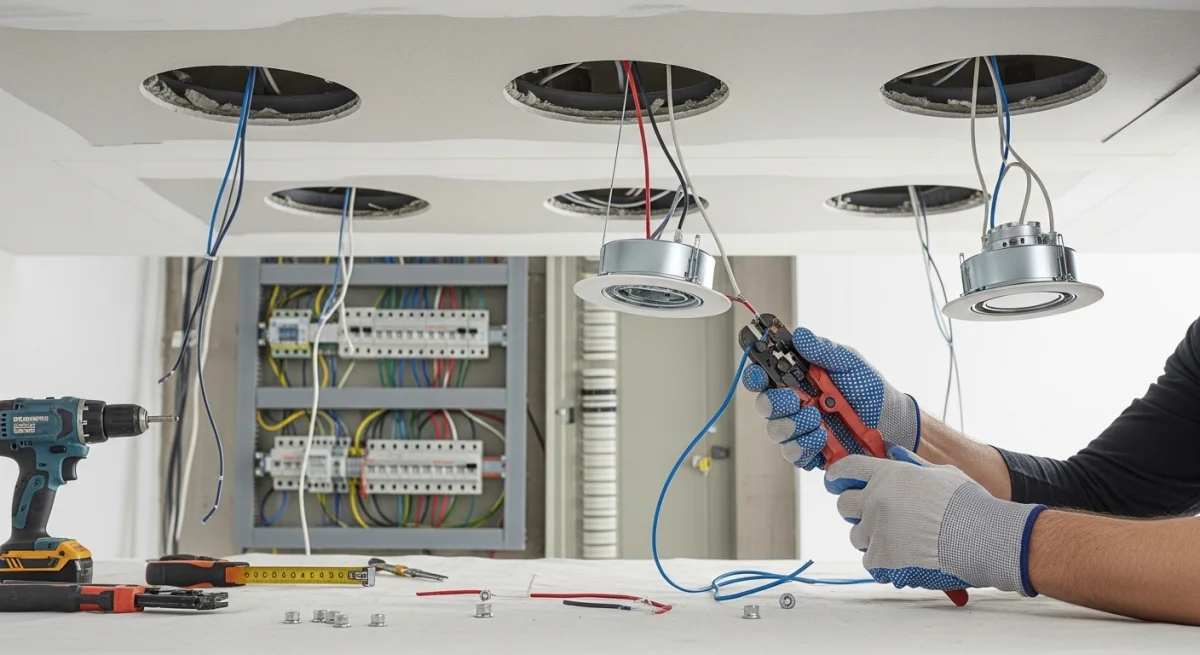
Our scope through our ECRA/ESA-licensed electrical contractor partner replaces K&T with:
- Romex 14-2 NMD90 for 15A general lighting circuits.
- Romex 12-2 NMD90 for 20A general purpose and small-appliance circuits.
- Romex 12-2 or 10-2 NMD90 for dedicated circuits (kitchen counter, microwave, dishwasher, washer).
- Romex 8-3 or 6-3 NMD90 for stove and dryer.
- Eaton, Schneider Square D, or Siemens branch breakers and panels — Federal Pioneer Stab-Lok always replaced.
- AFCI breakers on bedroom circuits (OESC requirement on new installations).
- GFCI at all kitchen counter, bathroom, exterior, garage, and within-6'-of-sink locations.
The Master Electrician on the LEC team signs off; the ESA inspection produces the Certificate of Inspection that ends the insurance issue. See the Knob & Tube Rewiring Service Page.
Related Reading
Knob & Tube Rewiring Toronto: Complete 2026 Guide, Aluminum Wiring vs Knob & Tube Toronto, Electrical Panel Upgrade During Rewiring Toronto.Sources & References
Authoritative sources cited in this guide:
- Electrical Safety Authority (ESA) — Ontario electrical regulator
- Ontario Electrical Safety Code — OESC Section 26 / latest amendments
- Canadian Electrical Code Part I (CSA C22.1) — CEC standard
- NRCan — Electric Vehicle Resources — NRCan EV/charging programs
Continue Reading