RenoHouse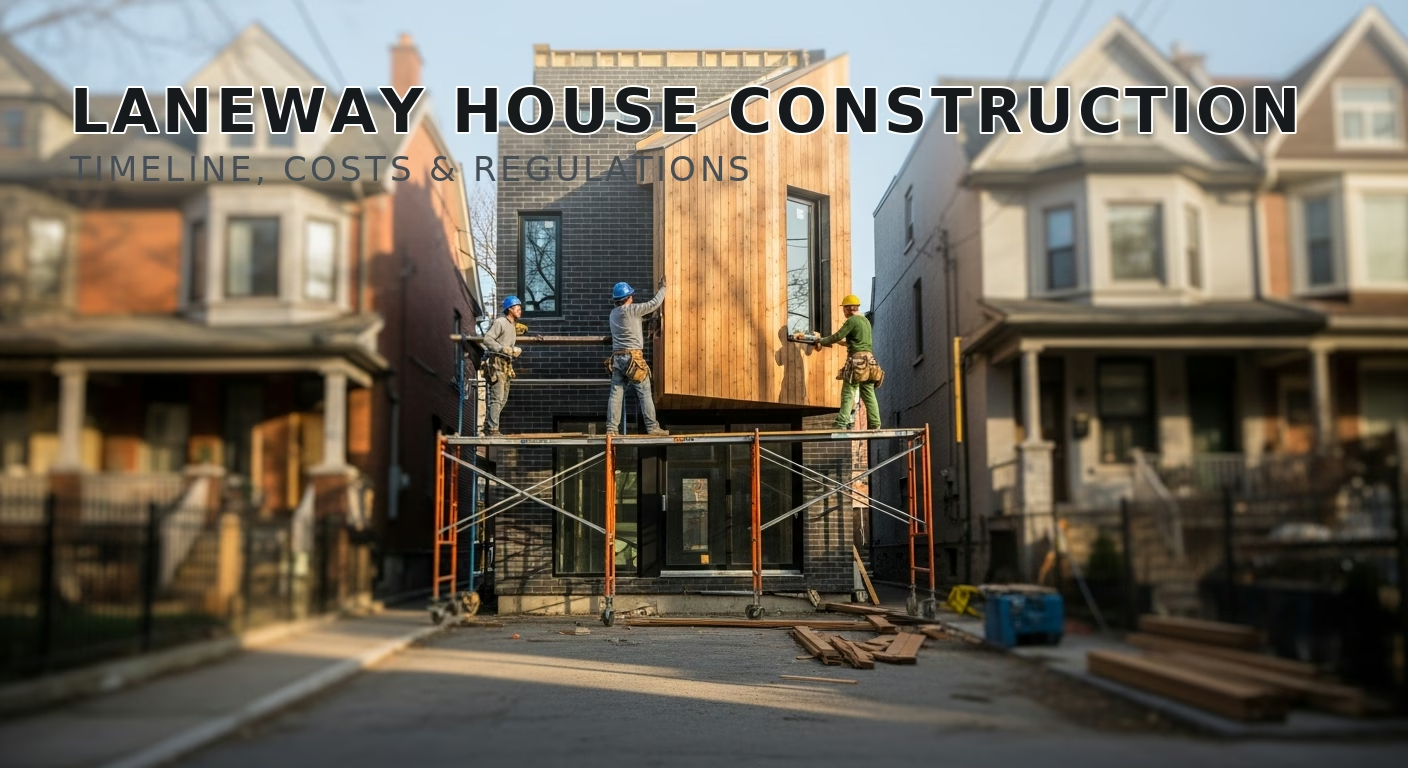

# Laneway House Construction Toronto: Complete 2026 Guide
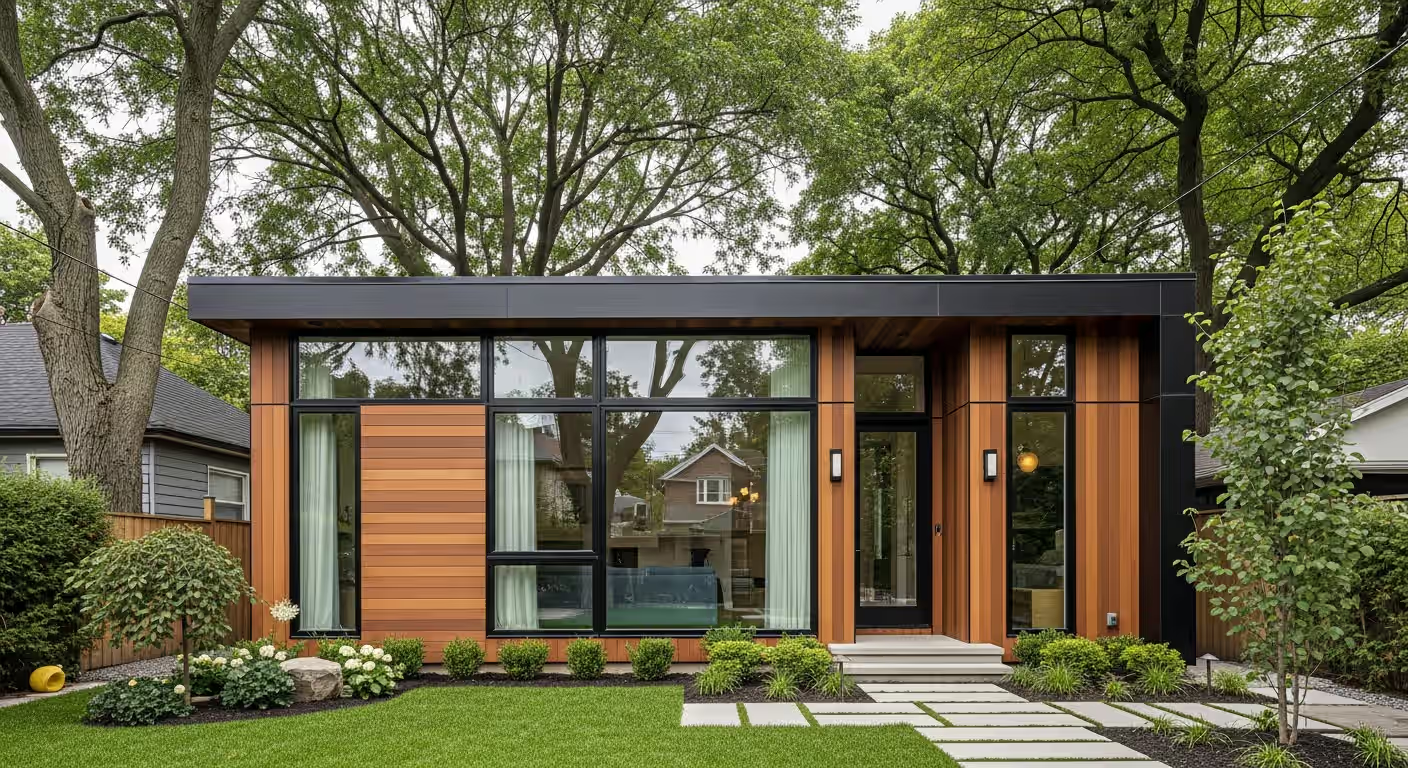
Quick answer. A laneway house is a detached, two-storey rental dwelling built in the rear of a Toronto lot that backs onto or flanks a public laneway. Since the City passed Bylaw 88-2018 in June 2018, roughly 3,500 Toronto properties have become eligible to build one as-of-right, with no parking required, no zoning amendment, and no Committee of Adjust...A laneway house is a detached, two-storey rental dwelling built in the rear of a Toronto lot that backs onto or flanks a public laneway. Since the City passed Bylaw 88-2018 in June 2018, roughly 3,500 Toronto properties have become eligible to build one as-of-right, with no parking required, no zoning amendment, and no Committee of Adjustment in most cases. In 2026, a typical Toronto laneway house costs $400,000 to $700,000 all-in for an 800-1,000 sq ft two-bedroom build, generates $3,000 to $5,500 per month in market rent, and adds $400,000 to $700,000 in property value to the parent lot. Cap rates land at 5-8% on cost, payback periods at 7-10 years on rent alone, and the Equitable Bank Laneway Mortgage plus the City's 20-year Development Charge Deferral Program make the financing math more favourable than at any point since 2018.
This is the RenoHouse pillar guide for laneway house construction in Toronto for 2026. We cover Bylaw 88-2018 eligibility, the real CAD cost stack from concept to occupancy, the 10-14 month timeline, financing routes (including CMHC MLI Select if you stack with a multiplex), design-build vs separate architect, ROI by neighbourhood, the most common reasons projects fail at the permit stage, and how laneway houses compare to garden suites and multiplex conversions on the same lot.
For lots without lane access, see the Garden Suite Toronto 2026 Complete Guide. For owners with larger existing houses that may be better converted than added to, see the Multiplex Conversion Toronto 2026 Complete Guide. For deeper dives on the topics below, see the seven cluster posts linked throughout this guide.
Why Laneway Houses Make Sense in Toronto
Toronto has roughly 257 km of public laneways, almost all concentrated in the former City of Toronto and East York: Roncesvalles, Trinity-Bellwoods, Little Italy, Little Portugal, Leslieville, Riverdale, Cabbagetown, Corktown, the Annex, Seaton Village, Bloor West, Junction Triangle, and Greenwood-Coxwell. Outside this core, laneway-eligible lots are rare. Don Mills, Willowdale, most of Scarborough, and most of Etobicoke have almost no public laneways at all.
What makes the laneway house economically distinct from any other Toronto rental investment is the combination of three things: a high-rent inner-city location, a self-contained two-bedroom dwelling with private outdoor entry, and the absence of any condo board, rental licensing fee, or parking requirement. Tenants pay a premium for laneway houses because they feel like a small detached home rather than a basement apartment or a unit in a triplex.
The math also clears the bar that almost no other Toronto residential investment clears in 2026. A $560,000 laneway build at $3,800/month rent produces a 6% cap rate on cost; the same $560,000 in a downtown condo produces a 3-4% cap rate before condo fees. The laneway also captures land value uplift on a property that the owner already controls.
Toronto Bylaw 88-2018: What It Permits
Bylaw 88-2018 was adopted by Toronto City Council on June 28, 2018, as the outcome of the "Changing Lanes" study initiated by Councillors Ana Bailao and Mary-Margaret McMahon. The bylaw amended Zoning By-law 569-2013 and Official Plan Amendment 433 to permit laneway suites as-of-right in all R zones (R, RD, RS, RT, RM) within the Toronto and East York District. In summer 2019, City Council expanded coverage to all of Toronto including North York, Scarborough, and Etobicoke, although laneway-eligible lots in those former municipalities are far rarer.
The eligibility test under Bylaw 88-2018 (as amended through 2025) is:
- The rear lot line OR side lot line must abut a public laneway for at least 3.5 m.
- The lot must be in an R zone (residential).
- Lot width must be at least 6.0 m.
- A 0.9 m unobstructed fire access path must exist from the public street/sidewalk to the laneway suite entrance.
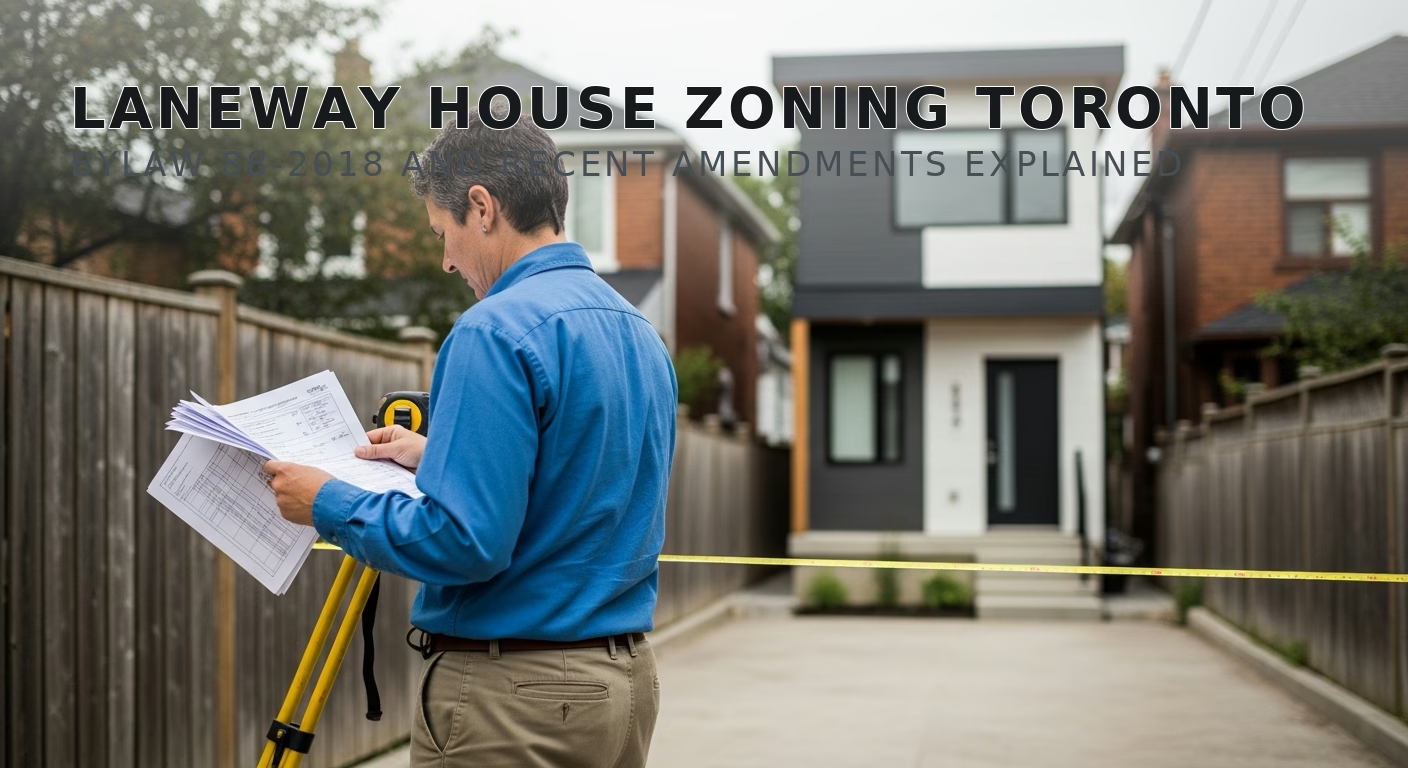
If those four conditions are met, the laneway house is permitted as-of-right with no parking required and no Committee of Adjustment unless the design exceeds the bylaw envelope. For the full bylaw walkthrough including height, setback, and angular plane rules, see Laneway House Zoning Toronto: Bylaw 88-2018 Explained.
Eligibility: Is Your Lot Suitable?
The single most common reason a Toronto homeowner discovers their lot is not suitable for a laneway house is the 0.9 m fire access path requirement. The path must be unobstructed from the street to the suite entrance, must not pass through enclosed space, and cannot be relaxed by Committee of Adjustment because it is a Toronto Fire Services life-safety standard rather than a zoning rule.
Lots with rear access only (where the lane is at the back and there is no side path along the house) typically fail this test. Lots with a side yard of at least 1.0 m clear of fences, gas meters, and AC condensers typically pass.
The second most common reason is lane access width below 3.5 m. Some Toronto laneways are public but narrow at certain points, especially at corners or where a building has historically encroached. The lot must abut the lane for a continuous 3.5 m length.
The third reason is the bylaw-protected tree. Any tree at least 30 cm diameter at breast height (DBH) on private property, or any tree at least 10 cm DBH on City property, is protected under Toronto Municipal Code Chapter 813. The Tree Protection Zone (TPZ) is a radius equal to 10 times DBH or 1.0 m per 10 cm of DBH, whichever is greater. A laneway house cannot be built inside a healthy protected tree's TPZ without a Tree Permit, and the City rarely issues Tree Permits for healthy trees on laneway sites.
Need professional renovation?
Call RenoHouse at 289-212-2345 or get a free estimate today.
Get Free Estimate →For a list of which Toronto neighbourhoods have the highest density of eligible laneway lots, see Laneway House Toronto: Which Neighbourhoods Qualify.
What a Laneway House Costs in 2026
Real all-in costs for a Toronto laneway house in 2026, broken out by size:
| Size | All-In Cost | Typical Use |
|---|---|---|
| Studio (300-400 sq ft) | $230K-$320K | Single-storey; basic kitchen |
| 1BR (450-650 sq ft) | $315K-$430K | Sweet spot for solo tenant |
| 1BR loft (650-800 sq ft) | $370K-$510K | Mezzanine bedroom |
| 2BR (700-900 sq ft) | $420K-$600K | Two storey, family or two roommates |
| 2BR+ premium (900-1,200 sq ft) | $540K-$750K | Cantilevered second; max GFA |
Hard construction cost runs $450-$700 per square foot in 2026, $50-$100/sq ft higher than equivalent garden suites because laneway-facing facades typically require brick or fibre-cement cladding (not vinyl), high-performance windows, sometimes Heritage District-compatible design, and tighter site logistics including crane lifts over neighbours.
Soft costs (architecture, engineering, surveys, permits, arborist, insurance) typically add $30,000-$60,000 to a laneway project. For the full line-by-line cost stack, see Laneway House Cost Toronto: Full Breakdown 2026.
The 10-14 Month Timeline
A typical Toronto laneway house takes 10-14 months from signed design contract to occupancy permit. The phases:
- 1. Concept and designer engagement (4-8 weeks). Site assessment, zoning verification, schematic design.
- 2. Permit drawings (6-10 weeks). Architectural, structural, mechanical, electrical, plumbing.
- 3. Tree assessment and arborist report (2-4 weeks, parallel). Required if any protected tree is within ~6 m of construction.
- 4. Permit submission and review (10-16 weeks). Toronto Building's House Stream review; Zoning, Plans, Forestry, Engineering, Toronto Water all weigh in.
- 5. Construction (20-28 weeks). Mobilization, foundation, framing, mechanical, finishes.
- 6. Final inspections and occupancy (2-4 weeks). Building, plumbing, electrical, occupancy permit.
Best-case projects with no surprises and a pre-approved City plan can complete in 9 months. Worst-case projects with Heritage District overlays, Committee of Adjustment, or tree appeals can run 18-24 months. For the full step-by-step process and what each city department reviews, see Laneway House Permits and Process: Toronto Timeline.
ROI: Rental Income, Property Value Uplift, and 10-Year Returns
A worked example for a 2BR, 1,000 sq ft laneway house in Riverdale or Leslieville at 2026 rents:
| Metric | Value |
|---|---|
| All-in cost | $560,000 |
| Monthly rent (2BR) | $3,800 |
| Annual gross rent | $45,600 |
| Vacancy + collection (5%) | -$2,280 |
| Property tax delta | -$4,000 |
| Insurance delta | -$1,400 |
| Maintenance reserve (8%) | -$3,648 |
| NOI (self-managed) | $34,272 |
| Cap rate on cost | 6.12% |
| Property uplift (laneway corridor premium) | $400K-$600K |
| 10-year total return | 165-200% of construction cost |
Rents in laneway-rich corridors trade at a premium because the suites feel like a private detached home. Riverdale, Leslieville, Trinity-Bellwoods, and Cabbagetown 2BR laneway rents in 2026 range $3,400-$4,900/month. Annex and Seaton Village 2BR rents range $3,600-$5,500/month. Junction Triangle and Bloor West rents range $3,000-$3,800/month.
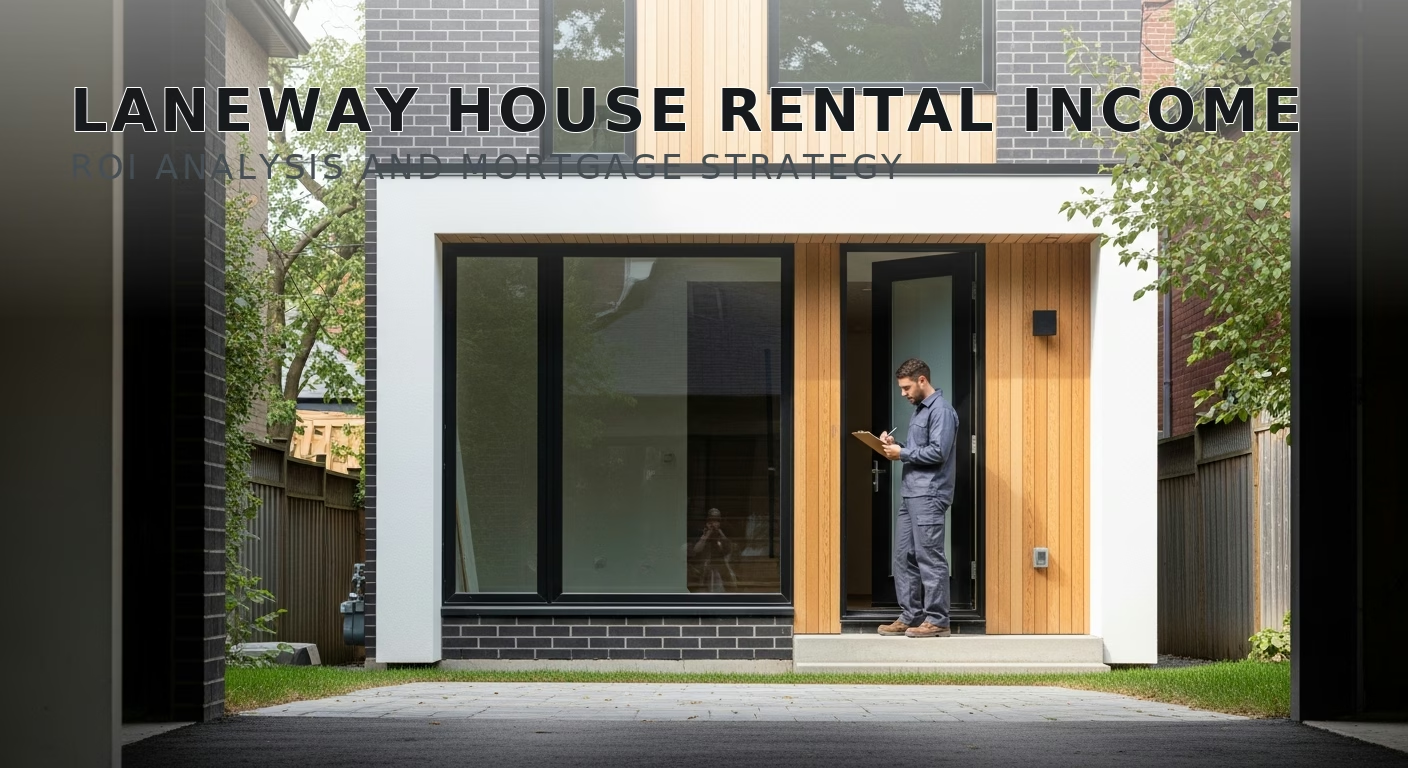
For the full ROI model including financing scenarios, mortgage refinance strategy, and tax considerations, see Laneway House Rental Income Toronto: ROI Analysis.
Laneway House vs Garden Suite: When Laneway Wins
Both laneway houses and garden suites are detached two-storey rental dwellings in the rear yard. The differences:
- Lane access. Laneway requires a public lane abutting the lot at 3.5+ m. Garden suite has no lane requirement.
- Footprint. Laneway max 8.0 m x 10.0 m (~860 sq ft footprint). Garden suite max 60 m² (~646 sq ft) footprint, lesser of that or 40% of rear yard.
- GFA. Laneway up to ~1,720 sq ft. Garden suite up to ~1,290 sq ft (capped at GFA of main dwelling).
- Servicing. Laneway typically routed across rear yard from main house; sometimes bored to street ($30K-$80K). Garden suite usually shorter runs from main house.
- Architectural premium. Laneway facade is publicly visible from the lane, requiring durable cladding and higher finish.
- Rent premium. Laneway typically rents 10-20% higher than equivalent garden suite due to private detached feel and lane-facing entry.
If your lot has lane access, the laneway house almost always wins on rent and resale value despite the slightly higher hard cost. If it does not, the garden suite is the only detached option. For the full decision tree, see Laneway House vs Garden Suite Toronto.
Financing Routes in 2026
Three primary financing routes for a Toronto laneway house in 2026:
Development charges for laneway suites are deferred 20 years from permit issuance under the City's Deferral Program, only triggered if the lot is severed within that period.
Choosing an Architect, Designer, or Design-Build Firm
Three paths to a Toronto laneway house, each with different cost and risk profiles:
1. Pre-approved City plans plus a builder. The City of Toronto launched 24 free pre-approved Garden Suite + Laneway Suite plans in 2025 (4 base designs x 6 variations). They save $10K-$20K in custom architectural fees and 2-4 weeks of design time. Site-specific drawings (lot grading, arborist, servicing) are still required. Best for cost-sensitive projects on standard lots. 2. Separate architect plus general contractor. OAA-licensed architect (Lanescape, Williamson Williamson, Solares/LNWY, Studio JCI, Boldera) does design and contract administration, then a separate GC does construction. Architect fees 10-15% of construction. Best for design-forward projects, irregular lots, Heritage Districts, and trophy builds. 3. Design-build firm. Single contract for both design and construction with one of the laneway-specialist design-build firms (MBC Homes, BVM Contracting, 21 Inc, Maserat, Konstruction, NovaCon, Acadia DC). Typically 5-10% cheaper than separate architect+GC, with faster decision-making and a single warranty. Best for first-time owners and turnkey-oriented projects.For a deep dive on architect selection, fee structures, and what to ask in interviews, see Laneway House Architect Toronto: Design Guide.
The Most Common Pitfalls
Five reasons Toronto laneway projects fail or run dramatically over budget:
- 1. Fire access path < 0.9 m. Cannot be fixed by Committee of Adjustment. Discovered too late, kills the project.
- 2. Servicing capacity insufficient. Existing 100A main service cannot power the parent home plus the laneway suite. Upgrade to 200A ($5K-$10K) or new dedicated Toronto Hydro service ($15K-$25K).
- 3. Tree Protection Zone violation. Permit denied because design encroaches on TPZ of healthy bylaw-protected tree. Redesign required.
- 4. Heritage District overlay missed. Owner discovers lot is in a Heritage Conservation District (Cabbagetown, Riverdale, Bain Co-op, etc.) only after permit submission. Heritage Permit adds 4-6 weeks and may force design changes.
- 5. Trespass for crane lift. Modular delivery requires crane swing over neighbour's yard; neighbour refuses. Forces site-built fallback or cash-compensated easement.
Tarion Warranty and HCRA Registration
Every new laneway house in Ontario must be enrolled in Tarion's New Home Warranty Program before the building permit is issued. Enrollment is the builder's responsibility. The warranty covers:
- One year on materials and workmanship.
- Two years on water penetration, electrical/plumbing/HVAC delivery systems, and Building Code violations.
- Seven years on major structural defects.
The builder must also be registered with the Home Construction Regulatory Authority (HCRA). Working with an unregistered builder voids the Tarion warranty and exposes the homeowner to direct liability. Tarion enrolment costs are typically $1,000-$2,000 and rolled into the build contract.
Next Steps
If you are evaluating whether a laneway house makes sense on your lot, the first step is a site assessment that confirms lane abutment of 3.5+ m, a clear 0.9 m fire path, no protected-tree conflicts, and adequate servicing capacity. From there, the decision tree branches into pre-approved plans vs custom design and design-build vs separate architect.
RenoHouse offers Toronto laneway house construction as a full design-build service, from site assessment through occupancy permit. We work with OAA architects on custom commissions and offer pre-approved-plan packages for cost-sensitive projects. Learn more at /services/multi-unit-aru-conversions/laneway-house-construction or contact us for a no-obligation site assessment.
Sources & References
Authoritative sources cited in this guide:
- Toronto Laneway Suite Bylaw 88-2018 — Toronto laneway regulations
- Bill 23 — More Homes Built Faster Act — Provincial enabling law
- Equitable Bank Laneway House Mortgage — Specialty financing
Continue Reading