RenoHouse

The Question Every Toronto Homeowner Asks
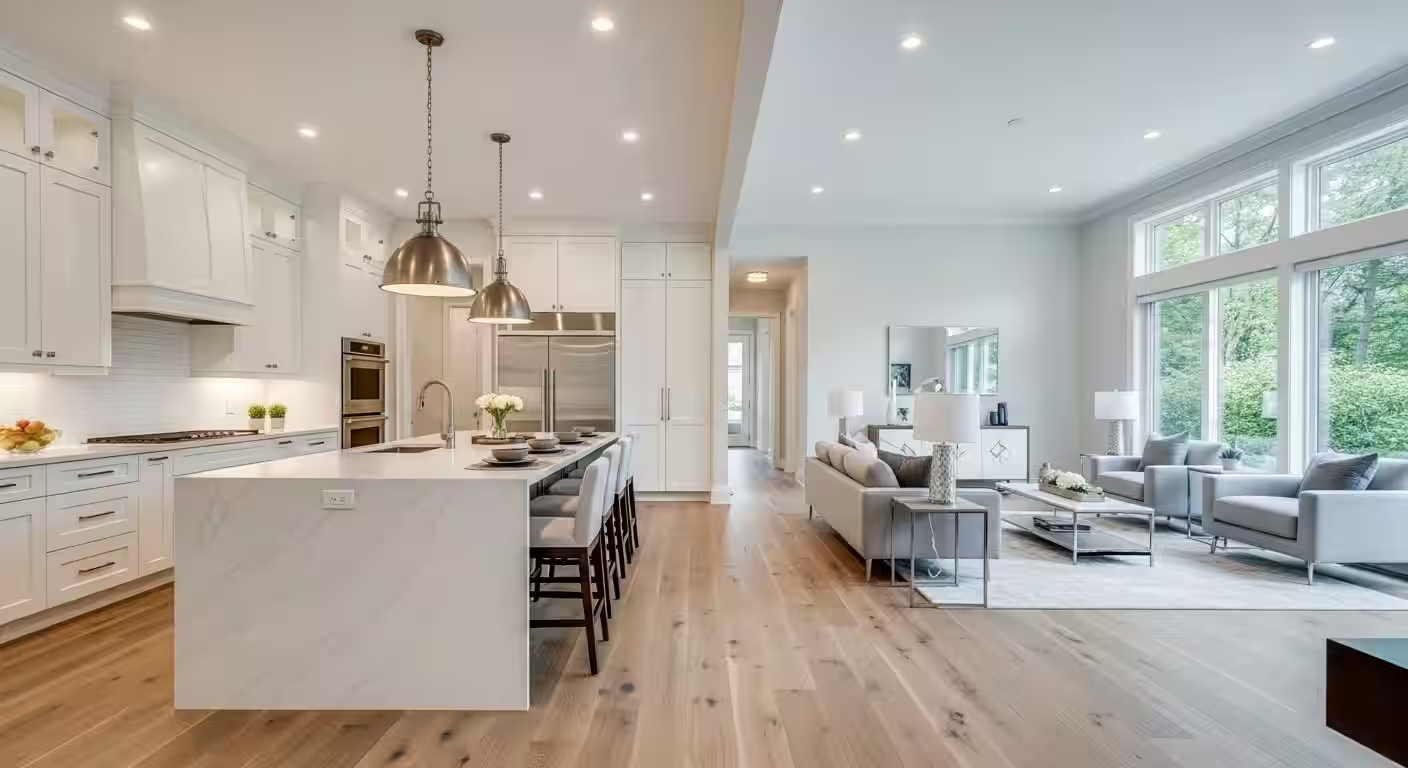
"If I spend $30,000–$50,000 on a load-bearing wall removal and open-concept main floor, what does it do to my home's resale value?" The honest 2026 answer: it depends on neighbourhood, home type, and execution quality, but for the right home in the right area, the project consistently returns most or all of its cost — and faster sale times on top.
This post is the data-driven view from someone who watches Toronto resale comps. For the project context start with the pillar guide.
Where Open-Concept Pays Back Best
Strongest ROI patterns we observe in 2026 Toronto:
1. 1960s-1980s Detached in Scarborough, North York, Etobicoke
This is the strongest segment. Homes built 1960–1985 in:
- Scarborough (Bendale, Wexford, Tam O'Shanter, Scarborough Village)
- North York (Don Mills, Bayview Village, Willowdale, Newtonbrook)
- Etobicoke (Markland Wood, Rexdale, Humber Bay, Mimico)
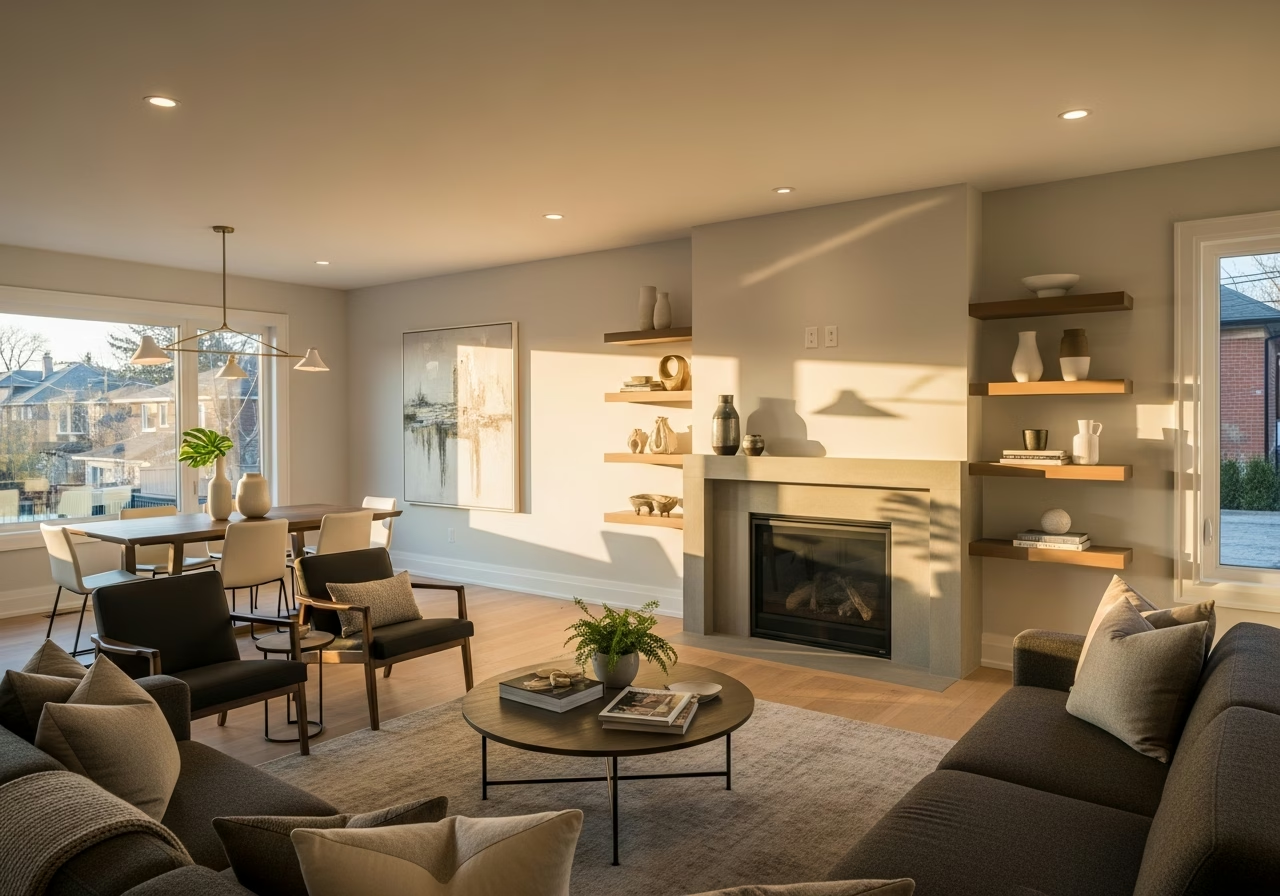
These homes were built with closed kitchens, formal dining rooms, and separated living rooms — a layout completely out of step with current buyer preferences. An open-concept conversion brings the layout up to current expectations and often shifts the home from "nice 1970s house" to "modern updated home" in buyer perception.
Typical pattern in 2026: $40,000–$70,000 invested in open-concept conversion (wall removal + kitchen + finishes) returns approximately 75–110% at resale in most cases, plus shorter days-on-market (often 30–50% faster sale).
2. 1900-1940 Semis in East Toronto Hot Markets
Riverdale, Leslieville, the Beaches, Cabbagetown semis with original closed plans. Buyers in these neighbourhoods skew younger, value modern functionality, but also value original character. The successful projects integrate open-concept with restoration of original details (trim profiles, hardwood, plaster ceilings).
Typical pattern: $80,000–$160,000 in restoration-quality open-concept renovation returns 70–95% at resale. Lower percentage than the suburbs because old-home renovations cost more, but absolute dollar lift is often $80,000–$160,000+ on the sale price for top-quality executions.
3. Two-Storey Detached 1980s-2000s in 905 Inner Suburbs
Mississauga, Vaughan, Markham, Richmond Hill homes built with closed kitchens and large isolated formal rooms. Same dynamic as the Toronto inner suburbs but slightly less buyer pressure for open-concept. ROI typically 65–90%.
Where ROI Is Weaker
A few patterns where load-bearing wall removal does NOT consistently pay back:
Newer Open-Plan Homes
If your home was built after 2005, it's already mostly open-concept. Tearing out an additional wall to make it more open rarely produces meaningful resale lift. Save the money.
Need professional home renovation?
Call RenoHouse at 289-212-2345 or get a free estimate today.
Get Free Estimate →Premium Homes Where Open-Concept Was Already Done
Forest Hill, Rosedale, Bridle Path homes that were renovated in the 2010s are often already open-concept. Adding more openness doesn't lift price.
Investment / Rental Properties in Generic Markets
If the property is rented and likely to stay a rental, the wall removal won't lift rent meaningfully and won't affect cap rate. Better to invest in maintenance and tenant-friendly upgrades.
Heritage Homes Where Original Layout Is Part of the Value
A truly preserved 1880s Cabbagetown Victorian where the closed plan IS the architectural value can lose character (and money) when opened up. Some buyers actively seek "untouched" heritage homes.
What Drives ROI Within a Project
Not all open-concept renovations produce equal returns. The factors that distinguish high-ROI from low-ROI projects:
Execution Quality
- Beam wrapped or hidden as designed feature (not awkward bulkhead afterthought)
- Flooring continuous across new open space
- Lighting plan accounts for the open layout
- Kitchen island anchors the space and provides function
- Built-ins integrate naturally
- Paint, trim, finish quality consistent with home value
A polished execution produces 15–30% more resale lift than a "we just removed the wall" execution at similar dollar cost.
Layout Decisions
The actual open-concept layout matters. Successful patterns:
- Kitchen at the back, dining transition zone in middle, living at front (or vice versa)
- Island that serves as the natural divider
- Sight lines from front door to back yard windows
- Light from multiple sides reaching all zones
Unsuccessful patterns:
- Awkward column or post in the middle of a sight line
- Multiple bulkheads that create visual chaos
- Kitchen island stranded in the middle without supporting layout
Photo and Listing Strategy
Open-concept lifts list price largely through photos. A dramatic main-floor photo that shows the openness sells the house. Project finish quality directly affects photo quality. Cheap finish work, visible patches, or awkward details show up clearly in listing photos and reduce the perceived value lift.
The Days-on-Market Effect
Beyond list price, open-concept consistently reduces days-on-market in 2026 Toronto:
- Closed-plan comparable home: 28–45 days on market typical
- Open-concept comparable: 14–25 days typical
Faster sale = lower carrying costs (mortgage, taxes, utilities while listed), lower stress, and often more negotiating power for the seller. Hard to put an exact dollar value on, but real.
Comparison to Other Renovations
Toronto 2026 renovation ROI rough rankings, best to worst:

- 1. Bathroom updates (mid-spec, well-executed): 80–110% ROI
- 2. Kitchen renovation with open-concept wall removal: 75–105% ROI
- 3. Whole-house exterior refresh (paint, doors, walkways): 70–95% ROI
- 4. Basement legal apartment: 65–110% ROI (depends on rental market)
- 5. Standalone load-bearing wall removal (no kitchen update): 50–80% ROI
- 6. Premium master suite renovation: 50–75% ROI
- 7. Pool installation: 25–45% ROI
- 8. Premium kitchen with no layout change: 60–80% ROI
The pattern: the best ROI comes from projects that fix layout problems buyers care about, executed well. Standalone wall removal without integrated kitchen update sits in the middle — useful but not a primary value driver on its own.
When ROI Isn't the Point
Many Toronto homeowners we work with are not selling soon and don't really care about resale value. They're going to live with the renovation for 10–20 years. In that case, the calculus is different:
- $50,000 invested, $40,000 returned at resale = $10,000 net cost over potentially 20 years of daily enjoyment
- $1,000 effective cost per year of better living, faster cooking, brighter space, better entertaining
- Most homeowners value that highly
For long-term residents, the ROI question is largely beside the point. The question is whether the renovation makes life better. The answer for an open-concept conversion is usually yes.
Who Shouldn't Do It
Be honest about whether the project makes sense:
- Selling within 12 months in a soft market segment
- Home already mostly open-concept
- Heritage value tied to original closed plan
- Budget too tight to execute well (poor finish quality kills ROI)
- Wall removal cost vastly exceeds neighbourhood comp range
For each of these, consider deferring or alternative scope.
Get an Honest Opinion
Before you commit to a load-bearing wall removal as a resale move, talk to your local real estate agent about your specific home in your specific neighbourhood. Then talk to a renovation contractor who will tell you honestly whether the proposed scope makes sense for the home.
Book a load-bearing wall consultation and we'll talk through your home, neighbourhood comps you should be comparing yourself to, and whether the project is a value play, a livability play, or both. We'd rather tell you "your money is better spent elsewhere" than build something that doesn't pay back for you.Sources & References
Authoritative sources cited in this guide:
- Ontario Building Code — OBC official text
- Toronto Building Permits — City permit portal
- Tarion New Home Warranty — Ontario new-build warranty regulator
- HCRA — Home Construction Regulatory Authority — Ontario builder/vendor licensing
Continue Reading