RenoHouse

Mistakes That Cost Toronto Homeowners Real Money
Every year we get called to fix a load-bearing wall removal someone else did wrong. The pattern is consistent: a homeowner or under-qualified contractor cut corners on engineering, permits, beam sizing, or asbestos, and the consequences showed up six months to two years later — sagging floors, cracked drywall, failed sale, insurance claim denial.
Need professional home renovation?
Call RenoHouse at 289-212-2345 or get a free estimate today.
Get Free Estimate →This post is the honest catalogue of the mistakes we see most often, what they cost to fix, and how to avoid them. For full project context start with the pillar guide.
Mistake 1 — Skipping the Engineer
What happens: Homeowner or unlicensed contractor decides the wall "looks non-bearing" and pulls it down without engaging a Professional Engineer. Sometimes a beam goes in based on guesswork; sometimes nothing replaces the wall.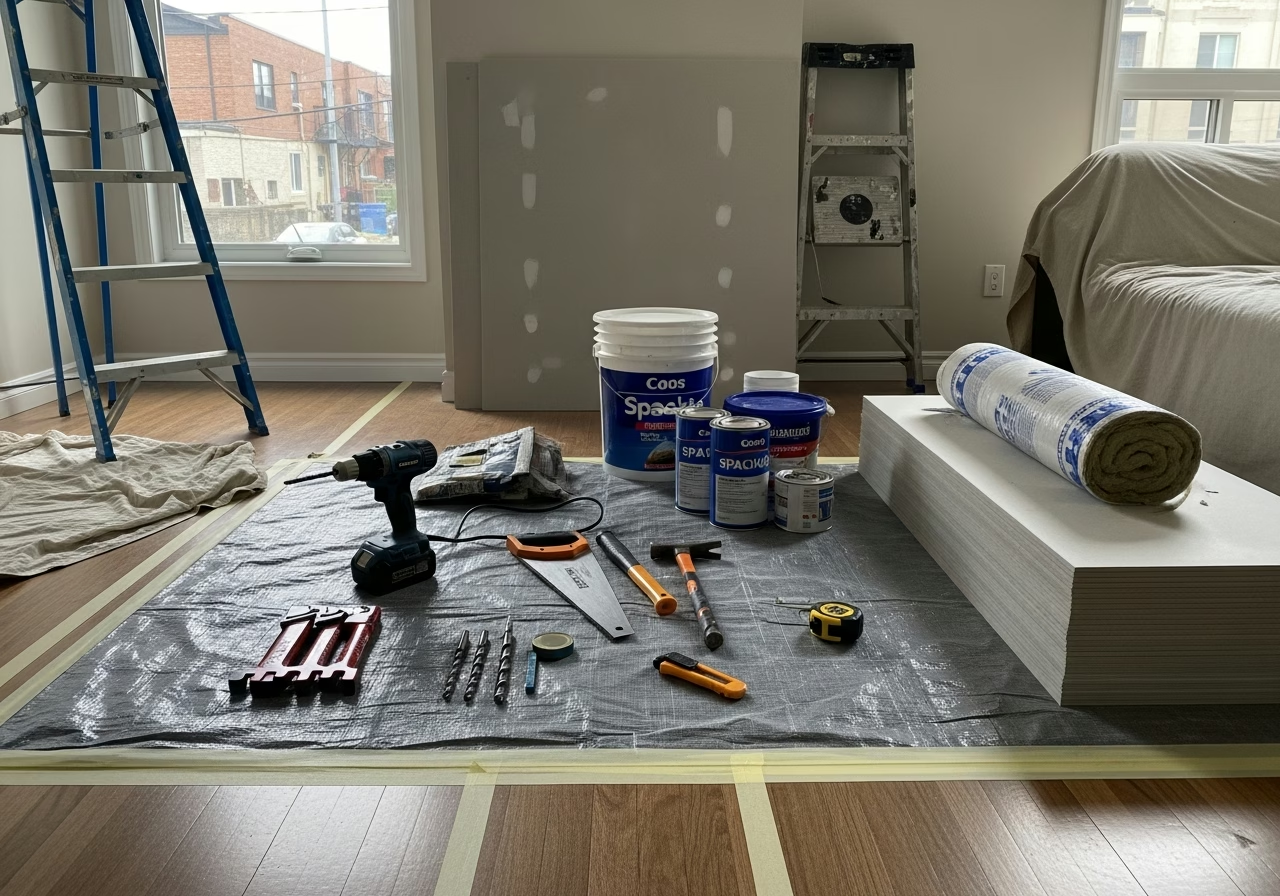
- 3–12 months later: sagging floors, cracked drywall on floors above
- Doors that no longer close, windows that bind
- In severe cases, structural failure requiring emergency support
Mistake 2 — No Building Permit
What happens: Project completes without applying for or closing a Toronto Building Permit. Sometimes contractor and homeowner agree to skip; sometimes the homeowner thinks the contractor pulled it and the contractor didn't. The damage:- Insurance claim denial if anything goes wrong (homeowners policies require permitted work)
- Resale problems: buyer's lawyer requests closed permits, finds none, requests a holdback or price reduction
- City order to apply for retroactive permit if reported to Toronto Building
- Open structural work appears on the property's permit history forever
Mistake 3 — Undersized Beam
What happens: Contractor (sometimes without engineer involvement) installs a beam that's too small for the span and load. The beam carries the load initially but deflects more than acceptable over time. The damage:- Visible sag in the beam (1/2 inch+ deflection)
- Cracks in drywall or plaster on floor above
- Bouncy floors above the beam
- Beam may eventually require replacement, which means re-opening the project
Mistake 4 — Posts Bearing on a Partition Wall
What happens: New beam installed correctly, but the post at one or both ends of the beam lands on a non-bearing partition wall on the floor below — instead of stacking down to a foundation wall, basement beam, or footing. The damage:- Partition wall cannot carry the load
- Wall fails, basement ceiling sags or cracks
- Beam end drops, transferring deflection up through the home
Mistake 5 — Asbestos Demoed Without Testing
What happens: Pre-1990 Toronto home, contractor cuts into wall finishes (plaster, drywall, joint compound, vermiculite insulation) without testing for asbestos. The damage:- Worker exposure liability
- Home contaminated with airborne asbestos requiring professional decontamination
- Potential health consequences for occupants
- Project halt and full Type 3 abatement required after the fact at higher cost
Mistake 6 — Ignoring Knob-and-Tube in the Wall
What happens: Pre-1950 Toronto home, wall opened up and knob-and-tube wiring discovered. Contractor cuts and caps without proper rewire, or buries the issue behind the new finishes. The damage:- Active knob-and-tube hidden in walls is a fire hazard
- Insurance won't cover homes with active K&T
- Buyer's home inspector finds it at resale
- ESA can issue a notice if reported
Mistake 7 — HVAC Not Re-Routed Before Bulkhead
What happens: Bulkhead beam installed where an HVAC supply duct used to run. Duct relocation not planned, second-floor heating/cooling drops or fails entirely.
- Cold rooms upstairs in winter
- Inadequate cooling in summer
- HVAC re-balancing or duct re-routing after the fact requires re-opening finishes
Mistake 8 — Plumbing Stack Surprise Mid-Demo
What happens: Wall opens up and a 4-inch cast iron vent stack runs through it. Contractor wasn't expecting it, project halts while plumber is engaged. The damage:- 1–3 week project delay
- Unplanned plumbing relocation cost ($1,500–$4,000)
- Sometimes redesign required if stack is impossible to relocate
Mistake 9 — Hardwood Floor Patch Looks Bad
What happens: Beam installed correctly, drywall patched, paint touched up. Then the floor patch where the wall used to be is a different shade and finish than the surrounding hardwood. The seam reads from across the room. The damage: Mostly aesthetic, but persistent enough that homeowners often re-do it within a year. The fix cost: Full floor re-sand and refinish $3,000–$6,000 vs $1,500–$3,500 to do it properly the first time with weave-in boards and full finish blend. How to avoid: Plan flooring patch in design phase. Source matching boards (often refinished from another part of the home). Weave new boards into existing pattern. Refinish the affected area or full room for finish consistency.Mistake 10 — Not Coordinating With Kitchen Renovation
What happens: Wall comes down as a standalone project. Six months later, homeowner renovates kitchen and realizes the wall placement, beam height, or column location interferes with the kitchen design. The damage:- Kitchen design constrained by suboptimal wall removal
- Sometimes beam or column needs to move (expensive)
- Lost opportunity to bundle costs
The Common Thread
Every one of these mistakes traces to one of three causes: no engineer, no permit, or no integrated design. Doing it right means engaging a PEng, pulling the Toronto permit, and treating the wall removal as part of a thought-through project — not an isolated demo job.
Book a load-bearing wall consultation and we'll walk you through what doing it right looks like for your specific home.Sources & References
Authoritative sources cited in this guide:
- Ontario Building Code — OBC official text
- Toronto Building Permits — City permit portal
- Tarion New Home Warranty — Ontario new-build warranty regulator
- HCRA — Home Construction Regulatory Authority — Ontario builder/vendor licensing
Continue Reading