RenoHouse

The Renovation That Defines Toronto's 2026 Real Estate Market
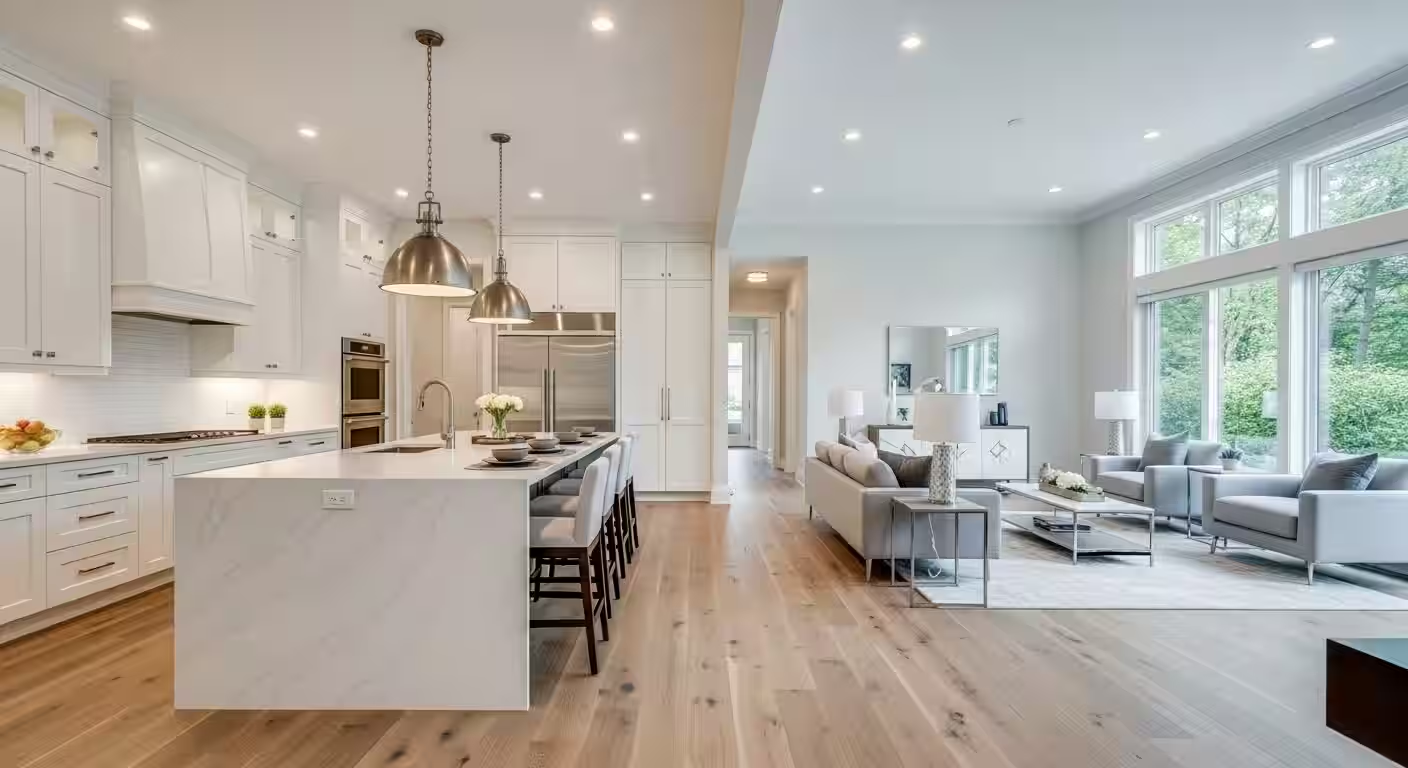
Open-concept main floors are the single most-requested renovation in Toronto in 2026. Drive through Scarborough, North York, Etobicoke, the Beaches, Riverdale, or Cabbagetown and the demand is visible: dumpsters in driveways, 1960s ranch bungalows mid-conversion, century semis getting their kitchens-dining rooms-living rooms unified into one bright space.
This post is the design and cost overview for that renovation, with focus on the load-bearing wall removal that makes it possible. For the deeper structural decisions, read the pillar guide. For the full kitchen reno integration, see Load-Bearing Removal During Kitchen Renovation.
Why Open-Concept Wins in Toronto Homes
Three reasons drive the demand:
- 1. Light. Toronto's mid-century closed-plan houses have small kitchen windows facing back yards and dark dining rooms in the middle of the house. Removing the kitchen-dining wall pulls back-yard light through the whole main floor.
- 2. Square-foot perception. A 1,200 sq ft main floor split into three small rooms feels cramped. The same square footage as one open space feels generous.
- 3. Family use. Cooking parents can keep eyes on kids in the living room. Hosting flows naturally across the space. Modern life is just easier on an open floor plan.
The 2026 listing data we track in Toronto consistently shows open-concept comps moving faster and pricing slightly above closed-plan comps in the same neighbourhoods, especially in Scarborough and North York 1960s detached.
The Three Common Toronto Layout Patterns
Pattern A — Bungalow / Ranch Detached (Scarborough, North York, Etobicoke 1955–1980)
Typical: 1,000–1,400 sq ft main floor, kitchen at the back centre, dining room beside it, living room at the front. Two walls between them — kitchen-to-dining and dining-to-living.
Most projects remove both walls to create one continuous space. The kitchen wall is usually 10–14 ft and houses a plumbing stack — relocate or absorb into an island. The dining-living wall is typically 10–12 ft, often non-bearing or carrying minor load.
Beam strategy: typically two LVL bulkheads or two flush beams. Total beam material in $5,000–$9,000 range. Engineer fee covers both ($2,500–$3,500 bundled). Combined cost with finishes: $25,000–$45,000 for the wall removals alone, $60,000–$110,000 including a new kitchen.
Pattern B — Two-Storey Detached (1960–1985)
Typical: kitchen at back left, dining at back right, living at front, with central staircase. The wall between kitchen and dining is the candidate, and there's a second-storey wall directly above (usually a hallway or bathroom wall).
Two-storey conditions almost always require steel or 3-ply LVL flush beam because the upper wall load is carried in addition to roof and second-floor live load. Spans typically 12–16 ft. Beam alone: $10,000–$16,000 installed.
Need professional home renovation?
Call RenoHouse at 289-212-2345 or get a free estimate today.
Get Free Estimate →The added complexity: temporary support of the upper floor during demo. See Temporary Shoring for Load-Bearing Removal. Combined open-concept project: $70,000–$140,000 with new kitchen.
Pattern C — Narrow Semi-Detached (Beaches, Riverdale, Leslieville, Cabbagetown 1900–1940)
Typical: 16–20 ft wide, 35–50 ft deep, three rooms in a row. Centre wall between dining and kitchen, sometimes a second wall between living and dining.
Centre walls are nearly always load-bearing because the joists span the short direction and rest on that wall mid-house. Spans 8–12 ft. LVL bulkhead or flush, $4,000–$10,000 beam.
The complications in Victorian semis: knob-and-tube wiring (see knob-tube rewiring), asbestos in plaster (see [asbestos abatement](/blog/asbestos-abatement-toronto-2026-complete-guide)), settled foundations, and sometimes Heritage Conservation District constraints. Combined project: $80,000–$150,000+ because of the additional restoration scope.
Layout Patterns That Work in Toronto
When the wall comes down, the question is what to do with the new space. The most successful Toronto open-concepts we've built share patterns:
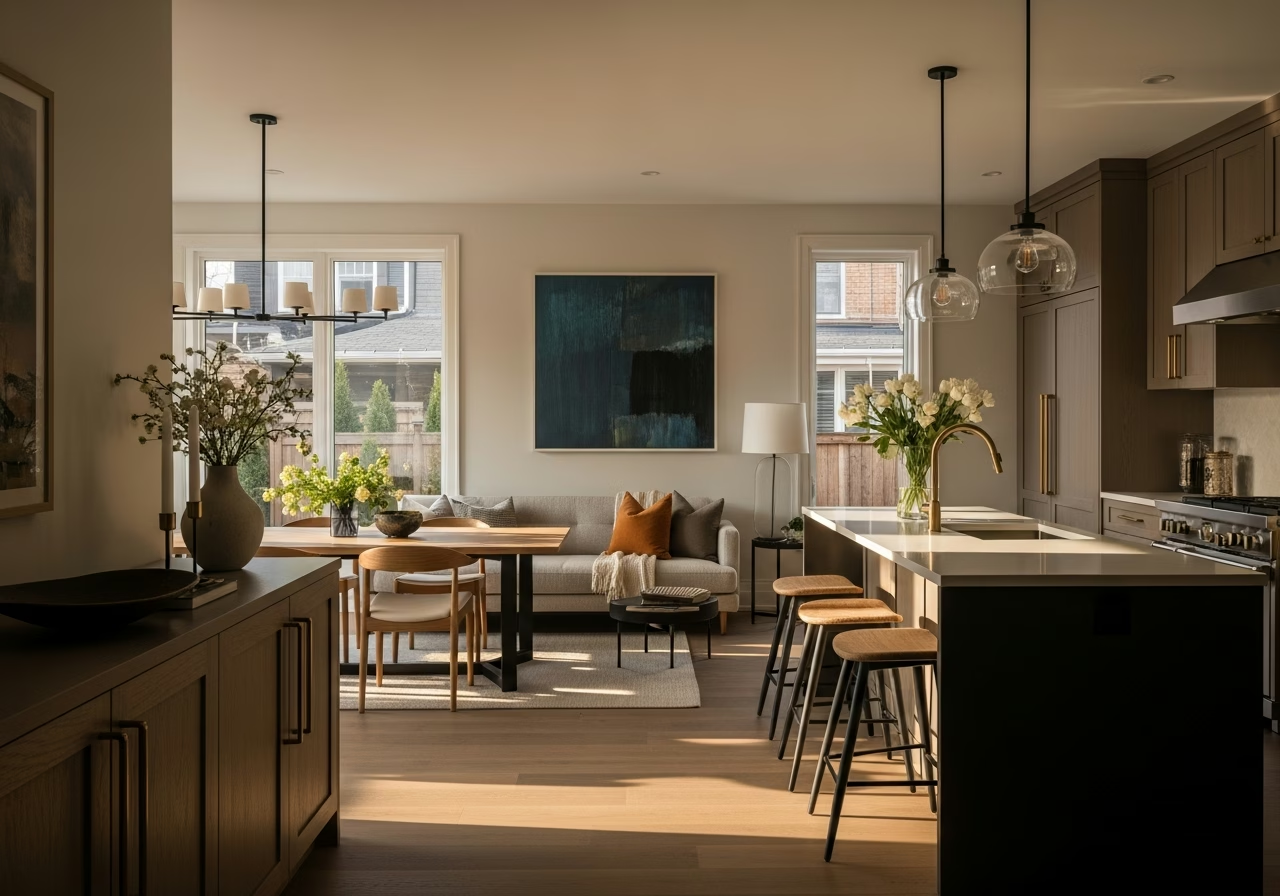
Island as the new wall. A 9–12 ft kitchen island defines the kitchen zone without a wall. Seating on the living-room side, work surface on the kitchen side. Anchors the whole space. Bulkhead as architectural feature. If the beam is a bulkhead (below ceiling), wrap it in trim, paint contrasting colour, or run a pendant light line along it. The bulkhead becomes a feature, not a flaw. Flooring continuity. One flooring material across the whole open space. Switching from kitchen tile to living-room hardwood at the old wall line betrays the original layout and shrinks the perceived space. Lighting in zones. Recessed lights for the kitchen, statement pendant over the island, chandelier or pendant cluster for the dining zone, recessed and accent for the living. Different lighting strategies define the zones without walls. Built-ins replace closed storage. When you remove a wall you also remove the cabinets and shelves the wall held. Custom built-ins on the remaining walls — entertainment unit on the back wall, bench seating at the dining end, integrated storage — restore storage and add architectural depth. See Built-Ins and Millwork in Toronto.The Realistic Budget
For a typical Toronto open-concept main floor renovation in 2026, including the load-bearing wall removal:
- Bungalow/ranch detached, mid-spec finishes: $60,000–$95,000
- Two-storey detached, mid-spec: $80,000–$140,000
- Victorian semi with restoration scope: $95,000–$170,000
- High-end any of the above: add 30–60% for high-end finishes, custom millwork, premium appliances.
The wall removal itself is typically 15–25% of total project cost. The kitchen, flooring, lighting, paint, and finishes are the bigger pieces.
What Pulls Toronto Projects Off-Schedule
Three things that consistently slow open-concept projects:
- 1. Asbestos surprise. Test before demo. We will not start without a report.
- 2. Permit timing. The Toronto permit process for structural alteration runs 3–6 weeks. Start early.
- 3. Long lead items. Custom cabinetry, stone countertops, special-order beams (steel, Glulam) all need 4–8 weeks. Order before demo, not after.
Ready to Open Up Your Main Floor
We've built dozens of Toronto open-concept main floors over the past several years. Our typical client comes to us thinking about a new kitchen and leaves with a fully integrated kitchen-living open-concept that works for the next twenty years.
Book an open-concept consultation and we'll walk your main floor, identify what's load-bearing, sketch the layout, and quote the full project — wall removal, kitchen, finishes, and timeline.Sources & References
Authoritative sources cited in this guide:
- Ontario Building Code — OBC official text
- Toronto Building Permits — City permit portal
- Tarion New Home Warranty — Ontario new-build warranty regulator
- HCRA — Home Construction Regulatory Authority — Ontario builder/vendor licensing
Continue Reading
- Load-Bearing Wall Removal in Toronto: 2026 Complete Open-Concept Guide
- Load-Bearing Wall Removal During Kitchen Renovation in Toronto: The Bundle Most Homeowners Choose
- Load-Bearing Wall Removal Cost in Toronto: Real 2026 Numbers by Span
Frequently Asked Questions
How much does an open-concept renovation cost in Toronto?
Open-concept renovations in Toronto range from $35,000 to $75,000 depending on wall type, finishes, and whether load-bearing requires structural support. A simple load-bearing wall removal with steel beam costs $8,000–$15,000. Kitchen upgrades, flooring, electrical, and finishes add another $25,000–$60,000. Scarborough, North York, and Etobicoke pricing is similar to downtown Toronto.
Do I need a permit to remove a load-bearing wall?
Yes. Removing a load-bearing wall in Toronto requires a building permit from your city's Department of Building. You'll also need a stamped structural engineer's design and ESA approval if electrical work is involved. Expect permit costs between $500–$2,000 plus the engineer's fee ($1,500–$3,500). Non-compliance risks fines and insurance denial.
How long does an open-concept renovation take?
Most open-concept renovations take 4–8 weeks from permit approval to completion, depending on structural complexity and kitchen scope. Structural work (beam installation, wall removal) takes 2–3 weeks. Electrical, plumbing, drywall, and finishing add 2–4 weeks. Delays occur if Toronto Building inspectors flag issues or trades are fully booked.
What support beam should I use for open-concept?
Steel beams (I-beams or H-beams) are standard in Toronto. Sizing depends on wall length, floor load, and support posts. A 20-foot span requires a W12x26 or W14x30 beam, costing $2,500–$6,000 installed. Your structural engineer calculates exact requirements and depth. Laminated beams are an alternative but less common in Toronto open-concept work.