RenoHouse

# Partial vs Full Knob & Tube Removal in Toronto: Why Partial Rarely Works
Quick answer. A common pitch from less reputable Toronto electricians: "We can remove the visible K&T in your basement for $4,000–$8,000 — the hidden K&T in your walls and attic is fine to leave." This is a false economy in 2026. Insurers do not accept partial removal. Buyers' inspectors flag remaining K&T during home sales.A common pitch from less reputable Toronto electricians: "We can remove the visible K&T in your basement for $4,000–$8,000 — the hidden K&T in your walls and attic is fine to leave." This is a false economy in 2026. Insurers do not accept partial removal. Buyers' inspectors flag remaining K&T during home sales. ESA does not certify partial removal as a complete project. The homeowner pays for incomplete work that does not solve the underlying insurance and safety issues.
This post explains why partial removal rarely works, the narrow cases where it might, and what a full removal scope actually includes. For the full project guide, see Knob & Tube Rewiring Toronto: Complete 2026 Guide.
What Partial Removal Typically Means
A "partial removal" or "visible-only" rewire usually scopes:
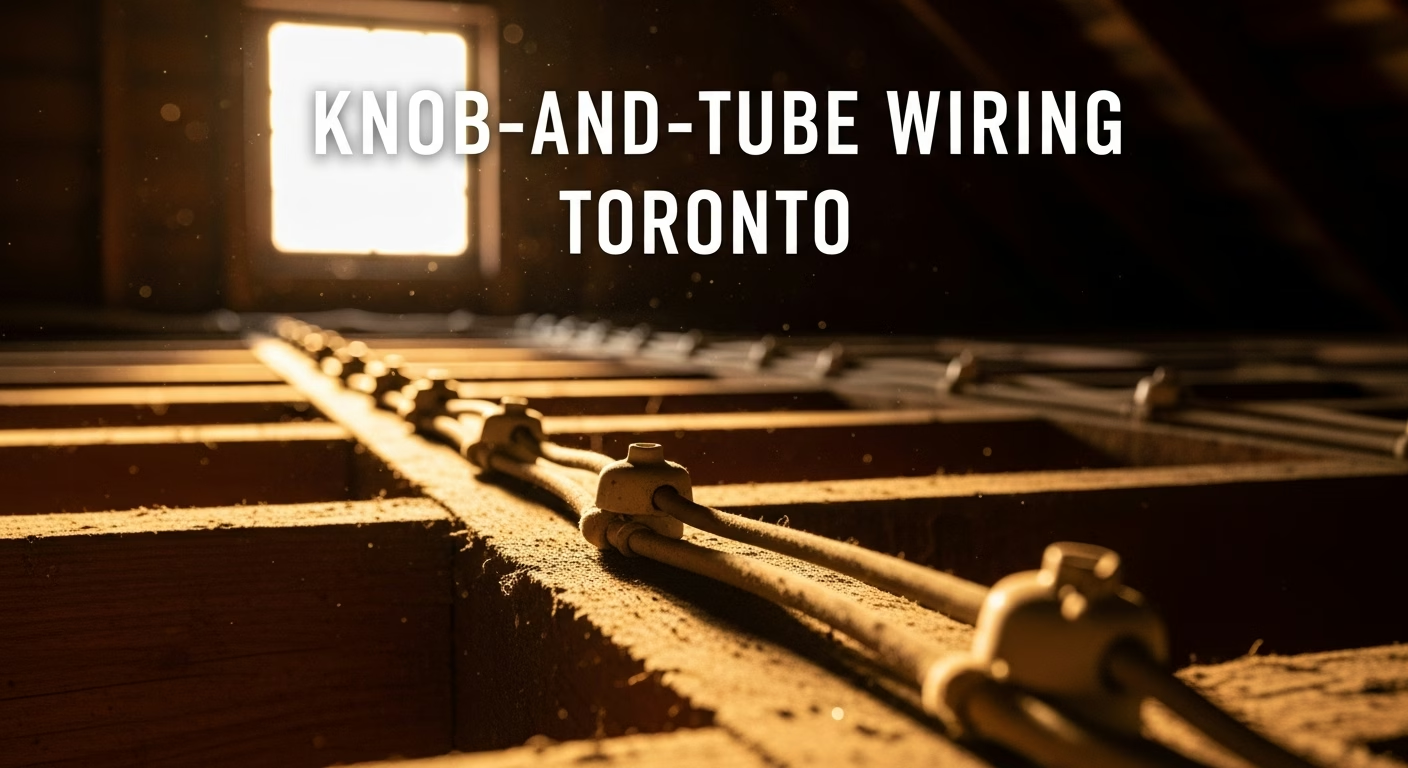
- All visible K&T in the unfinished basement (most accessible, easy to remove).
- All visible K&T in the unfinished attic (also accessible).
- New service drop and panel work if needed.
- Leaves K&T in finished walls (second floor, behind plaster).
- Leaves K&T in finished ceilings (second floor, between plaster and floor above).
The pitch is that the visible portions are the "risky" parts because of degraded insulation in open air. The hidden portions are "protected" inside walls and therefore safer.
This argument has a kernel of truth — open-air insulation degrades faster than insulation in stable wall cavities — but it ignores three realities:
- 1. Insurance does not accept it. Coverage reinstatement requires ESA Certificate of Inspection confirming all K&T removed, not just visible.
- 2. Splices in walls are still failing. The hidden K&T splices in walls still carry the original splice resistance, still see modern loads, and still age. The "protected" position is a marketing line.
- 3. Buyer's inspectors find it. Any pre-purchase inspection in 5 to 10 years will identify K&T in wall cavities through outlet rough-ins, fixture boxes, and panel investigation. The partial removal becomes a future negotiating point.
What Full Removal Actually Includes
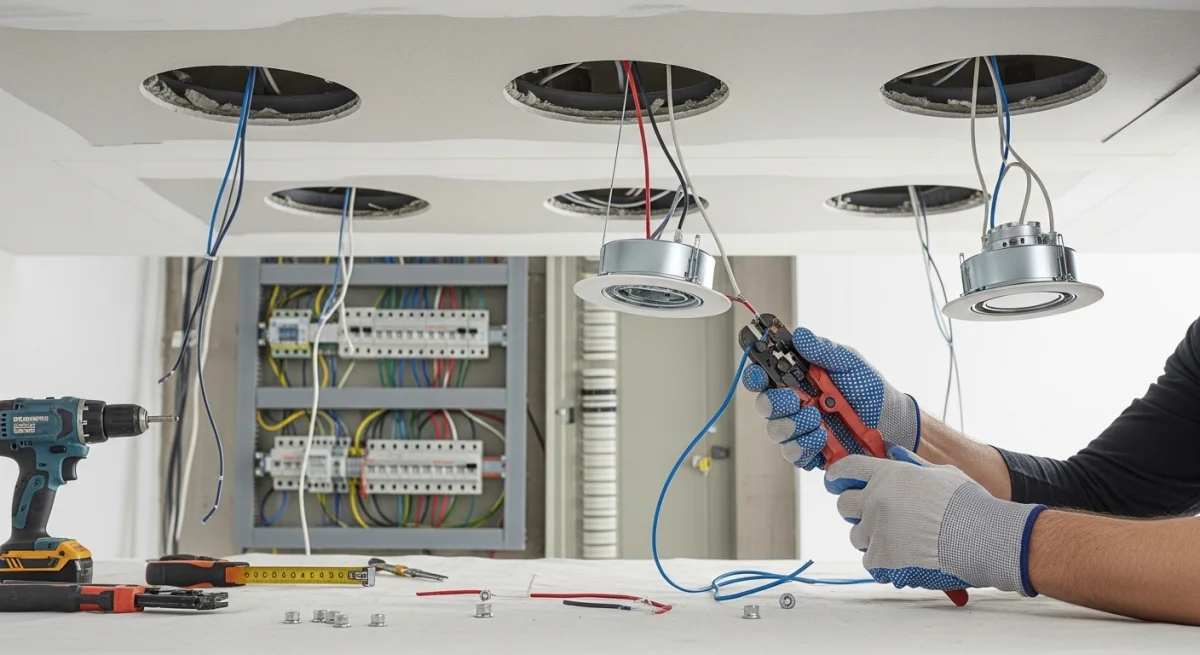
A full removal scope through an ECRA/ESA-licensed electrical contractor includes:
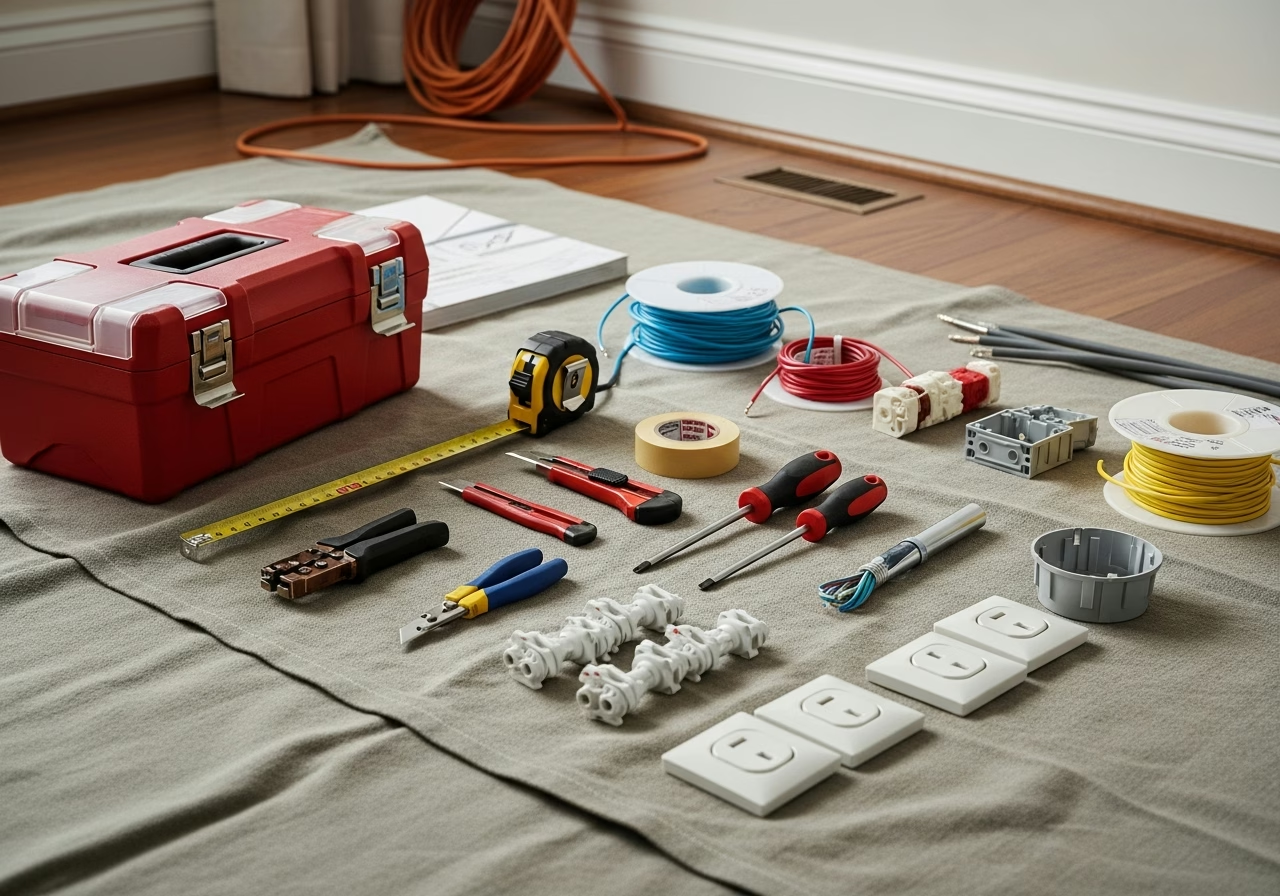
- All branch circuits replaced with Romex NMD90 cable (12-2 for 20A, 14-2 for 15A general lighting).
- All splices removed and replaced with modern wire-nut connections inside enclosed boxes.
- All devices (outlets, switches, fixtures) replaced or rewired with modern boxes.
- Equipment grounding added throughout — every device, every fixture, every appliance circuit.
- Panel evaluated and replaced if Federal Pioneer Stab-Lok, Wadsworth, or 60A.
- Service entrance conductors replaced if undersized or aged.
- AFCI breakers on bedroom circuits per OESC.
- GFCI at all required locations (kitchen counter, bathroom, exterior, within 6' of any sink).
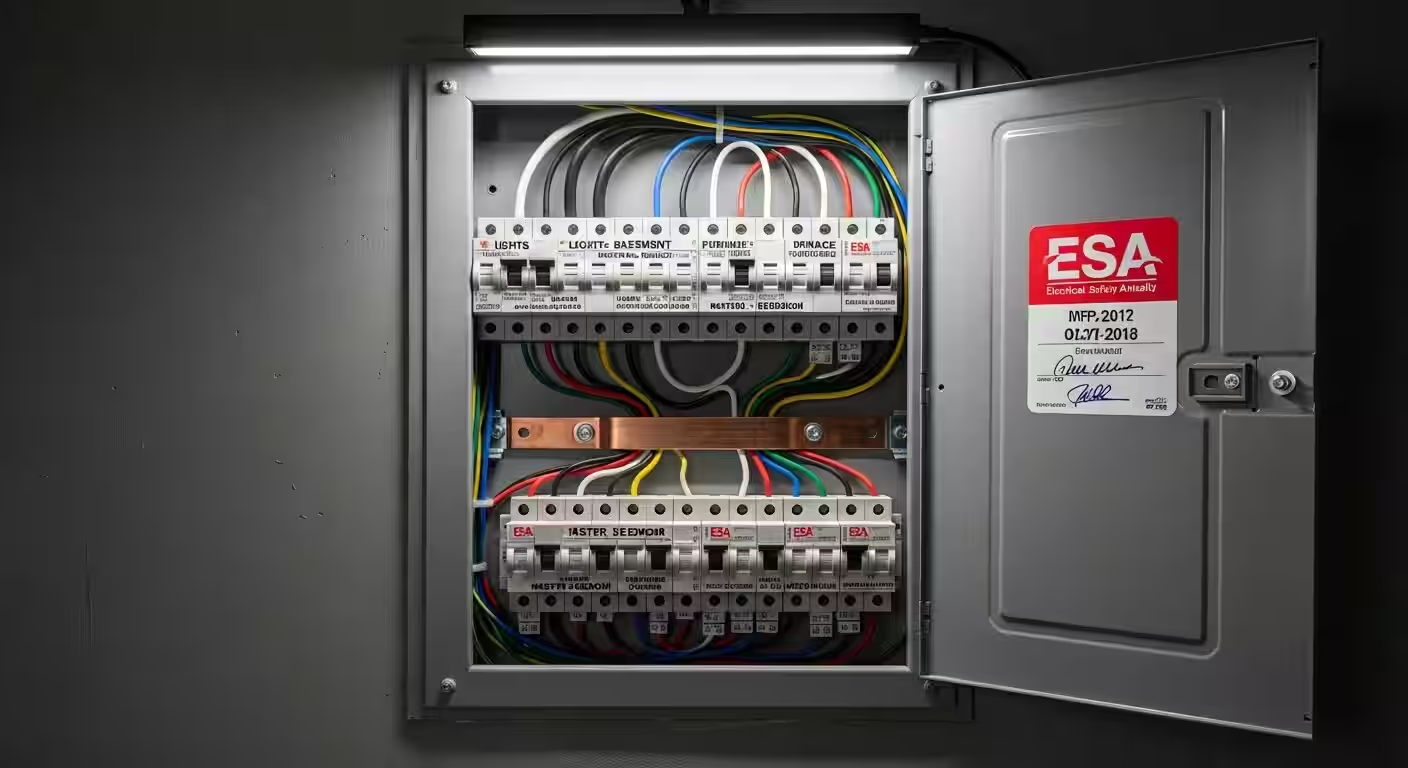
- ESA permit pulled by LEC, rough-in inspection, final inspection, Certificate of Inspection issued.
The output of full removal is the Certificate of Inspection, which is what the insurer requires.
The Narrow Cases Where Partial Is Acceptable
There are very limited circumstances where partial removal can work:
Need professional electrical services?
Call RenoHouse at 289-212-2345 or get a free estimate today.
Get Free Estimate →Case 1: Documented Disconnect of Inaccessible Sections
If a section of K&T runs through a sealed concrete slab, between dwelling units in a row of attached homes, or through a structural element that cannot be opened without major demolition, ESA may accept a documented disconnection — the wires are de-energized at both ends, capped, and labeled. The remaining K&T is no longer in service.
This requires:
- Visual confirmation by ESA inspector during the rough-in.
- Documentation in the ESA file.
- Insurer pre-approval — confirm with your broker before proceeding.
This case is rare and applies to maybe 2% of Toronto K&T projects.
Case 2: Phased Project with Clear Plan
Some homeowners cannot afford the full rewire in a single project and break it into phases:
- Phase 1: Panel upgrade and basement/main floor rewire ($6,000–$10,000).
- Phase 2: Second floor rewire ($6,000–$10,000) within 12–24 months.
- Phase 3: Attic and remaining circuits ($2,000–$4,000) at completion.
The insurer will not reinstate coverage until Phase 3 completes. The homeowner needs bridge insurance (Square One, non-standard market) covering all phases. Total cost is usually 10–20% higher than doing it all at once due to mobilization, repeated permit fees, and repeated drywall opens.
This is occasionally the right call when cash flow is the binding constraint, but it is not "partial removal" in the sense of leaving K&T permanently — it is just slow full removal.
Case 3: De-Energized Knob-and-Tube as Insulation Support
Sometimes K&T wires were used decades later as physical anchors for non-electrical purposes (cable TV, intercom, alarm wiring run through the same paths). If the K&T is fully de-energized, capped at the panel, and serves no electrical function, ESA may treat it as a non-electrical artifact. Insurers vary on this.
Why "Partial" Pricing Looks Attractive
The $4,000–$8,000 pricing for partial removal looks compelling next to a $15,000–$25,000 full rewire. Two reasons it should not seduce homeowners:
- 1. The insurance problem is not solved. You are still uninsurable with mainstream insurers.
- 2. The future buyer pays the full price. When you sell, the buyer's inspector flags the remaining K&T, the buyer's lender and insurer require documentation, and the negotiation discount or the buyer-paid completion offsets the savings you took. Often with interest.
What Happens If You Already Have a Partial Job
Some Toronto homeowners purchased homes that previously had partial K&T removal — maybe 1985 or 2005 vintage. The current state is:
- Visible portions are modern Romex.
- Hidden portions are original K&T.
- Panel was upgraded at the same time.
- ESA Certificate may exist for the partial work but not for full removal.
In 2026, this homeowner has the same insurance problem as a fully un-rewired homeowner. Most major insurers refuse based on any energized K&T, regardless of how much modern wiring also exists.
The remediation is to remove the remaining K&T. Cost is usually 40–70% of a full rewire because much of the new circuitry is already in place — the LEC needs to extend modern circuits to replace the old, but doesn't redo what is already modern.
How RenoHouse Quotes Partial Scope
We are direct about scope. If a homeowner asks for partial removal, we explain:
- Why insurers will not accept it.
- That the Certificate of Inspection covers only the new work, not the remaining K&T.
- That a future buyer's inspection will identify the remaining K&T.
- That a phased full removal is a reasonable middle ground if cash flow is constrained.
Our scope through our ECRA/ESA-licensed electrical contractor partner is structured for full removal by default, with phased pricing available if needed. See the Knob & Tube Rewiring Service Page.
Related Reading
Knob & Tube Rewiring Toronto: Complete 2026 Guide, Knob & Tube Cost Rewiring Toronto, Knob & Tube Permit ESA Toronto Process.Sources & References
Authoritative sources cited in this guide:
- Electrical Safety Authority (ESA) — Ontario electrical regulator
- Ontario Electrical Safety Code — OESC Section 26 / latest amendments
- Canadian Electrical Code Part I (CSA C22.1) — CEC standard
- NRCan — Electric Vehicle Resources — NRCan EV/charging programs
Continue Reading