RenoHouse

# Signs You Have Knob & Tube Wiring in Your Toronto Home
Quick answer. Knob and tube wiring is hard to confirm without opening walls, but there are reliable signals you can check before calling an electrician. If your Toronto home was built before 1945, a pre-purchase home inspection said "appears partially modernized", or your insurance broker just asked you to fill out a wiring questionnaire, this checklis...Knob and tube wiring is hard to confirm without opening walls, but there are reliable signals you can check before calling an electrician. If your Toronto home was built before 1945, a pre-purchase home inspection said "appears partially modernized", or your insurance broker just asked you to fill out a wiring questionnaire, this checklist tells you what to look for. For the full rewiring guide, see Knob & Tube Rewiring Toronto: Complete 2026 Guide.
Age and Neighbourhood
The first signal is the year your home was built. Toronto homes most likely to have K&T:
- Built between 1900 and 1945.
- Located in Riverdale, Beaches, Cabbagetown, Leslieville, Roncesvalles, High Park, the Annex, Wychwood, the Junction, Parkdale, Bloor West Village.
- Detached, semi-detached, or rowhouse on a street where most homes are pre-WWII.
Homes built 1945–1965 may have a transitional mix of K&T in the older sections and early modernized cable in newer sections. Homes built 1965+ are extremely unlikely to have K&T as new wiring, though K&T may have been left in service if a partial renovation incorporated older sections.
Visible Signs in the Basement
The basement is where K&T is most easily seen. Look for:
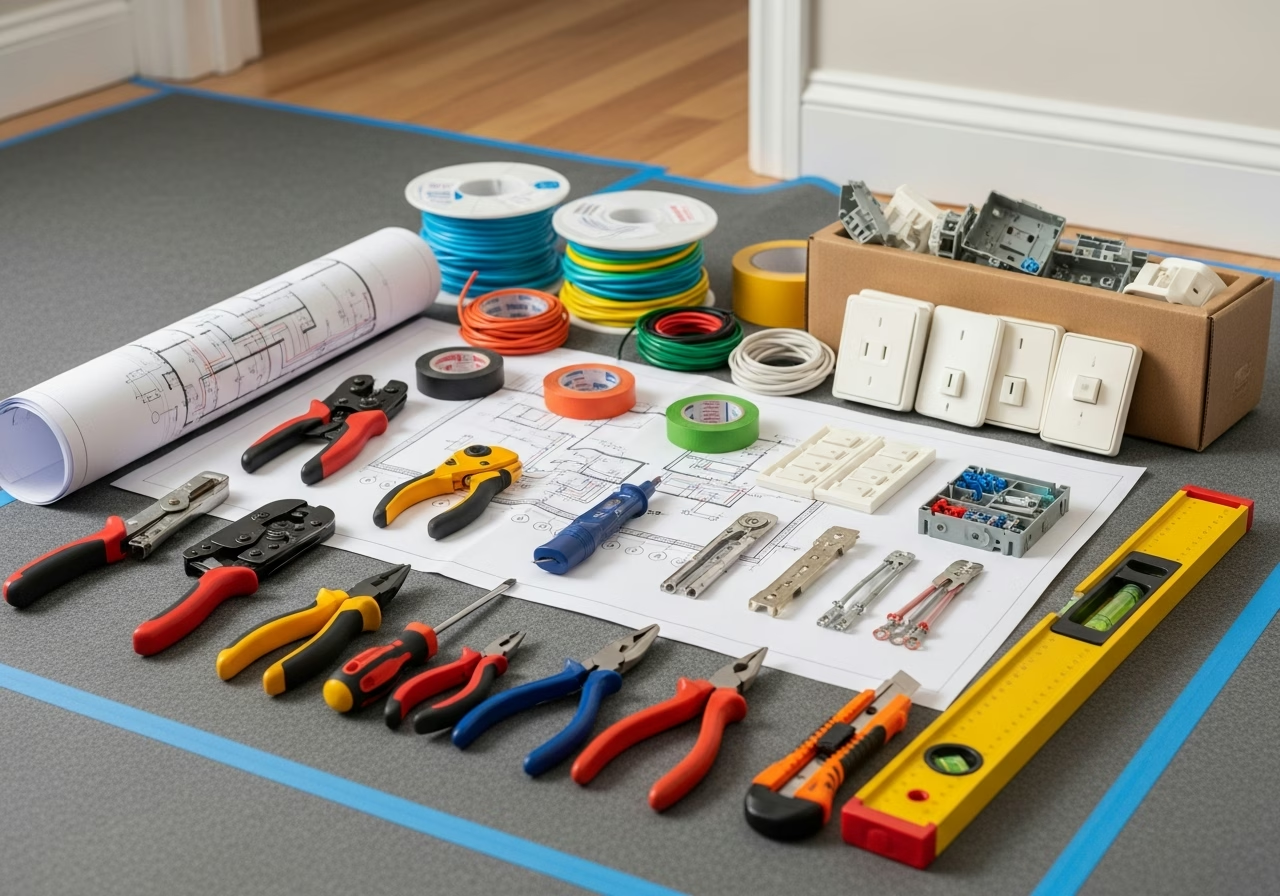
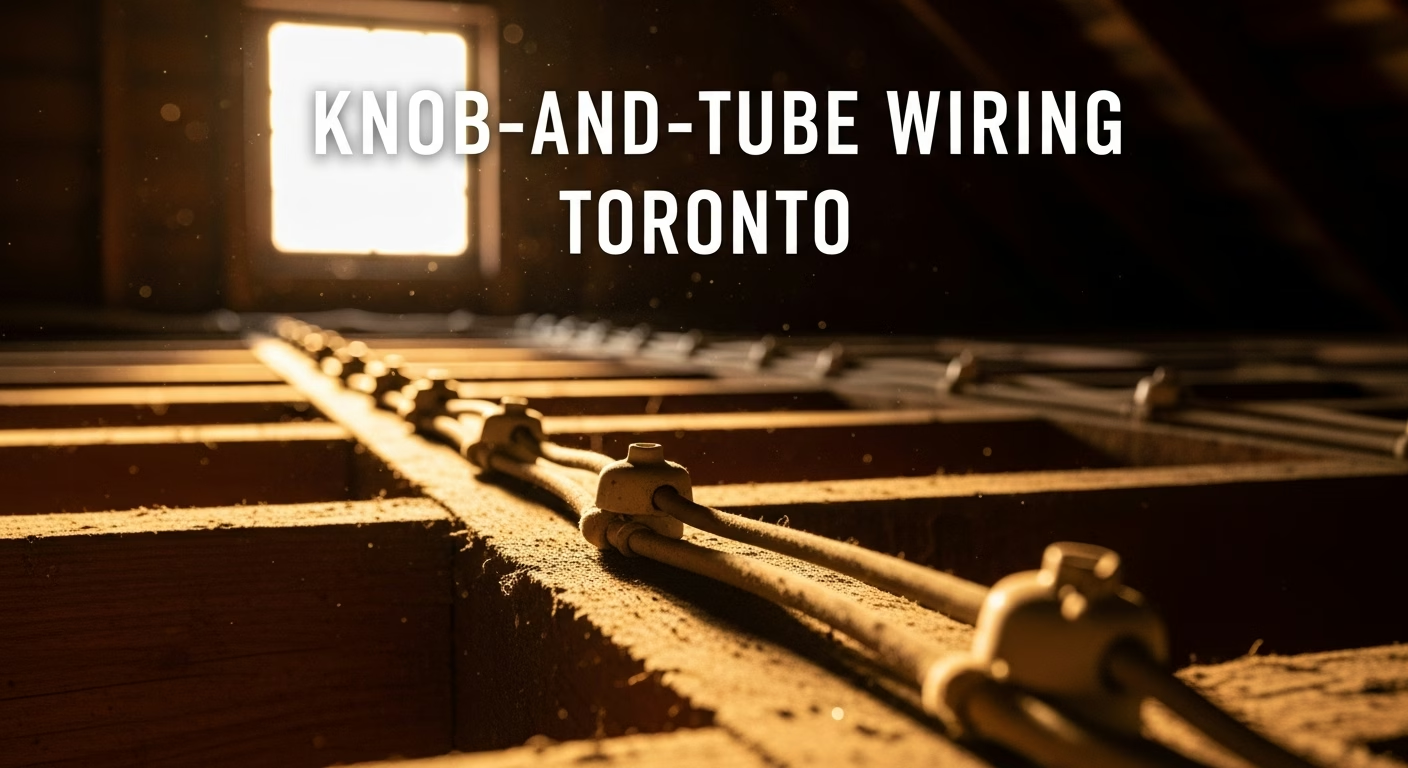
- 1. Porcelain knobs — small white cylinders, about 1.5 inches tall, anchoring single wires to joists. Often paired (one for hot, one for neutral) running parallel along the joist.
- 2. Porcelain tubes — short hollow ceramic sleeves protruding through joist holes. The wire passes through the tube to keep it isolated from the wood.
- 3. Single-conductor cloth-covered wire — black, white, or brown cotton braid sheath over the rubber insulation. Two separate wires running parallel, not bundled in a jacket.
- 4. Open splices — wires twisted together and wrapped in friction tape (often black, brittle, deteriorated). Sometimes soldered.
- 5. No equipment grounding conductor — only two wires per circuit (hot and neutral), no third bare ground wire.
Modern wiring you should also see (if past renovations occurred): white or grey jacketed Romex (NMD90 in Canada), three conductors (hot/neutral/ground), enclosed in plastic boxes for splices.
If you see both K&T and modern wiring in the basement, you have a partial renovation home. Insurers do not accept partial — the K&T must come out.
Need professional electrical services?
Call RenoHouse at 289-212-2345 or get a free estimate today.
Get Free Estimate →Visible Signs in the Attic
If your home has an accessible attic, climb up with a flashlight and look for:
- The same porcelain knobs and tubes anchoring single wires across joists.
- Cloth-covered single-conductor wires running in pairs.
- Open splices in the attic, often near where wires drop into wall cavities.
- Vermiculite insulation (loose granular insulation, often dark grey or brown). Vermiculite contamination with asbestos is common in pre-1990 homes — see Knob & Tube + Asbestos & Vermiculite Coordination.
Do not disturb vermiculite. If you see it, do not move it, do not vacuum it, do not stand directly on it. Step on joists only.
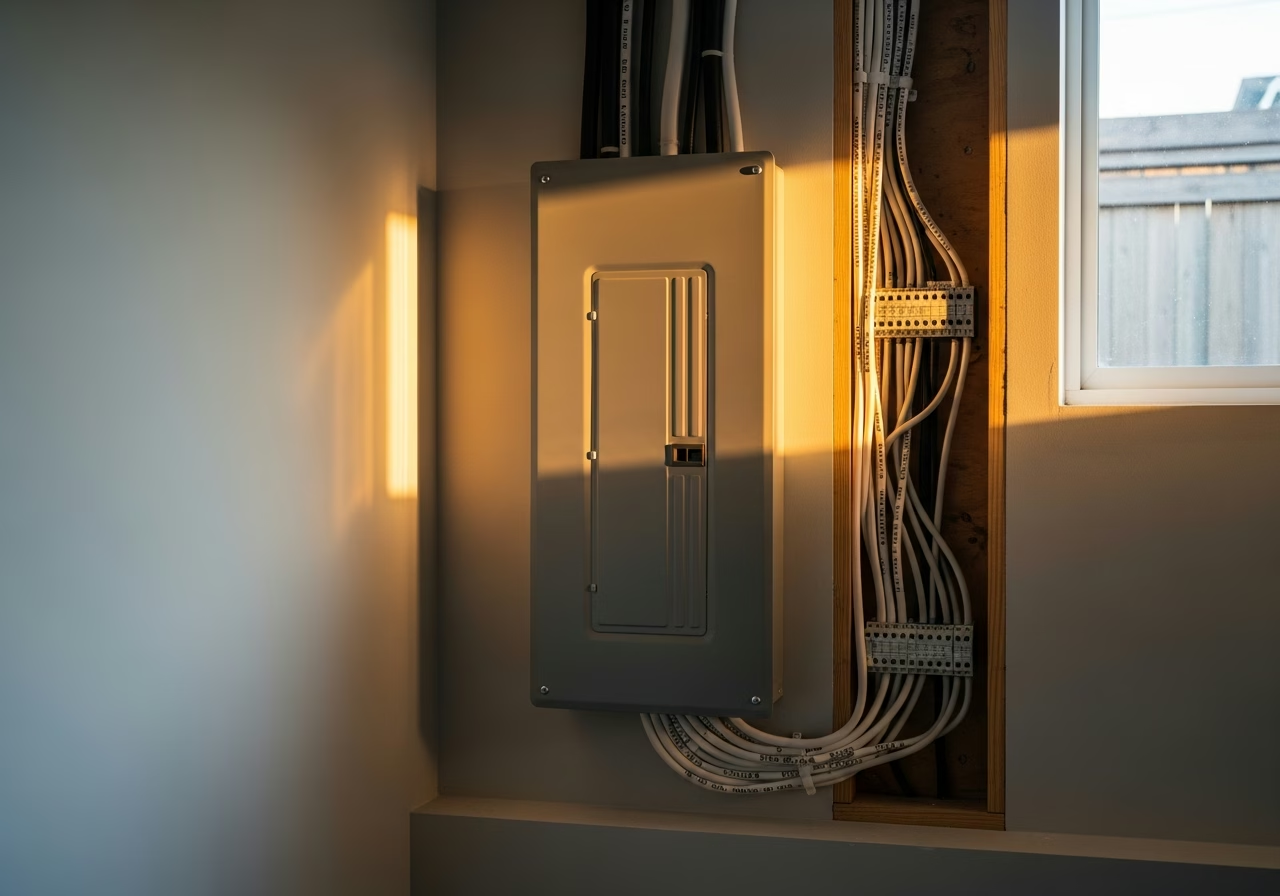
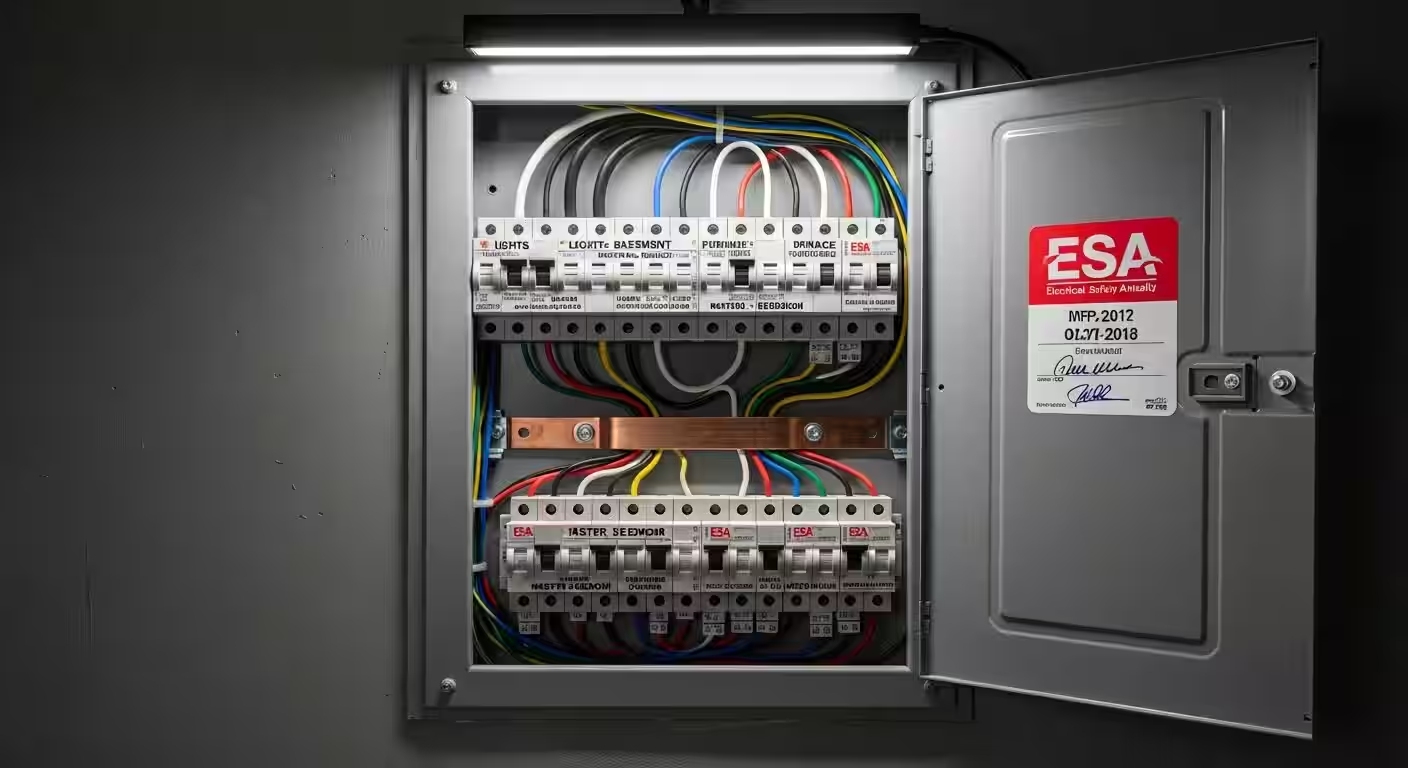
Clues at the Electrical Panel
Open the panel cover (only if comfortable doing so — turn off main breaker first if you want to be safer) and look at the wires entering the panel:
- Cloth-covered single conductors entering the panel: K&T is feeding the panel directly. Almost certain K&T home.
- Two-pole 60A or 100A main breaker with cloth wires: same conclusion.
- Federal Pioneer Stab-Lok panel (red/orange logo on the panel cover, distinctive thin breakers): often paired with K&T. Insurers refuse Stab-Lok panels independent of K&T issues — replace during the rewire.
- Wadsworth, Sylvania-Zinsco, or fused (no breakers, screw-in fuses) panels: same story.
- Sub-panel additions: a small secondary panel often indicates a past partial renovation. Original panel may still be feeding K&T circuits.
If your panel is modern (Eaton CH, Schneider Square D Homeline / QO, Siemens Q-line) installed in the last 15 years, the K&T may have been partially removed when the panel was upgraded. Or it may have been left in service. The panel itself is not proof either way.
Outlet and Switch Indicators
K&T circuits do not have an equipment ground. At the outlet:
- Two-prong outlets (no third round hole): often K&T, though some early modernized homes used two-prong on grounded BX cable.
- Three-prong outlets installed without rewiring: a homeowner replaced two-prong with three-prong but did not run new ground. A plug-in outlet tester (any hardware store, $8) shows "open ground".
- GFCI outlets installed as code-allowed substitute for grounded outlets: legal under specific OESC rules but the GFCI must be properly labeled "No Equipment Ground". Insurers still treat the underlying circuit as K&T if the wire is K&T.
Light Fixture Indicators
- Push-button light switches (round button, push to turn on, push to turn off): these are 1900–1930s vintage and almost always paired with original K&T.
- Cloth-covered fixture leads entering modern fixtures: K&T feeding modern devices. Common after a homeowner replaced fixtures without rewiring.
- No box behind the fixture, just two wires through a hole in plaster: original K&T fixture point, not OESC-compliant for modern fixtures.
Pre-Purchase Home Inspection Wording
Toronto home inspectors are required to flag K&T but often soften the language. Watch for these phrases in your inspection report:
- "Wiring is a mix of vintage and modern."
- "Original wiring observed in basement; cannot confirm extent."
- "Recommend further evaluation by licensed electrician."
- "Knob and tube wiring observed [in specific area]."
- "Two-prong outlets observed throughout — recommend electrician evaluation."
Any of these phrases means: budget for a rewire if you buy this house. The seller is required to disclose known K&T but is not required to dig for evidence — this is a buyer due diligence issue.
What to Do Next
If three or more of these signs are present in your home:
- 1. Book a licensed electrical contractor (ECRA/ESA-licensed) for a written assessment. RenoHouse coordinates this through our LEC partner.
- 2. Get the panel inspected even if you think it's modern. Federal Pioneer Stab-Lok panels are commonly missed.
- 3. Check your insurance policy for renewal date and K&T language. If renewal is within 90 days, start now.
- 4. Consider thermal imaging of suspected K&T circuits under load. The Electrical Hot Spot Inspection service identifies overheating splices and helps prioritize the rewire.
For the full project pathway, see Knob & Tube Rewiring Toronto: Complete 2026 Guide.
How RenoHouse Coordinates the Assessment
Our site visit includes a basement and attic walk, panel inspection, and visual sampling check for asbestos paper duct wrap and vermiculite. Our ECRA/ESA-licensed electrical contractor partner (with Master Electrician on staff) provides the formal scope and ESA permit. RenoHouse handles drywall patching and abatement coordination. See our Knob & Tube Rewiring Service Page.
Related Reading
Knob & Tube Rewiring Toronto: Complete 2026 Guide, Knob & Tube Old Toronto Neighborhoods 1900-1940, Knob & Tube Insurance Companies Refuse Toronto.Sources & References
Authoritative sources cited in this guide:
- Electrical Safety Authority (ESA) — Ontario electrical regulator
- Ontario Electrical Safety Code — OESC Section 26 / latest amendments
- Canadian Electrical Code Part I (CSA C22.1) — CEC standard
- NRCan — Electric Vehicle Resources — NRCan EV/charging programs
Continue Reading