RenoHouse

# Smoke Odour Removal Toronto: The Full Restoration Process
Quick answer. Smoke odour is the single most stubborn problem in fire restoration. The fire is out, the structural damage is repaired, the visible soot is cleaned — and weeks later, the homeowner can still smell smoke in the bedroom closet or the laundry room.Smoke odour is the single most stubborn problem in fire restoration. The fire is out, the structural damage is repaired, the visible soot is cleaned — and weeks later, the homeowner can still smell smoke in the bedroom closet or the laundry room. That residual odour is what professional smoke-odour neutralization addresses, and getting it right is what separates a finished restoration from one the homeowner regrets for years.
This post walks through the smoke odour removal process used by IICRC FSRT-certified restoration teams in Toronto: how smoke embeds in materials, the neutralization technologies available (hydroxyl, ozone, thermal fogging), HVAC contamination, and what insurance does and doesn't cover. For the broader fire restoration lifecycle, see Fire & Water Damage Restoration Toronto 2026: Complete Guide. For pricing, see Fire Damage Restoration Cost in Toronto.
RenoHouse's role: smoke odour neutralization is performed by FSRT and OCT-certified mitigation specialists from partners such as Restorx Disaster Restoration, ServiceMaster Restore, Steamatic, FirstOnSite, and PuroClean. RenoHouse executes the rebuild and finishing phases that follow successful odour clearance.Why Smoke Odour Persists
Smoke is a complex aerosol of carbon particles, volatile organic compounds (VOCs), and combustion gases. When smoke moves through a home, it deposits in three ways:
1. Surface deposition. Particles settle on horizontal surfaces. This is the visible soot — the easy part to clean. 2. Adsorption. VOCs and small particles adhere to porous materials at the molecular level. Drywall, paint, fabric, wood, and concrete all adsorb smoke compounds. Surface cleaning doesn't remove them. 3. Penetration. Smoke moves with airflow, so it follows pressure gradients into wall cavities, behind cabinets, into HVAC ductwork, between subfloor and finish flooring, and inside the attic. These hidden reservoirs continue off-gassing for months unless treated.The three smoke types each require slightly different neutralization approaches:
- Wet smoke (low-heat, plastics and synthetics) — sticky, smeary, pungent. Hardest to remove from surfaces but responds well to oxidative neutralization (hydroxyl, ozone).
- Dry smoke (high-heat, wood and paper) — powdery, vacuumable, but penetrates deeply into porous materials. Often requires thermal fogging in addition to oxidative treatment.
- Protein smoke (kitchen fires, grease) — invisible, intensely lingering, primarily an odour problem. Often the toughest to fully neutralize. Multiple treatment cycles common.
For kitchen-fire-specific protein smoke, see Kitchen Fire Restoration Toronto: The Process.
Step 1: Source Removal
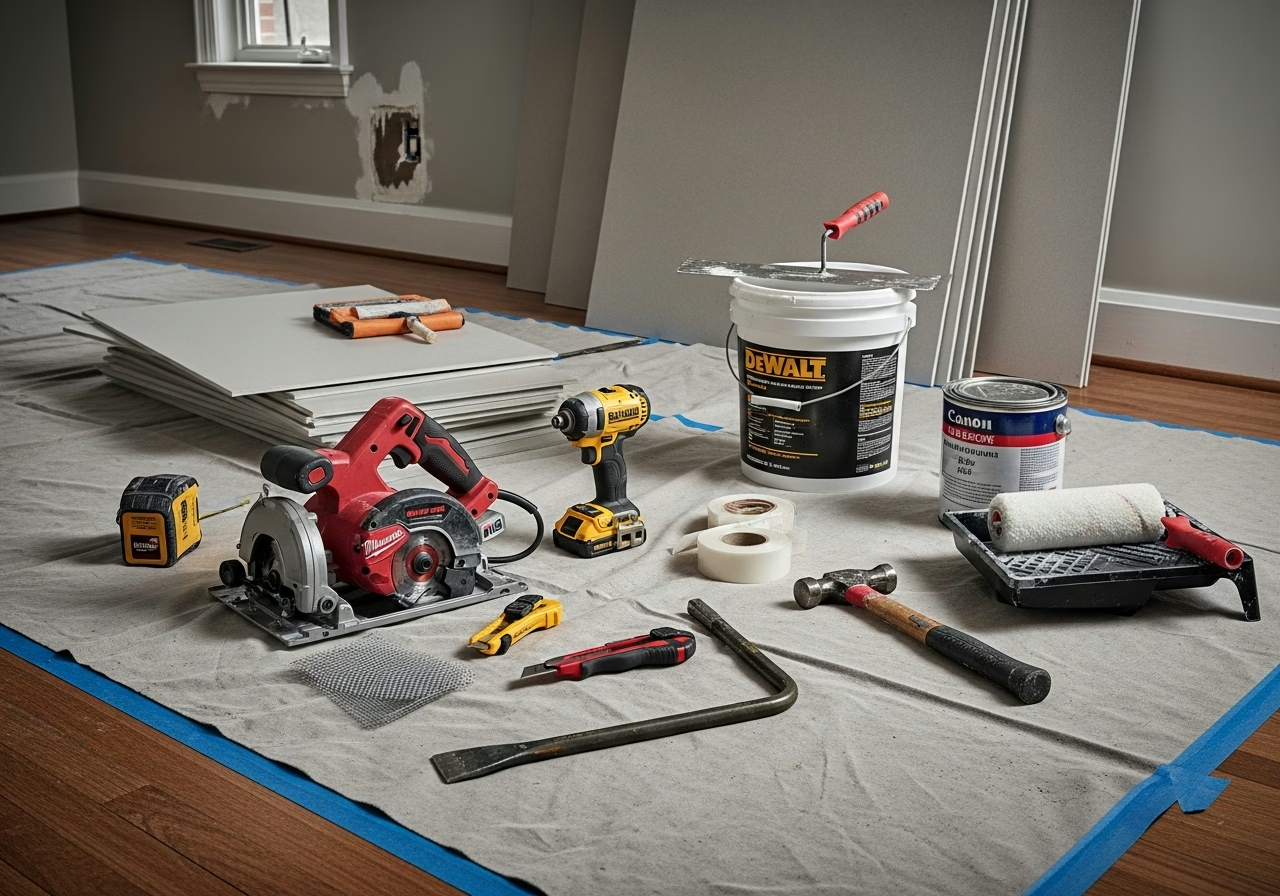
No odour treatment works on a continuing source. The first step in any smoke-odour project is physical removal of contaminated materials:
- Charred framing — wire-brushed, sanded, and (if needed) encapsulated with a shellac-based primer (Zinsser BIN, KILZ Original).
- Wet-smoke-saturated drywall — replaced (oxidative treatment alone won't penetrate enough).
- Burned insulation — removed and disposed of.
- Carpet, padding, mattresses — almost always replaced.
- Heavily soot-loaded HVAC components (filter housing, blower wheel, sometimes the furnace heat exchanger) — cleaned or replaced.
Until the source is removed, treatment is wasted effort.
Step 2: Surface Cleaning
Every horizontal and vertical surface in the affected area is cleaned. Standard sequence:
- HEPA vacuuming to remove loose particles. Dry first, before any wet cleaning.
- Dry chemical sponges (Absorene, Gonzo) for ceilings and high walls — they lift soot without smearing.
- Detergent wash for hard surfaces (wood, tile, painted walls that aren't being repainted).
- Soft-content pack-out — fabrics, drapes, upholstery, clothing — removed for off-site cleaning at a contents-restoration facility (often using ozone chambers or specialized solvent processes).
- Hard-content cleaning — books, electronics, dishware, heirlooms — cleaned individually.
Surface cleaning alone removes 80–90% of perceived odour for mild dry-smoke events. For wet smoke and protein smoke, it's the foundation but not the finish.
Step 3: HVAC Decontamination
The single most overlooked step in DIY or low-bid smoke restoration is HVAC duct cleaning. The HVAC system distributes air throughout the home, so it distributes smoke too. Even after structural cleaning, soot-loaded ductwork will recontaminate the home every time the furnace runs.
A proper HVAC decontamination after a fire:
Need professional home renovation?
Call RenoHouse at 289-212-2345 or get a free estimate today.
Get Free Estimate →- Inspection — borescope or video camera through the ductwork to assess contamination level.
- Source removal — register removal, manual cleaning of trunk lines and branch runs, brush-and-vacuum systems (Rotobrush) or compressed-air systems (Air-Care).
- Antimicrobial / odour neutralizer fogging through the system.
- New filter (high-MERV, often MERV 13).
- Sometimes blower replacement if heavily contaminated.
Skipping HVAC cleaning is the #1 reason "the smoke smell came back" three weeks after the rebuild.
Step 4: Oxidative Air Treatment
This is where the technology choice matters: hydroxyl generators vs ozone generators.
Hydroxyl generators (Odorox MDU, Air Allergen Hydroxyl Pro, Optimum 5):- Produce hydroxyl radicals (HO·) that break down VOCs at the molecular level.
- Safe in occupied spaces. People, pets, and plants can be present during treatment.
- Slower than ozone — typical treatment cycle is 3–7 days.
- Less aggressive on rubber, plastics, and certain finishes.
- Preferred for occupied homes, partial-evacuation jobs, or finished-finish areas where ozone risks oxidative damage.
- Produce O₃ (ozone), a strong oxidant that destroys VOCs and bacterial/fungal contaminants.
- Unsafe to breathe. Requires complete evacuation of people, pets, and plants.
- Fast — typical treatment cycle is 24–72 hours.
- Can damage rubber, certain plastics, leather, and rubber-based adhesives.
- Best for vacant spaces (post-displacement, contents-restoration warehouses, between-occupancy commercial).
A common Toronto pattern: ozone for the empty home during mitigation; hydroxyl for any occupied-overlap or sensitive content areas.
Step 5: Thermal Fogging
For deeply penetrated odours — wet smoke and protein smoke especially — thermal fogging is often added after oxidative treatment. A petroleum-based or water-based deodorizer is heated and aerosolized to a particle size similar to the original smoke, allowing it to penetrate the same materials and pathways the smoke reached.
Thermal fog is applied with the home sealed and HVAC running (with new filter). The fog reaches everywhere the smoke reached — wall cavities, attic spaces, behind cabinets — and chemically pairs with smoke residues.
Thermal fogging is particularly effective on protein smoke from kitchen fires and on persistent wet-smoke odour after demolition is complete.
Step 6: Encapsulation and Sealing
Some surfaces — charred framing kept as part of a salvage decision, original-character heritage millwork, exposed concrete — can off-gas residual odour for years. These surfaces are sealed with odour-blocking primers:
- Zinsser BIN Shellac — the gold standard for sealing smoke odour. Shellac molecules are non-porous and resist VOC migration.
- KILZ Original Oil-Based — solid second choice; cheaper but slightly less effective.
- Zinsser Odorless — water-based, lower-VOC option for occupied spaces.
Encapsulation is applied after oxidative treatment but before final paint. Done right, it produces a sealed substrate that future paint can adhere to without odour bleed-through.
Step 7: Verification
Independent verification is the standard for high-end fire restoration in Toronto. Methods include:
- Sensory evaluation by a trained OCT-certified inspector — surprisingly accurate when done by an experienced practitioner.
- VOC air sampling — collected on Tenax or charcoal tubes and lab-analyzed.
- Specific marker compound testing — e.g., naphthalene for combustion residue.
Verification is especially important for high-value homes, insurance disputes, or sale-pending properties where odour disclosure is at stake.
How Long Does the Whole Process Take
Typical Toronto smoke-odour neutralization timeline:
| Damage Level | Source Removal | Cleaning | Treatment | Total |
|---|---|---|---|---|
| Light dry smoke (one-room) | 1 day | 2–3 days | 3–5 days | 6–9 days |
| Moderate (multi-room or HVAC-distributed) | 3–5 days | 5–7 days | 5–10 days | 13–22 days |
| Heavy wet or protein smoke | 5–10 days | 7–14 days | 10–21 days | 22–45 days |
In all cases, the rebuild phase doesn't begin until odour treatment is complete and verified.
Insurance Coverage in Toronto
Smoke odour removal is covered under standard Toronto homeowner policies as part of the fire claim. Major carriers (Aviva, Intact, TD, Wawanesa, Belair, Co-operators, RSA) all use Xactimate line items for the typical sequence — HVAC duct cleaning, hydroxyl/ozone treatment, thermal fogging, encapsulation primer.
The coverage subtleties to watch for:
- HVAC component replacement coverage — sometimes capped or requires evidence of contamination.
- Soft-content pack-out and off-site cleaning — covered, but the limit varies. Confirm before pack-out.
- Multiple treatment cycles — adjusters may push back on more than 2–3 cycles. A documented odour-verification report justifies additional cycles when needed.
For the broader claim mechanics, see Insurance Claims for Water Damage in Toronto (the fire/smoke process is structurally identical).
Where Most Homeowners Go Wrong
The two most common smoke-odour mistakes in Toronto:
- 1. Skipping HVAC cleaning to save money. Almost guarantees recurrence.
- 2. Painting over odour without encapsulation primer. Smoke odour bleeds through standard latex paint within weeks. The fix is strip-and-redo, which costs far more than doing it right the first time.
For the full mistake list, see Restoration Mistakes Toronto Homeowners Make.
Next Steps
If you have a fire claim with smoke damage, the IICRC-certified mitigation team handles the odour-neutralization phase. Once it passes verification, RenoHouse coordinates the rebuild — including encapsulation primer, finish paint, and any HVAC or finish replacements approved by your carrier.
Get a restoration consultationRelated Reading
- Fire & Water Damage Restoration Toronto 2026: Complete Guide
- Fire Damage Restoration Cost in Toronto
- Kitchen Fire Restoration Toronto: The Process
- IICRC-Certified Restoration in Toronto
Sources & References
Authoritative sources cited in this guide:
- Ontario Building Code — OBC official text
- Toronto Building Permits — City permit portal
- Tarion New Home Warranty — Ontario new-build warranty regulator
- HCRA — Home Construction Regulatory Authority — Ontario builder/vendor licensing
Continue Reading