RenoHouse

# Staging vs Renovation Pre-Sale Toronto: How to Allocate the Budget (2026)
Quick answer. Sellers preparing a Toronto home for listing in 2026 face a budget allocation question that sits at the seam of two different professions. Renovation is our work — paint, flooring, kitchen and bathroom cosmetics, curb appeal.Sellers preparing a Toronto home for listing in 2026 face a budget allocation question that sits at the seam of two different professions. Renovation is our work — paint, flooring, kitchen and bathroom cosmetics, curb appeal. Staging is the realtor's work — furniture rental, art, accessories, and the final-week setup that turns the renovated home into a photo-ready listing. The healthy split between the two depends on the home's starting condition and the price band.
This piece covers the staging-versus-renovation tradeoff honestly: what staging accomplishes that renovation does not, what renovation accomplishes that staging cannot, and how Toronto sellers in 2026 should split a $5,000 to $50,000 pre-listing budget across the two.
A note on our scope. RenoHouse coordinates renovation only. We do not provide staging services, do not stock staging furniture, and do not have an in-house stager. Staging is selected and managed by the realtor's preferred provider. We coordinate timing and palette with that stager during the renovation calendar — we do not make the staging decisions.What Each Discipline Does
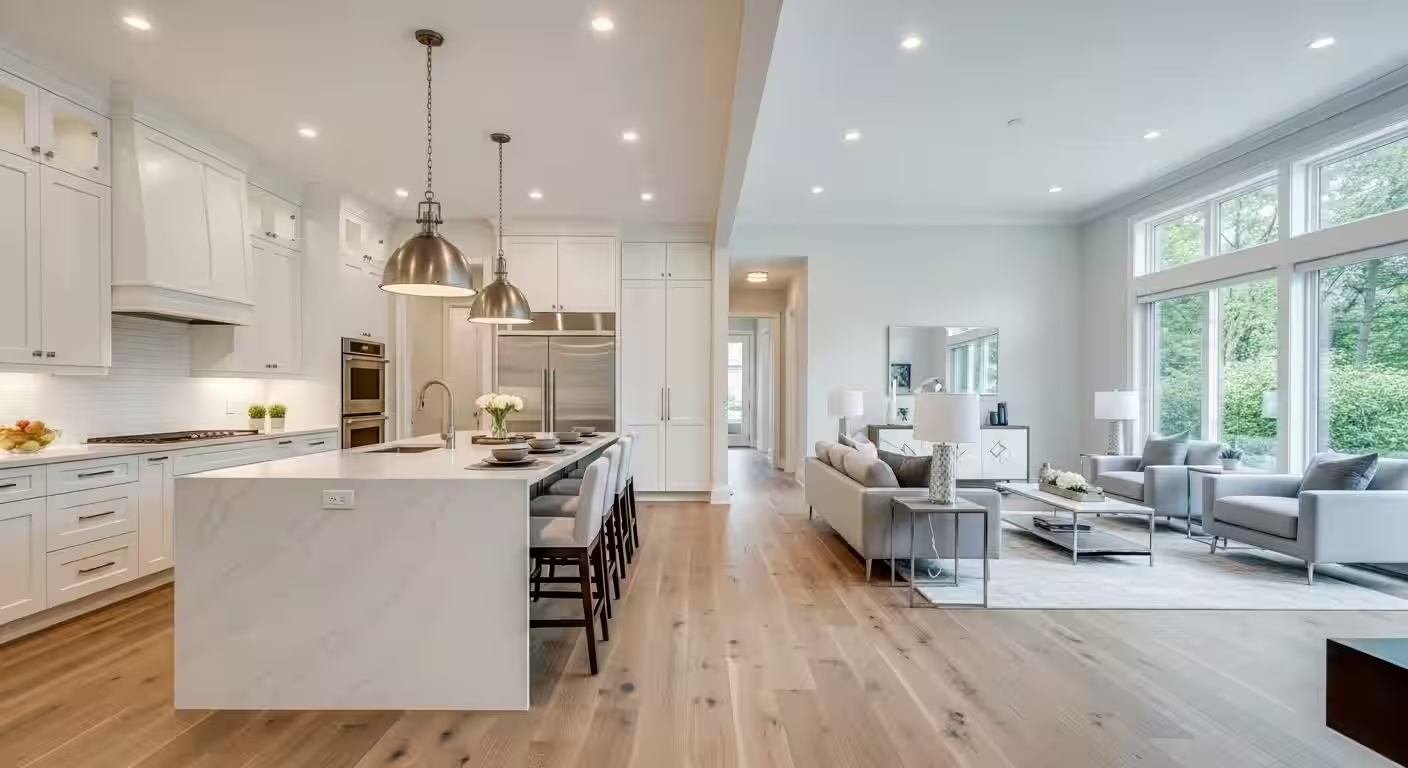
Renovation changes the underlying asset. New paint, new flooring, refinished cabinets, a new vanity — these changes outlast the listing. The buyer who walks through and signs the offer is buying the renovated home. Renovation costs more and takes longer, but the value transfers with the property. Staging changes the presentation. Rented furniture, curated art, neutral accessories, and the final styling moves shape the photo and showing impression but go back on the truck after the listing closes. Staging is faster and cheaper than renovation, and it is critical for empty homes and for occupied homes where the seller's furniture is dated, mismatched, or oversized.The two disciplines complement each other. Renovation without staging photographs as a freshly-renovated empty box and undersells. Staging over a tired underlying home photographs as "they are trying" and signals to buyers that there is work to do.
Budget Splits by Price Band
Across the Toronto pre-sale projects we have coordinated, the working splits between renovation and staging are:

- Renovation: $5,000 to $11,000 (paint refresh, light flooring, deep clean)
- Staging: $1,500 to $3,500 (light staging, often the seller's existing furniture with rented accents)
- Renovation: $11,000 to $20,000 (paint, flooring, cosmetic kitchen or bathroom)
- Staging: $3,000 to $5,500 (full empty-home staging or substantial occupied-home re-staging)
- Renovation: $20,000 to $32,000 (Tier 2 full cosmetic)
- Staging: $4,500 to $7,500 (full staging, longer rental period if listing in slow season)
- Renovation: $32,000 to $48,000 (Tier 3 cosmetic plus curb appeal)
- Staging: $6,500 to $10,500 (premium staging)
- Renovation: $45,000 to $75,000 (Tier 3 to Tier 4)
- Staging: $9,000 to $16,000 (premium staging, often custom-curated)
These splits assume the home is in reasonable starting condition. Homes that need significant renovation work shift the split toward renovation. Empty homes (estate sales, divorce sales, vacancy) shift the split toward staging.
Need professional home renovation?
Call RenoHouse at 289-212-2345 or get a free estimate today.
Get Free Estimate →When Staging Carries More Weight
Staging carries more weight in five conditions:
- 1. Empty home — An empty Toronto home photographs as cold and small. Staging delivers a 5 to 15 percent showing impression boost in empty-home listings.
- 2. Occupied home with dated or oversized furniture — Re-staging with rented furniture is faster and cheaper than asking the seller to move out.
- 3. Condo, especially small condo — Staging accentuates space, defines functional zones, and corrects awkward proportions. Renovation work in condos is constrained by building rules; staging is unconstrained.
- 4. Modern home, modern furniture expected — Buyers in modern Toronto townhomes and condos expect modern furniture in the photos. The seller's family furniture often does not match.
- 5. Listing during shoulder seasons (November to February) — When inventory is lower and showings are fewer, the listing has to work harder per showing. Better staging closes more offers per showing.
When Renovation Carries More Weight
Renovation carries more weight in five conditions:
- 1. Visible cosmetic wear — Stained carpet, yellowed paint, dated kitchen cabinets, scratched hardwood. Staging cannot hide these. Renovation has to fix them first.
- 2. Older home with dated finishes — A 1985 kitchen with oak cabinets and laminate counters reads as 1985 regardless of how well it is staged.
- 3. Sellers staying in the home through the listing — Staging an occupied home is constrained by the seller's life. Renovation is permanent and helps even after the staging furniture leaves.
- 4. Buyer pool expects renovated — Forest Hill, Lawrence Park, Rosedale, and similar high-end neighbourhoods. Stagging without renovation reads as "they did not bother."
- 5. The home will photograph poorly without cosmetic work — Some homes have a critical flaw (popcorn ceiling, dated bathroom tile, scratched flooring) that no amount of staging can mask.
What Staging Cannot Do
Three things staging cannot fix:
- 1. Underlying surface conditions — Yellowed walls, scratched floors, stained grout. Renovation has to handle these first.
- 2. Layout problems — Closed-off galley kitchens, awkward room proportions, dark hallways. Staging can soften these but not solve them.
- 3. Inspection findings — Pre-listing inspections (in some Toronto market segments) surface knob-and-tube electrical, asbestos, foundation issues. No amount of staging changes the inspection report.
What Renovation Cannot Do
Two things renovation cannot fix:
- 1. Empty-home cold — A renovated empty home still photographs as empty. Staging is essential after the renovation finishes.
- 2. Furniture mismatch — A beautifully renovated kitchen with a 1990s oak dining table in the next room undercuts the work. Furniture either has to match the renovation or has to come out.
Coordinating the Two
The healthy workflow we see in 2026 Toronto:
- 1. Realtor walks the home and proposes a list price. This sets the budget envelope.
- 2. Realtor refers RenoHouse for a renovation scope. We walk the home, propose a tier, line-item the scope, and quote.
- 3. Realtor or seller engages a stager for a parallel walkthrough. The stager identifies furniture, art, accessories, and decor changes.
- 4. The two scopes get reviewed jointly. The stager's paint colour preference, flooring tone preference, and counter colour preference get integrated into the renovation scope so we paint, floor, and counter once.
- 5. Renovation runs first in the 30-day calendar.
- 6. Stager moves in the day or two before photography.
The single most-common coordination mistake we see is when paint colour gets chosen before the stager is involved, and the stager then asks for a different palette and the seller has to either repaint or compromise the staging. The fix is to bring the stager into the conversation in week 1, not week 4.
Staging Costs in Toronto in 2026
We do not provide staging, but for budget-planning context, the typical Toronto staging cost bands in 2026:
- Light staging (occupied home, accessories only): $800 to $1,800 plus monthly rental.
- Mid staging (occupied home, partial furniture rental, accessories): $2,500 to $5,500 plus monthly rental.
- Full staging (empty home, full furniture rental, accessories, art): $4,500 to $9,500 plus monthly rental of $1,200 to $2,800.
- Premium staging (high-end home, custom-curated furniture and art): $9,000 to $20,000 plus rental.
Most Toronto stagers offer a 60-day rental as standard, with extension fees if the home does not sell in that window. The rental fee is separate from the styling fee.
For the broader pre-sale picture, see the pillar pre-sale renovation Toronto 2026 guide. For the cost-versus-ROI math, see pre-sale renovation cost vs ROI. For realtor coordination notes, see pre-sale Bosley Sotheby's realtor coordination.
If you are scoping a pre-listing renovation in Toronto and want help thinking through the budget allocation, the pre-sale renovation package service page is the starting point.
Sources & References
Authoritative sources cited in this guide:
- Ontario Building Code — OBC official text
- Toronto Building Permits — City permit portal
- Tarion New Home Warranty — Ontario new-build warranty regulator
- HCRA — Home Construction Regulatory Authority — Ontario builder/vendor licensing
Continue Reading