RenoHouse

# Automatic Transfer Switch Explained: How Toronto Standby Generators Switch Power
Quick answer. The Automatic Transfer Switch (ATS) is the device that decides whether your home runs on Toronto Hydro power or on your standby generator. It is also the single most misunderstood component in the standby generator system.The Automatic Transfer Switch (ATS) is the device that decides whether your home runs on Toronto Hydro power or on your standby generator. It is also the single most misunderstood component in the standby generator system. Without an ATS the generator is just a noisy box in your yard; with the wrong ATS, the unit cannot run the loads you bought it to run. This post walks through what the ATS actually does, the difference between service-rated and sub-panel ATS, how smart load management works, and the Toronto-specific install considerations.
For the broader standby generator context, start with our Standby Generator Installation Toronto Complete Guide.
RenoHouse Position
The ATS is electrical work. It is signed off by the ESA-licensed Master Electrician under an ECRA contractor licence as part of a permitted ESA inspection. RenoHouse coordinates the certified subcontractor, owns the project schedule and the finishing work, and stands behind the project as a whole. The ATS install itself is a regulated tie-in that the licensed electrician closes out.
What the ATS Does
The ATS sits between the utility meter and the home's main panel (or between the main panel and a sub-panel, depending on the install). It has three states:
- Utility position. The home is connected to Toronto Hydro. The generator is disconnected from the home and idle.
- Transfer in progress. Utility has dropped or is unstable. The ATS senses the loss, signals the generator to start, waits 5-15 seconds for the generator to stabilize, then disconnects the home from the utility and connects it to the generator.
- Generator position. The home is connected to the generator. Utility is disconnected. The ATS continuously monitors utility for return.
When utility comes back the ATS reverses the sequence: it waits a configurable interval (typically 30-60 seconds to confirm the utility is stable), reconnects to utility, runs the generator for a cool-down period (3-5 minutes), then shuts the generator down.
The whole cycle is automatic. The homeowner does nothing.
Why an ATS, Not a Manual Transfer Switch (MTS)
A Manual Transfer Switch (MTS) is a panel-mounted switch that the homeowner physically flips during an outage. An MTS works for a portable generator that the homeowner is going to roll out of the garage anyway. It does not work for a standby generator because:
- The homeowner is not always home when the outage hits.
- Even when home, the homeowner cannot flip a switch during a sleep cycle.
- A standby generator is engineered to run on outage start, not 30 minutes after the owner notices.
- The whole value proposition of standby (over portable) is automation.
Every RenoHouse standby generator project includes an ATS. We will not install a standby unit on an MTS — it defeats the purpose and creates safety risks (back-feeding into the grid if the manual switch is mis-operated).
Service-Rated ATS: The Whole-Home Standard
A service-rated ATS is rated to sit between the utility meter and the main panel. It includes the main service disconnect (typically 200A or 400A) and replaces the function of the main breaker. The home's entire main panel is downstream of the ATS.
Advantages:
- Whole-home coverage. Every breaker in the panel is energized during outages.
- Single device handles everything; cleanest install.
- Smart load management can shed any breaker on the panel.
Disadvantages:
- Costs more ($1,400-$2,200 vs $700-$1,100 for sub-panel ATS).
- Requires the panel to be in good condition. Aluminum-bus panels from the 1970s often need replacement before a service-rated ATS can land.
This is the standard for Tier 2 (14-18 kW) and Tier 3 (20-26 kW) Toronto standby installs.
Need professional renovation?
Call RenoHouse at 289-212-2345 or get a free estimate today.
Get Free Estimate →Sub-Panel ATS: The Tier 1 Option
A sub-panel ATS sits between the main panel and a dedicated critical-loads sub-panel. The main panel stays live on utility, the sub-panel transfers between utility (via a feed from the main) and the generator.
Advantages:
- Cheaper ($700-$1,100).
- Does not require a main panel upsize or replacement.
- Simpler ESA inspection scope.
Disadvantages:
- Only the circuits moved to the critical sub-panel are covered during outages.
- Owner has to choose loads in advance; no flexibility once installed.
- Cannot run AC, EV charger, electric range, or electric dryer on most Tier 1 generators.
This is the standard for Tier 1 (7.5-11 kW) Toronto standby installs. For the whole-home vs partial decision, see Whole-Home vs Partial Generator: The Toronto Decision.
Smart Load Management: Where the Tier 2 Magic Lives
A whole-home 16 kW generator on paper cannot run a Toronto home with a 4-ton AC, electric range, electric dryer, EV charger, and full lighting load all at once — total simultaneous draw can hit 25-30 kW. The smart load management module solves this by:
- Monitoring the generator's real-time output in milliseconds.
- Shedding pre-configured non-essential loads when capacity nears the limit.
- Restoring shed loads automatically when capacity returns.
The major brand modules:
- Generac PWRmanager. Up to 8 managed loads, prioritized in 4 tiers. Works with the Generac MobileLink app.
- Kohler Powersync. Up to 4 managed loads. Tighter integration with Kohler RXT ATS line.
- Cummins LMM. Up to 4 managed loads. More commercial heritage, fewer consumer features.
Typical Toronto load shed priority on a 16 kW Generac with PWRmanager:
- Tier 1 shed (first to drop): EV charger.
- Tier 2 shed: electric dryer.
- Tier 3 shed: electric range.
- Tier 4 shed: secondary AC zone or pool pump.
Result: the home runs heat pump, primary AC, full lighting, fridge, internet, and most non-heavy loads all the time. The heavy loads cycle on and off automatically based on capacity. Owner barely notices.
Sizing the ATS Correctly
ATS sizing matters as much as generator sizing. The ATS must match the home's main service rating:
- 100A service home: 100A ATS.
- 200A service home (most common Toronto detached and semi): 200A ATS.
- 400A service home (large detached, multi-zone HVAC, multiple EVs): 400A ATS.
Undersizing the ATS is a code violation and an ESA inspection failure. Oversizing is wasteful but not unsafe. The licensed Master Electrician confirms the service rating before ordering the ATS.
Wiring Topology in a Toronto Install
A typical 200A service-rated ATS install on a Toronto detached home:
- Utility meter on exterior wall (typical Toronto location).
- Service entry conduit into basement to ATS.
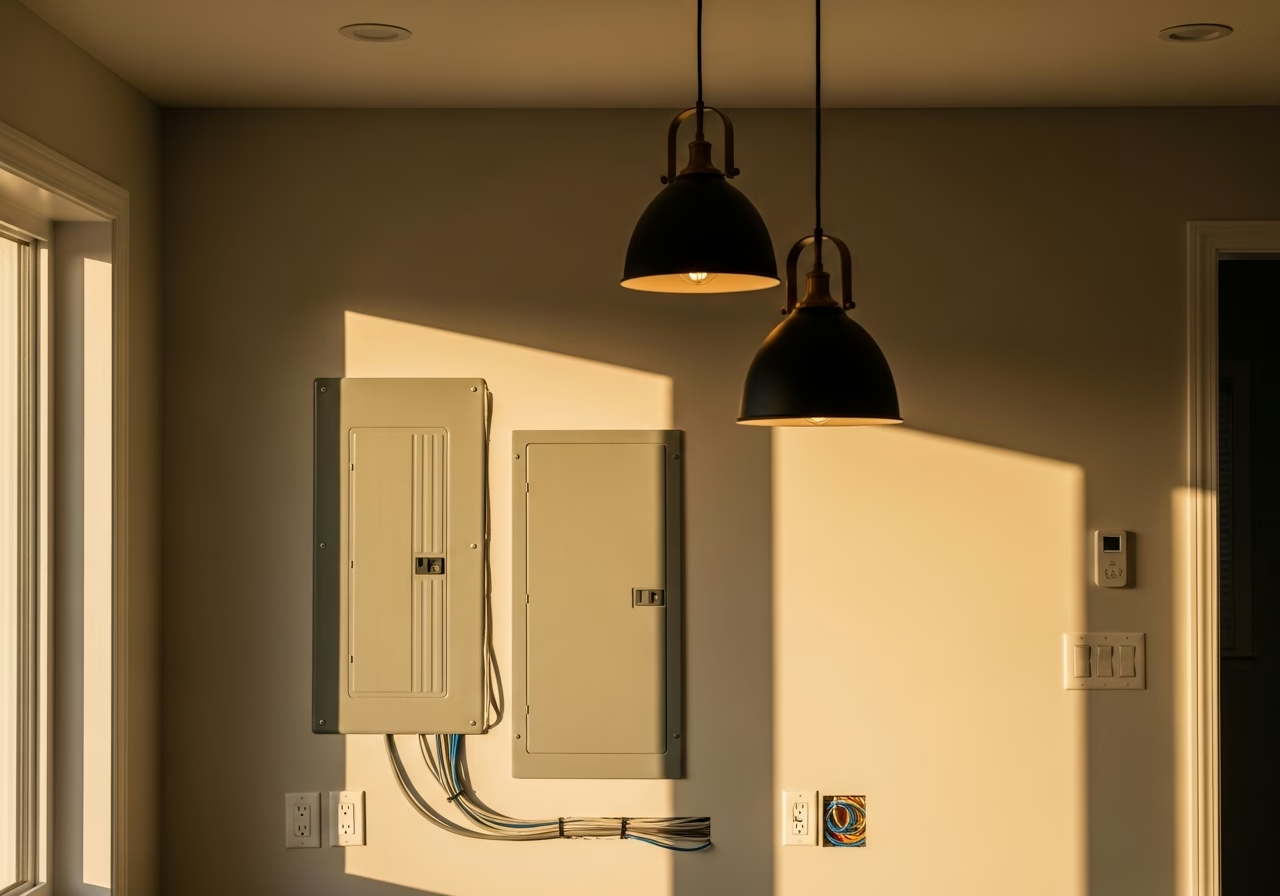
- ATS mounted on basement utility-room wall, typically beside or above the main panel.
- Output of ATS feeds the main panel directly.
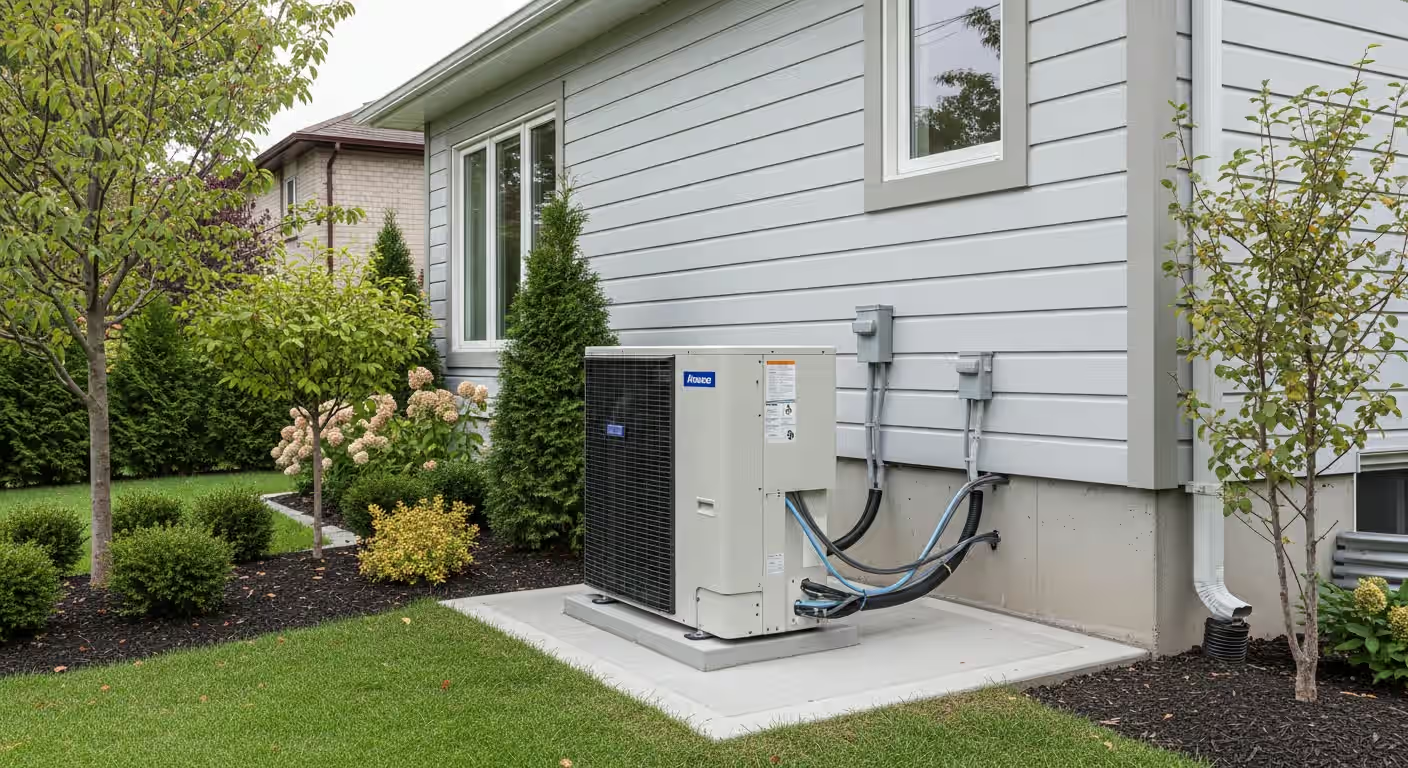
- Generator power feed (4 wires: two hots, neutral, ground) runs from generator to ATS, typically in conduit from the side yard.
- Smart load management module mounts inside or beside the main panel. Current transformer (CT) sensors clamp on managed-load circuits.
- ATS control wiring (low-voltage start signal) runs from ATS back to the generator.
Total install time for the ATS portion of a Tier 2 project: typically 1.5-2 days for the ESA Master Electrician (excluding generator delivery, gas line, pad).
ESA Inspection Scope
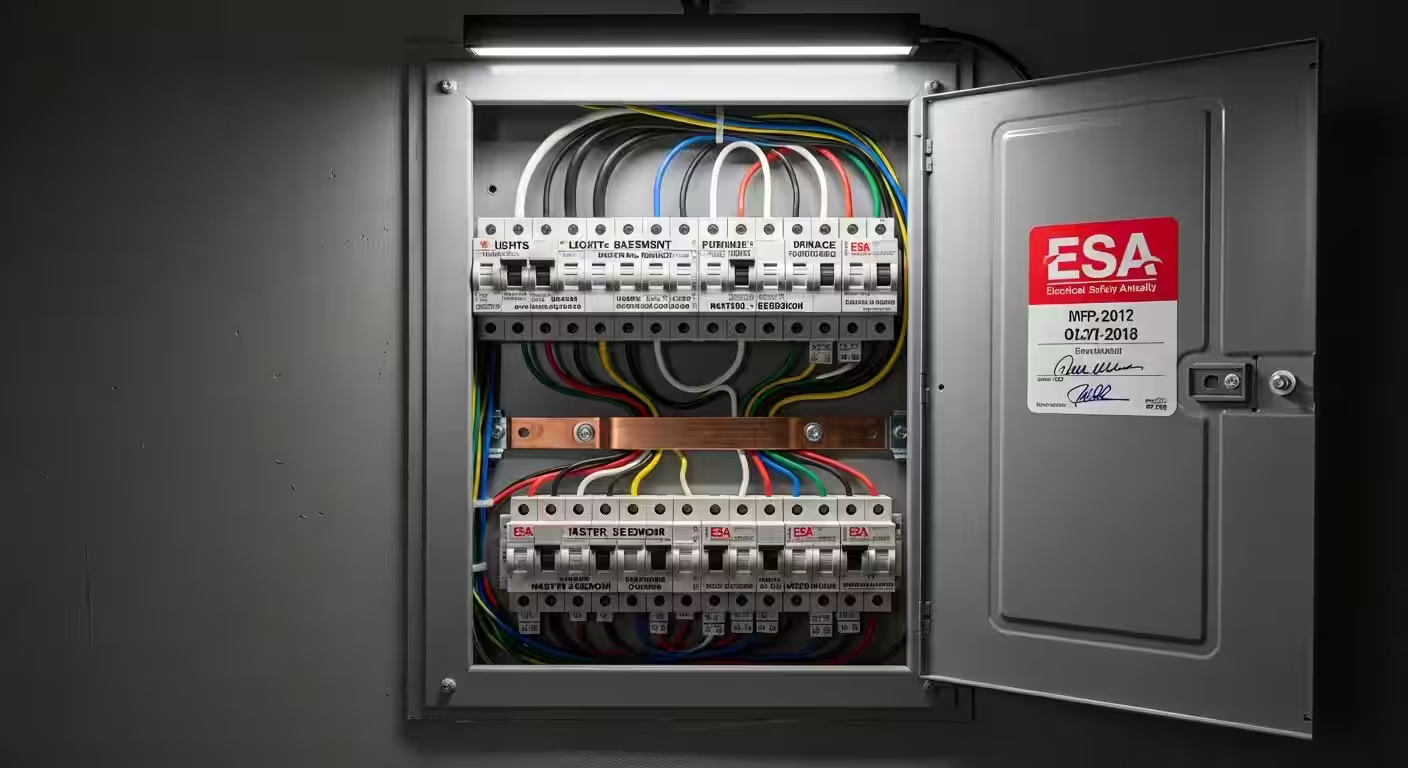
The ESA inspection on the ATS install covers:
- Service-entry conductors and conduit sizing.
- Grounding and bonding.
- ATS terminal lug torque.
- Generator feed wiring sizing for distance and load.
- Panel directory accuracy.
- Smart load management CT sensor placement.
- Bonding of the generator frame.
Common ESA fail items: missing bonding jumper, undersized generator feed conductor, panel directory not updated, neutral-ground bond in wrong location (must be at service entry, not at the ATS or generator). A licensed Master Electrician handles these correctly the first time.
Cost Summary
ATS line item on a typical Toronto install:
- 100A sub-panel ATS (Tier 1): $700-$1,100 hardware.
- 200A service-rated ATS with PWRmanager (Tier 2): $1,400-$1,800 hardware.
- 400A service-rated ATS (Tier 3 large home): $1,800-$2,500 hardware.
Plus electrical labour for ATS install and panel work: $1,800-$3,000 typical.
For the full project pricing context, see Standby Generator Cost Toronto: 2026 Pricing by kW Size.
Our Toronto Default
For 80% of Toronto standby generator projects we install:
- 200A service-rated ATS.
- Smart load management module matched to the generator brand.
- Generator feed in conduit from side yard to basement utility room.
- Main panel directory updated to flag generator-backed circuits.
For a project quote with the ATS portion broken out as a line item, RenoHouse coordinates the ESA Master Electrician for the regulated tie-in. Visit our standby generator installation service page. For permits and inspections, see Standby Generator Permits: TSSA, ESA, and Toronto Bylaw Compliance. For the panel-condition implications, see [Knob-and-Tube Rewiring and Service Upgrades](/services/electrical/knob-tube-rewiring).
Sources & References
Authoritative sources cited in this guide:
- Electrical Safety Authority (ESA) — Ontario electrical regulator
- Ontario Electrical Safety Code — OESC Section 26 / latest amendments
- Canadian Electrical Code Part I (CSA C22.1) — CEC standard
- NRCan — Electric Vehicle Resources — NRCan EV/charging programs
Continue Reading