RenoHouse

# Generator Installation Mistakes: What Toronto Homeowners Get Wrong in 2026
Quick answer. After coordinating standby generator projects across the GTA, the same five mistakes show up repeatedly — most of them avoidable with a slightly more deliberate scoping conversation. This post is the candid list, with the actual cost of each mistake and the fix.After coordinating standby generator projects across the GTA, the same five mistakes show up repeatedly — most of them avoidable with a slightly more deliberate scoping conversation. This post is the candid list, with the actual cost of each mistake and the fix.
For the broader standby generator context, start with our Standby Generator Installation Toronto Complete Guide.
RenoHouse Position
We coordinate certified subcontractors (TSSA G2 gas fitter and ESA Master Electrician) for the regulated tie-ins. The mistakes below are the ones we see most often when a homeowner is comparing quotes from multiple contractors or trying to scope a project without a load calculation. The fixes below are the ones we apply when scoping a project from scratch.
Mistake 1: Sizing on Gut Instead of a Load Calculation
The single most expensive mistake in the Toronto standby generator market. A salesperson walks the home, glances at the panel, and says "you need a 22 kW." Sometimes it is right. Often it is one size class too high (cost: $3,000-$5,000 extra) or one size class too low (cost: a generator that trips on AC startup surge in summer, frustrating the owner for the life of the unit).
What Goes Wrong
- Undersized: 14 kW unit on a heat-pump home. Trips during -20C aux strip cycling. Owner discovers the problem during the first January outage, three years after install.
- Oversized: 22 kW unit on a 1,800 sq ft semi with gas furnace and 3-ton AC. Runs at 25% load during outages, fouls plugs faster, costs $3,500 more than needed.
- Wrong fuel basis: 22 kW rated on natural gas, installed on propane, derated to 19 kW. Sizing math worked on paper but not on the connected fuel.
The Fix
Get a written load calculation from a licensed Master Electrician. Walk through the rated-load worksheet yourself. Confirm the result against the smart load management configuration. For the math, see Generator Sizing: kW and Load Calculation for Toronto Homes.
Mistake 2: Skipping the Automatic Transfer Switch
A small but real subset of Toronto standby generator quotes substitute a Manual Transfer Switch (MTS) for the ATS to save $700-$1,500. The owner accepts because the upfront cost is lower. The unit gets installed.
Need professional renovation?
Call RenoHouse at 289-212-2345 or get a free estimate today.
Get Free Estimate →What Goes Wrong
- Outage at 3 a.m. while the owner is asleep. Generator never starts. Sump pump fails. Basement floods. Restoration cost: $25,000-$60,000.
- Outage while the owner is on a business trip. Generator never starts. Fridge contents lost. Heat pump or furnace cold. Pipes freeze in 36 hours.
- Outage during a storm. Owner attempts to flip the manual switch in the dark with rain on the panel. Mis-operation back-feeds into the grid, energizing a downed line in front of the home.
The Fix
Every standby generator install must include an ATS. There are no acceptable exceptions for whole-home or essential-circuits standby. The MTS belongs on a portable generator, not a standby. For the ATS deep dive, see Automatic Transfer Switch Explained: How Toronto Standby Generators Switch Power.
Mistake 3: Bad Placement and Noise Complaints
The cheapest place to put a generator on a Toronto lot is rarely the right place. The cheapest placement minimizes gas line length and electrical conduit distance — typically directly beside the meter, on the side closest to the basement utility room. That placement often violates manufacturer setbacks, lot-line setbacks, or the City of Toronto noise bylaw.
What Goes Wrong
- Generator placed 4 ft from a window, violating the 5 ft fresh-air-intake setback.
- Generator placed 3 ft from the lot line, exceeding 45 dBA at the neighbour's bedroom window.
- Generator placed under a deck or overhang, violating the 12 in. overhead clearance.
- Generator oriented with exhaust pointing at the neighbour's air conditioner, drawing exhaust into the neighbour's home.
The downstream cost: a noise complaint to the City of Toronto triggers a bylaw inspection. The inspector measures the dBA at the lot line. The unit fails. The fix is either relocation (typically $2,500-$4,500 to redo the pad, gas line, and electrical) or an acoustic enclosure ($1,500-$3,500 added to the existing unit). Either is expensive and avoidable.
The Fix
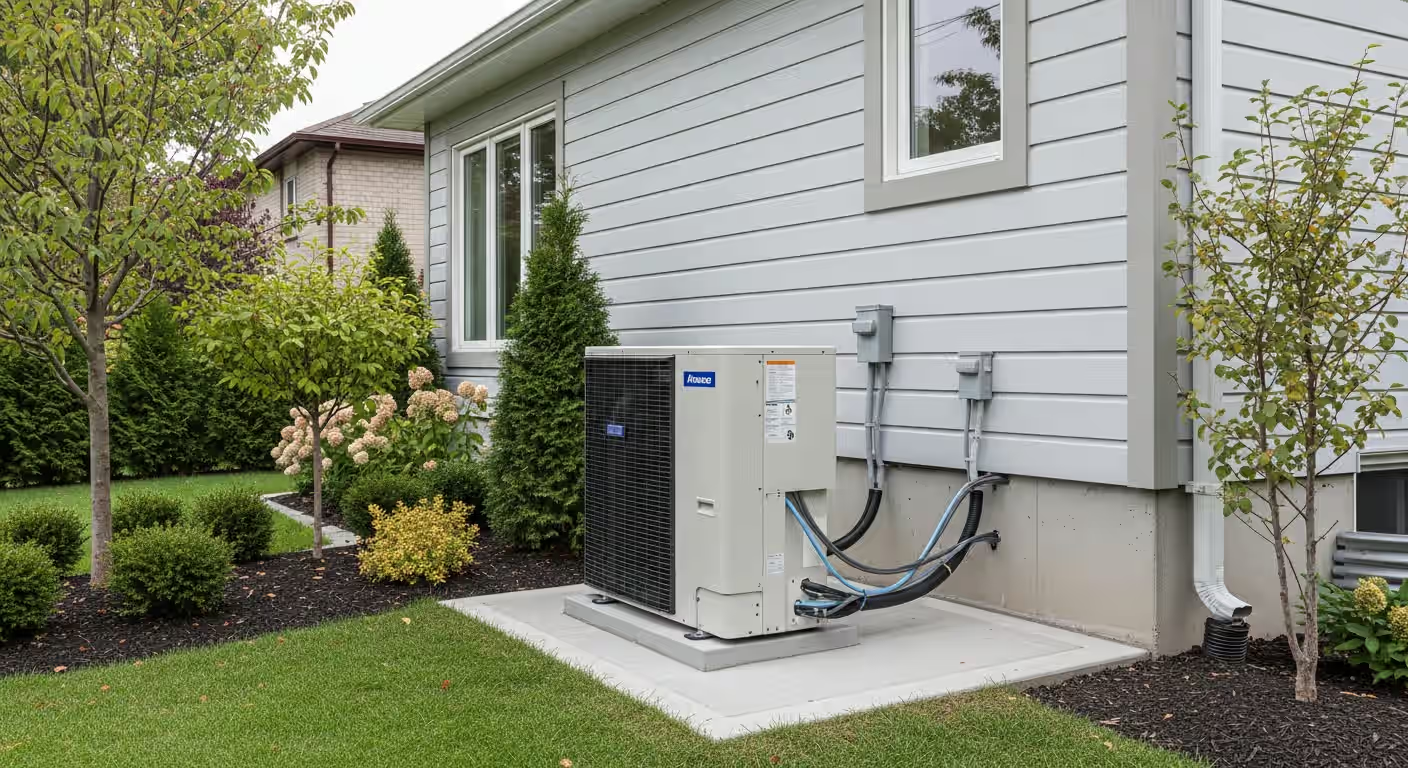
Site the unit deliberately at the start. Work through the manufacturer setbacks (18 in. from siding, 60 in. from windows or fresh-air intakes, 36 in. service clearance, 12 in. overhead). Walk the lot line with the homeowner and the gas fitter, confirming the dBA distance to the neighbour's bedroom window. Orient the unit's air intakes and exhaust away from the neighbour's house. For the noise side, see Generator Noise and Toronto Bylaw Compliance: Placement and Mitigation.
Mistake 4: Ignoring Panel Age and Service Capacity
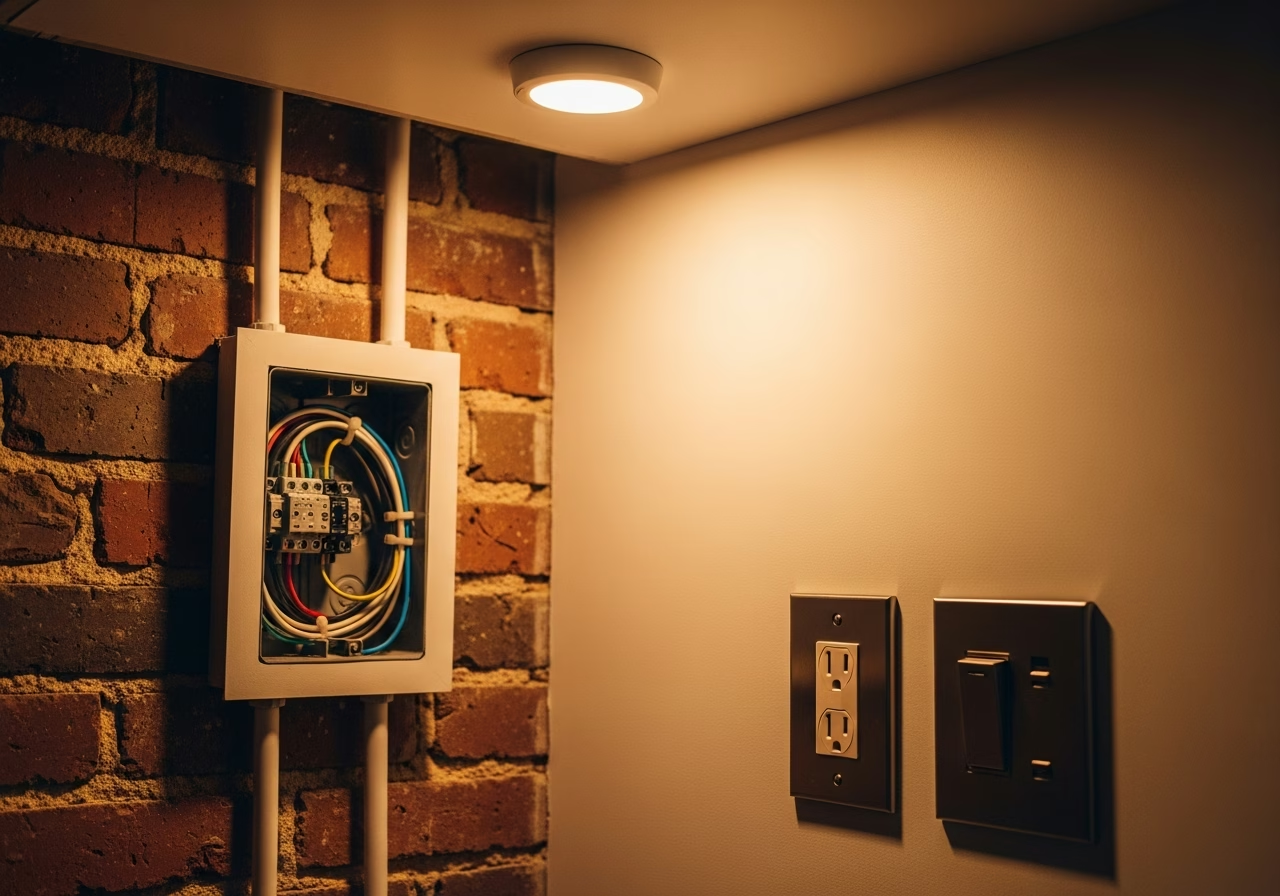
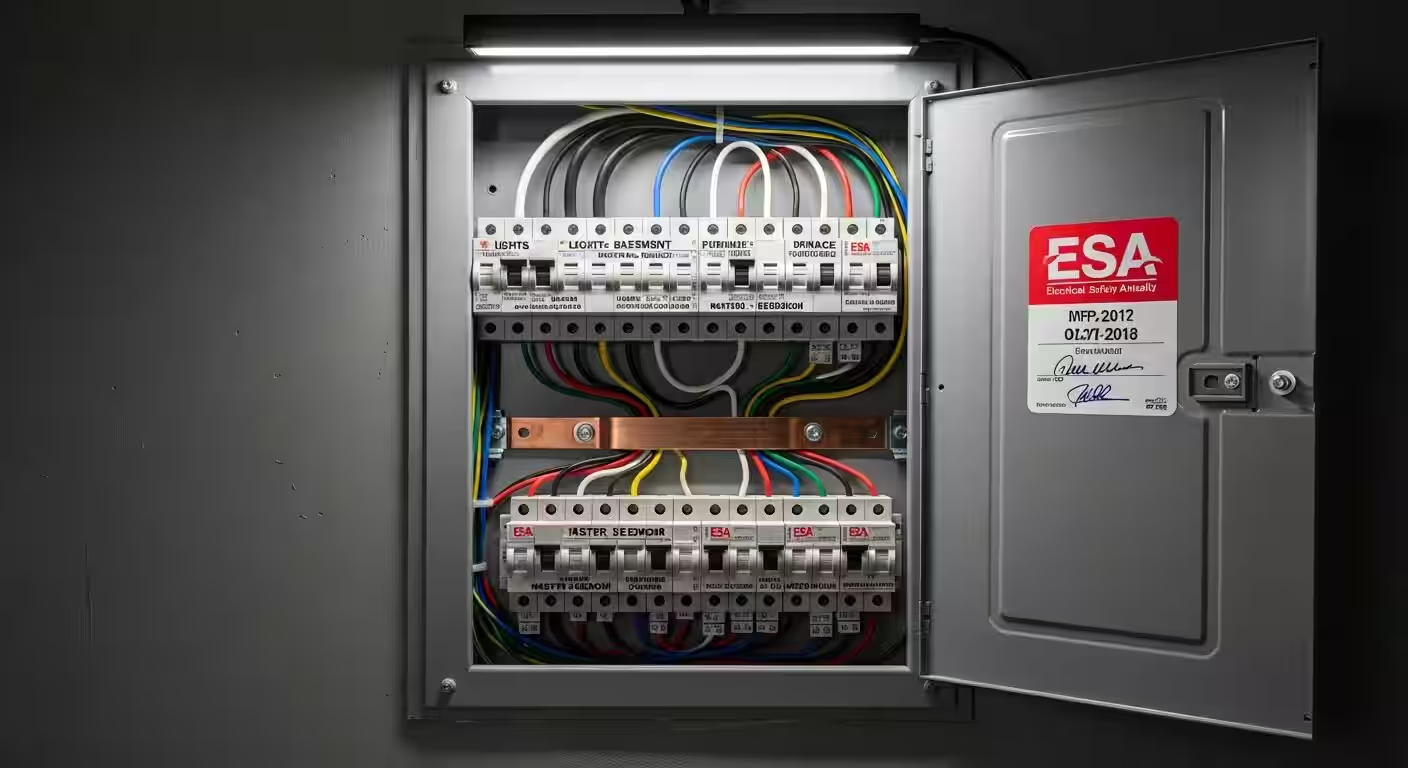
A standby generator with a 200A service-rated ATS requires the home's main panel to support a 200A service. Many Toronto homes built before 1985 still have 100A service. Some have 60A service in the oldest pockets of east Etobicoke and west Scarborough. Some have aluminum-bus panels from the 1970s that the ATS manufacturer will not allow as a connection point.
What Goes Wrong
- Quote priced as a standard standby install. On install day the electrician opens the panel and finds aluminum bus or insufficient capacity. Project stops. Change order issued for $3,000-$5,000 panel upsize. Schedule slips 2-4 weeks.
- Owner accepts a "Tier 1 essential-circuits" install on the older panel because the upfront cost is lower. Two years later the owner installs an EV charger and discovers the panel cannot host the charger circuit. Now the panel needs replacement and the generator's sub-panel ATS needs reconfiguration.
- Panel passes ESA inspection but the bonding and grounding scheme is legacy (1970s-era code). The new ATS install requires bringing the entire grounding system to current code, adding scope.
The Fix
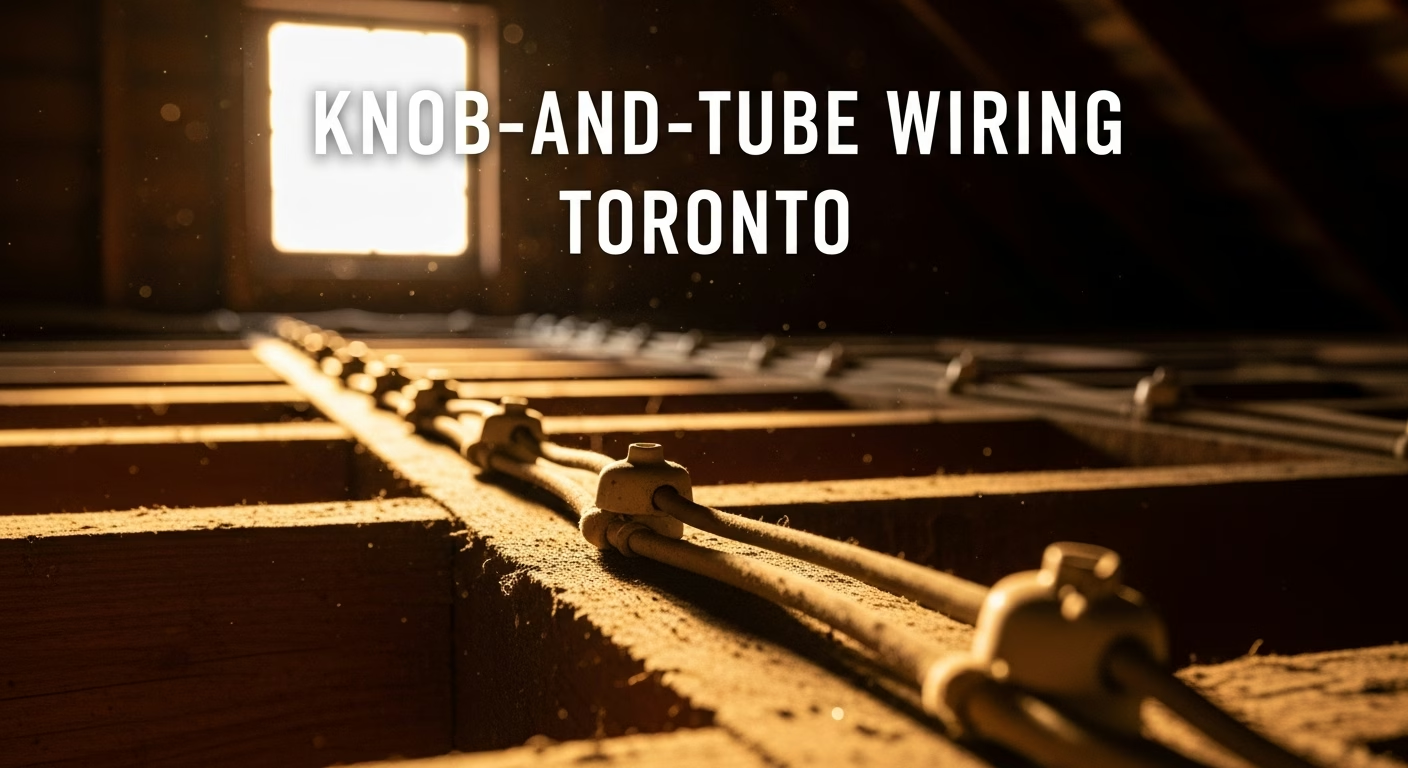
The licensed Master Electrician inspects the panel during the initial site visit, before the quote is finalized. If the panel needs upsize or replacement, that scope is in the original quote, not a change order. For homes with knob-and-tube wiring or aluminum branch wiring, the conversation extends — see Knob-and-Tube Rewiring and Service Upgrades for the related service.
Mistake 5: Forgetting the Snow Plan
A standby generator runs in Toronto's worst winter weather — that is the entire point. But the unit also needs unobstructed access to its air intake and exhaust, and the homeowner needs unobstructed service access for the annual maintenance visit and any emergency call. Snow accumulation defeats both.
What Goes Wrong
- Generator placed in a side-yard alley where snow drifts pile to 3-4 ft each winter. Air intake buried by drift. Unit overheats and shuts down during the January outage when the owner needed it most.
- Generator placed under a downspout. Ice dam forms in February, dripping onto the cabinet, freezing the cabinet door shut. Service tech cannot open the unit for the spring maintenance visit.
- Generator placed in a north-facing corner that never gets sun. Snow on the cabinet stays for weeks longer than elsewhere on the lot. The owner forgets to clear it manually, the unit's weekly self-test fires with snow blocking the exhaust, exhaust gas circulates inside the cabinet, controller faults out.
The Fix
Site the unit deliberately for snow management:
- South-facing or south-east-facing exposure where possible (sun helps melt accumulation).
- Away from downspouts and roof valleys that concentrate snow load.
- Easy walking access from the driveway or main path so the homeowner actually clears it.
- Pad height 4-6 in. above grade so the bottom of the cabinet is clear of typical drift heights.
- A documented snow-clearance reminder in the owner manual handed over at commissioning.
Bonus Mistakes
Three smaller mistakes that appear less often but matter:
- Skipping the annual service contract. A standby generator that does not get serviced annually has a meaningfully lower probability of starting reliably during the storm it was bought for. Annual service runs $250-$450 and is the cheapest insurance on the unit. See Generator Maintenance: Annual Service in Toronto.
- Mis-configuring the smart load management. A 16 kW Generac with PWRmanager configured for 4 managed loads but the actual home has 6 managed loads worth tracking will trip on simultaneous startups. The configuration is set during commissioning by the manufacturer-certified tech and should be reviewed during the first annual service.
- No documentation handover. The homeowner ends up with a generator and no warranty registration, no commissioning report, no ESA certificate, no gas-fitter licence number on file. When something goes wrong in year 3, the documentation gap costs days of delay.
Our Coordination Approach
For a Toronto standby generator project, RenoHouse owns the scoping conversation and the project coordination. We pull the licensed subs (ECRA Master Electrician for ESA, TSSA G2 gas fitter for gas) at the right point in the schedule. We avoid these mistakes by walking the lot, the panel, and the load calculation with the homeowner before the contract is signed.
For a project quote, visit our standby generator installation service page. For brand selection, see Generac vs Kohler vs Cummins: Toronto Standby Generator Brand Showdown. For the cost detail by size class, see Standby Generator Cost Toronto: 2026 Pricing by kW Size.
Sources & References
Authoritative sources cited in this guide:
- Electrical Safety Authority (ESA) — Ontario electrical regulator
- Ontario Electrical Safety Code — OESC Section 26 / latest amendments
- Canadian Electrical Code Part I (CSA C22.1) — CEC standard
- NRCan — Electric Vehicle Resources — NRCan EV/charging programs
Continue Reading