RenoHouse

# Generator Maintenance: Annual Service in Toronto 2026
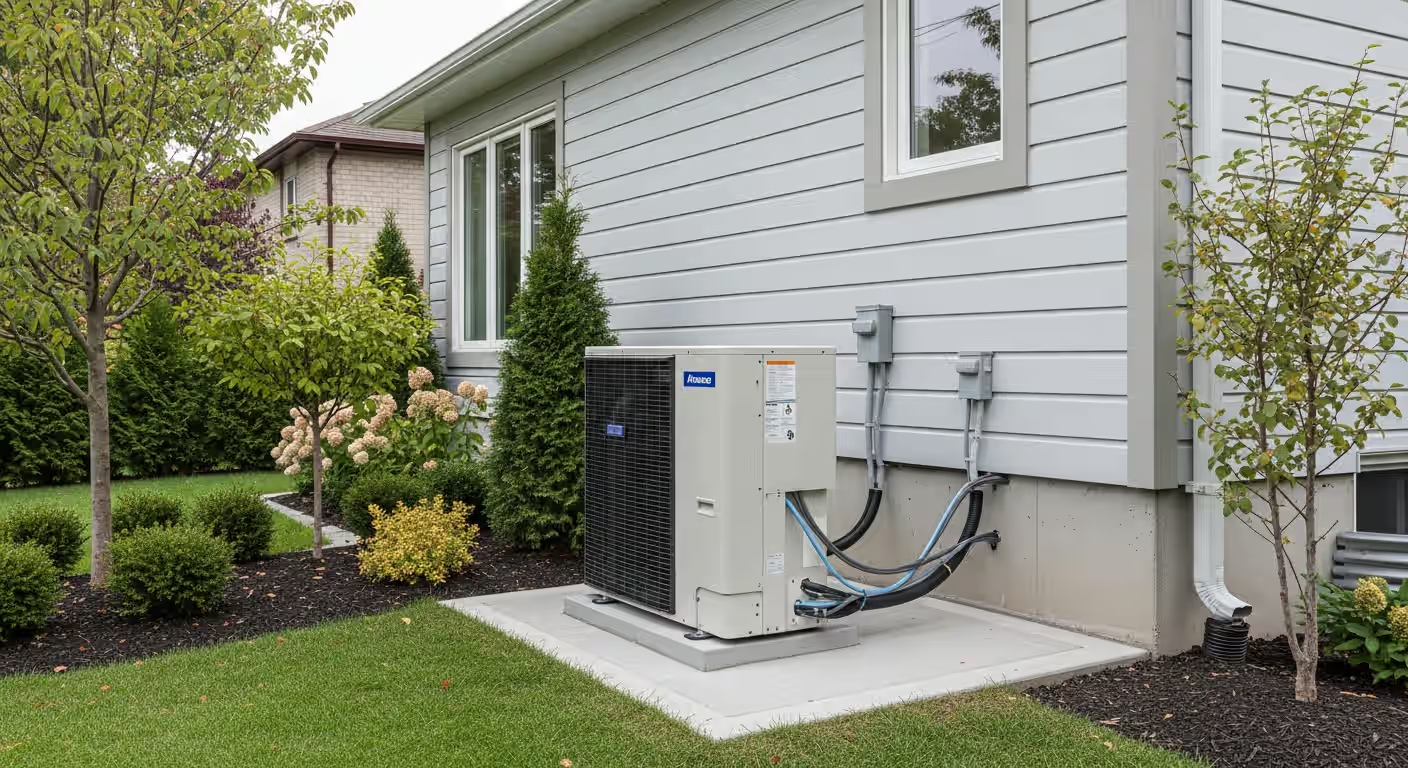
Quick answer. A standby generator is a 2-cylinder gas engine that sits outside year-round and self-tests weekly for a decade. It needs scheduled maintenance — period. Skipping the annual service is the single biggest reason older standby units fail to start when the storm finally hits.A standby generator is a 2-cylinder gas engine that sits outside year-round and self-tests weekly for a decade. It needs scheduled maintenance — period. Skipping the annual service is the single biggest reason older standby units fail to start when the storm finally hits. This post walks through what annual service actually covers, what it costs in Toronto in 2026, and the maintenance items that have to happen on schedule.
For the broader standby generator context, start with our Standby Generator Installation Toronto Complete Guide.
RenoHouse Position
We coordinate the install. Annual maintenance after install is typically handled by the manufacturer's authorized service network in Toronto (Generac, Kohler, Cummins, Briggs and Stratton each have a roster of authorized GTA dealers) or by an independent generator service company. RenoHouse can introduce homeowners to the right service contractor at handover. The maintenance work itself is straightforward and within the scope of any qualified small-engine and electrical technician.
Why Maintenance Matters
A standby generator differs from most home equipment in one critical way: it sits unused for 99.5% of its life and is expected to start reliably the 0.5% of the time it is needed. The weekly self-test (5-15 minutes) is the manufacturer's hedge against this risk — it confirms the unit will start. But the self-test does not catch:
- Slow oil degradation over 12-18 months of weekly short-cycle running.
- Spark plug fouling from short-cycle low-load operation.
- Battery aging on a unit that lives outside through Toronto winters.
- Valve clearance drift on an air-cooled engine.
- Air filter clogging in a side-yard environment with leaves, dust, and cottonwood seed.
- Stator and exciter wear, which only shows up under outage load.
Annual service catches these. A unit that has run weekly for 5 years but has never had service is statistically more likely to fail during a long outage than a unit that has been serviced annually.
What a Standard Annual Service Covers
A typical 2026 Toronto annual service contract ($250-$450) covers:
- Oil change. The engine oil is drained and refilled with manufacturer-spec synthetic (typically 5W-30 full synthetic for cold-climate operation). Quantity: 1.5-2.5 quarts depending on engine size.
- Oil filter. Replaced every service.
- Spark plug inspection. Plug pulled, gap checked, replaced every 2-3 services or sooner if fouled.
- Air filter inspection. Cleaned or replaced; replaced every 2 years typically.
- Battery test. Voltage and load test. Battery replacement at 3-5 years (typically not included in the base service price; charged separately at $150-$300 when needed).
- Coolant check (liquid-cooled units only). Level, condition, freeze protection.
- Visual inspection. Cabinet condition, paint, rust, hose condition, exhaust condition, mounting hardware torque.
- Self-test review. Controller log review for any faults during weekly self-tests since the last service.
- Load test. A controlled load test that confirms the unit will deliver rated capacity. Typically a 15-30 minute run at simulated load.
- Smart load management module check. CT sensor placement and configuration verification.
- Service report and recommendations. Written report handed to the homeowner.
A 2-3 hour visit. Worth every dollar.
What a Standard Annual Service Does Not Cover
Items typically charged separately:
- Battery replacement at 3-5 years: $150-$300.
- Spark plug replacement when condition warrants: $40-$80 each (engines have 2 plugs).
- Air filter replacement when condition warrants: $30-$60.
- Valve adjustment at 5 years and again at 10 years: $200-$400.
- Stator or exciter replacement if a major component fails: parts and labour, typically warranty-covered if within the 5-year manufacturer warranty.
- Controller firmware update if the manufacturer issues a recall or update: typically free under warranty, modest charge after.
A 5-year service total cost of ownership across the standard service intervals: $1,500-$2,500 in scheduled service, plus ~$250 in non-scheduled wear items.
Need professional renovation?
Call RenoHouse at 289-212-2345 or get a free estimate today.
Get Free Estimate →The 5-Year and 10-Year Big Items
Two scheduled larger services beyond the annual:
Year 5 service (or 250-300 hours of operation, whichever comes first)
- All standard annual items.
- Valve clearance adjustment. Air-cooled engines drift slightly on valve clearance over 250+ hours. Manufacturer spec calls for a re-clearance at 5 years. Cost: typically $200-$400.
- Comprehensive load test at 100% rated load for 30-60 minutes.
- Battery replacement if not already done.
- Coolant flush and refill on liquid-cooled units.
Total year 5 service cost: typically $600-$1,000 including the standard items.
Year 10 service (or 500-600 hours of operation)
- All year 5 items.
- Spark plug replacement (if not done in interim).
- Engine cylinder compression check. Confirms the engine is healthy.
- Stator and exciter inspection. Check for wear that would limit rated output.
- Voltage regulator function test.
- Comprehensive controller diagnostic.
Total year 10 service cost: typically $700-$1,200 including the standard items.
For a unit at year 10 the homeowner is approaching the unit's expected mid-life. Decisions about end-of-life replacement (typically year 15-20 for residential standby) become relevant from year 12 onward.
Exercise Schedule
The unit's self-test (also called "exercise") fires on a configurable schedule. The default for most brands is Wednesday 11 a.m. for 5 minutes. Choices:
- Frequency. Weekly is the manufacturer default and the right choice for most homes. Bi-weekly or monthly is an option but reduces the confidence that the unit is ready.
- Duration. 5 minutes is the air-cooled default. Liquid-cooled units sometimes default to 10-15 minutes. Longer self-tests are slightly better for engine health (longer warm-up reaches operating temperature) but use more gas and produce more emissions.
- Time of day. Configurable. We recommend mid-day on a weekday for noise reasons (see Generator Noise and Toronto Bylaw Compliance: Placement and Mitigation). Some homeowners prefer Saturday morning so they can hear the test and confirm it ran.
What Goes Wrong Without Maintenance
The failure modes we see on neglected units:
- Stale oil. A unit at 5 years with no oil change has degraded oil that does not protect bearings during outage start-up. Result: bearing wear, eventual catastrophic engine failure during the storm the unit was bought for.
- Fouled plugs. Short-cycle weekly self-tests at low load foul plugs faster than continuous operation. A unit at 3-4 years with no plug service may not start reliably.
- Dead battery. Standby generator batteries last 3-5 years in Toronto's cold winters. A 6-year-old battery does not have the cranking amps to start the unit in -15C cold. The unit fails to start during the storm.
- Clogged air filter. A side-yard generator collects leaves, dust, and cottonwood seed. A clogged air filter starves the engine and fouls plugs faster.
- Drift on valve clearance. Air-cooled engines that have not had the year-5 valve adjustment may have hard-starting issues by year 7-8.
The cumulative effect: a unit that has run weekly for 5+ years without service is statistically less reliable than a unit that was serviced annually. The whole value proposition of standby (start reliably during the storm) erodes without maintenance.
Choosing a Service Provider
Three options in the Toronto market:
- Manufacturer-authorized dealer (Generac authorized, Kohler authorized, etc.). Premium price, factory parts, factory training. The right choice for warranty work in years 1-5.
- Independent generator service company. Often a former dealer technician now running their own shop. Lower price, often equally competent. Good fit after the warranty period ends.
- General electrical contractor with generator scope. Mixed bag. Some are excellent; some treat the generator as a sideline. Vet carefully.
For homes within the manufacturer warranty period (5 years on most brands), use the authorized dealer. For homes past warranty, an independent service company at $250-$350 is often a better fit than a $400-$450 dealer service.
DIY Maintenance: What Is and Is Not Reasonable
Some maintenance is within the scope of a competent DIY homeowner:
- Visual cabinet inspection. Anyone can do this. Look for rust, paint condition, debris, snow blockage.
- Battery voltage check. A multi-meter reading on the generator battery terminals is a 30-second check. Battery should read 12.5-12.8V at rest.
- Air filter inspection. Most cabinets have an accessible air filter. Pulling it and checking for excessive dust is straightforward.
Some maintenance should not be DIY:
- Oil change. Hot oil, awkward access, manufacturer-spec oil grade. Service tech work.
- Spark plug change. Confined access, easy to cross-thread on aluminum heads. Service tech work.
- Load test. Requires a load bank or specific switching procedure. Service tech work.
- Controller diagnostics. Requires manufacturer service software. Service tech work.
Annual Service Cost Summary
Realistic Toronto 2026 pricing:
- Standard annual service contract: $250-$450/year.
- Battery replacement at year 4-5: $150-$300.
- Year 5 valve adjustment: $200-$400 incremental.
- Year 10 comprehensive service: $700-$1,200.
Average annual service cost over 15 years: approximately $300-$400/year all-in including the larger interval services and wear items.
Our Coordination Approach
We install the standby generator and hand the homeowner a list of qualified service providers in the Toronto market. We do not force a service contract — that is the homeowner's choice. For homes where we have done the install we are happy to flag the year-1 service window and the year-5 valve adjustment when we follow up.
For a project quote on a new install, RenoHouse coordinates the TSSA G2 gas fitter and the ESA Master Electrician for the regulated tie-ins. Visit our standby generator installation service page. For brand selection (which affects long-term service availability), see Generac vs Kohler vs Cummins: Toronto Standby Generator Brand Showdown. For installation mistakes that increase maintenance burden, see Generator Installation Mistakes: What Toronto Homeowners Get Wrong.
Sources & References
Authoritative sources cited in this guide:
- Electrical Safety Authority (ESA) — Ontario electrical regulator
- Ontario Electrical Safety Code — OESC Section 26 / latest amendments
- Canadian Electrical Code Part I (CSA C22.1) — CEC standard
- NRCan — Electric Vehicle Resources — NRCan EV/charging programs
Continue Reading