RenoHouse

# Standby Generator Permits Toronto: TSSA, ESA, and Bylaw Compliance 2026
Quick answer. A whole-home standby generator installation in Toronto crosses two regulated trades and one municipal bylaw. The electrical work is signed off by an ESA-licensed Master Electrician under an ECRA contractor licence and inspected by the Electrical Safety Authority.A whole-home standby generator installation in Toronto crosses two regulated trades and one municipal bylaw. The electrical work is signed off by an ESA-licensed Master Electrician under an ECRA contractor licence and inspected by the Electrical Safety Authority. The gas connection is made by a TSSA-licensed G2 (or G1) gas fitter and recorded with the Technical Standards and Safety Authority. The unit's runtime acoustic profile must meet the City of Toronto noise bylaw at the property line. This post is the homeowner-facing permit and inspection roadmap.
For the broader standby generator context, start with our Standby Generator Installation Toronto Complete Guide.
RenoHouse Position
The regulated tie-ins (electrical and gas) are signed off by the licensed subcontractors RenoHouse coordinates: an ECRA Master Electrician for the ESA permit and inspection, and a TSSA G2 gas fitter for the gas connection notification. RenoHouse owns the permit submission scheduling, the inspection coordination with the homeowner's calendar, the noise-bylaw siting analysis, and the finishing work after the regulated tie-ins are signed off. The license-bearing trades own the regulated work itself.
ESA Permit: The Electrical Layer
Every standby generator install in Toronto requires an ESA permit. The Electrical Safety Authority is the provincial regulator for electrical work in Ontario; an ESA permit (sometimes called a "notification of work") is the document that allows the inspection to be scheduled and the work to be approved.
Who Pulls the ESA Permit
The licensed Master Electrician who will perform the work pulls the ESA permit under their ECRA contractor licence. The homeowner does not pull the permit personally. The contractor licence is non-transferable; only an ECRA-licensed contractor can pull the permit.
What the ESA Permit Covers
The permit scope on a standby generator project typically covers:
- The Automatic Transfer Switch (ATS) installation.
- The generator power feed conductor from the unit to the ATS.
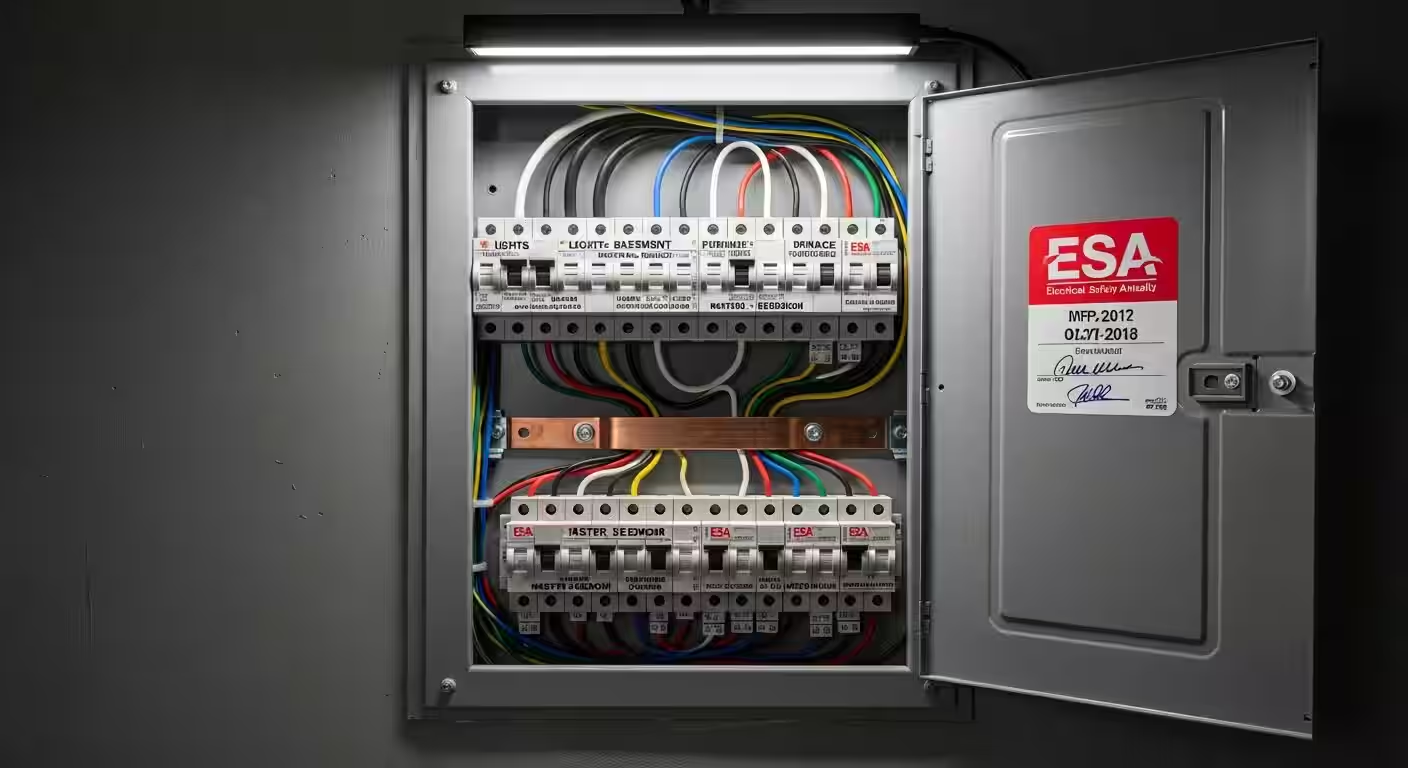
- Any panel work (replacement, upsize, sub-panel install for critical circuits).
- The bonding and grounding of the generator frame.
- Any branch circuit modifications affected by the generator install.
If the project also involves a service upsize from 100A to 200A (common when the existing panel cannot host a 200A ATS), the upsize is covered under the same permit.
The ESA Inspection
The ESA inspector visits the site after the work is complete and the homeowner is ready for energization. Typical inspection items:
- Service-entry conductor sizing and conduit type.
- ATS terminal lug torque (often spot-checked).
- Bonding and grounding continuity.
- Generator feed conductor sizing for distance and load.
- Panel directory accuracy.
- Smart load management module CT placement (if applicable).
- Working clearance around the panel and ATS.
Common ESA fail items: missing bonding jumper at the service entrance, undersized generator feed conductor (typically when the run is longer than the contractor sized for), neutral-ground bond in the wrong location, panel directory not updated to reflect generator-backed circuits.
A licensed Master Electrician handles these correctly the first time. Re-inspection delays of 1-2 weeks are the cost of cutting corners on the install.
Need professional renovation?
Call RenoHouse at 289-212-2345 or get a free estimate today.
Get Free Estimate →ESA Permit Cost
ESA permit fees vary with project scope but typically run $200-$400 on a residential standby generator install. The fee is included in the contractor's quote in most Toronto jobs.
TSSA Gas Connection: The Fuel Layer
The gas connection from the Enbridge meter (or propane tank) to the generator is regulated by the Technical Standards and Safety Authority (TSSA). The work is performed by a TSSA-licensed gas fitter holding a G2 or G1 certification.
Who Performs the Gas Work
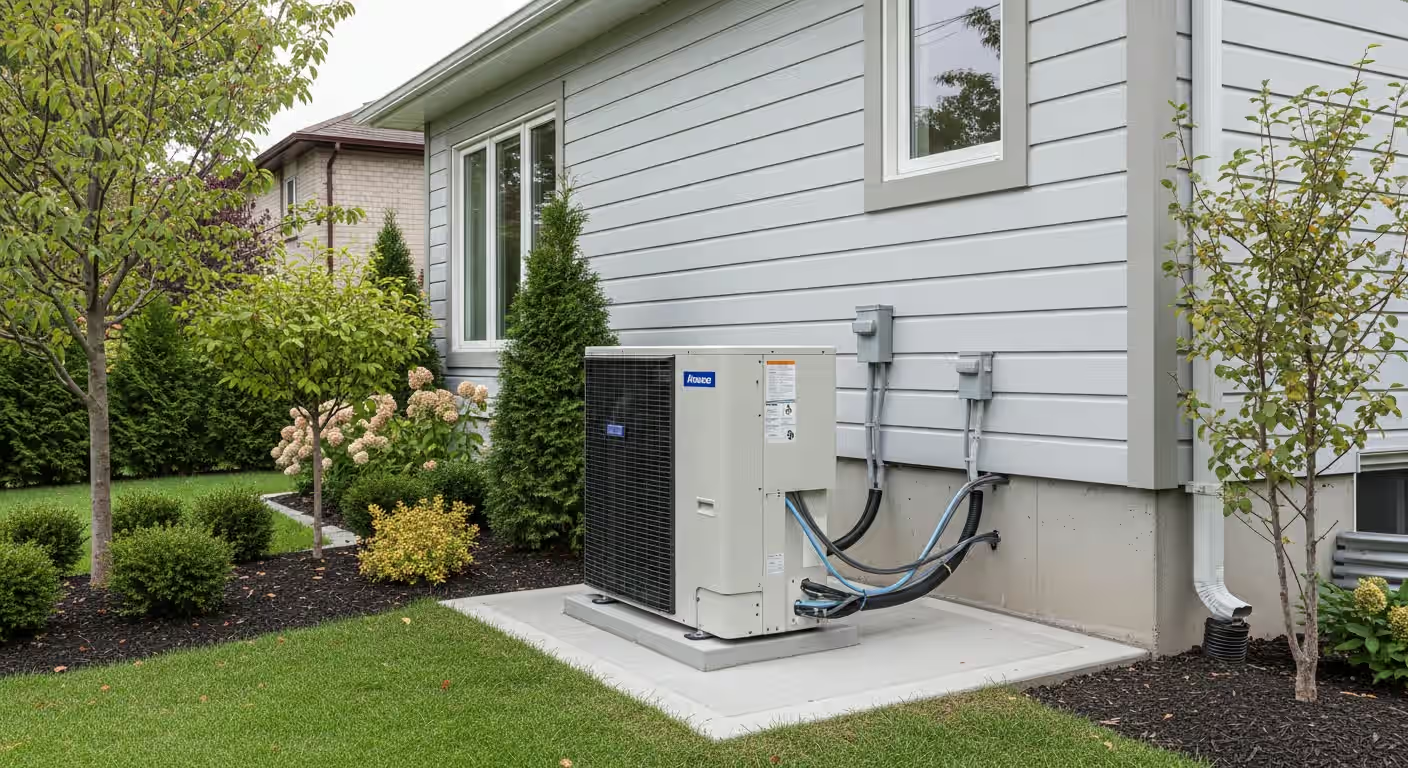
A G2 gas fitter is licensed to install and connect appliances up to 400,000 BTU/hour. Most residential standby generators (7.5 kW through 26 kW) fall well within G2 scope. A G1 gas fitter has unrestricted scope and can do the same work.
TSSA Notification vs Permit
For most residential standby generator installs the gas fitter notifies TSSA on the connection but the inspection is not mandatory in the same way an ESA inspection is. TSSA reserves the right to inspect any installation but conducts most residential inspections on a random or complaint-driven basis rather than a 100% inspection of every job. The gas fitter retains pressure-test records and the licence number on file.
This is a meaningful distinction from the ESA process: the ESA inspector visits the site on essentially every standby generator project; the TSSA inspector typically does not. The lack of routine TSSA inspection puts the burden of compliance on the gas fitter's licence and the documentation they retain.
What the Gas Fitter Does
Typical gas fitter scope on a Toronto standby generator install:
- Confirm Enbridge meter capacity (typically 250 CFH residential; may need upsize to 425 CFH for larger generators).
- Coordinate with Enbridge for any meter upsize service order.
- Run black iron or CSST gas line from the meter to the generator pad.
- Install drip leg, shutoff valve, and flexible appliance connector at the unit.
- Pressure test the new gas line.
- Document the work and notify TSSA.
- Commission the generator on the connected fuel.
TSSA Cost
The gas fitter's labour and parts on a standard 30-50 ft natural gas run run $1,200-$2,200 in 2026 Toronto pricing. The TSSA notification fee itself is small (under $100 in most cases) and typically included in the gas fitter's quote.
City of Toronto Noise Bylaw
The City of Toronto noise bylaw caps continuous mechanical equipment at the property line. The widely cited threshold for standby generators is 45 dBA at the lot line during nighttime hours (11 p.m. to 7 a.m.).
What This Means in Practice
A standby generator running at full load produces 65-72 dBA measured at 7 metres. With proper site selection and the natural distance from the unit to the lot line, most Toronto installs comply with the 45 dBA limit at the property line. The most common compliance issues:
- Generator placed too close to a side lot line on a narrow lot.
- Bedroom windows on the neighbour's house line up directly with the generator side.
- Air intakes and exhaust oriented toward the neighbouring lot.
- Reflective hard surfaces (concrete pad, brick wall, fence) amplifying the unit toward the lot line.
For the deeper noise compliance and mitigation guide, see Generator Noise and Toronto Bylaw Compliance: Placement and Mitigation.
Weekly Self-Test Considerations
Standby generators self-test weekly for 5-15 minutes. Toronto's bylaw treats brief test runs differently from continuous outage operation, but most reasonable homeowners schedule the weekly self-test for mid-day on a weekday (typical default: Wednesday 11 a.m.) to minimize neighbour exposure. The self-test schedule is configured in the unit's controller and can be changed at any time.
Permit Timeline
A typical Toronto standby generator project permit and inspection timeline:
- Day 0: Contract signed.
- Days 1-3: ESA permit pulled by Master Electrician. TSSA notification queued.
- Days 5-10: Concrete pad poured (or composite pad delivered), gas line route confirmed.
- Days 10-15: Generator delivered. ATS conduit and gas line run. Generator placed on pad. Gas connected and pressure tested. Electrical connected.
- Days 15-20: ESA inspection scheduled and performed. Any deficiencies addressed.
- Days 20-25: Final commissioning by manufacturer-certified tech. Customer walkthrough.
Total: 4-6 weeks from contract to fully energized and signed-off. Variance comes from permit queue length (occasional 1-2 week delays at peak season), Enbridge meter upsize service order (2-6 week lead time when required), and weather delays on concrete pad pours in winter.
Documentation You Should Retain
After the project is complete the homeowner should retain:
- The signed ESA inspection certificate.
- The Master Electrician's ECRA licence number.
- The G2 gas fitter's TSSA licence number.
- The pressure-test record on the gas line.
- The generator's commissioning report from the manufacturer-certified tech.
- The smart load management configuration printout.
- The five-year manufacturer warranty registration.
These documents matter for two reasons: insurance underwriting on the home (some insurers ask for ESA inspection certificates on major electrical upgrades), and resale due diligence (a buyer's home inspector will ask).
Mistakes to Avoid
Three permit-related mistakes we see in the Toronto market:
- Hiring an unlicensed installer. A handyman or electrician without ECRA contractor status cannot pull an ESA permit. The work has no inspection, no warranty, no insurance coverage if something fails. The homeowner's home insurance may also be affected.
- Skipping the gas-line pressure test. A pressure test is mandatory under TSSA regulations. A licensed gas fitter performs this routinely; an unlicensed installer may skip it.
- Ignoring the noise bylaw siting. The cheapest place to put a generator (closest to the meter, easiest gas line route) may not be the legal place to put it. Site selection should account for the lot-line dBA at the start, not after a complaint.
RenoHouse Coordination
For a project quote, RenoHouse coordinates the ECRA Master Electrician for the ESA permit and inspection, the TSSA G2 gas fitter for the gas connection, and owns the noise-bylaw siting analysis, the permit scheduling, and the finishing carpentry. Visit our standby generator installation service page. For installation mistakes to avoid, see Generator Installation Mistakes: What Toronto Homeowners Get Wrong. For the noise compliance side, see Generator Noise and Toronto Bylaw Compliance: Placement and Mitigation.
Sources & References
Authoritative sources cited in this guide:
- Electrical Safety Authority (ESA) — Ontario electrical regulator
- Ontario Electrical Safety Code — OESC Section 26 / latest amendments
- Canadian Electrical Code Part I (CSA C22.1) — CEC standard
- NRCan — Electric Vehicle Resources — NRCan EV/charging programs
Continue Reading