RenoHouse

# Generator ROI Toronto: Resale Value, Insurance Math, and Damage Avoidance 2026
Quick answer. A standby generator does not pay back the way a heat pump or an EV does. There is no monthly utility savings; in fact, the unit consumes natural gas during weekly self-tests and during outages. The ROI on a Toronto standby generator is in three forms: damage avoidance, resale lift, and insurance posture. This post is the honest math.A standby generator does not pay back the way a heat pump or an EV does. There is no monthly utility savings; in fact, the unit consumes natural gas during weekly self-tests and during outages. The ROI on a Toronto standby generator is in three forms: damage avoidance, resale lift, and insurance posture. This post is the honest math.
For the broader standby generator context, start with our Standby Generator Installation Toronto Complete Guide.
RenoHouse Position
The numbers below are based on observed Toronto market behaviour and conversations with realtors and insurance brokers we work with. They are not promises. Resale lift varies by neighbourhood, by buyer, by listing strategy. Insurance credits vary by carrier and by underwriter. The damage avoidance math is the most concrete of the three but still depends on the specific outage exposure of the home.
The Three ROI Components
1. Damage Avoidance: The Hardest Number, the Strongest Math
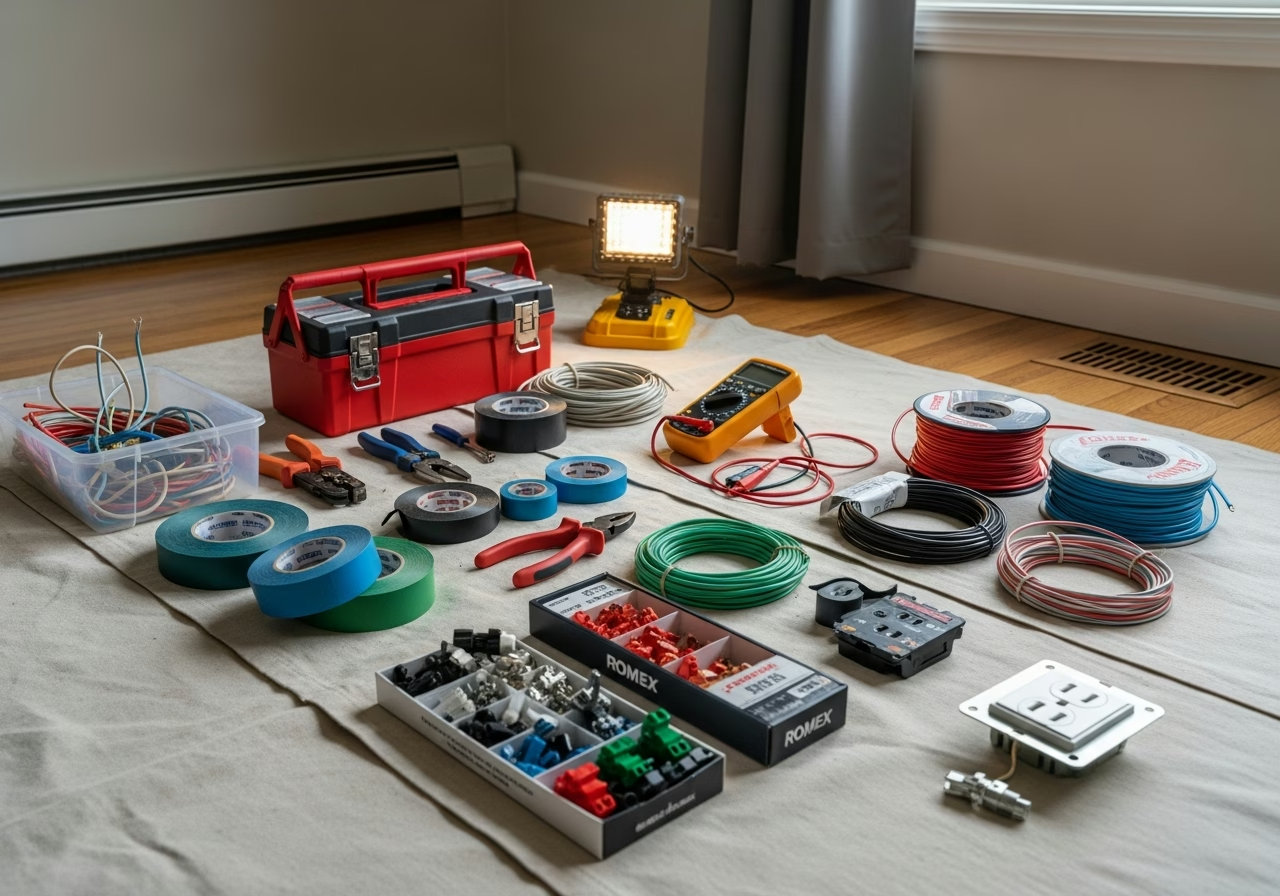
The single biggest dollar item in standby generator ROI is the avoided cost of basement flooding from a sump-pump failure during a multi-day outage.
A typical Toronto basement flood from a 24-72 hour sump-pump outage:
- Restoration: $15,000-$45,000 depending on basement finish level and water depth.
- Insurance deductible: typical $1,000-$2,500 for flood claims, plus the underwriting impact on future premiums.
- Indirect cost: displacement during restoration (2-6 weeks of partial home use), lost personal items, mold remediation if not caught quickly.
A single avoided basement flood pays for a Tier 2 standby ($11,500-$13,000) twice over.
The frequency assumption matters. In a flood-historied Toronto neighbourhood (Etobicoke creek corridor, Don Valley fringe, parts of Scarborough), a flood-causing outage might hit every 7-12 years. In a higher and drier neighbourhood (parts of central Toronto, well-drained pockets of North York and Etobicoke), the frequency might be every 20-30 years. The expected-value math:
- Flood-historied neighbourhood, 1 in 10-year exposure, $25,000 average flood cost: expected annual avoidance value ~$2,500. Generator pays back in 5-6 years on this metric alone.
- Average Toronto neighbourhood, 1 in 20-year exposure, $20,000 average flood cost: expected annual avoidance value ~$1,000. Generator pays back in 11-13 years.
- Dry neighbourhood, 1 in 30-year exposure: expected annual avoidance value ~$650. Generator does not pay back on flood avoidance alone in the unit's expected 15-20 year service life.
For homes in neighbourhoods that have flooded historically, this is the math that makes the project work. For homes in dry neighbourhoods, the other two ROI components carry more weight.
Secondary damage avoidance items
- Frozen pipes during winter outages. A 36-72 hour winter outage with no heat can burst pipes. Repair cost: $2,500-$15,000 depending on extent. Frequency: low (most homes do not freeze in 36 hours), but consequences high.
- Refrigerator and freezer contents. A multi-day outage can spoil $400-$1,500 in fridge and freezer contents. Annual expected value: low ($30-$80) but real.
- Sump backup damage to mechanical systems. A flooded basement can take out the furnace, the hot water tank, the laundry hookups. Add $5,000-$15,000 to the typical flood restoration cost. Folded into the basement flood math above.
2. Resale Value: The Soft Number, the Variable Outcome
Toronto realtors increasingly call out whole-home generators in listings, particularly in flood-historied neighbourhoods. The lift is real but variable. Conversations with realtors we work with suggest:
- Listed but not the lead feature: typical 0.5-1% sale price lift, or roughly $5,000-$12,000 on a $1M home.
- Lead feature in flood-historied neighbourhood: typical 1-2% sale price lift, $10,000-$25,000 on a $1M home.
- Premium home with battery hybrid (Tier 4): larger lift but harder to isolate from other resilience features.
Caveats:
Need professional renovation?
Call RenoHouse at 289-212-2345 or get a free estimate today.
Get Free Estimate →- The lift is not guaranteed. Some buyers do not value the feature; others discount it because of the maintenance contract obligation.
- The lift depends on the unit being current and well-maintained at the time of sale. A 2005 generator that has not been serviced is closer to a liability than an asset.
- The lift is most defensible on listings where the generator's ESA inspection certificate, commissioning report, and service records are presented to the buyer's home inspector.
For homeowners selling within 5 years of installation, expect to recover a meaningful fraction of the install cost on resale. For homeowners selling within 1-2 years, the recovery is smaller because the unit is not yet "proven" through a few years of weekly self-tests.
3. Insurance Posture: The Quiet Number, the Long-Term Math
Toronto home insurance is in a difficult market. Climate-driven flood claims have driven premiums up 3-8% per year for the past several years. Some insurers have begun offering modest credits for homes with whole-home standby generators tied to sump pumps, recognizing the reduction in basement flood claims during multi-day outages.
Realistic 2026 numbers (varies by carrier):
- Direct premium credit for standby generator: 2-5% off the home insurance premium, or roughly $50-$250/year on a typical Toronto home insurance bill.
- Indirect premium impact from avoided claims: larger but harder to quantify. Avoiding a $25,000 basement flood claim today prevents a 5-15% premium increase at next renewal that compounds for 5+ years.
The insurance side is not the lead reason to install a standby generator, but it is a meaningful tailwind on the long-term math.
Where the Math Works
The standby generator math works most clearly for:
- Long-term homeowners (10+ year horizon) in flood-historied neighbourhoods. The flood avoidance compounds, the resale lift comes through if and when they do sell, the insurance posture protects the asset.
- Homes with finished basements of significant value. The basement is the "asset at risk" that the generator protects. Restoration costs scale with finish level.
- Homes on heat pumps or planning conversion. The "no heat for 5 days" scenario in a 2013-style ice storm is a different cost calculus than a gas furnace home, where the furnace blower can be run on a small portable.
- Homes with EV as primary transportation. A 5-day outage with a depleted EV battery is a different cost than a 5-day outage with a gas tank in the car. The generator ensures the EV stays charged enough to drive out for emergencies.
Where the Math Is Closer
The math is closer (and the standby generator becomes a lifestyle decision more than a financial one) for:
- Short-term homeowners (under 5 year horizon) in dry neighbourhoods. The flood avoidance value is low, the resale recovery is partial, the math is closer to break-even.
- Smaller homes with simple loads. A 1,400 sq ft semi with gas furnace, 2-ton AC, no EV, no finished basement has less to protect. A portable generator with manual interlock at $2,500-$4,000 covers the actual exposure.
- Renters and short-term holdouts. The standby generator stays with the home; the financial benefit transfers to the new owner.
Where the Math Does Not Work
For some Toronto homes the standby generator is genuinely not the right financial decision:
- Apartments and most condos. Building-level resilience is the building's responsibility; individual standby is rarely viable.
- Homes that will be redeveloped within 3-5 years. The unit will be removed and the install cost is not recovered.
- Homes in neighbourhoods that have not had a flood-causing outage in 30+ years and have minimal heat-pump or EV exposure. The math is hard to make work without the resilience drivers.
The 15-20 Year Total Cost of Ownership
A Tier 2 standby generator over a 15-year service life:
- Install: $11,500-$13,000.
- Annual service: $250-$450 x 15 = $3,750-$6,750.
- Battery replacement: $200 x 4 = $800.
- Self-test gas: $30 x 15 = $450.
- Outage gas: $30/year x 15 = $450 (most years; spikes during major outage events).
- End-of-life replacement (year 15-20): $11,500-$13,000 for the next unit.
Total 15-year TCO: $16,500-$21,500 for the unit and operating costs (excluding the next unit replacement).
Compared to:
- Avoided flood (one in 15 years on flood-historied lot): $20,000-$45,000.
- Resale lift: $5,000-$25,000 if sold within the unit's life.
- Insurance credits: $750-$3,750 over 15 years.
Net 15-year math on flood-historied lot: meaningfully positive.
Net 15-year math on dry low-exposure lot: closer to break-even, with the resale lift carrying most of the value.
Our Toronto Recommendation
If you are in a flood-historied neighbourhood or have a finished basement of meaningful value, the math works at the Tier 2 (14-16 kW) size class with a payback that compounds over the unit's life.
If you are in a dry neighbourhood with simple loads, consider a portable interlock setup at $2,500-$4,000 — it covers the realistic exposure at a fraction of the cost. See Portable vs Standby Generator: The Toronto Decision.
If you are on a heat pump or planning the conversion, size up to a Tier 2 or Tier 3 standby — the heat pump changes the outage cost calculus.
For a project quote scoped to your home's actual exposure, RenoHouse coordinates the licensed Master Electrician and TSSA G2 gas fitter for the regulated tie-ins. Visit our standby generator installation service page. For brand selection, see Generac vs Kohler vs Cummins: Toronto Standby Generator Brand Showdown. For maintenance and the annual service schedule, see Generator Maintenance: Annual Service in Toronto.
Sources & References
Authoritative sources cited in this guide:
- Electrical Safety Authority (ESA) — Ontario electrical regulator
- Ontario Electrical Safety Code — OESC Section 26 / latest amendments
- Canadian Electrical Code Part I (CSA C22.1) — CEC standard
- NRCan — Electric Vehicle Resources — NRCan EV/charging programs
Continue Reading