RenoHouse

# Home Battery ESA Permit & CEC Section 64 Compliance in Toronto
Quick answer. A home battery is a permanent electrical installation regulated by the Electrical Safety Authority (ESA) under the Canadian Electrical Code (CEC). Anyone installing one in Toronto without a permit is exposing you to insurance denial, resale issues, and electrical hazard.A home battery is a permanent electrical installation regulated by the Electrical Safety Authority (ESA) under the Canadian Electrical Code (CEC). Anyone installing one in Toronto without a permit is exposing you to insurance denial, resale issues, and electrical hazard. Here is exactly what compliance looks like — what we file, what the inspector checks, and what makes an install pass first time.
For the broader picture, read Home Battery & Powerwall Toronto Complete Guide. For the cost breakdown, see Home Battery Cost Toronto Installation.
The Three Layers of Required Authorization
1. ESA Notification of Work and PermitEvery home battery installation in Ontario requires an ESA Notification of Work, filed before any work starts. The permit cost is $250-$400 depending on system size and number of inspections needed. Inspection happens during or after the install.
2. Master Electrician of RecordThe contractor pulling the permit must employ a licensed Master Electrician. The Master Electrician's licence number goes on the permit and the warranty documents. They are legally responsible for the work.
3. Manufacturer-Certified InstallerFor warranty validity, the company doing the install must hold the manufacturer's installer certification:
- Tesla Certified Installer (recertification required, training on Powerwall 3 platform)
- FranklinWH Authorized Installer (annual training)
- Enphase Premier Installer (tier-based)
A non-certified install voids the manufacturer warranty even if the ESA permit is in order. Always ask for the certification ID.
For solar PV pairing, an NRCan-registered installer is also required for federal incentive eligibility — that is a separate registration handled by the solar partner. See Powerwall with Solar Panels Toronto.
CEC Section 64-200: What the Code Actually Says
CEC Section 64 covers renewable energy systems and energy storage. The relevant subsections for a residential battery:
- 64-200: Scope — covers stationary energy storage systems for buildings
- 64-202: Working clearance around the battery (typically 900 mm front clearance, manufacturer-specified side and rear)
- 64-204: Location restrictions — not in sleeping rooms, not over egress paths, ventilation requirements
- 64-208: Disconnect requirements — readily accessible AC disconnect required outside the battery enclosure
- 64-210: Overcurrent protection at battery terminals and on the AC side
- 64-218: Markings — labels for system voltage, isolation procedures, and emergency shut-down sequence
- Section 26: General requirements for installation of electrical equipment (applies to inverter and gateway)
The inspector walks through each of these on site. We pre-inspect every install internally before calling ESA. Failed inspections cost time and money.
Where Batteries Can and Cannot Go
CEC 64-204 sets location rules. In a typical Toronto house:
Allowed locations:- Basement utility room with adequate clearance
- Attached garage (with operating temperature compliance)
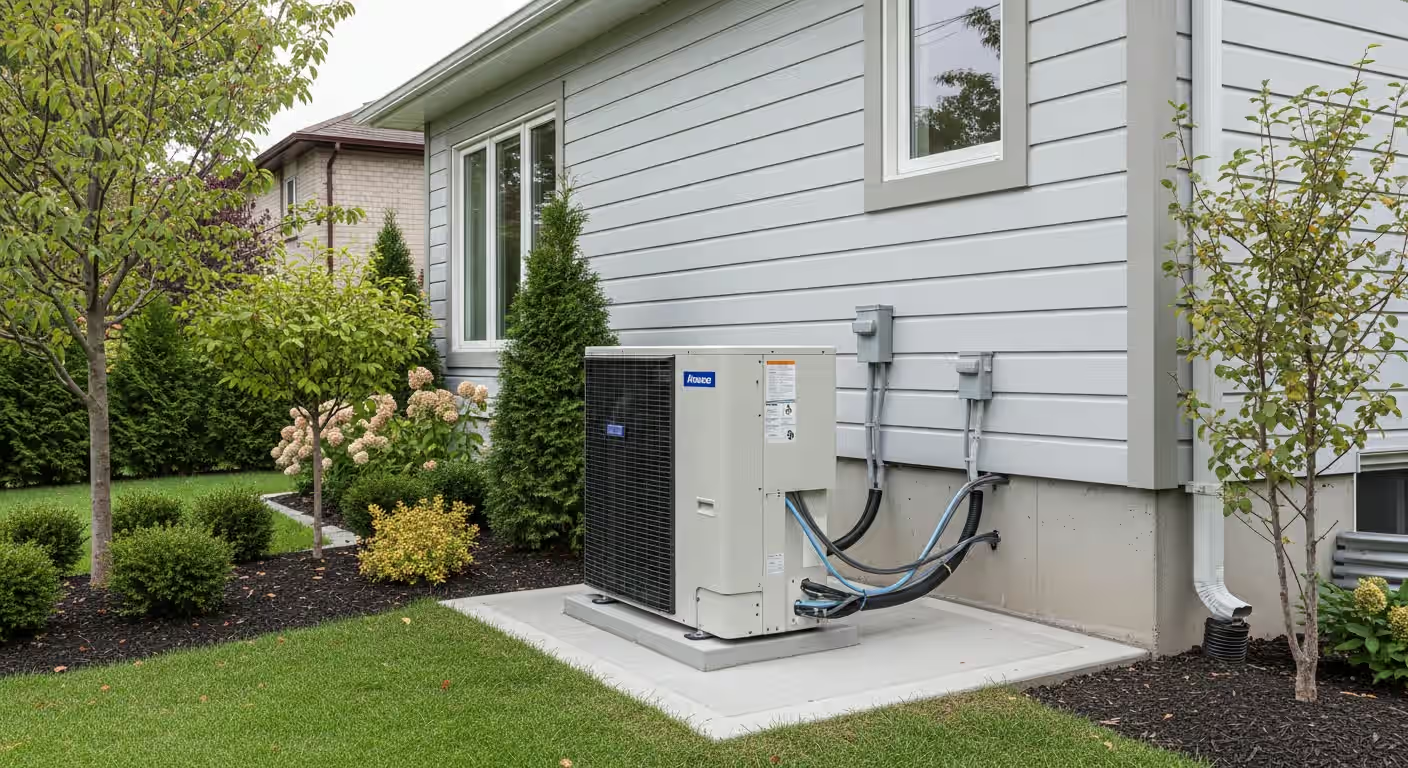
- Exterior wall with weatherproof enclosure or designed-for-outdoor unit
- Mechanical room
- Bedrooms or sleeping areas
- Above egress doors or windows
- In closets without ventilation
- Within 900 mm of operable windows for vented systems (Powerwall, FranklinWH, Enphase are all sealed lithium-iron-phosphate so this is less restrictive than older lead-acid rules but still inspected)
- Detached garage: yes, but must meet operating temperature range. Toronto winters drop below the -20 C minimum of all three brands. An unconditioned detached garage usually requires either a heated mini-split or relocation. We will not install in a space that voids the warranty.
Working Clearances
CEC 64-202 plus manufacturer specs. For a Powerwall 3:
- Front clearance: 900 mm minimum for service access
- Side clearance: 100 mm to wall on each side (per Tesla spec)
- Top clearance: 150 mm above unit
- Bottom clearance: 100 mm above floor for floor-stand install
- Multi-unit clearance: 100 mm between units
For FranklinWH aPower 2 and Enphase IQ Battery 5P, clearance specs differ — we follow each manufacturer's installation manual exactly because the inspector checks against that document.
Need professional renovation?
Call RenoHouse at 289-212-2345 or get a free estimate today.
Get Free Estimate →What the ESA Inspector Checks
Typical inspection sequence on a Toronto Powerwall install:
- 1. Permit posted on site with permit number visible
- 2. Master Electrician licence on file matches Notification of Work
- 3. Manufacturer certification verified on quote and warranty paperwork
- 4. Service entrance and panel sufficient for added load (battery loads on AC side, generation pushing back through panel)
- 5. AC disconnect located within sight of battery, properly labelled
- 6. Conduit type and sizing correct for the wire run (EMT or PVC, no exposed romex)
- 7. Wire gauge matches breaker rating and amperage
- 8. Bonding and grounding continuous from battery enclosure through gateway to main panel ground
- 9. Working clearances measured against CEC 64-202 and manufacturer manual
- 10. Anti-islanding behaviour demonstrated during commissioning (battery isolates from grid during simulated outage within 100ms)
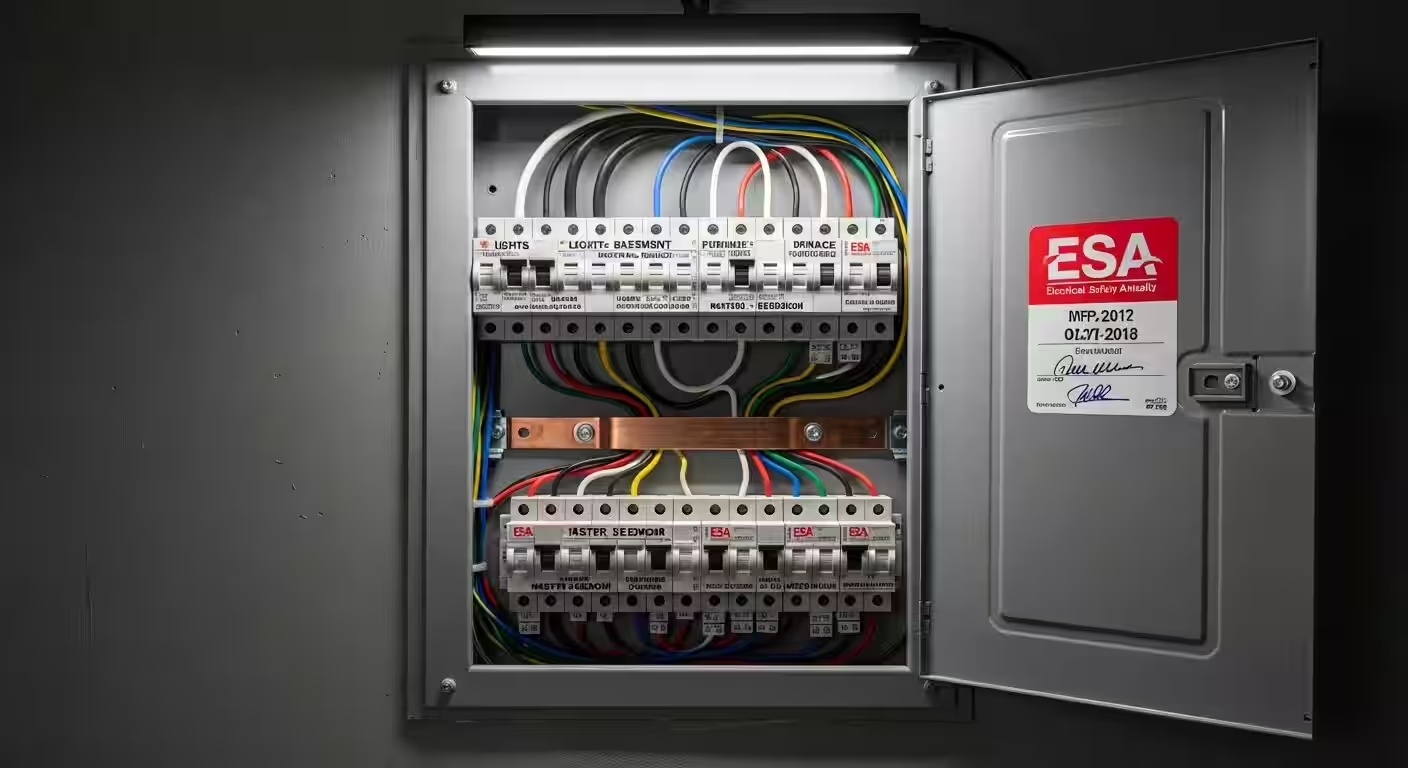
- 11. Labels on disconnect, gateway, and panel meeting CEC 64-218
- 12. System voltage and current ratings consistent with installed equipment
If everything is right, the inspector signs off and the system is officially live. We file the closed permit copy with the customer's house records.
Common First-Inspection Failures (and How We Avoid Them)
After hundreds of inspections, a few failures keep appearing:
Missing or Wrong Labels
Required labels: AC disconnect identification, gateway emergency shut-down sequence, panel directory updated to show battery breaker. We use Tesla/FranklinWH/Enphase OEM label kits that meet the spec.
AC Disconnect Not Within Sight
The disconnect must be within line of sight of the battery and within 6 metres. Hiding it inside the gateway is not compliant. We mount a separate visible disconnect.
Improper Conduit Termination
PVC into a metal box without a bushing. EMT into a panel without a connector. These are quick fixes but they are tagged.
Missing or Undersized Bonding
The bonding wire must be continuous and sized per CEC. A loose lug at the gateway is a fail.
Working Clearance Violation
Battery installed too close to a furnace, water heater, or wall. We measure and photograph clearances before calling ESA.
Service Capacity Insufficient
A 100A panel cannot legally accept a Powerwall 3 with full continuous discharge in many configurations. We require service upgrade verification before install.
Permit Wrong on Date or Scope
Notification of Work filed for "small electrical job" instead of "energy storage system installation under Section 64". Wrong scope = re-permit.
We pre-inspect with a Master Electrician walkthrough every install before calling ESA. Our first-pass approval rate is >95%.
Insurance Implications
Most Ontario home insurance policies require all electrical work to be permitted and inspected. An unpermitted battery can result in:
- Denied claim if a fire originates near the battery
- Cancelled policy if discovered during a renewal inspection
- Delisting from coverage for some specialized policies
We provide the closed ESA permit, certification IDs, and warranty paperwork at handoff so you can update your insurer with proper documentation.
Resale Implications
Toronto home inspectors are increasingly aware of home battery installations. An inspection report flagging "unpermitted electrical alteration — battery system" is a deal-killer or a price-cut for a buyer. The closed ESA permit on file resolves this immediately.
We have been called to inspect and fix unpermitted batteries during pre-listing and the work to bring them to code (often re-running conduit, replacing the disconnect, getting a retro-permit) costs $2,000-$4,000 more than doing it right the first time. Pay the $300 permit up front.
Permit Timeline
For a typical Toronto Powerwall 3 install:
| Day | Activity |
|---|---|
| 0 | Customer signs contract; we file Notification of Work |
| 1-3 | ESA permit confirmed (electronic) |
| 7-14 | Materials staged, install scheduled |
| Install day 1-2 | Mechanical and electrical install |
| Install day 2 | Commissioning |
| Install day 2-5 | ESA inspection scheduled |
| Inspection day | Inspector visits (1-hour appointment, we attend) |
| Inspection day +1 | Closed permit certificate issued |
Full project ESA cycle: 2-4 weeks. Solar pairing extends this by 4-6 weeks for the NRCan and net metering side. See Powerwall with Solar Panels Toronto.
What to Ask Your Installer
Before signing, the installer should be able to provide on quote:
- 1. Master Electrician licence number (verify on ESA website — public registry)
- 2. Manufacturer certification ID (Tesla / FranklinWH / Enphase)
- 3. ESA Contractor Licence number
- 4. Workmanship warranty term (industry standard 1 year, we offer 5)
- 5. Commitment to file Notification of Work before work starts
- 6. Itemized permit fee on quote
If any of these are missing, walk away. There are good Tesla Certified, FranklinWH Authorized, and Enphase Premier installers in Toronto. There is no reason to settle for less.
Book a Compliant Install
We pull every permit, brief every customer on what the inspector will check, and stand behind the install with a 5-year workmanship warranty on top of the manufacturer warranty. Book a home battery consultation for an ESA-compliant project.
Sources & References
Authoritative sources cited in this guide:
- Electrical Safety Authority (ESA) — Ontario electrical regulator
- Ontario Electrical Safety Code — OESC Section 26 / latest amendments
- Canadian Electrical Code Part I (CSA C22.1) — CEC standard
- NRCan — Electric Vehicle Resources — NRCan EV/charging programs
Continue Reading