RenoHouse

# HRV Condensation Prevention Toronto Winter
Quick answer. A correctly installed HRV in a Toronto winter generates a small but steady stream of condensate. A poorly installed HRV generates ice in the heat exchanger, water on the floor, and an exterior hood plugged with frost.A correctly installed HRV in a Toronto winter generates a small but steady stream of condensate. A poorly installed HRV generates ice in the heat exchanger, water on the floor, and an exterior hood plugged with frost. This guide walks through the building science of HRV condensation in cold climates, the two defrost strategies, drainage best practice, and the install details that prevent winter call-backs. For the pillar guide, see HRV & ERV Installation Toronto: The Complete 2026 Guide.
Why HRVs Generate Condensate in Winter
The HRV core transfers heat between the warm, humid exhaust stream (about 21 C, 35-50 percent RH leaving the home) and the cold, dry supply stream (about -10 C to -25 C, 60-80 percent RH outside). When the warm exhaust gives up its heat, it cools toward the dew point. Below the dew point, water condenses on the exhaust side of the core.
A typical Toronto HRV produces:
- 0.5-1.5 litres of condensate per day in mid-winter.
- Almost zero condensate in summer (the exhaust stream is not super-saturated).
- Frost-free shoulder seasons (October, April).
The condensate must drain. If it does not, the core fills, the unit ices, and the home loses ventilation.
Frost in the Heat Exchanger
When outdoor temperature drops below -10 C, the exhaust stream cools fast enough on the cold side of the core that condensate freezes before it can drain. Ice accumulates, narrows the flow path, and eventually blocks the exhaust side entirely.
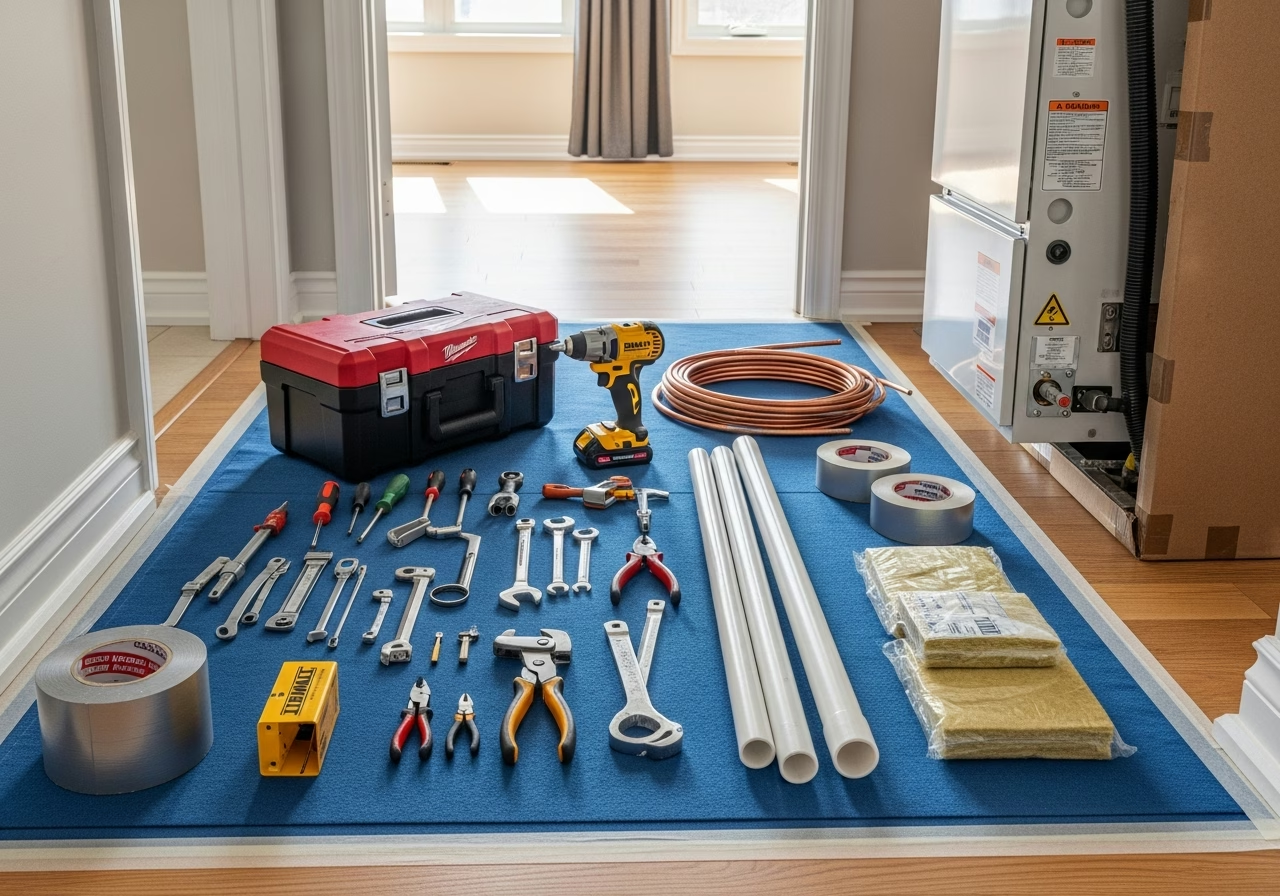
Two defrost strategies prevent this:
Recirculation Defrost
The unit closes the outdoor intake damper and recirculates warm exhaust through the core. Frost melts. Drain catches the runoff. Defrost cycle takes 4-8 minutes, typically every 30-60 minutes when below -10 C.
Used on: Lifebreath RNC 10, Lifebreath 200 ATH, Venmar AVS HRV/HEPA, lower-tier vanEE.
Pros: simple, no extra electrical load.
Cons: ventilation to the home pauses during defrost. Net ventilation rate drops 10-15 percent in deep winter.
Pre-Heat Defrost
A small electric pre-heater (typically 500-1,200 watts) warms incoming outdoor air to about -5 C before it reaches the core. Frost never forms. Ventilation continues uninterrupted.
Used on: Panasonic Intelli-Balance, premium Aldes, some Venmar models.
Pros: continuous ventilation in deep winter. No drop in CO2 or moisture management.
Cons: pre-heater adds 500-1,200 watts of intermittent load.
For most Toronto retrofits, recirculation is acceptable. For tight new builds with high occupancy, pre-heat is worth the premium.
For brand-by-brand defrost detail, see Panasonic vs Lifebreath vs Venmar HRV.
Need professional renovation?
Call RenoHouse at 289-212-2345 or get a free estimate today.
Get Free Estimate →Condensate Drainage Best Practice
Two drainage paths:
Gravity Drain to Floor Drain
The HRV mounts above a basement floor drain. A 1/2-inch insulated PVC line runs from the unit drain port to the floor drain with a P-trap to prevent sewer gas backflow.
Requirements:
- Slope at least 1/4 inch per foot.
- P-trap primed (water in the trap) — important for units that go dormant in summer.
- Insulated line if running through cold space.
- Unit drain pan checked annually for sediment.
Cost: $80-$180 in materials.
Condensate Pump
Where there is no nearby floor drain, a small condensate pump catches drainage and pumps it to a sink, laundry tub, or exterior drain.
Requirements:
- Pump rated 100+ GPH (modest spec for HRV; same units used for AC condensate).
- Safety float switch wired to disable the HRV if the pump fails.
- Drain line insulated where exposed to cold.
Cost: $180-$400 installed.
Exterior Hood Frost
The exterior exhaust hood vents warm humid air. In winter that hood frosts up:
- Initial deposit on the hood louver.
- Ice cone grows over hours of operation.
- Eventually narrows or closes the louver.
Prevention:
- Hood with anti-frost design. Internal damper closes between exhaust pulses; the louver stays warm. Many premium units ship with anti-frost hoods.
- Manual de-icing. Twice-monthly check during deep cold. Brush off accumulated ice.
- Heat trace cable on hood. Premium installs in extreme exposures.
Hood location matters. North-facing exhausts ice faster than south-facing. Avoid placing the exhaust where it will be sheltered from sun and wind.
Intake Hood Considerations
The intake hood does not generate condensate. But two failure modes appear:
- Snow burial. Hood placed under a low overhang or in a drift zone gets buried. Outdoor air supply is choked.
- Re-entrainment. Intake placed within 6 feet of exhaust pulls just-exhausted humid air back in. Frost forms on the intake louvers.
Code minimum separation is 6 feet between intake and exhaust hoods. We recommend 8-10 feet.
For ductwork best practice, see HRV Ductwork Design Toronto Renovation.
Indoor Condensation Around the HRV
A second failure mode: condensation outside the unit, on the cold supply duct after it leaves the HRV but before it has warmed to room temperature.
Causes:
- Uninsulated supply duct in conditioned space.
- Insulation gaps where ducts pass through wall plates.
- High indoor humidity over 55 percent RH plus a cold metal duct surface.
Prevention:
- Insulated flexible duct on all supply runs (R-6 typical).
- Insulation continuous; no gaps at penetrations.
- Vapour barrier on the warm side of insulation.
This is also why fresh-air supply ducts should not be tied into the air-conditioning duct trunk where summer cold metal can drop below the dew point of indoor air.
Where Indoor Window Condensation Comes From (And HRVs Can Make It Worse)
Toronto homeowners often install HRVs to reduce winter window condensation. They are often surprised when an ERV does not change much. Reason: the ERV preserves moisture by design; it is not a dehumidifier.
If the goal is removing winter window condensation, the right answer is:
- HRV (not ERV) to exhaust moisture along with stale air.
- Spot exhaust during cooking and showers (range hood, bath fans).
- Tighter envelope so cold window surfaces are warmer (better windows, frame insulation).
If the goal is balanced ventilation with comfort and IAQ, an ERV plus spot exhaust is the right answer in most homes. The window condensation will remain modest as long as indoor RH stays under 40-45 percent in deep winter.
For the HRV-versus-ERV decision, see HRV vs ERV Toronto: Which to Choose.
Annual Maintenance for Drainage
Once a year, before the first hard frost:
- Pour a cup of warm water into the drain pan to flush the trap.
- Inspect the drain line for kinks or sediment.
- Verify the P-trap holds water.
- Check the condensate pump (if installed) by manually filling the reservoir.
- Inspect the exterior hood louvers for damage.
Cost: $0-$50 in materials, 30 minutes of homeowner time, or $180-$280 for a service visit.
For the maintenance schedule, see HRV Maintenance and Filter Cleaning Toronto.
Common Mistakes Summary
- 1. No P-trap on the drain line.
- 2. Drain line uninsulated through cold space.
- 3. No condensate pump where there is no gravity drain.
- 4. Exterior intake and exhaust within 6 feet of each other.
- 5. Exterior hoods placed in snow-drift zone.
- 6. No anti-frost hood on a deep-cold exposure.
- 7. Uninsulated supply ducts dropping below dew point.
- 8. ERV chosen when winter dehumidification was the goal.
- 9. Drain pan never checked for sediment.
- 10. Defrost cycle disabled to push CFM higher (will cause icing).
Final Word
Winter condensation and frost in HRVs are predictable and manageable. The unit selection (recirculation versus pre-heat defrost), the drainage path, the exterior hood location, and the duct insulation are the four levers. RenoHouse coordinates with HVAC-licensed installers who handle the install detailing, and with TSSA-registered design subs on the ductwork plan.
Book at /services/hvac-energy/hrv-erv-installation. For deeper reads, see HRV & ERV Installation Toronto: The Complete 2026 Guide, Panasonic vs Lifebreath vs Venmar HRV, HRV Maintenance and Filter Cleaning Toronto. Related: HVAC Thermal Audit (FLIR).
Sources & References
Authoritative sources cited in this guide:
- NRCan — Heating and Cooling — NRCan heating/cooling guidance
- Canada Greener Homes Loan — Federal energy retrofit financing
- CSA F326 (Mechanical Ventilation) — Residential HRV/ERV standard
- Enbridge Home Renovation Savings (HRS) program — Provincial heat pump rebate
- TSSA Fuel Safety — Ontario fuel/gas regulator
Continue Reading