RenoHouse

# HRV vs Bath Fan vs Range Hood Toronto: Why You Need All Three
Quick answer. Toronto homeowners often ask whether an HRV replaces the bath fan or the range hood. Short answer: no, they do different jobs and they work as a system. This guide walks through the three ventilation roles, what happens when one is missing, and how to integrate them on a renovation.Toronto homeowners often ask whether an HRV replaces the bath fan or the range hood. Short answer: no, they do different jobs and they work as a system. This guide walks through the three ventilation roles, what happens when one is missing, and how to integrate them on a renovation. For the pillar guide, see HRV & ERV Installation Toronto: The Complete 2026 Guide.
The Three Ventilation Roles
Range Hood: High-Volume Cooking Exhaust
A range hood handles 250-600 CFM of high-grease, high-particulate, high-moisture exhaust during cooking. It must vent directly to exterior. Filter (mesh or baffle) traps grease before it enters the duct.
Key spec: minimum 250 CFM for a typical Toronto kitchen, 400-600 CFM for high-output gas ranges or open-concept kitchens. Make-up air (separate intake) required for hoods over 400 CFM by code in many Toronto applications.
Bath Fan: Spot Moisture Exhaust
A bath fan handles 80-150 CFM of moisture-laden air during showers and baths. Runs on a timer or humidity sensor. Vents to exterior on its own duct (or, in some designs, ties into HRV exhaust).
Key spec: 80 CFM minimum per bathroom; 100-110 CFM for full bathrooms with shower; humidity-sensing or timer-based control.
HRV/ERV: Whole-Home Balanced Background Ventilation
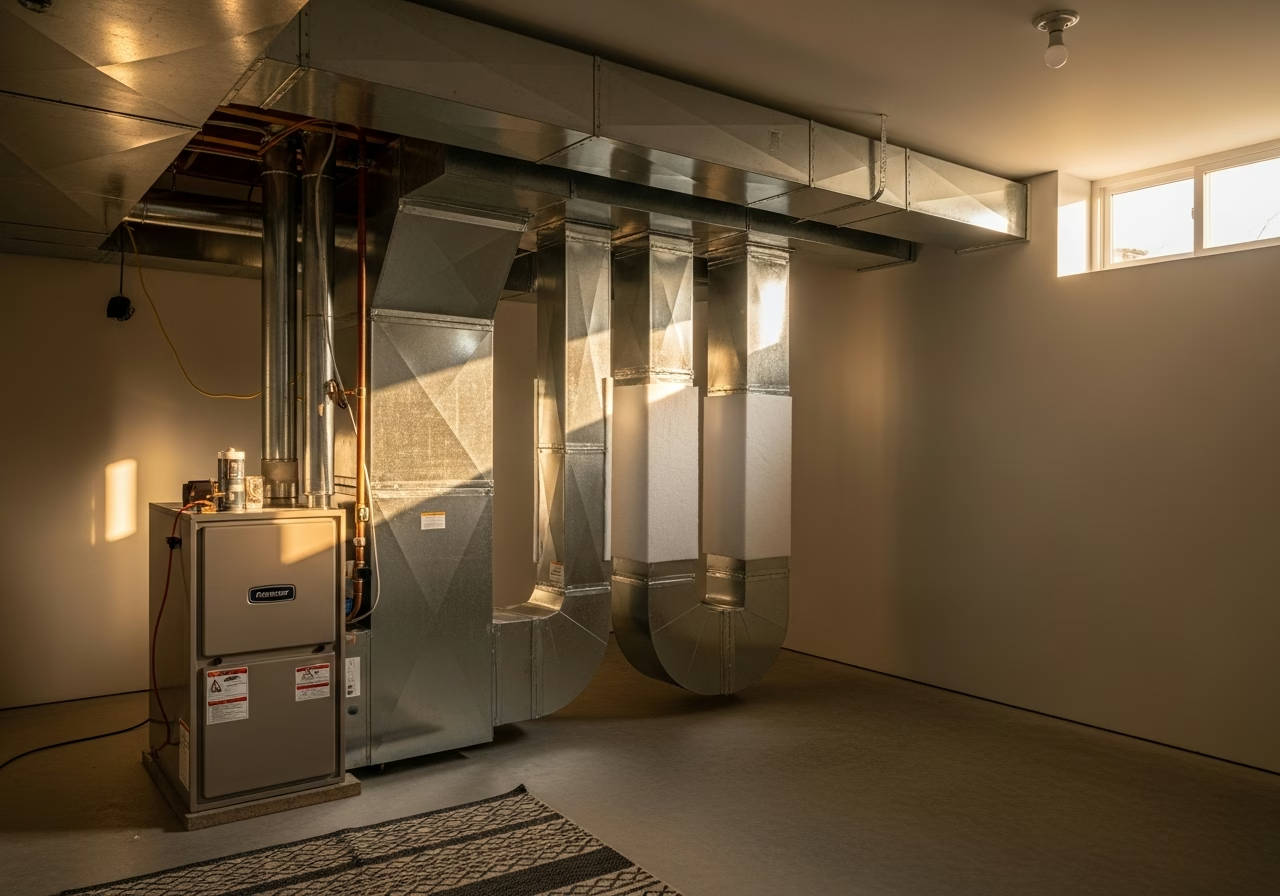
The HRV runs continuously at 60-200 CFM, supplying fresh outdoor air to bedrooms and living areas while exhausting stale air from main exhaust points. Heat and (with ERV) moisture is recovered between the streams.
Key spec: 60-200 CFM continuous, balanced supply and exhaust within 10 percent, 70-90 percent SRE.
Why You Need All Three
The three roles do not overlap.
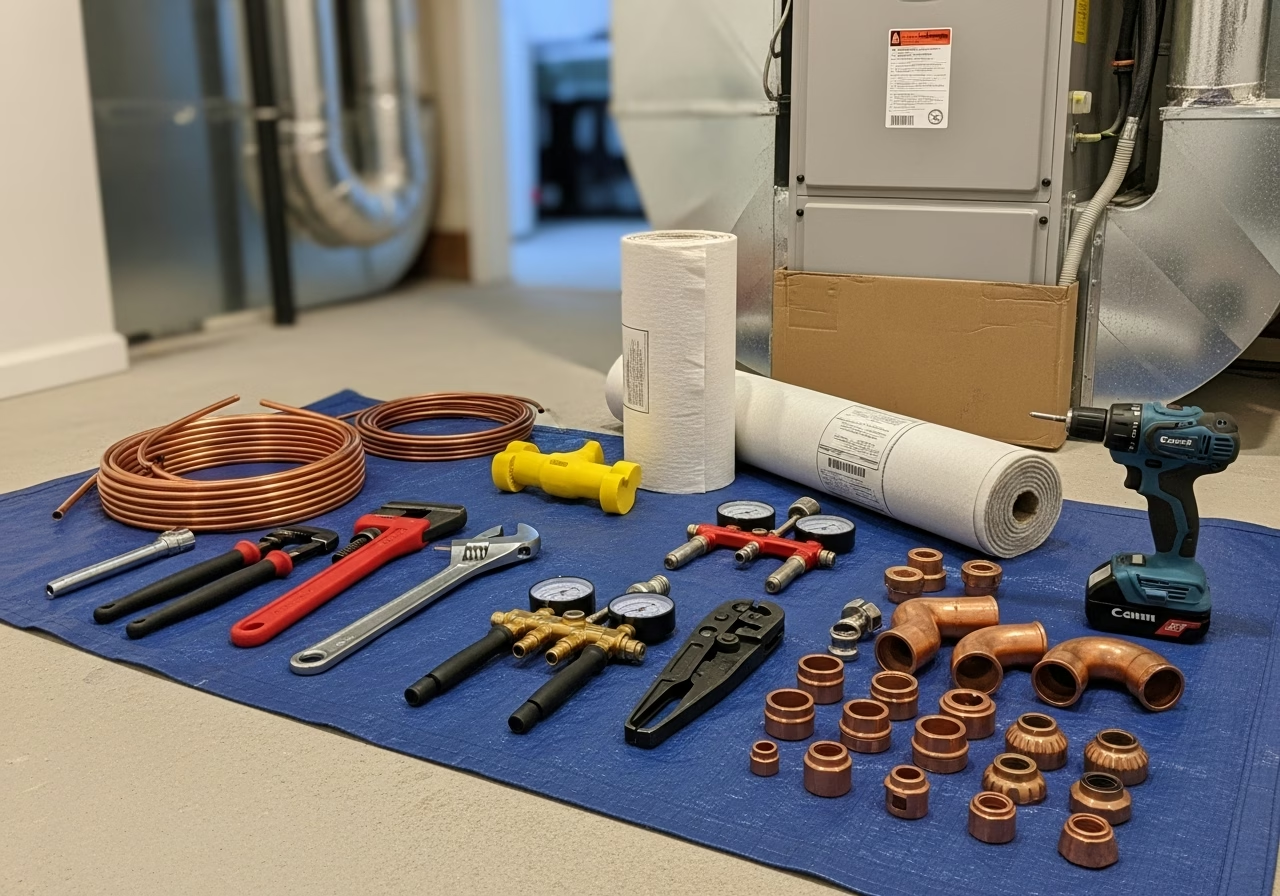
- The HRV handles continuous low-CFM background ventilation for IAQ and code compliance.
- The bath fan handles spot moisture spikes during showers (the HRV cannot economically handle 100 CFM moisture spikes for 30 minutes — it would over-ventilate the rest of the home).
- The range hood handles high-grease, high-particulate cooking exhaust that would foul the HRV core in months.
Skipping any of the three creates failure modes:
| Missing Role | Symptom |
|---|---|
| No HRV | Stuffy bedrooms, high CO2, lingering smells, OBC non-compliance |
| No bath fan | Mildew on bathroom ceiling, window condensation in adjacent rooms |
| No range hood | Grease film on cabinets, persistent cooking smells, fouled HRV |
Common Toronto Mistake: Tying Range Hood Into HRV
Some Toronto installers, in an attempt to reduce the number of exterior penetrations, route the range-hood exhaust through the HRV core. This destroys the HRV.
What happens:
- Cooking grease coats the heat exchanger.
- Recovery efficiency drops 30-50 percent within 6-12 months.
- The unit becomes a fire risk.
- Manufacturer warranty is voided.
Fix: range hood always exhausts directly to exterior on its own duct. The HRV picks up background kitchen air from a register placed away from the cooktop, not the cooking plume itself.
For ductwork design detail, see HRV Ductwork Design Toronto Renovation.
Need professional renovation?
Call RenoHouse at 289-212-2345 or get a free estimate today.
Get Free Estimate →Common Toronto Mistake: Tying Bath Fan Into HRV (Maybe OK, Maybe Not)
Bath fans can be tied into the HRV exhaust path under specific conditions:
- The bathroom exhaust grille is part of the HRV's continuous exhaust at low CFM (30-50 CFM background).
- A boost switch triggers the HRV to high-CFM exhaust during showers (boost mode 100-150 CFM).
- The HRV supply pressurizes the rest of the home so bathroom moisture does not migrate.
Done well, this is the OBC 2024 reference design. Done poorly (no boost capacity, undersized HRV), the bathroom does not clear and mildew appears.
If the HRV is undersized for boost loads, keep a separate bath fan as backup. Many Toronto installs use both: HRV continuous extract at 30 CFM plus a 100 CFM bath fan with manual override.
The Make-Up Air Question
A range hood pulling 400+ CFM creates a meaningful negative pressure in a tight home. Without make-up air supply, three things can happen:
- Back-drafting on gas furnace, water heater, or fireplace flues (carbon monoxide risk).
- Sucking outdoor air through every leak (defeats the envelope).
- Window seals whistling.
Toronto code (OBC 2024) requires make-up air for kitchen exhaust over 400 CFM in tight new builds, in many cases tempered (heated) make-up air. Make-up air units (Broan MUA, Lifebreath MUA) supply matched CFM during cooking events.
Practical thresholds:
- 250-400 CFM range hood: typically no make-up air required if home is leaky enough.
- 400-600 CFM range hood: tempered make-up air strongly recommended; required in new builds.
- 600+ CFM range hood: tempered make-up air required.
Note: an HRV does not provide make-up air for a range hood. The CFM is wrong (HRV maxes at 200 CFM) and the speed of response is wrong.
Integrated System Layout
A well-integrated Toronto home in 2026 looks like this:
- Range hood: 350-600 CFM, direct exhaust to exterior, separate make-up air unit if over 400 CFM.
- Bath fans: 100-110 CFM in each full bath, humidity-sensing control. (Or HRV bathroom extracts with boost.)
- HRV/ERV: 100-200 CFM continuous, supply to bedrooms and living areas, exhaust from kitchen background, bathrooms (if integrated), and laundry.
- Dryer: separate exhaust direct to exterior, never tied into anything.
Five exterior penetrations: HRV intake, HRV exhaust, range hood, dryer, sometimes one bath fan if not integrated.
For the OBC walkthrough, see OBC 2024 HRV Requirement Toronto Explained.
Sound Levels: A Toronto Comfort Issue
Each ventilation device has a sound level:
- HRV at low speed (continuous): 0.4-1.0 sones (barely audible).
- HRV at high speed (boost): 1.5-3.0 sones (noticeable).
- Bath fan: 0.5-3.5 sones (modern quiet fans 0.5-1.5).
- Range hood at low: 1.5-3.0 sones.
- Range hood at high: 4-9 sones (loud).
For continuous operation, choose the quietest unit. For high-speed events (cooking, showering), 30-60 minutes of louder operation is acceptable.
Filtration Across the System
Each device has different filtration:
- HRV supply: MERV 8 standard, MERV 13 recommended, HEPA premium.
- HRV exhaust: typically a coarser screen for grease and lint.
- Range hood: mesh or baffle filter for grease (no fine filtration).
- Bath fan: typically no filtration.
For allergy households, the HRV supply filtration is the high-leverage spot. Upgrade from MERV 8 to MERV 13 or HEPA.
For the HVI rating detail, see HRV Energy Recovery Efficiency Explained.
What Happens in Older Toronto Homes
Many pre-2000 Toronto homes have:
- A range hood that recirculates (no exterior duct).
- One bath fan that vents into the attic (against code).
- No HRV at all.
Renovation upgrade path:
- 1. Replace recirculating range hood with directly-vented hood.
- 2. Re-route bath fan exhaust to exterior (not attic).
- 3. Add HRV/ERV when the envelope is tightened during the same renovation.
The combined retrofit is typically $5,500-$9,500 and addresses three IAQ problems at once.
For costs, see HRV Installation Cost Toronto Comparison.
Final Word
The three ventilation devices do not compete. They are complementary. Toronto homeowners building or renovating in 2026 should plan for all three: range hood for cooking, bath fans for showers, HRV for everything else. RenoHouse coordinates the integrated design with HVAC-licensed installers and TSSA-registered design subs.
Book at /services/hvac-energy/hrv-erv-installation. For deeper reads, see HRV & ERV Installation Toronto: The Complete 2026 Guide, HRV Ductwork Design Toronto Renovation, OBC 2024 HRV Requirement Toronto Explained. Related: HVAC Thermal Audit (FLIR).
Sources & References
Authoritative sources cited in this guide:
- NRCan — Heating and Cooling — NRCan heating/cooling guidance
- Canada Greener Homes Loan — Federal energy retrofit financing
- CSA F326 (Mechanical Ventilation) — Residential HRV/ERV standard
- Enbridge Home Renovation Savings (HRS) program — Provincial heat pump rebate
- TSSA Fuel Safety — Ontario fuel/gas regulator
Continue Reading