RenoHouse

# Portable vs Standby Generator: The Toronto Decision in 2026
Quick answer. A portable generator with a manual interlock kit at the panel costs $1,500-$2,800 turnkey installed. A whole-home natural-gas standby generator costs $11,500-$13,000 turnkey installed. The 7-9x cost gap is real and the choice between the two is one of the genuine cost-vs-functionality tradeoffs in the Toronto resilience-retrofit market.A portable generator with a manual interlock kit at the panel costs $1,500-$2,800 turnkey installed. A whole-home natural-gas standby generator costs $11,500-$13,000 turnkey installed. The 7-9x cost gap is real and the choice between the two is one of the genuine cost-vs-functionality tradeoffs in the Toronto resilience-retrofit market. This post is the honest framework.
For the broader standby generator context, start with our Standby Generator Installation Toronto Complete Guide.
RenoHouse Position
We coordinate licensed Master Electricians (ECRA) for both portable interlock installs and whole-home standby installs. The portable side is a smaller scope — one trade, no gas connection, no concrete pad, one ESA inspection. The standby side is the multi-trade project we have written about across this cluster. Our recommendation depends on the homeowner's actual needs, not on which margin is bigger for us.
What a Portable Setup Looks Like
A portable generator setup has four components:
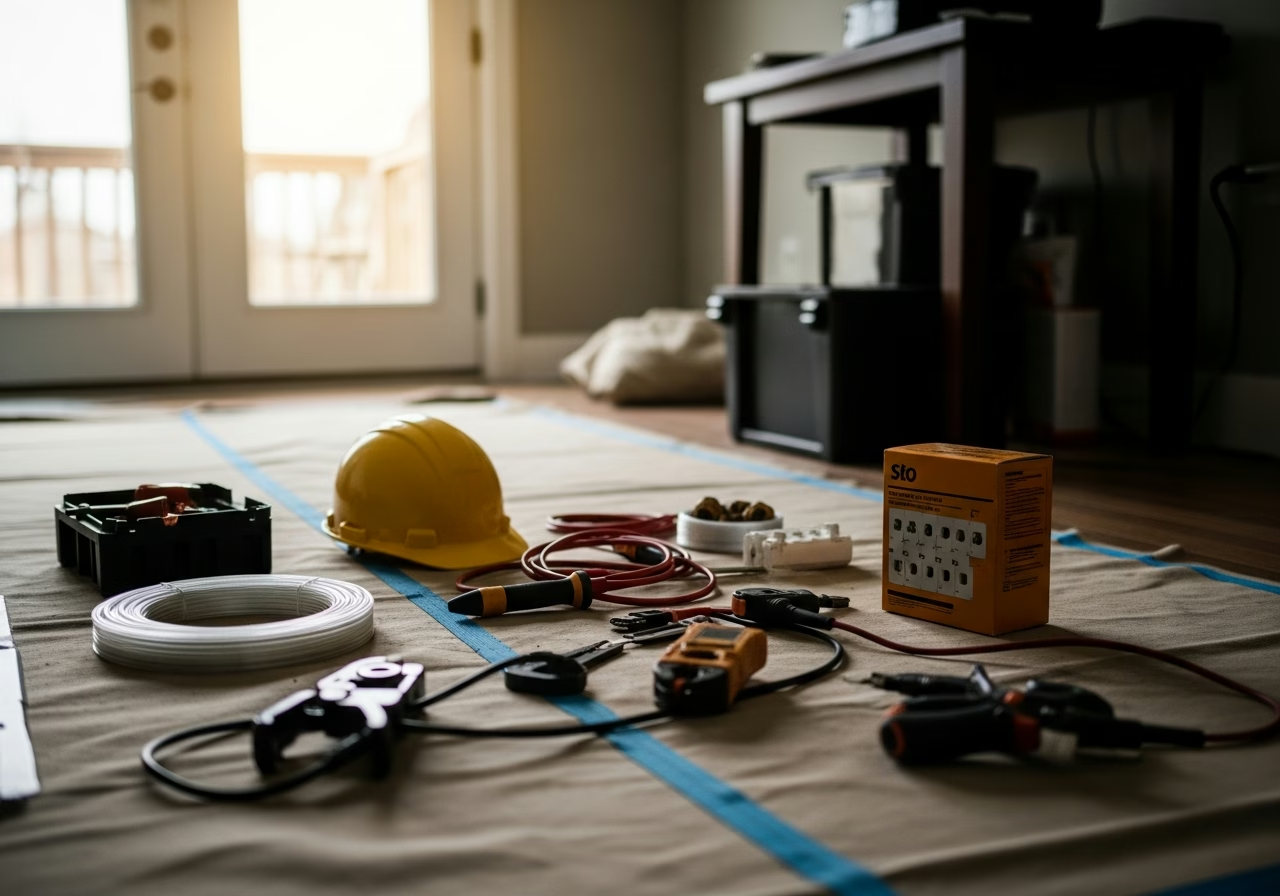
- The portable unit. A 5,500W to 9,500W gasoline generator (Honda EU7000iS, Generac GP6500, Champion 9500-watt dual-fuel). Cost: $900-$2,500.
- An inlet box. An exterior-mounted 30A or 50A inlet (the L14-30 or L14-50 connector). Wired into a generator-feed circuit at the panel.
- A manual interlock kit at the panel. A sliding plate that prevents the main breaker and the generator-feed breaker from being on simultaneously. Code-compliant alternative to a transfer switch for portable use. Cost: $50-$150 plus electrician install.
- A heavy-duty extension cord. L14-30 or L14-50 cord, typically 10-25 ft, from the portable unit to the inlet box. Cost: $80-$200.
Total turnkey install (excluding the portable unit itself): $1,200-$1,800 for the inlet, interlock, panel breaker, and ESA-permitted electrician work.
Total turnkey install (including a mid-range 7,500W portable): $2,500-$4,000.
How a Portable Setup Operates
When the power goes out:
Need professional renovation?
Call RenoHouse at 289-212-2345 or get a free estimate today.
Get Free Estimate →- The owner walks to the garage or shed and rolls the portable to the side yard.
- The owner fuels the unit (typically gasoline; some dual-fuel units accept propane from a 20-lb tank).
- The owner starts the unit (electric start or pull start, depending on model).
- The owner connects the L14-30 cord between the unit and the inlet box.
- The owner walks to the panel, slides the interlock plate, turns off the main breaker, and turns on the generator-feed breaker.
- Critical loads on the manual interlock-selected breakers come up. Other breakers stay on but are de-energized.
- The owner manages refueling every 6-12 hours throughout the outage.
When the power comes back:
- The owner walks to the panel, turns off the generator-feed breaker, slides the interlock plate, turns on the main breaker.
- The owner walks to the unit, shuts it down, lets it cool, drains it of gasoline (or stabilizes the fuel for next outage).
- The owner rolls it back into storage.
This works. People do it during every Toronto storm. It is also a meaningful operational burden during a multi-day winter event.
The Cost Gap
Realistic Toronto 2026 turnkey pricing:
- Portable with interlock and inlet (Tier 0): $2,500-$4,000 including a 7,500W portable.
- Standby Tier 1 essential-circuits (7.5-11 kW): $7,500-$9,500.
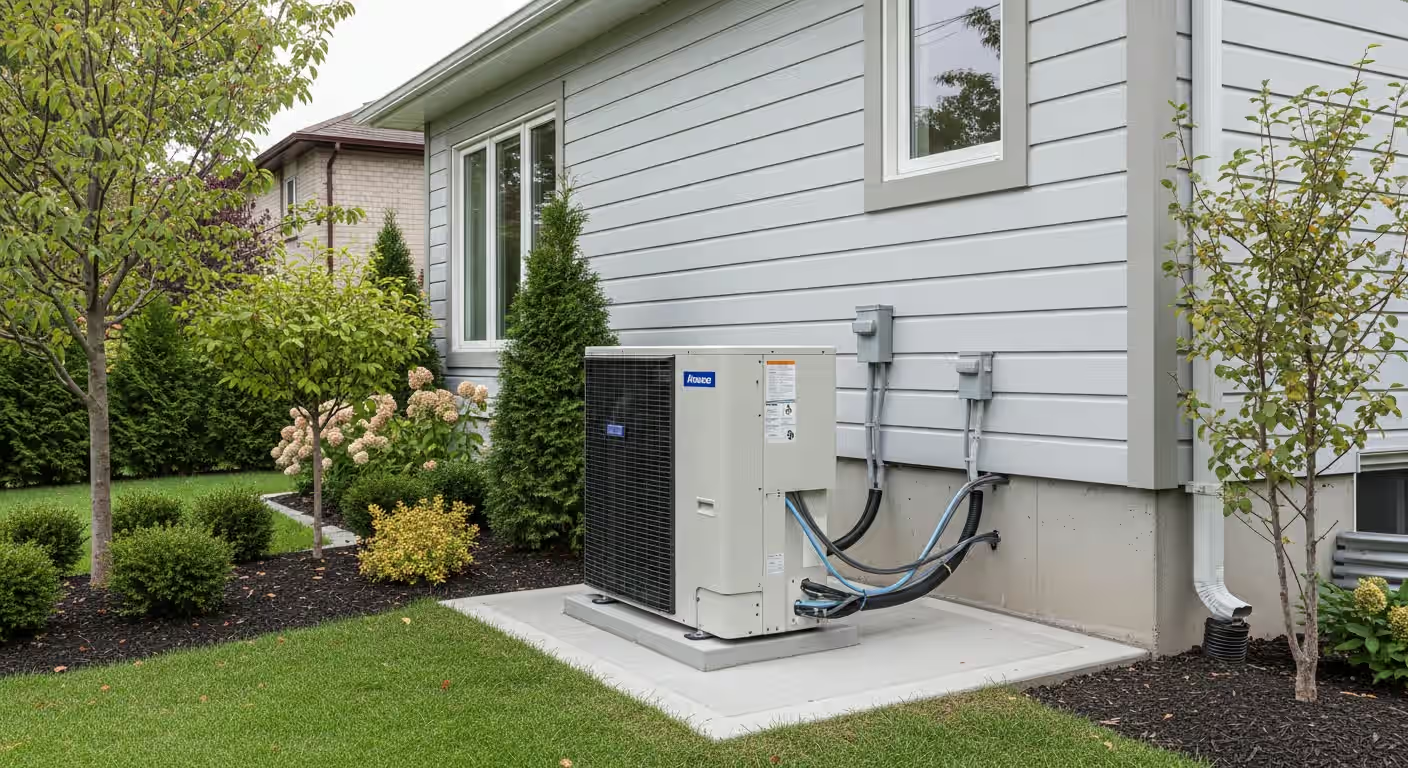
- Standby Tier 2 whole-home with load management (14-16 kW): $11,500-$13,000.
The portable setup is roughly $5,000-$8,500 cheaper than a Tier 1 standby and $9,000-$10,500 cheaper than a Tier 2 standby.
When Portable Wins
Portable wins in five clear scenarios:
- Tight budget. $2,500-$4,000 is a meaningful entry point for outage protection. If the choice is between a portable now or no protection for 3-5 years, portable is the right answer.
- Owner is reliably home during outages. Retired homeowners, work-from-home homeowners, single-family households where one adult is consistently around. The manual operating model fits the household.
- Outages are short and infrequent. Toronto neighbourhoods that see 1-2 outages per year of less than 8 hours each can be served by a portable unit without much friction.
- Garage or shed storage available. Portable units do not store well in cramped basements or in finished living space. The right home has a garage, a covered porch, or a backyard shed.
- Renter or short-term homeowner. A portable generator goes with the household when the home sells. A standby generator stays with the home and may not return its full cost on resale (though it does add some value — see Generator ROI: Toronto Resale Value and Insurance Math).
When Standby Wins
Standby wins when the home meets any of these conditions:
- Owner is frequently away. Business travel, snowbird in Florida, work commute that pulls the household out of the home for 10+ hours a day. A portable that requires the owner to be home cannot protect against the storms that hit when nobody is home.
- Heat pump as primary heating. A portable in the 7,500W class cannot run a 4-ton heat pump under load, particularly with aux strip cycling at -20C. The home goes cold during winter outages.
- Sump pump in a finished basement. A portable that requires manual startup will not protect the basement during a 3 a.m. outage. By the time the owner notices the power is out, water is already in the basement.
- Multi-day outage exposure. A portable on gasoline burns 5-15 gallons per day depending on load. A 5-day outage requires 25-75 gallons of stored gasoline, which is a fire hazard, an aging-fuel problem, and a refuel challenge during a region-wide emergency. A natural-gas standby has no equivalent constraint.
- Owner cannot or will not roll, fuel, and start a portable. Older homeowners, owners with mobility issues, owners who travel for work, owners who simply do not want the operational responsibility.
The Safety Layer
The portable interlock kit is a code-approved solution, but only when installed by a licensed electrician under an ESA permit. The DIY scenarios that get into trouble:
- Improvised back-feeding through a dryer outlet. Plugging a portable into a dryer outlet with a male-to-male cord ("suicide cord") is illegal, dangerous, and a fire and electrocution risk. This is the single biggest cause of generator-related electrical incidents in Ontario.
- Running the portable in a garage or under an overhang. Carbon monoxide poisoning is the leading cause of generator-related deaths during Toronto outages. Portables must run outdoors, well clear of windows and doors, period.
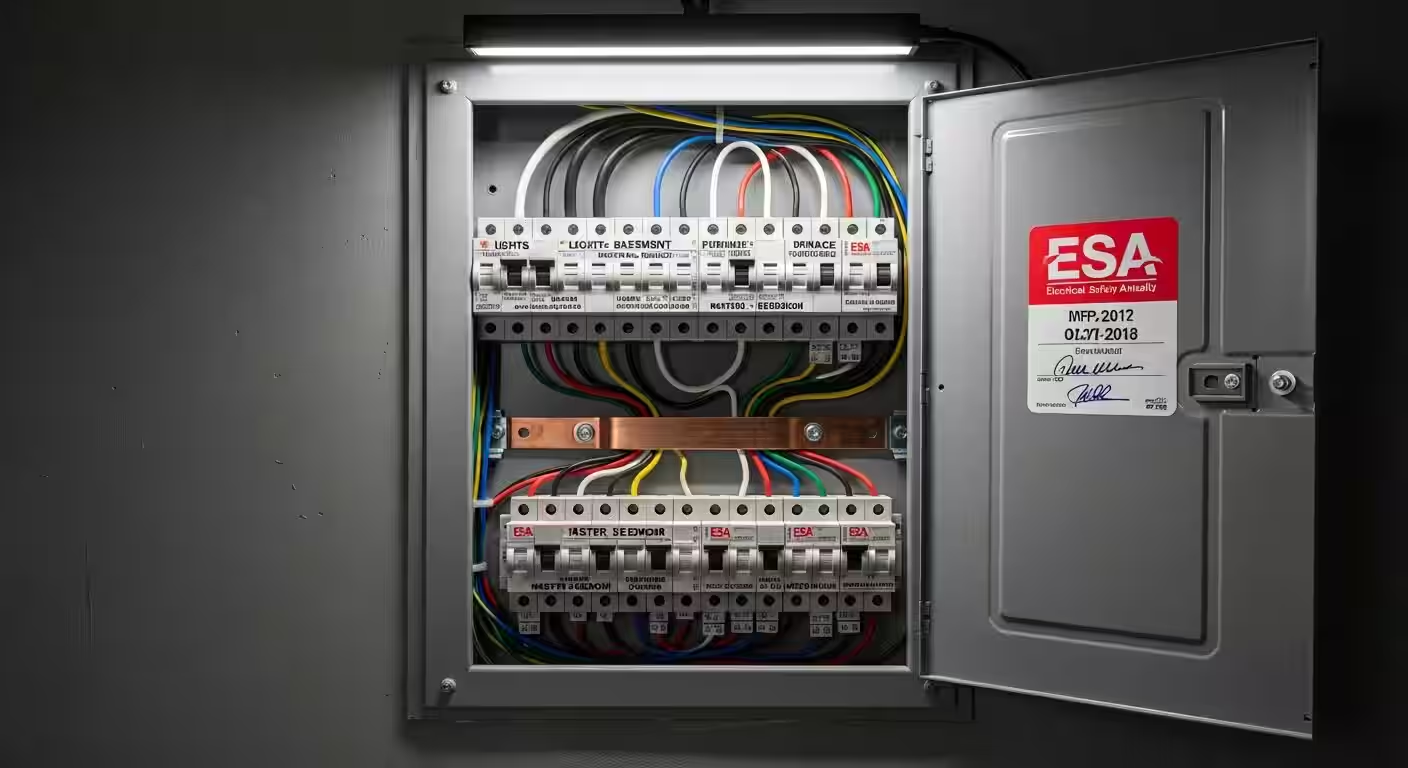
- Skipping the ESA inspection. A portable inlet and interlock install without an ESA permit has no legal status. The home insurer can refuse claims tied to electrical incidents on the unpermitted work.
A licensed Master Electrician installs the inlet, the interlock, and pulls the ESA permit for any portable setup we coordinate. The ESA inspection signs off the install.
The Operational Reality at -20C
A scenario that often clarifies the decision: a 5 a.m. outage in January at -18C with 30 cm of snow on the ground. The household is asleep.
- Portable scenario: the alarm clock fails because the bedroom outlet is dead. The household wakes when the home cools to 12C around 9 a.m. The owner gets dressed in the cold, finds the generator in the back of the garage under summer patio furniture, drags it through 30 cm of snow to the side yard, fuels it (assuming the gasoline can did not freeze or sour over the summer), starts it, runs the cord to the inlet, flips the interlock. Best case: an hour and a half of cold work. Worst case: the generator does not start because it has not been run since the September gas cleanup.
- Standby scenario: the unit senses the outage at 5 a.m., starts at 5:01, transfers at 5:02, the home stays warm. The household wakes to a normally functioning home with a ticker on the thermostat saying "running on backup." No work, no cold morning, no risk.
This is the asymmetric operational scenario that drives the standby preference for owners who can afford it.
Our Default Toronto Recommendation
For 2026 we recommend:
- Tight budget, reliably home, gas heat: portable with manual interlock kit. Honest, code-compliant, $2,500-$4,000.
- Average Toronto detached, gas heat, no EV: Tier 2 standby (14-16 kW). $11,500-$13,000.
- Heat pump or planning conversion: Tier 2 or Tier 3 standby with smart load management. $13,000-$16,500.
- Frequent traveler or absentee owner: Tier 2 standby minimum, regardless of home size.
- Short-term holding period (under 5 years): portable, since the standby will not fully return its value on resale.
For either setup, RenoHouse coordinates the licensed Master Electrician under an ESA permit. Visit our standby generator installation service page for the standby option, or our EV charger bundle service if you are pairing electrical work. For the cost detail by size class, see Standby Generator Cost Toronto: 2026 Pricing by kW Size. For the whole-home vs partial decision within the standby class, see Whole-Home vs Partial Generator: The Toronto Decision.
Sources & References
Authoritative sources cited in this guide:
- Electrical Safety Authority (ESA) — Ontario electrical regulator
- Ontario Electrical Safety Code — OESC Section 26 / latest amendments
- Canadian Electrical Code Part I (CSA C22.1) — CEC standard
- NRCan — Electric Vehicle Resources — NRCan EV/charging programs
Continue Reading