RenoHouse

# Powerwall Installation Mistakes in Toronto: What to Avoid
Quick answer. We get calls every month from Toronto homeowners with home battery problems — usually three or four months after another installer finished the job. The patterns are predictable, the fixes are expensive, and almost all of them are avoidable if you know what to look for.We get calls every month from Toronto homeowners with home battery problems — usually three or four months after another installer finished the job. The patterns are predictable, the fixes are expensive, and almost all of them are avoidable if you know what to look for.
Need professional renovation?
Call RenoHouse at 289-212-2345 or get a free estimate today.
Get Free Estimate →This is the field-experienced list of mistakes from an ESA Master Electrician + Tesla Certified Installer + Enphase Premier + FranklinWH Authorized crew. For the full battery context, see the Home Battery & Powerwall Toronto Complete Guide. For the permit and code side, see Home Battery Permit & ESA Toronto.
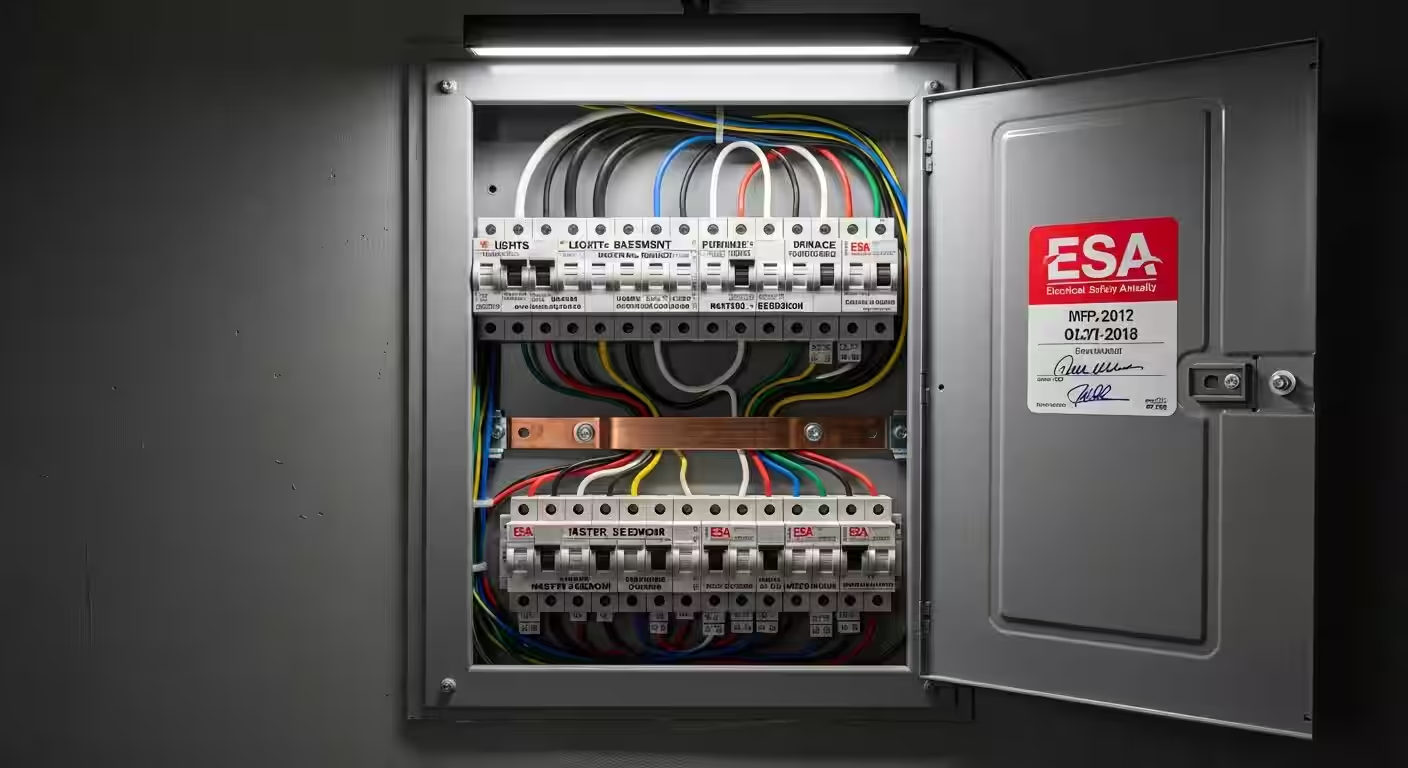
Mistake 1: Skipping the ESA Permit
What happens: A handyman or unlicensed contractor installs a Powerwall without filing Notification of Work. Cheaper quote, faster turnaround, no inspector visit. Why it's a problem:- Voids your home insurance coverage in event of a fire near the battery
- Voids the manufacturer warranty (most require ESA-compliant install)
- Flagged on home inspection during resale, killing or discounting your sale
- If discovered later, retro-permit costs $2,000-$4,000 in re-work
Mistake 2: Undersized Electrical Service
What happens: A 100A panel gets a Powerwall 3 added without service upgrade. Inspector signs off because the battery breaker fits, but the panel is now over-margin during peak loads.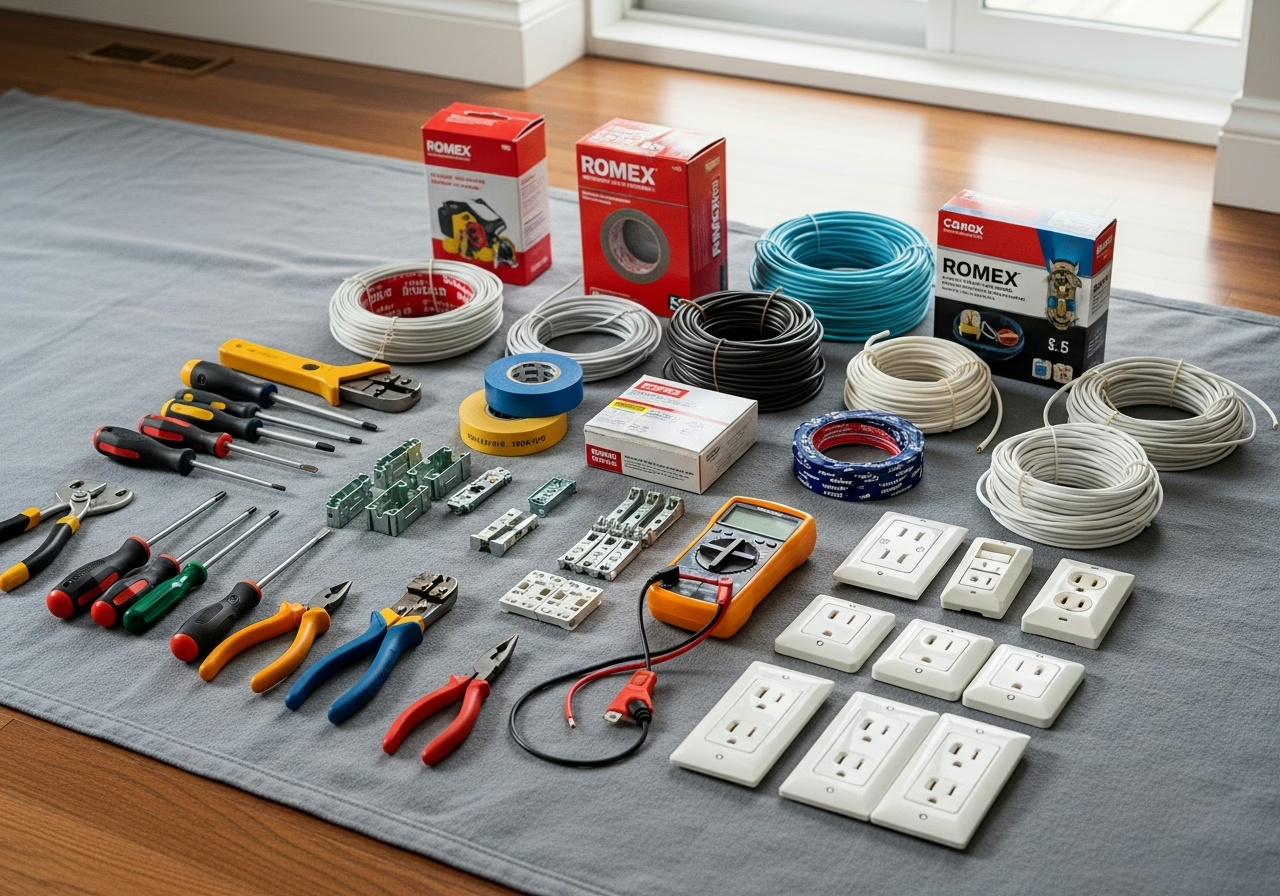
- Panel runs hot, breakers trip during AC + battery discharge + cooking
- During grid charging at 60A continuous, the rest of the house has very little headroom
- ESA may require remediation under Section 8 (panel sizing) on a follow-up audit
Mistake 3: Battery in Unconditioned Detached Garage
What happens: Customer wants the battery out of the basement, installer puts it in the detached garage. Looks fine in summer. Why it's a problem:- Toronto winters drop the garage below -20 C — the minimum operating temperature for Powerwall 3, FranklinWH, and Enphase
- Battery enters cold-weather lockout, will not charge or discharge
- Warranty does not cover damage from out-of-spec operating temperature
- Capacity degradation accelerates with cold cycling
Mistake 4: Missing or Cheap Surge Protection
What happens: Installer skips the Type 2 SPD on the grid input to save $200-$300. Why it's a problem:- Toronto's grid sees real lightning and switching surges
- A nearby strike or transformer event can fry a $11,000 inverter
- Manufacturer warranty often excludes "transient surge damage"
Mistake 5: Bad Wi-Fi Coverage at the Gateway
What happens: Gateway gets installed in the deep basement utility room. Wi-Fi from the house router is one bar. Connection drops constantly. Why it's a problem:- Without Wi-Fi, the battery cannot pull ULO rate schedules from the cloud
- Firmware updates fail
- App control is unreliable
- Tesla customer support cannot remotely diagnose issues
Mistake 6: AC Disconnect Hidden or Wrong
What happens: Installer mounts the AC disconnect inside the gateway enclosure or inside an electrical room. Inspector signs off if rushed, but it is not code. Why it's a problem:- CEC 64-208 requires the disconnect to be readily accessible and within sight of the battery
- First responders need clear shut-down access
- Fails on resale inspection
Mistake 7: Powerwall 2 Installed Without Surge Protection on the Solar Side
What happens: Older Powerwall 2 installs (2020-2022) sometimes skipped DC surge on the solar combiner. Why it's a problem:- Lightning-induced surge on the DC side fries the inverter and battery
- Powerwall 3 has internal DC surge protection (better) but Powerwall 2 with external string inverter does not always
Mistake 8: Wrong Schedule Programmed (or No Schedule at All)
What happens: Installer commissions the battery in "self-consumption" mode and never sets up Time-Based Control for ULO arbitrage. Why it's a problem:- You are paying for the battery's arbitrage capability and not getting it
- Customer thinks battery is "not saving money" — installer left money on the table
Mistake 9: Conduit Run Through Conditioned Space Without Fire-Stopping
What happens: Wire runs from gateway to subpanel through bedroom walls or finished space. Drywall holes get patched but no fire-rated caulk used at penetrations.
- Code requires fire-stopping at floor and rated-wall penetrations
- Insurance issue if fire originates and travels along the wire path
- Inspector tags it on close-out
Mistake 10: Using a Generic Electrician Without Manufacturer Certification
What happens: A licensed Master Electrician installs a Powerwall without holding Tesla Certified Installer status. Permit is fine. Install passes inspection. Why it's a problem:- Manufacturer warranty is voided for non-certified installs
- If the inverter fails in year 4, Tesla denies the claim
- Customer is stuck with a $11,000 paperweight
Mistake 11: Whole-Home Backup Without Smart Load Management
What happens: Installer wires the entire panel to the battery side, no load shedding or smart panel. Customer expects "the whole house" to run during an outage. Why it's a problem:- AC + electric range + EV charger simultaneously can exceed 11.5 kW
- Battery throttles or trips during peak load
- Customer perceives battery as broken
Mistake 12: No Anti-Islanding Test Documented
What happens: Commissioning rushes through grid-loss simulation without documenting the transition time and reconnection behaviour. Why it's a problem:- If the system fails to island during a real outage, no proof it ever worked
- Toronto Hydro requires anti-islanding compliance for grid-connected systems
- ESA inspector may want to see test record
Mistake 13: Battery Stack Without Ventilation Plan
What happens: Two or three Powerwall 3 units stacked side-by-side in a tight basement closet. Manufacturer specs 100mm spacing — installer puts them flush. Why it's a problem:- Heat from each unit affects neighbours
- Capacity degradation accelerates
- Warranty issues on premature failure
How to Vet an Installer in Toronto
A 5-minute screening call should answer:
- 1. "What's your ESA Contractor Licence number?" (verify on registry)
- 2. "What's your Master Electrician's licence number?"
- 3. "Are you Tesla Certified / FranklinWH Authorized / Enphase Premier?" (and what's the ID?)
- 4. "Will you pull the ESA Notification of Work?"
- 5. "Do you include surge protection (Type 2 SPD on grid input) on every install?"
- 6. "What's your workmanship warranty?"
- 7. "Can I see closed permits from 3 recent installs?"
If any of these get vague answers, move on. We hold all the certifications and we will share licence and permit numbers on request.
Book a Right-First-Time Install
Battery installation done right is durable, code-compliant, fully warrantied, and seamless. Done wrong, it costs more later than doing it right would have cost the first time. Book a home battery consultation for a transparent quote with all certifications on paper.
Sources & References
Authoritative sources cited in this guide:
- Electrical Safety Authority (ESA) — Ontario electrical regulator
- Ontario Electrical Safety Code — OESC Section 26 / latest amendments
- Canadian Electrical Code Part I (CSA C22.1) — CEC standard
- NRCan — Electric Vehicle Resources — NRCan EV/charging programs
Continue Reading