RenoHouse

# Powerwall vs Standby Generator in Toronto: Which One Should You Get?
Quick answer. If your goal is power-outage protection, two technologies dominate the Toronto market: home batteries (Tesla Powerwall, FranklinWH, Enphase) and natural-gas standby generators (Generac, Kohler, Briggs & Stratton).If your goal is power-outage protection, two technologies dominate the Toronto market: home batteries (Tesla Powerwall, FranklinWH, Enphase) and natural-gas standby generators (Generac, Kohler, Briggs & Stratton). They solve the same problem differently — and for some Toronto homes the right answer is one or the other, while for others both is genuinely the best move.
This is the honest comparison from a contractor that installs both. For the dedicated standby generator deep dive, read Standby Generator Installation Toronto Complete Guide. For the broader battery context, see Home Battery & Powerwall Toronto Complete Guide.
The Headline Comparison
| Factor | Home Battery (Powerwall 3) | Standby Generator (22 kW Generac) |
|---|---|---|
| Installed cost | $15,500 | $13,000-$18,000 |
| Outage transfer time | <100 ms (seamless) | 4-15 seconds (lights blink) |
| Runtime, single event | 12-30 hours | Indefinite (as long as gas) |
| Fuel | Electricity (grid or solar) | Natural gas (typically) |
| Noise | Silent | 65-72 dB at 7m (loud) |
| Maintenance | Negligible | Annual service ($300-$500) |
| Lifespan | 10-15 years | 15-25 years |
| Permits required | ESA + CEC 64 | ESA + Gas (TSSA) + Building |
| Warranty | 10 yr (Tesla) / 15 yr (FW/EP) | 5 yr typical, 10 yr extended |
| Daily savings (ULO) | $1.50-$2.50 | None |
| Cold-weather impact | Reduced capacity | Generally fine |
| Solar pairing | Native | Awkward |
| Aesthetics | Wall-mounted box, basement OK | Outdoor unit, slab, gas line |
Where the Generator Wins Decisively
Multi-day outages (3-7 days). A natural-gas-fed generator will run as long as the gas supply holds. During the May 2022 Derecho, customers with generators ran for 5-7 days while battery-only homes were dark by hour 30.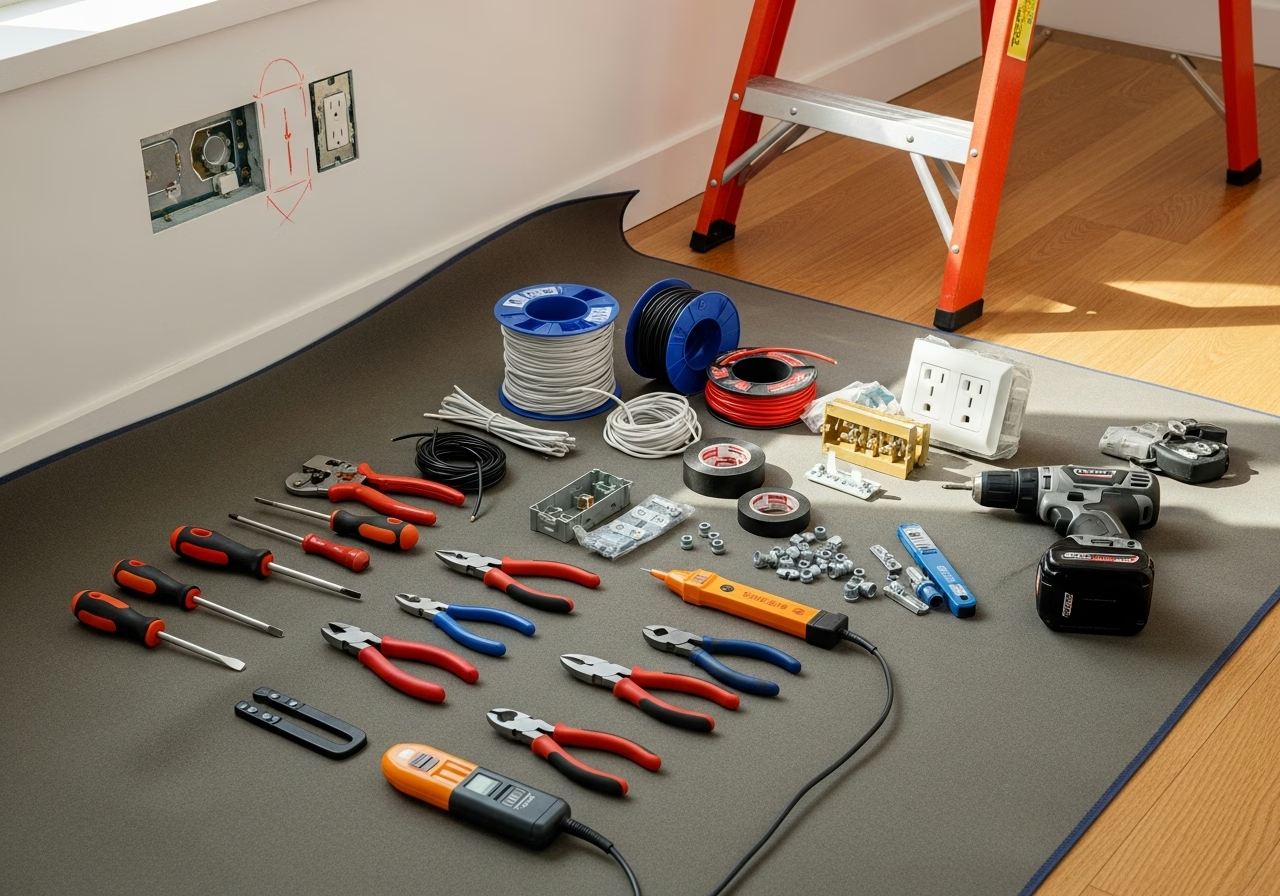
Where the Battery Wins Decisively
Frequent short outages (under 12 hours). Battery transitions seamlessly — lights don't blink, computers don't restart, security systems stay armed. Generator takes 4-15 seconds during which everything resets. Daily energy savings. A battery on Toronto Hydro ULO captures $489-$884/year in arbitrage savings while sitting there waiting for an outage. A generator earns nothing during normal grid operation. See Powerwall Toronto Hydro ULO Arbitrage. Solar pairing. A battery + solar PV gives indefinite outage runtime. A generator + solar is awkward and rarely worth doing. Noise and aesthetics. A generator running at 3am wakes neighbours. A battery is silent. Maintenance. A generator needs annual service, oil changes, battery replacements. A battery is essentially maintenance-free. Indoor air quality and emissions. Generators emit CO and exhaust. Even with proper venting, they're a worse choice for tight urban properties.The Hybrid Case: Battery + Generator
For Toronto homes with serious outage tolerance requirements (medical equipment, work-from-home, finished basements with sumps, food businesses), the best system is both — and the architecture is elegant:
- 1. Battery handles the daily arbitrage and short outages (under 12 hours). Seamless transitions, ULO savings, no noise.
- 2. Generator engages only when battery depletes during multi-day outages. Recharges the battery, then shuts down. Runs maybe 6-8 hours per outage event instead of 100+ hours.
Benefits of the hybrid:
- Generator runs far less (lower fuel cost, longer lifespan, fewer service calls)
- Battery never depletes (no shedding cycles, longer cell life)
- Daily savings still captured from battery
- True multi-day resilience without sleeping through generator noise
Cost: roughly additive — $15,500 battery + $14,000 generator = $29,500 installed for both. Greener Homes Loan covers $40,000, so the full hybrid fits with $10,500 of headroom.
Cost Comparison Over 15 Years
| Factor | Powerwall 3 alone | Generator alone | Hybrid (both) |
|---|---|---|---|
| Installed cost | $15,500 | $14,000 | $29,500 |
| 15-year fuel/electricity | $0 (covered by ULO arbitrage) | $1,500 (gas during outages) | $300 (less generator runtime) |
| 15-year maintenance | $300 (firmware, comms) | $5,500 ($350/yr service) | $4,000 (less gen wear) |
| 15-year ULO savings | -$10,500 | $0 | -$10,500 |
| Net 15-year cost | $5,300 | $21,000 | $23,300 |
| Outage tolerance | 12-30 hr per event | indefinite | indefinite |
| Daily quality of life | seamless | annoying transfer | seamless |
The battery alone is dramatically cheaper over 15 years if you can tolerate 12-30 hour single-event runtime. The hybrid is worth the premium if you genuinely need multi-day resilience.
Need professional renovation?
Call RenoHouse at 289-212-2345 or get a free estimate today.
Get Free Estimate →Code, Permits, Inspections — The Generator Side Is More Complex
Battery permits:- ESA Notification of Work (CEC Section 64-200)
- Master Electrician of record
- Manufacturer-certified installer
- ESA Notification of Work for transfer switch and electrical tie-in
- TSSA gas permit and inspection (gas line and connection)
- Building permit for the slab/pad and any structural work
- Toronto Bylaw setback compliance (1.2m from property line, 1.5m from operable windows)
- Toronto noise bylaw exemption documentation (sometimes)
A generator install typically takes 4-6 weeks longer than a battery install due to the gas permit and the slab pour. See Standby Generator Installation Toronto Complete Guide.
Toronto-Specific Considerations
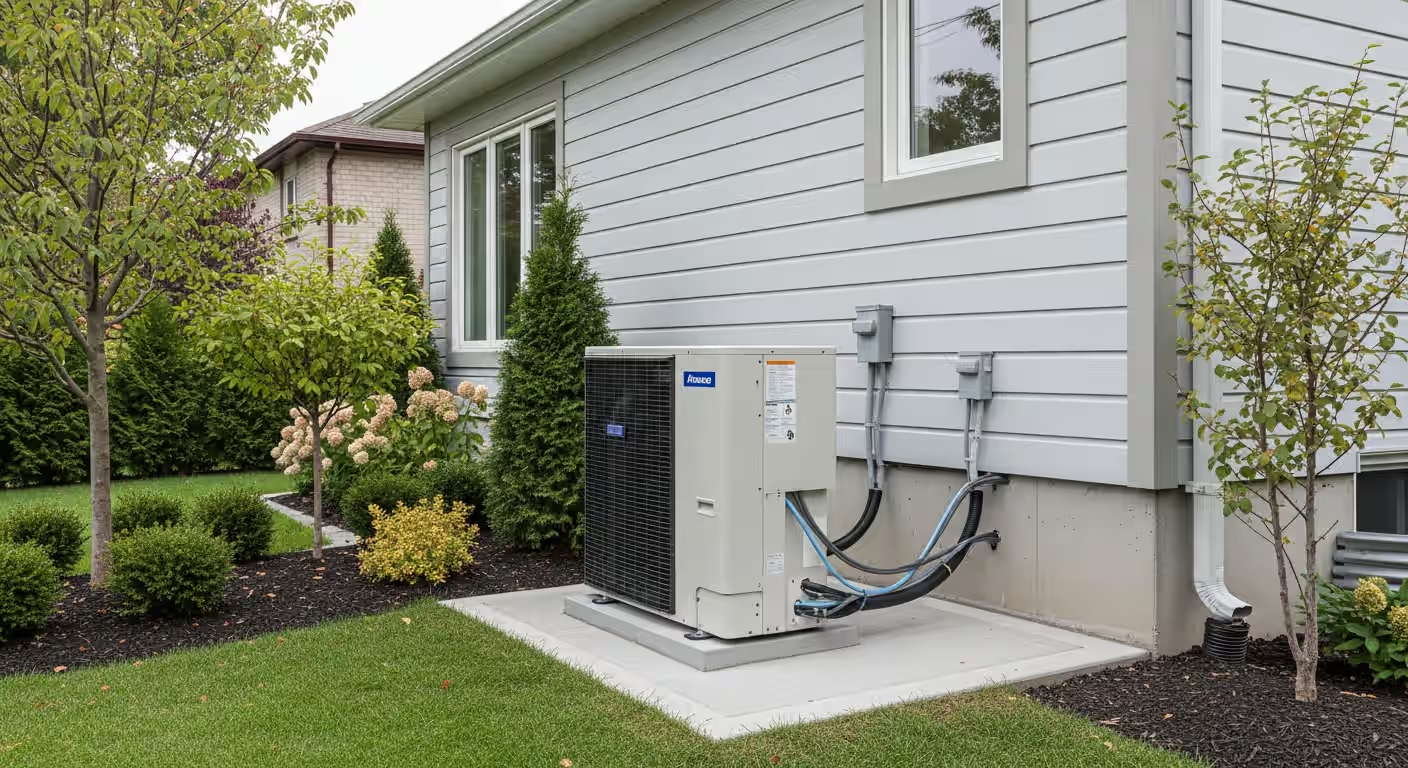
Setbacks: Toronto requires generators 1.2m from property lines and 1.5m from operable windows. Many lots can fit a generator but it's tight in semis and townhouses. Batteries don't have this restriction (they install indoors or in attached garage).
- Battery cell heating activates below 0 C (slight efficiency loss)
- Generator needs proper enclosure heating; cold-start issues are real
Frequency of Use Matters
If you've lost power for more than 24 hours in the last 5 years, the resilience case is real and a generator might be worth it.
If you've lost power for less than 12 hours in the last 5 years, the battery alone is almost certainly the better choice — you get daily ULO savings, seamless transition, no noise, and adequate runtime for the outage profile your area actually has.
Toronto Hydro reliability varies dramatically by neighbourhood. Pull your area's outage history before deciding.
Real Toronto Decision Framework
We use this with every customer:
| Your situation | Recommendation |
|---|---|
| Toronto downtown, rare short outages | Powerwall 3 alone |
| Frequent 12-24 hr outages | Powerwall 3 alone (or 2x for headroom) |
| Have lost power 3+ days in last 5 years | Powerwall 3 + Generator hybrid |
| Medical equipment dependence | Hybrid, no question |
| Rural Toronto / exurb | Generator first, battery second |
| Budget-constrained, want one | Powerwall 3 (does double duty as ULO arbitrage) |
| Solar pairing planned | Powerwall 3 (Generator awkward with solar) |
| Multi-day reliability with quiet | Hybrid |
Honest Recommendation Pattern
We recommend Powerwall 3 alone to roughly 60% of Toronto inquiries. The grid is generally good, ULO arbitrage adds daily value, and outages rarely exceed 24 hours.
We recommend the hybrid to roughly 25% — customers with serious resilience requirements or rural lots.
We recommend a generator alone to roughly 15% — usually customers with very high peak loads where the battery cost to match would be prohibitive, or rural lots with frequent multi-day outages.
We never recommend a battery to a light user with reliable grid (see Home Battery ROI Toronto Payback Scenario D for that conversation).
Get a Right-Sized Recommendation
We install both and we genuinely recommend whichever is right for your house, your outage history, and your budget. Book a home battery and backup consultation and we'll model your options against your real Toronto Hydro outage history and usage profile.
Sources & References
Authoritative sources cited in this guide:
- Electrical Safety Authority (ESA) — Ontario electrical regulator
- Ontario Electrical Safety Code — OESC Section 26 / latest amendments
- Canadian Electrical Code Part I (CSA C22.1) — CEC standard
- NRCan — Electric Vehicle Resources — NRCan EV/charging programs
Continue Reading