RenoHouse

# Standby Generator Installation Toronto: The Complete 2026 Guide
Quick answer. Toronto's grid is no longer the quiet utility it was in the 1990s. Between the December 2013 ice storm that left more than 300,000 households without power for five days, the August 2018 windstorm, the May 2022 Derecho, and the August 2025 downtown power vault explosion, Toronto Hydro and the surrounding Local Distribution Companies (LDCs...Toronto's grid is no longer the quiet utility it was in the 1990s. Between the December 2013 ice storm that left more than 300,000 households without power for five days, the August 2018 windstorm, the May 2022 Derecho, and the August 2025 downtown power vault explosion, Toronto Hydro and the surrounding Local Distribution Companies (LDCs) have logged a steady upward trend in unplanned outage frequency and duration. Climate-driven storm cycles, aging vault infrastructure under downtown streets, and tree canopy stress are converging at exactly the moment when more Toronto homes depend on continuous power for heat pumps, EV charging, sump pumps, finished basements, and home offices.
That is the backdrop for the 2026 standby generator boom. A whole-home natural-gas standby generator turns a five-day outage into a non-event: the unit self-tests weekly, senses utility loss within seconds, signals an Automatic Transfer Switch (ATS), and restores power to your panel in 10-30 seconds with no human intervention. This is the RenoHouse pillar guide for standby generator installation in Toronto for 2026. We cover real CAD costs across every size tier, the four major brands (Generac, Kohler, Cummins, Briggs and Stratton), natural gas versus propane fuel choice, ATS versus MTS, sizing math by load calculation, the TSSA and ESA permit pipeline, Toronto noise bylaw compliance at 45 dBA at the lot line, and the resale-value math that increasingly favours backup power in flood- and storm-prone neighbourhoods.
Honest Positioning: Who Does What on a RenoHouse Standby Generator Project
We need to be clear up front. RenoHouse is a renovation general contractor, not a stand-alone electrical or gas-fitting shop. A standby generator install crosses two regulated trades: the gas connection from the meter to the unit must be made by a TSSA-licensed G2 (or G1) gas fitter, and the electrical tie-in including the Automatic Transfer Switch must be made by an ESA-licensed Master Electrician under an ECRA contractor licence. Both inspections close out under separate authorities (TSSA for gas, ESA for electrical).
On a RenoHouse generator project we coordinate the certified subcontractors for both regulated tie-ins, and we own the rest: site selection and concrete pad, exterior finishing carpentry around the unit, lattice or louvered screening to soften visual impact, permit submission and inspection scheduling, snow-clearance planning around the air intakes, and any interior finishing where the ATS is mounted in a finished basement or utility room. The certified specialists sign off the gas line and the electrical panel work; RenoHouse signs off the project as a whole and stands behind the schedule, the budget, and the carpentry. That division of labour is how we keep both the regulated work clean and the project timeline honest.
Why Toronto Standby Generator Demand Is Surging in 2026
Three forces are driving the market:
- Outage frequency. Toronto Hydro and the surrounding LDCs (Alectra in north and west GTA, Hydro One in pockets of east Scarborough and Etobicoke) have all reported rising System Average Interruption Duration Index (SAIDI) numbers since 2018. The 2013 ice storm is the most cited Toronto outage event, but the more revealing trend is the increase in shorter 4- to 12-hour outages tied to summer thunderstorms and fall windstorms.
- Load dependence. A Toronto home built or renovated in the 2020s now runs a heat pump (no gas furnace fallback), a Level 2 EV charger, a finished basement with a sump pump, a home office with a fibre internet connection, and a refrigerator-freezer-deep-freeze chain. A 24-hour outage in January now means frozen pipes, a cold house, an empty EV battery, and a flooded basement — not just a quiet evening with candles.
- Insurance exposure. Some Toronto insurers have begun offering modest premium credits for homes with whole-home standby generators tied to sump pumps, recognizing the reduction in basement flood claims during multi-day outages.
A standby generator in 2026 is no longer a luxury for cottagers — it is risk management for the typical Toronto detached or semi homeowner.
The Four Tiers of Toronto Standby Generators
Tier 1: Small Essential-Circuits Standby (7.5 to 11 kW) — $6,500 to $9,500 installed
The entry tier feeds a sub-panel of cherry-picked critical circuits: furnace blower or heat pump air handler, sump pump, fridge, a few lighting circuits, garage door, internet router. The main panel is left dark; only the critical sub-panel is energized during an outage.
Best for: smaller Toronto homes, condos with private gas service, rural-edge properties on private well and septic, owners on tight budgets who want the core safety circuits covered without paying for whole-home capacity.
Limitations: cannot run central air conditioning, electric range, electric dryer, or EV charging during an outage. Owner has to choose loads in advance and live with the choice.
Tier 2: Mid-Size Whole-Home with Load Management (14 to 18 kW) — $9,500 to $13,000 installed
The volume tier and our most common Toronto install. A 14 kW or 16 kW Generac Guardian, Kohler 14RESA, or Cummins QuietConnect 13 covers the entire main panel with a smart load-management module that sheds non-essential heavy loads (EV charger, electric range, dryer) when the AC compressor or heat pump kicks in.
What is included:
- Generator cabinet (Generac 14kW, Kohler 14RESA, Cummins QC13, or Briggs Fortress 17kW).
- 200A or 400A service-rated Automatic Transfer Switch (ATS).
- Smart load-management module (Generac PWRmanager, Kohler Powersync, Cummins LMM).
- Concrete pad or composite pad meeting manufacturer setbacks.
- Natural-gas connection from meter (TSSA G2 sub).
- Electrical tie-in to panel and ATS (ESA Master Electrician sub).
- Permit submission, ESA inspection, TSSA gas inspection.
- 5-year limited manufacturer warranty.
Best for: most Toronto detached and semi homes built 1960-2015 on natural-gas service.
Tier 3: Large Whole-Home, No Load Shedding (20 to 26 kW) — $13,000 to $16,500 installed
The premium tier for larger homes (3,500+ sq ft), homes with two HVAC zones, or homes with a Level 2 EV charger that the owner refuses to shed during outages. A 22 kW Generac Guardian, Kohler 20RCA, or Cummins QuietConnect 20 is sized to run the entire house simultaneously without any load management.
Best for: large detached homes in Forest Hill, Lawrence Park, Bridle Path; homes with multiple HVAC zones; multi-generational households; homeowners with two EVs.
Tier 4: Generator Plus Battery Hybrid (Powerwall, FranklinWH, or Enphase IQ) — $25,000 to $55,000 installed
The top tier pairs a smaller standby generator (typically 14 kW) with a battery storage system that handles short outages silently and only fires the generator for outages longer than 4-6 hours. The battery can also load-shift on Toronto Hydro's Ultra-Low Overnight (ULO) rate, paying for itself partly through daily off-peak charging.
Best for: long-term homeowners doing a comprehensive resilience retrofit; owners with rooftop solar; quiet-conscious neighbourhoods where firing a generator at 2 a.m. would draw complaints.
This is where RenoHouse adds the most value — coordinating four trades (electrical, gas, structural for the pad, finishing carpentry) plus battery commissioning to a single timeline.
Need professional renovation?
Call RenoHouse at 289-212-2345 or get a free estimate today.
Get Free Estimate →Brand Comparison: Generac vs Kohler vs Cummins vs Briggs and Stratton
We deliberately stay brand-agnostic. Each has trade-offs and the right brand depends on your priorities. For the deep dive, see Generac vs Kohler vs Cummins: Toronto Standby Generator Brand Showdown.
- Generac Guardian (14kW, 16kW, 22kW, 26kW). Highest market share in Ontario, deepest service-tech network, most aggressive pricing, PWRmanager smart load shedding is the most mature on the market. Liquid-cooled enclosure on 22kW+ runs cooler in summer. Reputation hit on the early-2010s air-cooled units has been largely repaired by the Guardian Wi-Fi platform and the post-2020 Synergy enclosure.
- Kohler 14RESA, 20RCA, 26RCA. Quieter cabinet (often 1-3 dBA lower than the Generac equivalent at the same load), better paint, often considered the build-quality leader. Smaller dealer network in the GTA means longer wait times on parts. Five-year warranty matches Generac.
- Cummins QuietConnect 13, 20, 22. Strongest pedigree in commercial standby (Cummins is the diesel name on most data-centre generators) and the residential line inherits that engineering culture. Premium pricing, smaller dealer network, but the unit most likely to start reliably after 10 years of weekly self-tests.
- Briggs and Stratton Fortress 17kW. Discount alternative, decent build, smaller GTA dealer footprint. Five-year warranty. Reasonable choice for a Tier 1 essential-circuits install where the homeowner is price-sensitive.
For most Toronto homes the right answer is a Generac 16kW or 22kW with PWRmanager. For homeowners who prioritize low cabinet noise or premium finish, the Kohler 20RCA is the upgrade. For homeowners who plan to keep the home 20+ years, the Cummins QuietConnect 20 wins on long-term reliability.
Sizing: How Many kW Do You Actually Need?
Sizing is the single most expensive mistake in the Toronto standby generator market. Undersized units run hot, wear out fast, and trip on overload during AC startup. Oversized units cost $3,000-$5,000 more than necessary and run inefficiently at low load. The right answer comes from a load calculation — not a salesperson's gut. For the full method, see Generator Sizing: kW and Load Calculation for Toronto Homes.
Quick rules of thumb for Toronto homes:
- Up to 2,000 sq ft, gas furnace, central AC up to 3 ton, no EV: 14 kW.
- 2,000-3,000 sq ft, gas furnace, AC up to 4 ton, no EV: 16 kW with load management.
- 2,000-3,000 sq ft, heat pump, AC up to 4 ton, one EV charger: 22 kW.
- 3,000-4,500 sq ft, two HVAC zones, EV charger, electric range: 22-26 kW.
- 4,500+ sq ft, two HVAC zones, two EV chargers: 26 kW or 38 kW commercial.
The single biggest variable is whether the home runs a heat pump in winter. A 4-ton cold-climate heat pump on aux electric strips during a -20C outage can pull 12-15 kW by itself. That single fact pushes most Toronto heat-pump homes into the 22 kW or larger size class.
Natural Gas vs Propane: The Toronto Fuel Choice
Most Toronto homes with existing Enbridge gas service should run a natural-gas standby. The fuel feed is essentially infinite (you cannot run out unless the gas main itself fails, which is an extreme rarity), there is no tank to rent or refill, no aesthetic issue with a 500-gallon tank in the side yard, and no risk of running out during a multi-day winter outage.
Propane is the right choice in two scenarios:
- The home has no natural-gas service (some pockets of east Etobicoke, north Scarborough, semi-rural fringe).
- The homeowner wants fuel independence from the gas utility (rare in Toronto, common in cottage country).
Trade-offs:
- Natural gas hookup cost: $1,000-$3,000 extra over the base install for the gas line from the meter, depending on distance and whether the meter needs upsizing.
- Propane tank: 500-gallon owned tank ($2,500-$3,500) or rental at $200-$400/year. Refill cost varies seasonally; a multi-day outage can drain a 500-gallon tank in 4-7 days at full load.
- BTU difference: Generators rated on natural gas typically derate 5-10% on propane (less common to derate the other way). Sizing must account for fuel.
For the head-to-head, see Standby Generator Natural Gas vs Propane: Toronto Fuel Choice.
The Automatic Transfer Switch (ATS): The Brain of the System
The ATS is the device that disconnects your home from the utility grid and connects it to the generator within 10-30 seconds of an outage. Without an ATS the generator is just a noisy box in your yard. There are two flavours:
- Service-rated ATS (most common in Toronto). Mounted between the utility meter and the main panel. Handles 200A or 400A. Replaces or supplements your main breaker. Cleanest install for whole-home coverage.
- Sub-panel ATS. Mounted between the main panel and a dedicated critical-loads sub-panel. Used for Tier 1 essential-circuits installs.
A Manual Transfer Switch (MTS) requires the homeowner to physically flip a switch during an outage. MTS is acceptable for portable generator backup but defeats the purpose of a standby unit. Every RenoHouse standby project ships with an ATS. For the full explainer, see Automatic Transfer Switch Explained: How Toronto Standby Generators Switch Power.
Toronto Permits: TSSA Gas, ESA Electrical, and the Noise Bylaw
A standby generator install in Toronto requires three regulatory touch points:
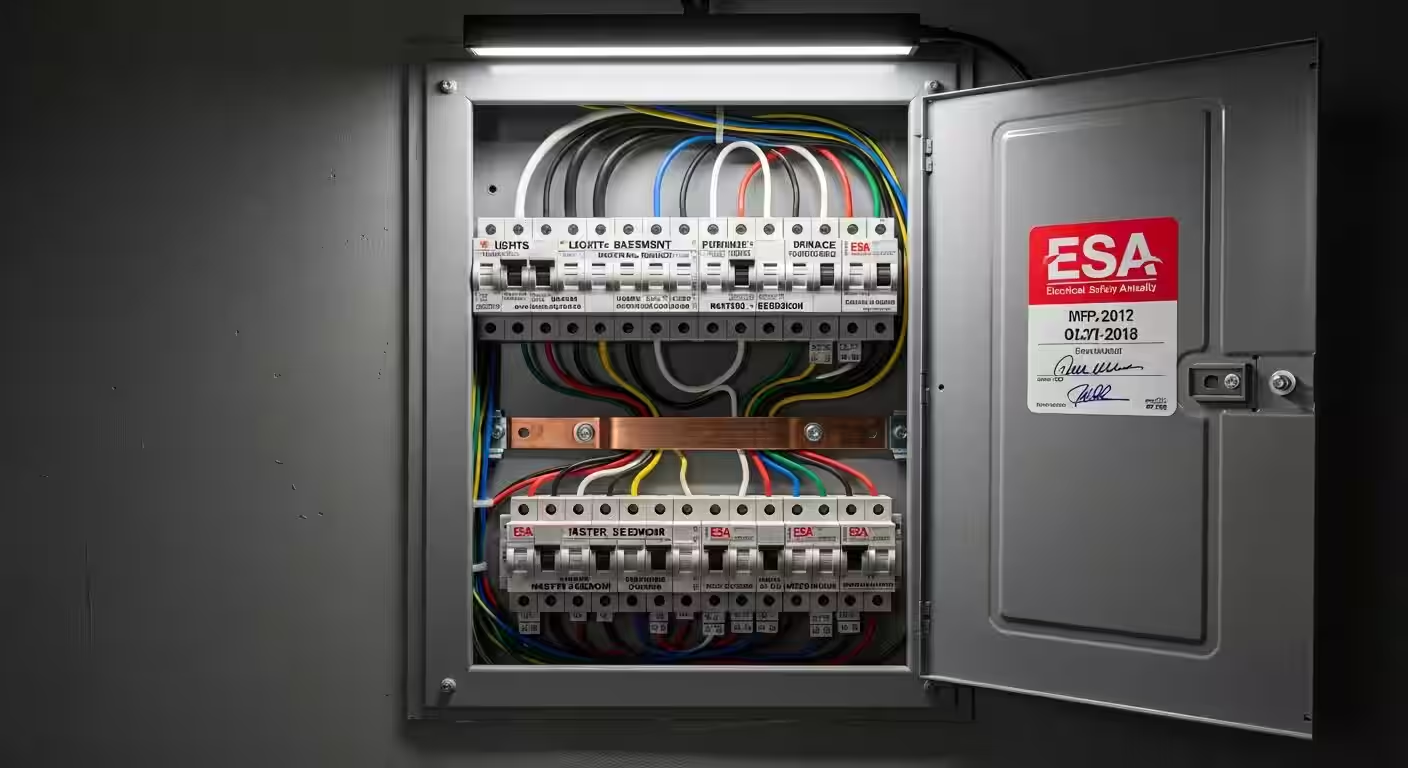
- ESA permit (Electrical Safety Authority). Pulled by the licensed Master Electrician under the ECRA contractor licence. Inspects the ATS, the panel tie-in, the grounding, the generator wiring, and the service-rated equipment. Typical inspection 1-2 weeks after install.
- TSSA gas connection. The G2 gas fitter notifies TSSA on the gas-line connection. Inspections are typically random rather than mandatory on residential standby generators under the BMD G2 scope, but the gas fitter's licence number and pressure-test records are kept on file.
- City of Toronto noise bylaw. Toronto's noise bylaw caps continuous mechanical equipment at the property line. The widely cited 45 dBA threshold applies at the lot line during nighttime hours. Generator placement, cabinet selection, and orientation all matter for compliance.
For the deeper permit guide, see Standby Generator Permits: TSSA, ESA, and Toronto Bylaw Compliance. For the noise side specifically, see Generator Noise and Toronto Bylaw Compliance: Placement and Mitigation.
Site Selection and Setbacks
Manufacturer setbacks govern where the generator can sit:
- 18 inches from any combustible structure (siding, deck, fence).
- 60 inches from any door, window, or fresh-air intake.
- 36 inches of service clearance on the front of the unit.
- 12 inches of clearance above the unit (for hot exhaust).
- Drainage away from the pad — generators do not like sitting in standing water.
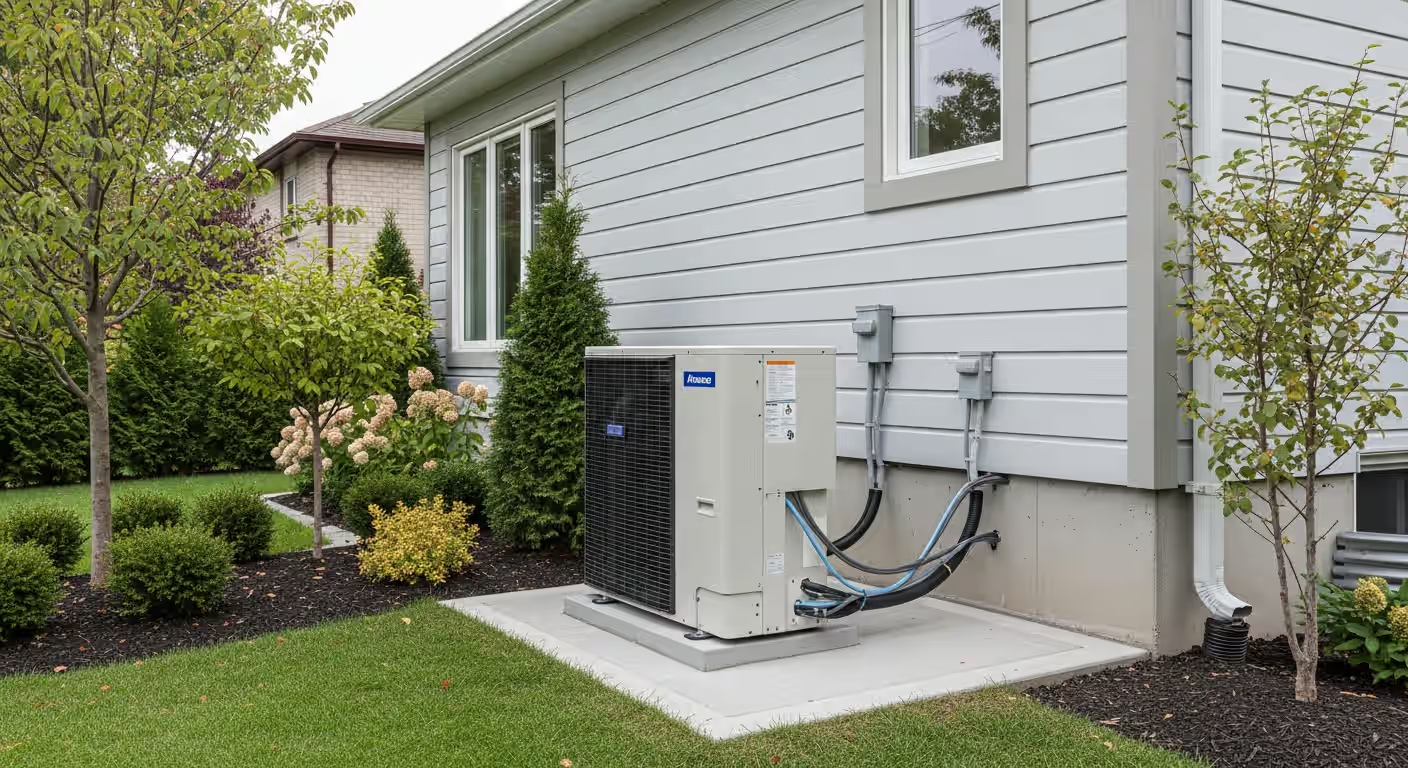
In the typical Toronto lot (semi or detached on a 25-50 ft frontage) the generator usually goes in the side yard, mid-block away from the bedroom side of the neighbour's house, on a poured concrete or composite pad sized to the unit footprint plus 6 inches on every side. Snow accumulation is a consideration: the unit must remain accessible for weekly self-test exhaust and for service technicians, and the air intakes cannot be buried.
Cost Breakdown: Where the Money Goes
A typical 16 kW Generac Guardian whole-home install at $11,500 turnkey breaks down approximately as follows in 2026 Toronto pricing:
- Generator cabinet (16 kW Generac Guardian with Wi-Fi): $5,200-$5,800.
- 200A service-rated ATS with PWRmanager: $1,400-$1,800.
- Concrete pad (poured 4 ft x 5 ft, 6 inch slab): $400-$700.
- Gas line from meter (TSSA G2 sub, 30-50 ft run): $1,200-$2,200.
- Electrical tie-in (ESA Master Electrician sub, panel + ATS): $1,800-$2,400.
- Permits, inspections, commissioning: $400-$700.
- RenoHouse project coordination, finishing carpentry, screening: $700-$1,200.
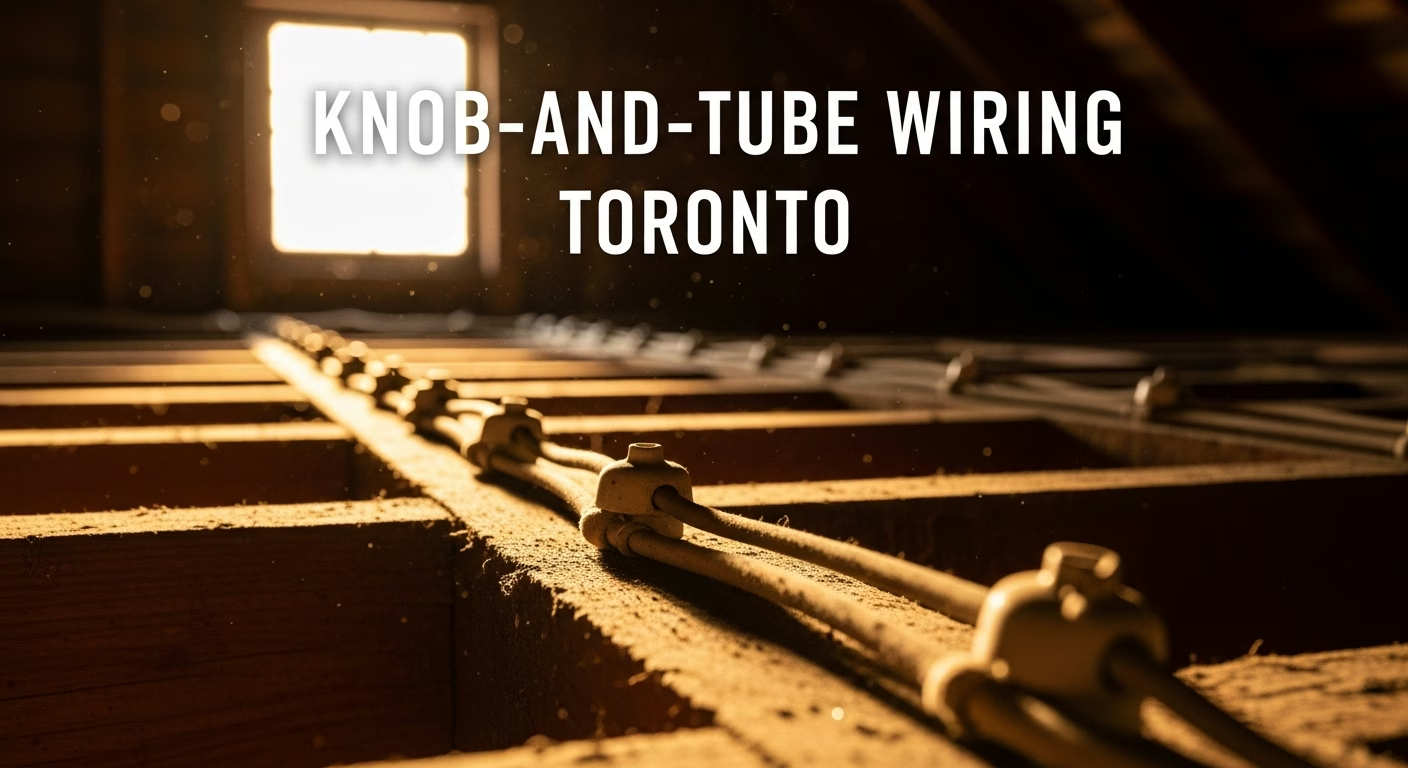
Total: $11,100-$14,800 depending on gas line length, panel condition, and finishing scope. The most common variances are gas line distance (a 60+ ft run from meter to side yard adds $500-$1,000) and panel age (a 100A panel typically needs upsizing to 200A before the ATS can be installed, adding $2,500-$3,500 — see Knob-and-Tube Rewiring and Service Upgrades).
ROI: Does a Standby Generator Pay Back?
A standby generator does not pay back the way a heat pump or EV does. There is no monthly utility savings; in fact, the unit consumes natural gas during weekly self-tests and during outages. The ROI is in three forms:
- Damage avoidance. A single basement flood from a sump-pump outage can run $15,000-$45,000 in restoration. One avoided flood pays for the generator twice over.
- Resale lift. Toronto realtors increasingly call out whole-home generators in listings, particularly in flood-historied neighbourhoods (Etobicoke creek corridor, Don Valley fringe, parts of Scarborough). Anecdotal lift of 1-2% on sale price is plausible but not guaranteed. For the deeper analysis, see Generator ROI: Toronto Resale Value and Insurance Math.
- Insurance posture. Some insurers offer modest credits; more importantly, a generator-protected home is less likely to file the kind of large claims that drive premium re-rating.
For a long-term Toronto homeowner in a storm- or flood-exposed neighbourhood, the math usually works at the 14-16 kW size class. For larger homes the math is closer to break-even and the decision is driven by lifestyle and risk tolerance.
Maintenance: The Annual Service Contract
A standby generator is a 2-cylinder gas engine that sits outside year-round and self-tests weekly for a decade. It needs scheduled maintenance: oil and filter at 100-200 hours of operation (typically annual), spark plug and air filter every 2-3 years, valve adjustment at 5 years, battery replacement at 3-5 years. Annual service contracts in the Toronto market run $250-$450 depending on brand and dealer. Skipping maintenance is the single biggest reason older standby units fail to start when the storm hits. For the full schedule, see Generator Maintenance: Annual Service in Toronto.
Mistakes to Avoid
The five most common Toronto standby generator mistakes we see, broken out in detail in Generator Installation Mistakes: What Toronto Homeowners Get Wrong:
- Sizing on the salesperson's gut instead of a load calculation.
- Skipping the ATS to save money (then never being home to flip the manual switch when the outage hits).
- Placing the unit too close to a bedroom window or the neighbour's bedroom window.
- Ignoring the panel age — installing a generator behind a 1970s aluminum-bus panel that the ATS cannot legally land on.
- Forgetting the snow plan — letting winter berms bury the air intake and exhaust.
Portable Generators: When They Make Sense
A 7,500W portable generator with a manual interlock kit at the panel costs $1,500-$2,800 installed and covers the essential circuits for outages where the homeowner is home and willing to drag the unit out, fuel it, and run extension cords or flip an interlock. It is a legitimate budget alternative to a Tier 1 standby. The trade-offs (fuel storage, refuel during the outage, no automatic operation) are covered in Portable vs Standby Generator: The Toronto Decision.
How RenoHouse Coordinates a Standby Generator Project
A typical RenoHouse standby generator project runs 4-6 weeks from contract to commissioning:
- Week 1: Site visit, load calculation, brand and size selection, contract signed.
- Week 2: Permit applications submitted (ESA, TSSA notification). Concrete pad poured (or composite pad delivered). Gas line route confirmed.
- Week 3: Generator delivered. ESA Master Electrician runs the ATS conduit and panel work. TSSA G2 gas fitter runs the gas line.
- Week 4: Generator set on pad. Gas connected and pressure tested. Electrical connected. Initial firing and load test.
- Week 5: ESA inspection. Final commissioning by manufacturer-certified tech. Customer walkthrough.
- Week 6: Finishing carpentry, screening, landscape repair around the pad.
The certified subcontractors handle their regulated tie-ins; we handle the schedule, the permits, the customer communication, and the project as a whole.
Get a Toronto Standby Generator Quote
If you are weighing a standby generator after the August 2025 outage, the May 2022 Derecho, the December 2013 ice storm, or just the steady drumbeat of Toronto Hydro alerts, RenoHouse can scope it. We coordinate the TSSA G2 gas fitter and the ESA Master Electrician, we own the permits and the carpentry, and we stand behind the project. Visit our standby generator installation service page to start a quote, or pair the conversation with an EV charger bundle if you are also adding electric-vehicle charging — the panel and ATS work overlap and the bundle saves on combined trade time.
Related Guides in This Series
Continue reading our complete coverage of this niche:
- Standby Generator Cost Toronto: 2026 Pricing by kW Size
- Whole-Home vs Partial Generator: The Toronto Decision in 2026
- Toronto Power Outages: From the 2013 Ice Storm to the 2025 Vault Fire
Sources & References
Authoritative sources cited in this guide:
- Electrical Safety Authority (ESA) — Ontario electrical regulator
- Ontario Electrical Safety Code — OESC Section 26 / latest amendments
- Canadian Electrical Code Part I (CSA C22.1) — CEC standard
- NRCan — Electric Vehicle Resources — NRCan EV/charging programs
Continue Reading