RenoHouse

# Whole-Home vs Partial Generator: The Toronto Decision in 2026
Quick answer. The first big decision in any Toronto standby generator project is also the one with the biggest cost lever: do you buy a whole-home unit (14-22 kW) that covers the entire main panel, or a partial essential-circuits unit (7.5-11 kW) that feeds a sub-panel of cherry-picked critical loads? The cost gap is real ($3,000-$5,000 typically), but...The first big decision in any Toronto standby generator project is also the one with the biggest cost lever: do you buy a whole-home unit (14-22 kW) that covers the entire main panel, or a partial essential-circuits unit (7.5-11 kW) that feeds a sub-panel of cherry-picked critical loads? The cost gap is real ($3,000-$5,000 typically), but so is the functionality gap. This post is the Toronto-specific decision framework.
For the broader context, start with our Standby Generator Installation Toronto Complete Guide.
RenoHouse Honest Position
We coordinate certified subcontractors for the regulated tie-ins (TSSA G2 gas, ESA Master Electrician). We do not have a financial incentive to push you to a larger unit — both Tier 1 and Tier 2 generate similar coordination fees on our side. The recommendation below is what we actually tell homeowners during the scoping conversation.
What "Whole-Home" Actually Means
A whole-home standby generator (14-22 kW with smart load management, or 22-26 kW without) connects through a service-rated Automatic Transfer Switch (ATS) installed between the utility meter and the main panel. When the utility drops, the entire main panel is energized by the generator. Every breaker, every circuit, every outlet works the same way as on utility power. The only constraint is total simultaneous load — and that is where smart load management comes in.
Smart load management modules (Generac PWRmanager, Kohler Powersync, Cummins LMM) monitor the generator's real-time output and automatically shed pre-configured non-essential loads when the unit nears its capacity. Typical shed priority: EV charger first, then electric dryer, then electric range, then secondary AC zone. The shed loads come back online when capacity is available (e.g., after an AC compressor cycle ends).
The result: a 16 kW generator with PWRmanager runs a home that on paper would need a 22 kW unit. The home behaves normally during outages with brief, automatic load shifts the homeowner barely notices.
What "Partial" or "Essential-Circuits" Actually Means
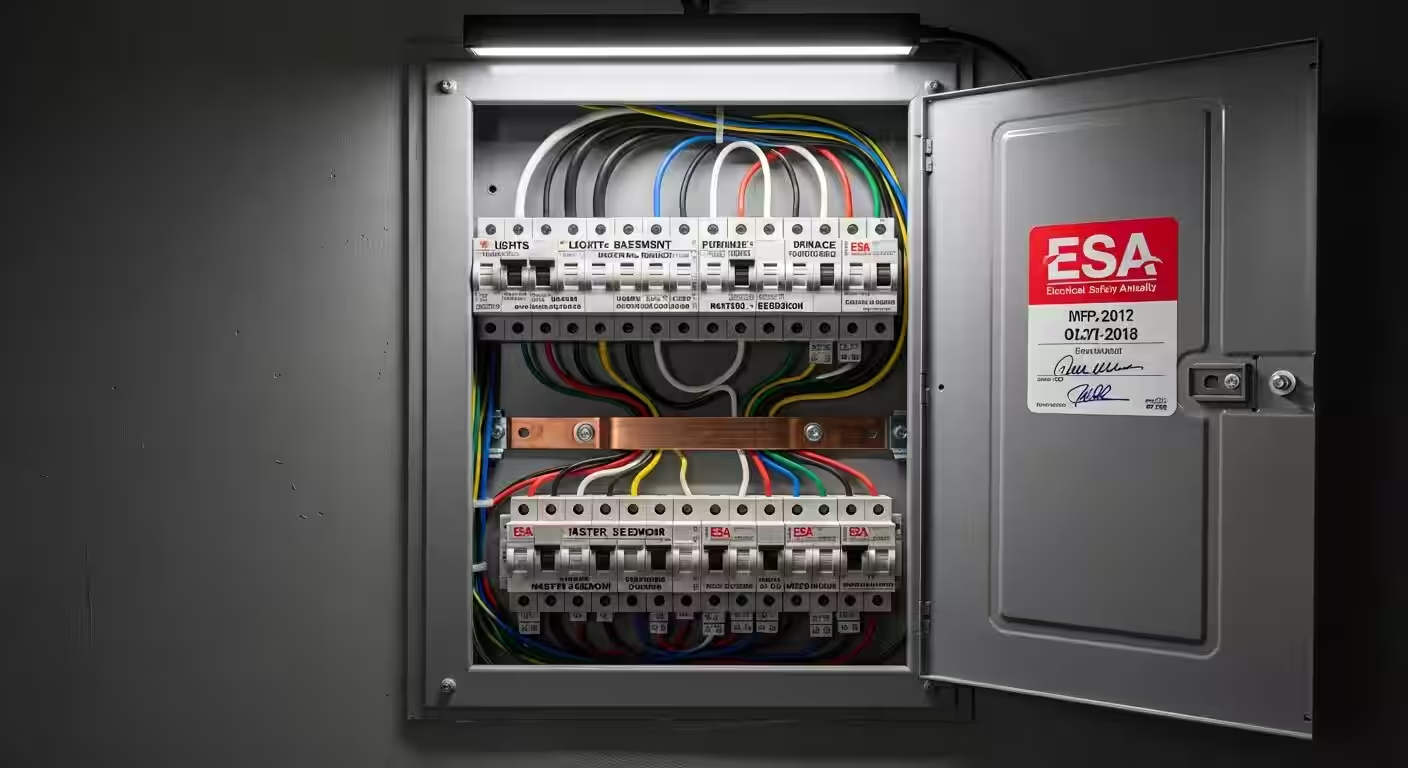
A partial generator (7.5-11 kW) connects through a sub-panel ATS that feeds only a dedicated critical-loads sub-panel. The main panel stays disconnected during outages. The owner pre-selects which circuits move to the critical sub-panel during installation.
Typical Toronto critical-loads sub-panel:
Need professional renovation?
Call RenoHouse at 289-212-2345 or get a free estimate today.
Get Free Estimate →- Furnace blower (gas furnace) or heat pump air handler.
- Sump pump (and backup sump pump if installed).
- Refrigerator and chest freezer.
- 4-6 lighting circuits (kitchen, hallway, master bedroom, basement stairs, exterior).
- Garage door opener.
- Internet router and modem.
- One or two GFCI receptacles (kitchen counter, bathroom).
- Furnace thermostat, smoke alarms, CO detectors (most are hardwired).
Not on the critical sub-panel:
- AC compressor or heat pump outdoor unit.
- Electric range and oven.
- Electric dryer.
- EV charger.
- Hot tub.
- Most non-essential lighting and outlets.
The Cost Gap
Realistic Toronto 2026 turnkey pricing:
- Tier 1 partial (7.5-11 kW): $7,500-$9,500.
- Tier 2 whole-home with load management (14-16 kW): $11,500-$13,000.
The gap is typically $3,000-$5,000. For the full breakdown by line item, see Standby Generator Cost Toronto: 2026 Pricing by kW Size.
When Partial Is the Right Answer
Partial wins in five clear scenarios:
- Tight budget. $7,500-$9,500 is a meaningful step under $11,500-$13,000. If the difference is the difference between doing the project this year or in 3 years, partial coverage now beats no coverage.
- Smaller home, simple load. A 1,800-2,400 sq ft Toronto semi with a gas furnace, central AC, no EV, no electric range, no electric dryer, no hot tub. The "non-essential" loads on a partial install are genuinely non-essential during a 24-72 hour outage.
- Owner is home during most outages. Some owners prefer to manage the home actively during outages — choosing when to run the AC manually, when to do laundry on a generator, when to use the electric range. A partial install matches that operating posture.
- Home is on Tier 1 essential safety only. Homes where the priority is "fridge, sump pump, furnace blower, internet" and nothing else. Partial covers exactly this.
- Frequent short outages, rare long outages. Some Toronto neighbourhoods see 30-60 minute outages 4-8 times a year and rare multi-day events. Partial coverage handles the short ones gracefully and the long ones tolerably.
When Whole-Home Is the Right Answer
Whole-home wins when the home meets any of these conditions:
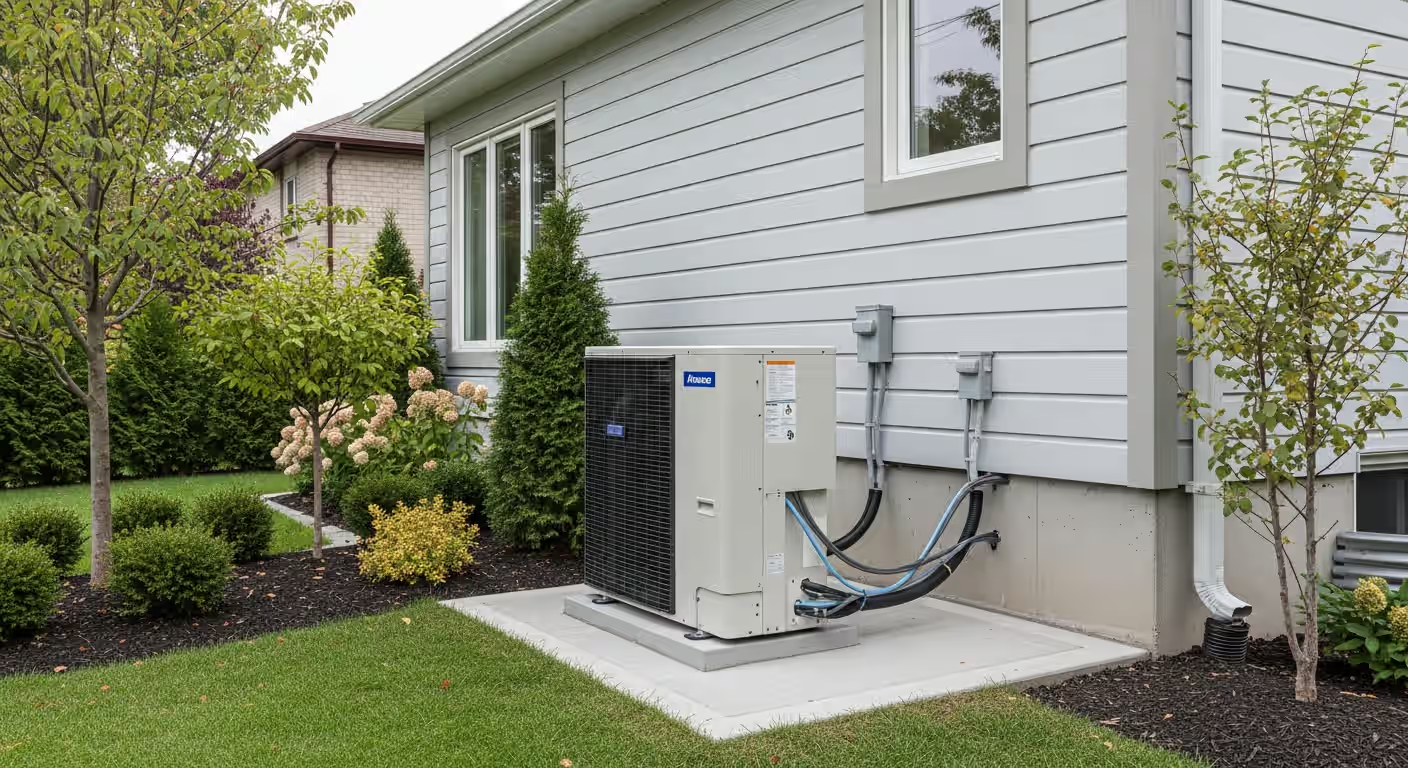
- Heat pump as primary heating. A heat pump cannot run on a Tier 1 essential-circuits sub-panel because the outdoor unit is on a 240V circuit that typically does not migrate to the critical sub-panel. In a -15C outage, a partial generator leaves the home cold. Whole-home with load management is the right answer.
- Level 2 EV charger as primary transportation fuel. If you cannot afford an empty EV battery during a 3-day outage, you need whole-home coverage with load management.
- Finished basement with significant value. A flooded finished basement during a multi-day outage can run $30,000-$80,000 in restoration. Whole-home coverage protects two sump pumps and dehumidifiers and keeps the basement dry.
- Owner is frequently away during outages. If the home is empty during outages — work commute, snowbird in Florida, business travel — you cannot trust manual load management. Whole-home with smart shedding is the only viable answer.
- Multi-generational household, medical equipment, work-from-home. Anything where continuous power across the entire home matters more than the cost gap.
- Larger home (3,000+ sq ft). The non-essential loads in a larger home are too many to cherry-pick onto a Tier 1 sub-panel. Whole-home is the cleaner answer.
The Heat Pump Factor
The single biggest variable in 2026 Toronto: are you on a heat pump for primary heating, or moving to one in the next 3-5 years? A heat pump effectively forces whole-home coverage because:
- The outdoor unit pulls 6-12 kW under load, which is most of a Tier 1 generator's capacity by itself.
- Auxiliary electric strip heat at -20C can pull 12-15 kW, exceeding most Tier 1 units.
- A partial generator with the heat pump on a critical sub-panel works in shoulder seasons but fails in deep winter outages — exactly when you need it.
If you are on a heat pump or planning the conversion (see Heat Pump Conversion Toronto: The Complete 2026 Guide), buy whole-home with load management. The math does not work for partial.
The EV Factor
A Level 2 EV charger is 7.7-11.5 kW continuous. On a Tier 1 generator the charger does not run during outages — period. On a Tier 2 whole-home with load management, the charger runs when capacity allows (typically off-peak in summer, off-peak overnight in winter when the AC compressor is idle). In a 3-day outage that is the difference between a charged car and a stranded car.
If you have one EV, whole-home with load management is the right answer. If you have two EVs, whole-home with load management at 22 kW is the right answer.
The Operating Cost Difference
Both Tier 1 and Tier 2 cost roughly the same to operate annually:
- Annual service: $250-$450, similar between size classes.
- Self-test gas: $20-$40/year, similar.
- Outage gas: scales with load. A whole-home unit at 50% load burns more gas per outage hour than a Tier 1 unit at 70% load. Over a year of typical outage exposure, the cost difference is $30-$60.
The operating cost is not a meaningful factor in the decision.
Our Default Toronto Recommendation
For 2026, we recommend whole-home with load management (Tier 2, 16 kW or 22 kW with PWRmanager equivalent) for most Toronto homes that meet any of these criteria:
- Detached or semi over 2,500 sq ft.
- Heat pump now or planned.
- EV charger now or planned.
- Finished basement.
- Frequent absentee owner.
For smaller homes with simpler loads and tight budgets, Tier 1 partial coverage is a defensible answer. We will scope either honestly.
For a project quote, RenoHouse coordinates the TSSA G2 gas fitter and the ESA Master Electrician for the regulated tie-ins and owns the rest. Visit our standby generator installation service page. For brand selection, see Generac vs Kohler vs Cummins: Toronto Standby Generator Brand Showdown. For the cost detail, see Standby Generator Cost Toronto: 2026 Pricing by kW Size.
Sources & References
Authoritative sources cited in this guide:
- Electrical Safety Authority (ESA) — Ontario electrical regulator
- Ontario Electrical Safety Code — OESC Section 26 / latest amendments
- Canadian Electrical Code Part I (CSA C22.1) — CEC standard
- NRCan — Electric Vehicle Resources — NRCan EV/charging programs
Continue Reading