RenoHouse

# Chimney Repair Mistakes Toronto Homeowners Make in 2026
Quick answer. Most Toronto chimney problems aren't just the original deterioration — they're the result of well-intentioned repairs that made things worse. We see the same mistakes over and over: the wrong mortar mix, caulk smeared over a flashing problem, a "repointed" chimney that's actually been sealed shut, a brand-new cap installed on a cracked cr...Most Toronto chimney problems aren't just the original deterioration — they're the result of well-intentioned repairs that made things worse. We see the same mistakes over and over: the wrong mortar mix, caulk smeared over a flashing problem, a "repointed" chimney that's actually been sealed shut, a brand-new cap installed on a cracked crown nobody bothered to look at.
This post catalogues the eight most expensive mistakes Toronto homeowners make on chimney work and how to avoid each one. Read this before you sign any quote.
For the full repair vs. removal framework, see Chimney Repair & Removal Toronto 2026 Complete Guide. For pricing reality-checks, see Chimney Repointing Cost Toronto.
Mistake 1: Using the Wrong Mortar Type
The mistake: Using Type N or Type S portland-cement-rich mortar on a pre-1940 chimney built with soft, hand-fired brick. Why it's expensive: Modern mortars cure to 750–1,800 psi compressive strength. Pre-1940 Toronto brick is rated 500–1,000 psi. When the building moves and water gets in, the mortar (now harder than the brick) doesn't fail — the brick does. Faces of bricks pop off. Once the brick face is gone, the only fix is rebuild. The right answer: Type O lime mortar for any chimney built before 1940. Type O is intentionally softer (350 psi) so it acts as the sacrificial layer. Mortar should always be softer than the brick. How to verify: Ask your contractor to specify the mortar mix in writing on the quote. "Type O lime mortar (1:2:9 cement:lime:sand)" is the right answer for heritage. If they hand-wave or say "standard mortar," walk away. Get more on this in Chimney Mortar Deterioration Toronto Freeze-Thaw.Mistake 2: Caulk-Only Flashing "Repair"
The mistake: Smearing silicone or polyurethane caulk along the chimney-roof joint to stop a leak.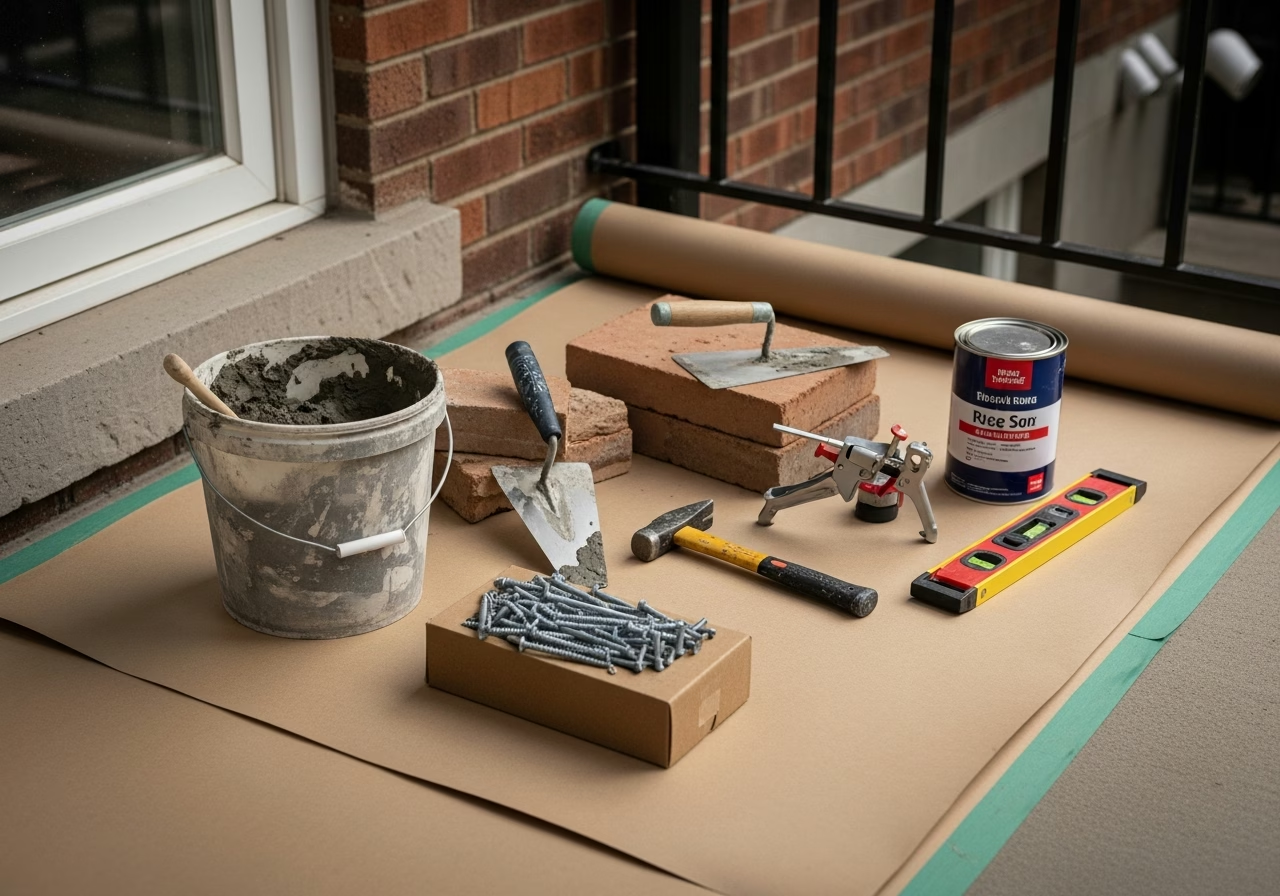
Mistake 3: Sealing the Chimney Top with Concrete
The mistake: Pouring concrete directly across the entire top of the chimney including the flue opening, sealing it shut. Why it's expensive: Two scenarios:- If the chimney still vents anything (water heater, furnace, fireplace), this is a carbon monoxide hazard.
- Even if the chimney is decommissioned, sealing it off without proper venting traps moisture inside the masonry. The chimney becomes a humidity chamber that pulses water vapour into your attic and the brick chase below.
Mistake 4: Hiring "Roof Guys" for Masonry Work
The mistake: Letting a roofing crew handle repointing or rebuild work because they're already on-site. Why it's expensive: Roofing companies are good at roofing. Mortar work is a different trade with different skills, different materials, and different curing requirements. Roofers often:- Mix mortar by feel rather than specification
- Use standard portland mortar on heritage brick
- Don't know how to do tuck pointing in a heritage joint profile
- Strike joints flat (less water-shedding) instead of concave or weathered
Mistake 5: Spot Repointing as a Permanent Fix
The mistake: Repointing only the worst 10–20 linear feet of joint to save money. Why it's expensive: The "good" joints next to the new joints are typically near-failure too. Within 2–3 winters, you're back for another spot repair. Each visit costs the staging fee ($400–$900) plus the actual mortar work. Five spot repairs over 10 years cost more than one full repoint upfront. The right answer: Spot repointing is appropriate ONLY when the chimney is genuinely 90%+ sound (recent inspection confirms) and you have one or two isolated failure points. Otherwise, full repointing of the exposed-above-roof section is the better long-term economics. See pricing math in Chimney Repointing Cost Toronto.Mistake 6: New Cap, Old Crown
The mistake: Installing a shiny new chimney cap on top of a cracked, failing crown. Looks great from the street; useless functionally. Why it's expensive: The crown — the concrete or stone slab covering the top of the chimney brick — is what keeps water out of the chimney itself. A cracked crown lets water into the brick from the top, where freeze-thaw does the most damage. The cap only protects the flue, not the masonry around it.We see this constantly: a $400 cap installed in 2024 on top of a crown that's been cracked since 2018, and now the top 3 courses of brick are spalling.
Need professional exterior renovation?
Call RenoHouse at 289-212-2345 or get a free estimate today.
Get Free Estimate →Mistake 7: Skipping the Heritage Permit
The mistake: Doing chimney work in a Toronto Heritage Conservation District without applying for a Heritage Permit. Why it's expensive: Toronto bylaw enforcement does drive-by inspections in HCDs. If they catch unpermitted work — visible brick replacement, mortar that doesn't match the original, removed chimney — you face:- Stop-work order
- Restoration order (have to undo and redo to original specs)
- Fines up to $25,000
- Property liability that can affect resale
The HCDs in Toronto: Cabbagetown North, Cabbagetown South, Wychwood Park, Old Town / St. Lawrence, Casa Loma, parts of Harbord Village, South Rosedale, and a few smaller districts. If you're not sure, check the Toronto Heritage Register before any exterior work.
The right answer: Heritage Permit is free to apply but takes 4–8 weeks. Plan accordingly. Match mortar mix and joint profile to original. We prep the application and act as homeowner's agent. See Chimney Heritage Permit Cabbagetown Toronto.Mistake 8: DIY Chimney Sealing Products
The mistake: Using ChimneySaver, Chimney Sealer, or similar consumer waterproofing sprays as a substitute for repointing.
- Seal moisture INSIDE the chimney (it can't evaporate out)
- Mask the actual problem visually for 12–18 months
- Accelerate freeze-thaw damage by trapping water against frost-line layers
When the product fails, you've now got a sealed crust on top of failed mortar — and stripping the sealer to do real repair is a separate job.
The right answer: Waterproof breathable sealers (silane/siloxane-based, like ChimneySaver or Defy Masonry Saver) are appropriate after repointing as a maintenance coat — typically year 1 after repoint, then every 7–10 years. Never as a substitute for actual mortar repair.Mistake 9: Not Verifying Insurance on Chimney Removal Crews
The mistake: Hiring the cheapest chimney removal quote without checking WSIB clearance and liability insurance. Why it's expensive: Chimney removal is roof work + heavy demolition. If a worker is injured on your property and the contractor doesn't carry WSIB, you can be liable. If a chunk of brick lands on the neighbour's car or garage roof and the contractor's general liability is lapsed, your homeowner policy gets dragged in. The right answer: Before signing, ask for:- WSIB clearance certificate (current)
- General liability insurance certificate ($2M minimum)
- Roofing certification or trade qualification documentation
A reputable contractor provides these without hesitation.
Mistake 10: Ignoring the Water Heater
The mistake: Removing a chimney without addressing the water heater that still needs to vent through it. Why it's expensive: A natural-draft water heater with no vent path is dangerous (CO buildup) and non-compliant (TSSA / OBC violation). If a contractor demos the chimney before the water heater is replaced or relined, you have a hot-water emergency on top of a venting problem. The right answer: HVAC sequencing first — water heater replaced (heat pump, power-vent, or tankless) or chimney relined for water heater only. Then chimney removal. See Chimney Removal After Furnace Upgrade Toronto.How to Vet a Toronto Chimney Contractor
Three questions that filter out 80% of bad operators:
- 1. "What mortar type are you using and why?" — A real mason answers Type N or Type O with reasoning. A bad contractor says "standard."
- 2. "What's the warranty on workmanship and materials?" — Standard is 5 years. Less than 2 years is a red flag.
- 3. "Can you show me your WSIB clearance and liability certificate?" — A pro emails them within 24 hours.
Bonus filter: "Can you walk me through the order of operations?" — A good contractor explains scaffolding, weather-day contingency, debris management, and final inspection. A bad contractor says "we'll figure it out."
How RenoHouse Avoids These Mistakes
Our process is built around the failure modes above:
- Specifications in writing — mortar type, flashing material, crown spec
- Licensed mason coordination for repointing (not us doing mortar work)
- In-house roofing certification for removal and roof patch
- Heritage Permit prep for HCD homes
- Insurance and WSIB documentation provided before contract signed
- Three-option scoping — minimum repair, full repair, removal — with honest pricing on each
Get a no-pressure assessment through our Chimney Repair & Removal services page. We'll tell you what your chimney actually needs — even if that's "nothing for now, recheck in 3 years."
Sources & References
Authoritative sources cited in this guide:
- Toronto Building Permits — Permit info
- Ontario Building Code 9.27 (Cladding) — Exterior cladding standards
- NRC Building Codes — National building codes
Continue Reading