RenoHouse

# Partial vs Full Chimney Removal Toronto 2026: How to Decide
Quick answer. Once you've decided your Toronto chimney is coming out, the next decision is how much of it. There are two distinct removal scopes, and they cost very different amounts of money:Once you've decided your Toronto chimney is coming out, the next decision is how much of it. There are two distinct removal scopes, and they cost very different amounts of money:
- Partial removal (to roof line): $3,500–$7,500
- Full removal (to crawlspace or basement): $5,000–$15,000
Most Toronto homeowners choose partial. But for some scenarios — kitchen renovations, basement finishing, square-footage recovery — full removal is the right call. This post walks through the decision matrix, structural considerations, and the finish-work scope that drives the price spread on full removals.
For broader removal pricing and process: Chimney Removal Cost Toronto Process. For the post-furnace-upgrade scenario: Chimney Removal After Furnace Upgrade Toronto. For the full chimney framework: Chimney Repair & Removal Toronto 2026 Complete Guide.
What "Partial" Actually Means
Partial removal — sometimes called "removal to roof" or "above-roof removal" — takes the chimney down to just below the roof deck. The opening in the roof is closed with new sheathing, ice & water shield, underlayment, and shingles. The interior brick chase remains in place from the attic floor downward. The flue is capped at the attic floor, sealed against airflow, and forgotten.
What you see afterwards:
- From the street: chimney is gone
- From the attic: a closed-off floor where the chimney chase used to project
- From the bedroom or closet below: the chimney chase is still there as a vertical brick column or a drywall-covered column, looking exactly as it did before
Partial removal is the default and best-value choice for the majority of Toronto chimney removals.
What "Full" Actually Means
Full removal takes the chimney out top to bottom, including the interior brick chase running through every floor of the house. This involves:
- Removing the interior brick column (typically 4 feet square or smaller in cross-section, but 25+ feet tall)
- Patching framing where the chase was tied into bearing walls or beams
- Patching drywall, plaster, flooring, baseboard, and trim on every floor
- Possibly opening adjacent walls to access the chase
- Restoring the basement floor where the chimney footing was
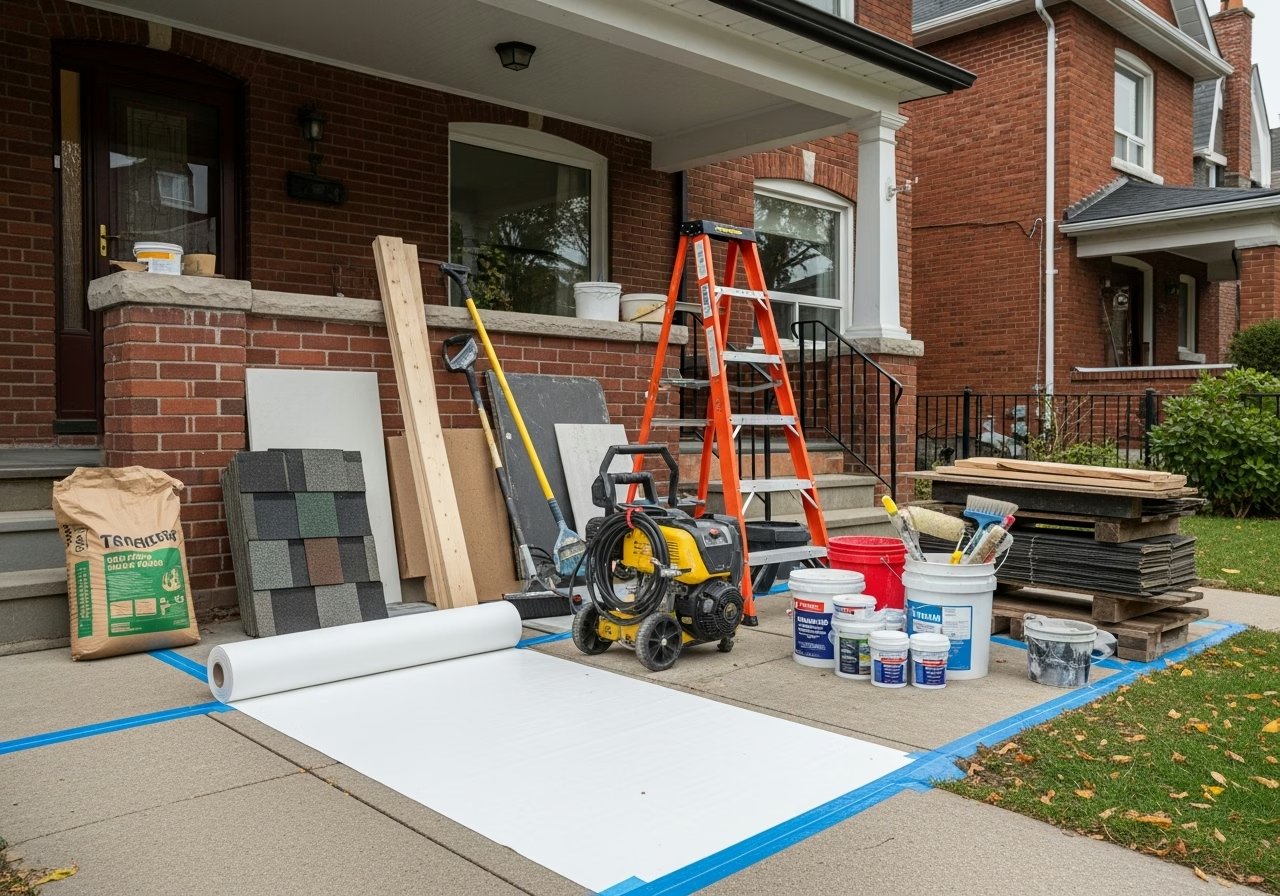
The result is recovered usable square footage at every floor — typically 8–20 sq ft per floor — that becomes part of the room.
Cost Drivers — Why Full Removal Spreads $5K to $15K
The wide cost band on full removal reflects what's in the way of the chimney chase:
| Scenario | Cost |
|---|---|
| Chimney through unfinished basement + closets only | $5,000–$7,000 |
| Chimney through one finished room + unfinished basement | $7,000–$9,500 |
| Chimney through finished kitchen with cabinetry | $9,500–$12,500 |
| Chimney through finished hardwood floors on multiple levels | $11,000–$15,000 |
| Chimney as part of structural wall (load-bearing) | +$2,000–$5,000 for engineer & framing |
The masonry demolition is the cheap part. The finish work drives the price.
Decision Matrix
When does partial make sense vs. full? Here's how we walk clients through it.
Need professional exterior renovation?
Call RenoHouse at 289-212-2345 or get a free estimate today.
Get Free Estimate →Choose PARTIAL when:
- The chimney chase is in unfinished space (basement, attic) or hidden in a closet
- You don't need or want the square footage back
- Budget is the primary constraint
- The roof is the only place the chimney is causing problems
- Heritage Conservation District allows removal but expects minimal interior change
Choose FULL when:
- You're already renovating the affected room (kitchen reno is the classic case)
- The chase eats into a useful space — a kitchen corner, a closet you'd want bigger, a bathroom layout
- You're finishing the basement and the chimney column is in the way
- You want the cleanest long-term result
- You're tearing back walls anyway (asbestos abatement, knob-and-tube replacement, full gut)
Hybrid: "Down a floor"
A middle option: remove the chimney down through the attic and one floor, leaving the basement-level portion. Useful when:
- The basement chase is fine and you want it as a structural anchor
- You're recovering only the upstairs square footage
- You want to limit basement disturbance
Cost: $4,500–$8,500 typically, between partial and full.
Structural Considerations
A chimney can be:
- Free-standing — just a brick column with no structural role beyond its own weight. Removal is simple.
- Tied into a beam pocket — a horizontal beam ends in the chimney mass for bearing. Removal requires a new beam pocket or beam extension.
- Part of a bearing wall — the chimney is integrated into a load-bearing wall. Removal requires a structural review and possibly a header or post.
For full removals, we always have a licensed structural engineer review the chase before demo if there's any doubt. Cost: $800–$1,800 for the review and a sealed letter. This is one of the line items that pushes some full removals from "moderate" to "expensive" — but skipping it is unsafe.
Partial removals rarely need engineer review unless the chimney is unusually constructed or the home has known structural issues.
Asbestos & Pre-1980 Considerations
Pre-1980 Toronto homes occasionally have:
- Asbestos insulation wrapped around chimney connector pipes in the basement (sometimes)
- Vermiculite insulation in the attic around the chimney (occasionally)
- Lead-painted plaster on chase walls (very common in pre-1980 finished spaces)
For partial removal, these are usually not disturbed. For full removal, pre-demo testing is required if any of these conditions are suspected. Asbestos abatement costs $1,500–$4,000 depending on scope. Lead remediation is typically a containment + careful demo protocol rather than a separate trade.
We test before quoting full removal on any pre-1980 home. Don't skip this step.
Roofing Coordination
Both partial and full removal involve roof patching at the top. Where partial and full diverge:
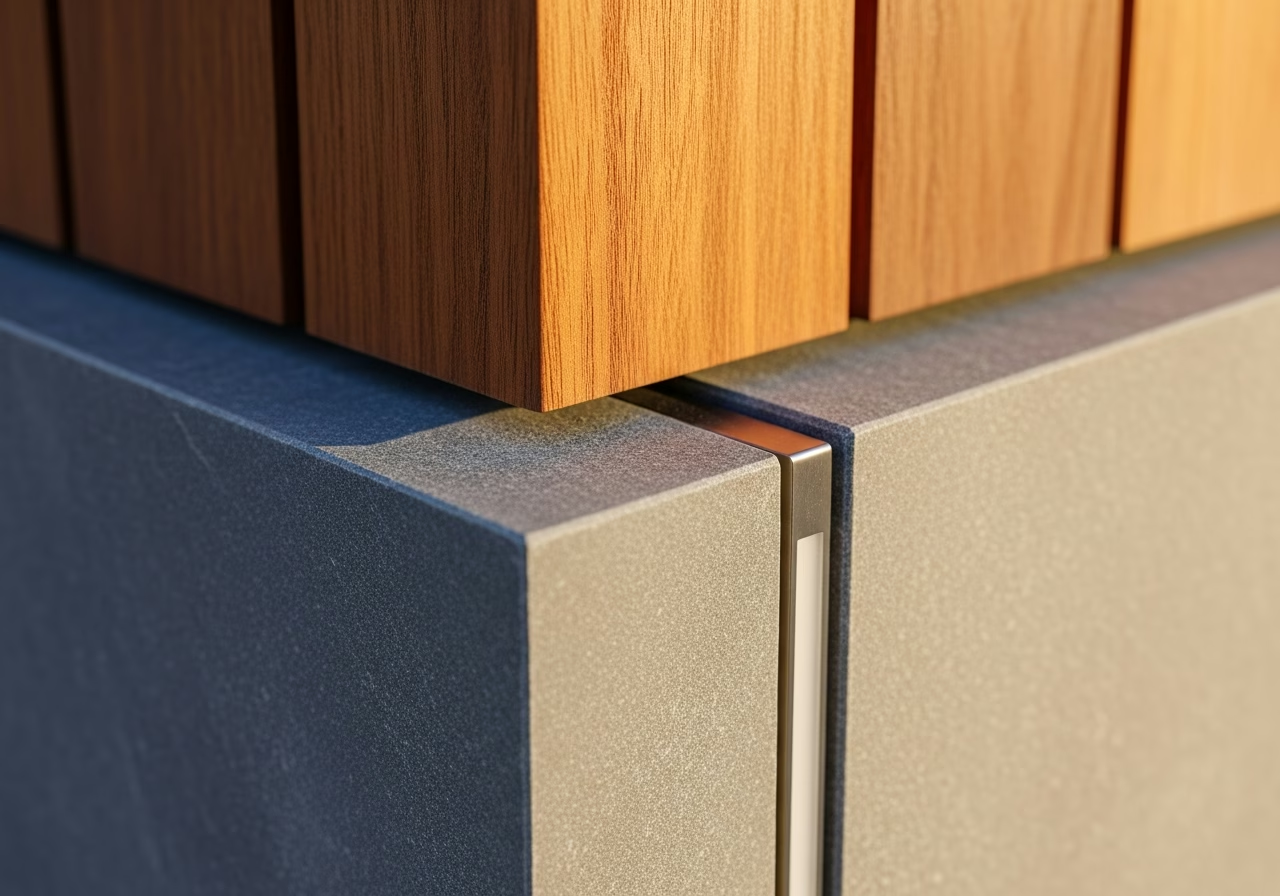
- Partial: roof patch is the FINAL roof work — well-detailed, watertight, integrated.
- Full: roof patch happens early and there may also be additional work (framing rebuild, sheathing) above the patch as the interior chase is dismantled.
The roof patch quality is the most important watertight detail of the entire job. RenoHouse holds roofing certification and does the patch in-house — not subcontracted — for accountability.
If your roof is past 18 years old, bundle removal with a full reroof. The patch becomes part of a fresh shingle field instead of a visible seam. Net cost: often $1,500–$2,500 less than doing reroof and patch in separate years.
Heritage Permits — A Wrinkle for Both Levels
In Toronto Heritage Conservation Districts, removal of any kind requires a Heritage Permit. The permit may approve:
- Partial removal (typical when approved)
- Full removal with restoration of heritage character (rare)
- Neither — relining or repointing required instead
Partial is more frequently approved than full because partial preserves the basement-level masonry that's part of the building's historic fabric. Full removal in HCDs is uphill.
Read Chimney Heritage Permit Cabbagetown Toronto for application details.
Timeline Differences
| Phase | Partial | Full |
|---|---|---|
| Permits + heritage review | 4–8 weeks (HCDs only) | 4–8 weeks (HCDs) + building permit |
| Pre-demo testing (asbestos/lead) | Not usually | 1–2 weeks if needed |
| Engineer review | Not usually | 1–2 weeks |
| Site setup | 0.5 day | 0.5 day |
| Demo | 1–2 days | 3–5 days |
| Roof patch | 1–2 days | 1–2 days |
| Interior chase removal | N/A | 2–4 days |
| Drywall / plaster patch | N/A | 2–3 days |
| Flooring restoration | N/A | 2–4 days |
| Paint / trim / final | 1 day | 2–3 days |
| On-site total | 3–5 working days | 10–18 working days |
Add another 1–2 weeks of intermittent finish-work for full if hardwood matching or specialty plaster is involved.
How RenoHouse Scopes Partial vs Full
Our standard removal site visit produces TWO quotes:
- Partial removal with a fixed price
- Full removal with a fixed price for the demo + a finish-work allowance for interior restoration
The finish-work allowance is itemized — you see exactly what's in scope (drywall, paint, flooring, trim) and what isn't. We don't bury surprises in finish work. If hardwood matching is uncertain, we list it as an open item with a budget range and flag it on the quote.
Most clients land on partial after seeing both numbers. About 20% choose full — usually those who are renovating the affected space anyway.
Ready to see your two numbers? Book through our Chimney Repair & Removal services page. The site visit takes 45–60 minutes and we'll quote within 3–5 business days.
Sources & References
Authoritative sources cited in this guide:
- Toronto Building Permits — Permit info
- Ontario Building Code 9.27 (Cladding) — Exterior cladding standards
- NRC Building Codes — National building codes
Continue Reading