RenoHouse

# OBC 9.10 Fire Code and Stretch Ceilings: What Toronto Homeowners Need to Know
Stretch ceilings are PVC film or polyester fabric stretched across the room - which raises a reasonable question: what about fire? The Ontario Building Code (OBC) addresses interior finish fire performance in Section 9.10, with specific limits on flame spread and smoke development. This guide explains what those limits are, which stretch ceiling brands are tested compliant, and what installers in Toronto and the GTA must specify on every quote.
For broader category context, see our Toronto stretch ceiling complete guide. For brand selection, see MSD vs Pongs vs Halead.
The Short Answer
Premium PVC stretch ceiling films from major brands (Clipso PVC, Barrisol PVC, Newmat PVC, Pongs Decoflair, MSD Premium, Renolit) are tested to ASTM E84 / CAN/ULC-S102 with Flame Spread Rating ≤ 25 (Class A) and Smoke Developed ≤ 50. This is well within OBC 9.10 residential limits (FSR ≤ 150 baseline; Class A required for exit corridors and shared common areas). The same is true of premium fabric brands.
Budget unbranded films (cheap import PVC sold via grey-market channels) may not be tested at all and may exceed the FSR limits. This is the single biggest reason to specify brand in writing on every quote.
No municipal building permit is required for residential stretch ceiling installation in Ontario. The ceiling is interior, non-structural, and reversible. OBC compliance is the contractor's responsibility through brand specification.
Understanding Flame Spread Rating
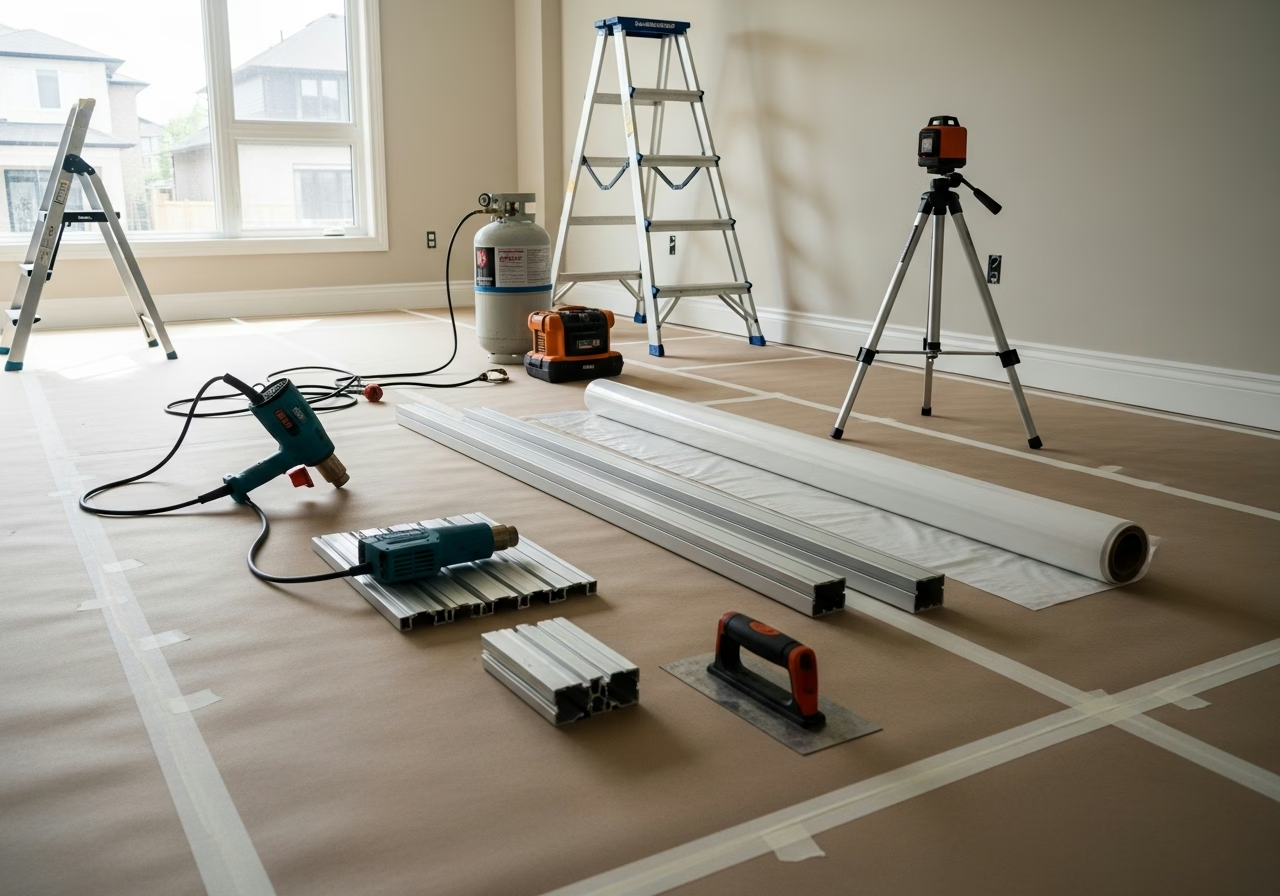
Flame Spread Rating (FSR) is measured by a standardized test where a 25-foot tunnel is lined with the test material, ignited at one end, and the rate of flame spread is measured against red oak (FSR 100) and asbestos cement board (FSR 0). The lower the number, the slower the flame spreads.
Test standards:
- ASTM E84 - the American standard.
- CAN/ULC-S102 - the Canadian equivalent (essentially identical).
- NFPA 255 - alternative reference.
Three classifications:
- Class A: FSR 0-25, Smoke Developed ≤ 450 (Canadian) or ≤ 50 (stricter European convention). Highest fire performance.
- Class B: FSR 26-75, Smoke Developed ≤ 450. Mid performance.
- Class C: FSR 76-200, Smoke Developed ≤ 450. Baseline performance.
OBC 9.10 sets the following limits for residential and small commercial:
| Location | FSR limit | Smoke limit |
|---|---|---|
| General residential ceilings (within suite) | 150 | 300 |
| Bedrooms, living rooms, kitchens | 150 | 300 |
| Bathrooms | 150 | 300 |
| Egress corridors / shared exit corridors | 25 (Class A) | 50 |
| Stair shafts | 25 (Class A) | 50 |
| Lobbies / common-area ceilings | 25 (Class A) | 50 |
Most homeowners care about the residential ceiling limit (FSR ≤ 150). All major branded stretch ceiling films meet this with significant margin.
Which Brands Test to Class A
The following brands publish test reports demonstrating FSR ≤ 25 (Class A) on their flagship lines:
Need professional renovation?
Call RenoHouse at 289-212-2345 or get a free estimate today.
Get Free Estimate →- Clipso PVC - Class A, A+ indoor air certified.
- Barrisol PVC - Class A, M1 fire classification (French equivalent of Class A).
- Newmat PVC - Class A.
- Pongs Decoflair - Class A, TUV-certified.
- MSD Premium - Class A, ASTM E84 tested.
- MSD EvoLine - Class A.
- Renolit - Class A.
- Clipso fabric - Class A, A+ certified.
- Newmat fabric - Class A.
- Barrisol Lumiere fabric - Class A.
- Descor - Class A.
- Halead - some lines Class A, others not specified. Always ask for the specific product code's test report.
- Bauf - documentation often inconsistent.
- Unbranded grey-market PVC - frequently not tested. Avoid.
How to Verify Class A Compliance
Ask your installer for the manufacturer's test certificate. The certificate should specify:
- Test standard (ASTM E84 or CAN/ULC-S102).
- Test date (within the last 5-10 years).
- Specific product code tested.
- FSR result (numeric value).
- Smoke Developed result.
- Issuing laboratory (Underwriters Laboratories, FM Approvals, Intertek, Bureau Veritas, etc.).
If the certificate covers a different product code than what you are buying, the certificate does not apply. If the installer cannot produce a certificate, do not buy.
RenoHouse provides the manufacturer test certificate on every quote at customer request. We do not install non-compliant film.
What Happens in a Real Fire
In a real residential fire, the stretch ceiling is rarely the first material to ignite. The fire usually starts in furniture, electrical, or kitchen sources. Once the fire reaches the ceiling, here's what happens:
Class A PVC: Begins to soften at 70-80 degrees Celsius (the same temperature used for hot install). At higher temperatures, the membrane releases from the harpoon track and falls away. It does NOT support flame spread - the FSR ≤ 25 means the fire moves more slowly across PVC than across red oak. Drywall (for comparison): Type X drywall achieves a 1-hour fire rating. Standard drywall achieves Class A FSR ≤ 25. Drywall does not release; it stays in place and slows fire passage between rooms.The trade-off: stretch ceiling does not provide a fire rating between floors (it is just a finish), whereas drywall ceiling can be part of a 1-hour fire-rated assembly. For fire-rated assemblies (e.g., shared walls and ceilings between condo units), the structural ceiling above the stretch membrane must independently meet the rating - this is achieved by the original concrete slab or drywall above.
In practice: for a Toronto condo, the slab above is concrete (1+ hour fire rating intrinsically) and the stretch ceiling is a finish only. For a detached home with stretch ceiling on the main floor, the floor system above provides whatever fire separation exists - the stretch ceiling does not subtract from it but does not add either.
Does Stretch Ceiling Affect Insurance?
Most Ontario home and condo insurance policies do not specifically address stretch ceilings. The ceiling is treated as an interior finish.
However, some insurers ask about non-standard interior finishes during underwriting. If you have a stretch ceiling, disclose it. Explain that:
- It is Class A fire-rated (A+ certified premium brand).
- It is OBC 9.10 compliant.
- Manufacturer test documentation is available.
In our experience coordinating projects across Toronto, no client has been declined coverage or had a premium increase due to a properly-specified stretch ceiling. Some insurers actually consider PVC stretch ceiling a positive risk factor in condo policies because of leak resilience.
Sprinklers and Stretch Ceilings
For condos and commercial spaces with sprinkler systems, the sprinkler heads must remain at original code-required height. The stretch ceiling profile is mounted below the sprinkler heads, with cut-around finishing rings to allow the sprinkler heads to project through the membrane. Each sprinkler cut-around adds $40-$80 to the install cost.
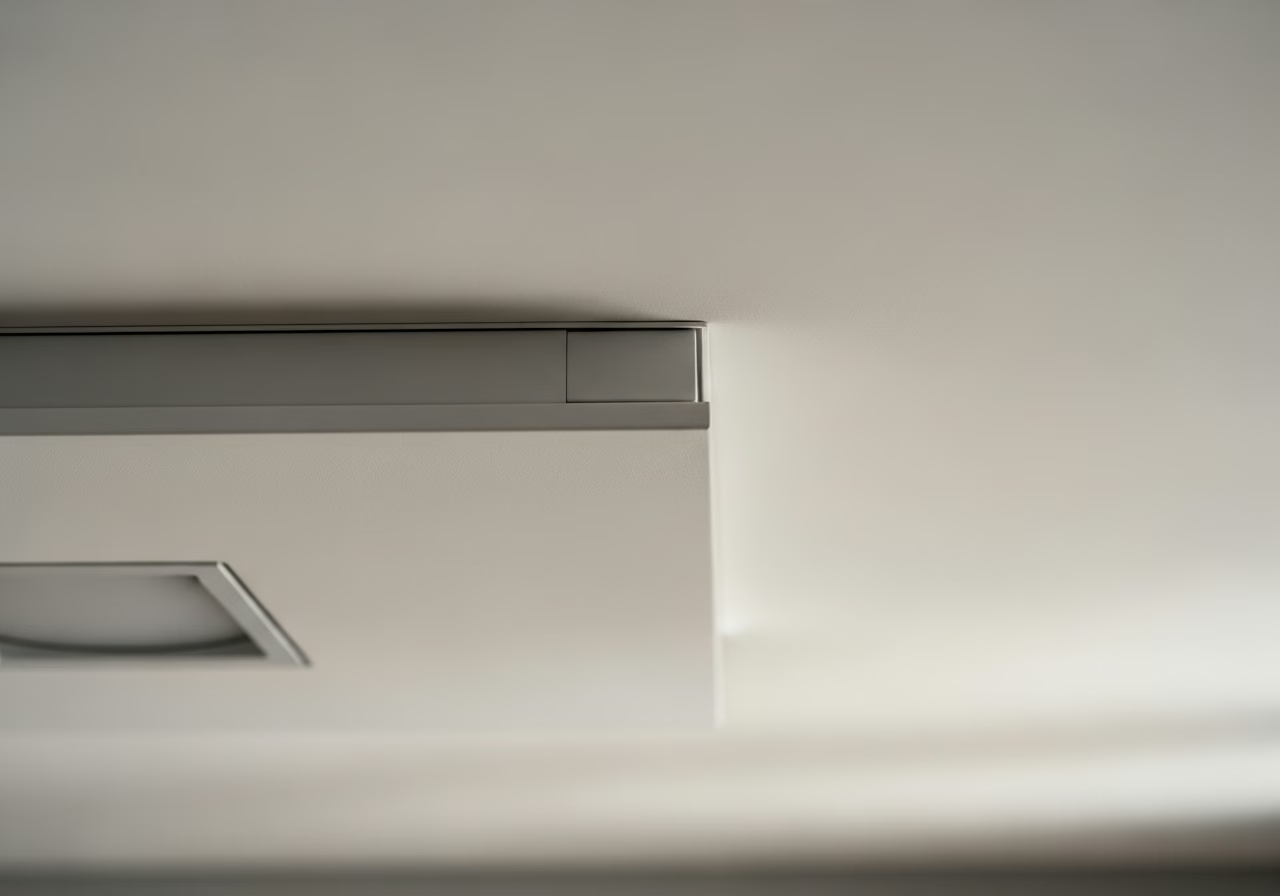
The sprinkler system continues to function normally. In a fire activation, the sprinkler discharges water, the PVC membrane temporarily contains the discharge (similar to a leak event), and the system protects the room. After activation, the membrane is drained and re-tensioned.
For any condo with sprinklers, confirm with your installer that:
- Sprinkler heads will be cut around with proper rings.
- The sprinkler's effective coverage is not blocked by the cut-around.
- The fire sprinkler contractor is informed (sometimes required by condo board).
Building Permit Requirements in Toronto
Per OBC, no permit is required for residential ceiling finish replacement. This includes:
- Replacing drywall ceiling with stretch ceiling.
- Installing stretch ceiling over existing drywall.
- Adding multi-level or 3D stretch ceiling features.
- Replacing one stretch ceiling with another.
Permits ARE required for:
- Structural changes to the ceiling assembly.
- Adding new electrical circuits or relocating electrical (the electrical work needs a permit, not the stretch ceiling).
- Heritage-designated properties with interior heritage features (rare).
For commercial fitouts (restaurants, retail, offices), permits may be required depending on scope. Consult with the Toronto Building Department for commercial installs.
Heritage Conservation District Considerations
Toronto Heritage Conservation Districts (HCDs) - Cabbagetown, Riverdale, Old Town Toronto, etc. - generally regulate exterior and structural features, not interior finishes. Stretch ceilings are interior, non-structural, and reversible. They are typically outside the scope of HCD review.
That said, some heritage homes have plaster ceilings with original ornamental detail (medallions, cornices, coffered patterns). Installing stretch ceiling over an original plaster ceiling preserves the original beneath the membrane (reversible if future owner wants to restore). Some heritage purists object on principle. The decision is the homeowner's.
How RenoHouse Ensures Compliance
On every coordinated project:
- Brand is specified in writing on the quote (MSD Premium, Pongs Decoflair, Clipso PVC, etc.).
- Manufacturer test certificate is provided at customer request.
- Sprinkler cut-arounds are coordinated with building requirements.
- Condo board approval forms are completed where required.
- Documentation is retained for warranty and insurance purposes.
We do not install unbranded or untested film. Every project is OBC 9.10 compliant by brand specification.
Get a fire-code compliant stretch ceiling quote with brand and certification documented in writing.FAQ
Do I need a permit for stretch ceiling in Toronto? No, for residential. Commercial fitouts may require permits depending on scope. Is stretch ceiling fire-rated? Premium branded PVC and fabric are Class A (FSR ≤ 25). The ceiling is a finish, not a fire-rated assembly. What about smoke? Class A films also meet Smoke Developed ≤ 50, well under OBC 300 limit. Will my insurance cover stretch ceiling? Yes, with disclosure. We have not seen Ontario insurers decline coverage for properly-specified A+ certified stretch ceiling. What if my installer can't produce a test certificate? Walk away. Specify a brand that can.Continue Reading