RenoHouse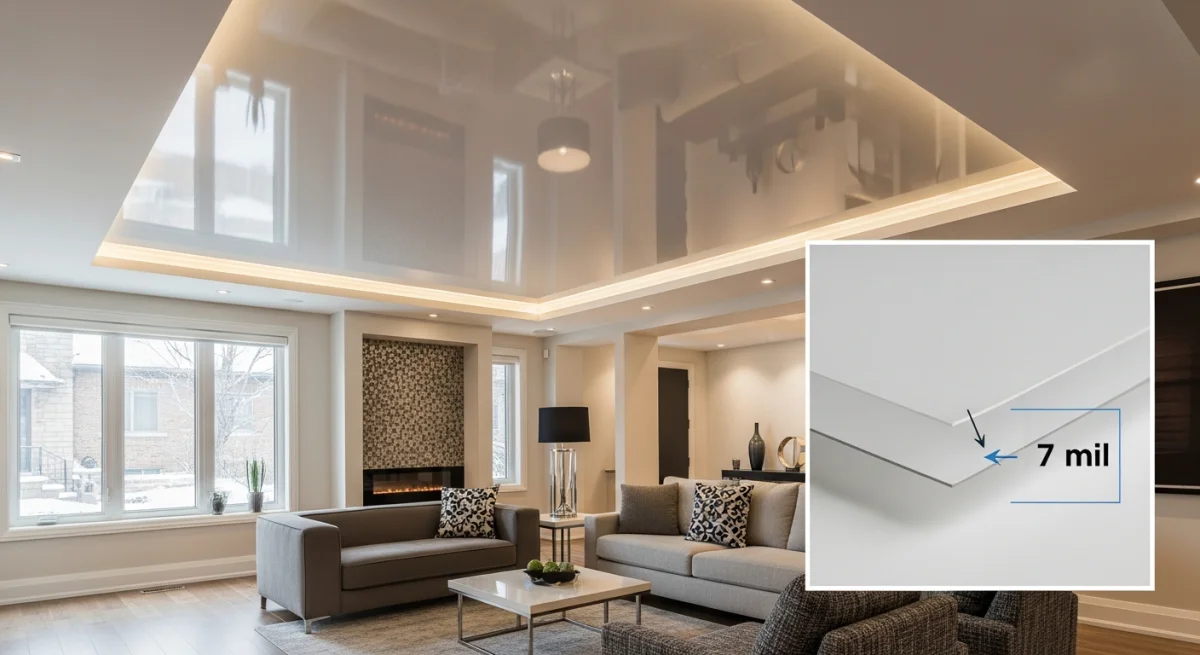

# Stretch Ceiling Thickness Explained: Mil, Microns, and What 0.18 mm vs 0.35 mm Means
Stretch ceiling specification sheets list film thickness in mil, microns, or millimetres. Numbers like "180 microns" or "7 mil" or "0.18 mm" or "0.35 mm" are all measuring the same thing: how thick the PVC film is. The thickness affects durability, water-holding capacity, install difficulty, and price. This guide explains the units, the practical differences across the range, and what to specify for a Toronto residential project.
For broader context, see our Toronto stretch ceiling complete guide. For brand-specific thickness specs, see MSD vs Pongs vs Halead.
Unit Conversion
Three units are used interchangeably:
- Microns (μm): thousandths of a millimetre. Common in European specs.
- Mil: thousandths of an inch. Common in North American specs.
- Millimetres (mm): decimal millimetres. Common in everyday discussion.
Conversions:
- 1 mil = 25.4 microns = 0.0254 mm
- 1 micron = 0.001 mm
- 1 mm = 39.37 mil
| Common spec | Microns | Mil | mm |
|---|---|---|---|
| Thinnest economy | 170 | 6.7 | 0.17 |
| Standard economy | 180 | 7.1 | 0.18 |
| Mid-tier baseline | 200 | 7.9 | 0.20 |
| Premium standard | 220 | 8.7 | 0.22 |
| Premium thicker | 280 | 11.0 | 0.28 |
| Heavy-duty / acoustic backing | 350 | 13.8 | 0.35 |
The practical residential range is 0.17-0.35 mm (170-350 microns; 6.7-13.8 mil).
Need professional renovation?
Call RenoHouse at 289-212-2345 or get a free estimate today.
Get Free Estimate →Why Thickness Matters
Tear resistance: Thicker film tears less easily under installation stress and after install. A 0.18 mm film is more vulnerable to corner-snag during install than a 0.28 mm film.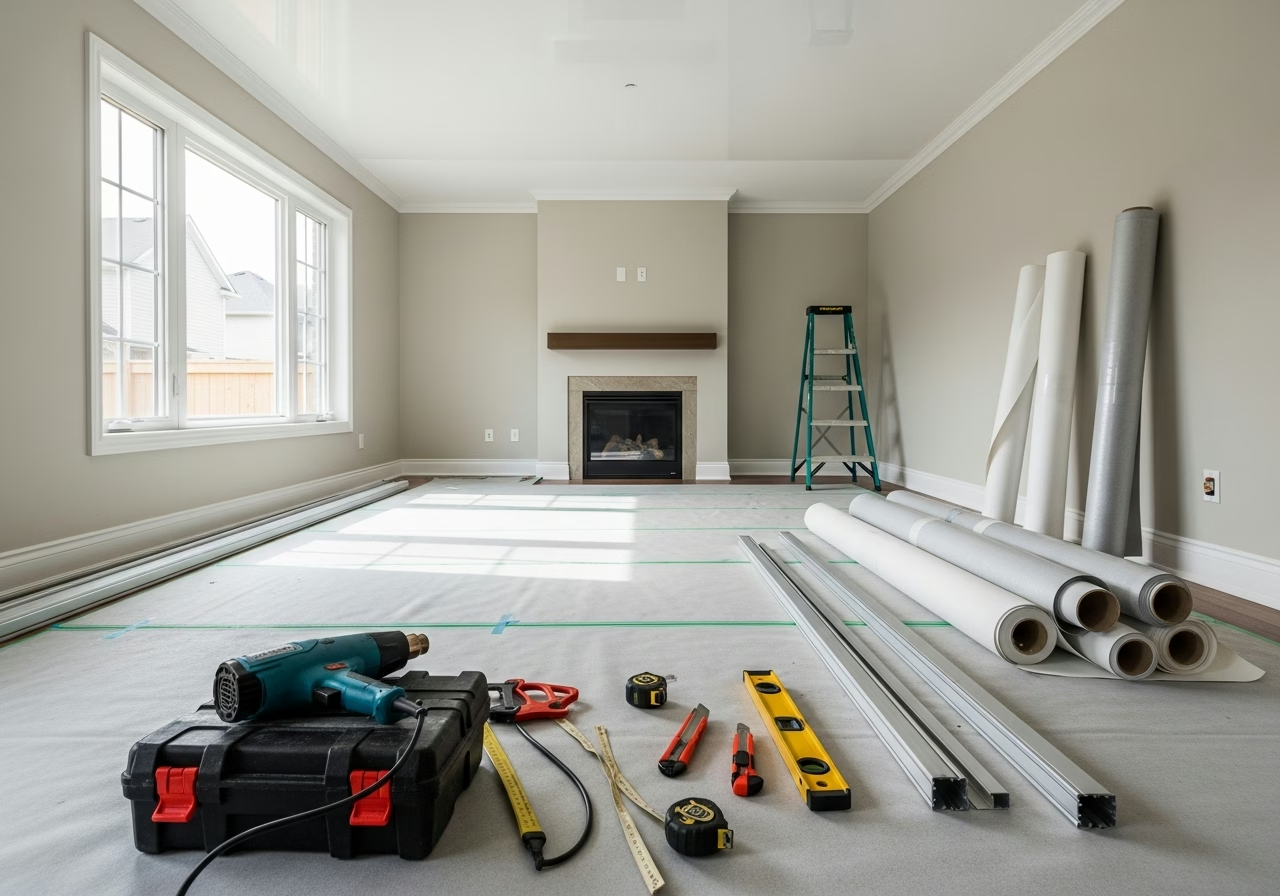
What Each Tier Specifies
Halead, Bauf (economy):- Standard thickness: 0.17-0.18 mm (170-180 microns; 6.7-7.1 mil)
- Acceptable for budget secondary spaces (basement, garage, rental)
- Avoid for primary bedrooms or living rooms in high-traffic homes
- Standard thickness: 0.18-0.20 mm
- Acceptable for most residential applications
- Sufficient for water-leak resilience in condos
- Good gloss finish
- Standard thickness: 0.20-0.22 mm
- The 80/20 sweet spot for Toronto residential
- Excellent gloss depth, strong tear resistance
- Industry-standard mid-tier
- Standard thickness: 0.22-0.28 mm
- Best gloss depth, best tear resistance
- Designer-led projects, heritage homes
- Thickness: 0.28-0.35 mm
- Acoustic perforated PVC requires thicker film for perforation pattern integrity
- Heavy-traffic commercial (restaurants, lobbies)
- Curved/3D installations under higher stretch load
Real-World Implications by Application
Bedroom, glossy: 0.18-0.22 mm is sufficient. The room sees minimal stress. Premium 0.22 mm offers better gloss but the difference is subtle. Master bathroom, glossy: 0.20-0.25 mm. Humidity stress on the membrane is real over 10+ years. Premium thickness extends life. Kitchen, satin: 0.20-0.22 mm. Heat from cooking and steam stress the membrane. Mid-tier is appropriate. Living room, matte: 0.18-0.22 mm. Light stress, mid-economy works fine. Toronto condo with leak risk: 0.22 mm minimum recommended. The water-holding margin matters when a leak event occurs. Restaurant, commercial: 0.25-0.28 mm. High-traffic stress, frequent cleaning, longer expected service life. Curved or 3D installation: 0.25-0.35 mm. The stretch geometry creates higher local stress. Star sky ceiling: 0.20-0.28 mm. The fiber-optic pinhole pattern requires thicker film for pinhole edge integrity.What Happens If You Spec Too Thin
A 0.17 mm film in a high-stress installation can fail in three ways:
- 1. Punctures from minor contact that thicker film would resist. A child's tossed toy might puncture 0.17 mm but bounce off 0.25 mm.
- 2. Edge tear at the harpoon weld under thermal cycling. The weld is the highest-stress point; thinner film fatigues the weld faster.
- 3. Sagging acceleration if the room has temperature swings. Thinner film loses tension faster at thermal cycling.
For a $200 saving on a 200 sqft project, it is rarely worth specifying the absolute thinnest film.
What Happens If You Spec Too Thick
Over-specifying thickness has fewer downsides:
- Slightly higher cost ($200-$500 for a 200 sqft room)
- Slightly longer install heating phase (10-15 extra minutes)
- Slightly less drape elasticity (can complicate very intricate 3D shapes)
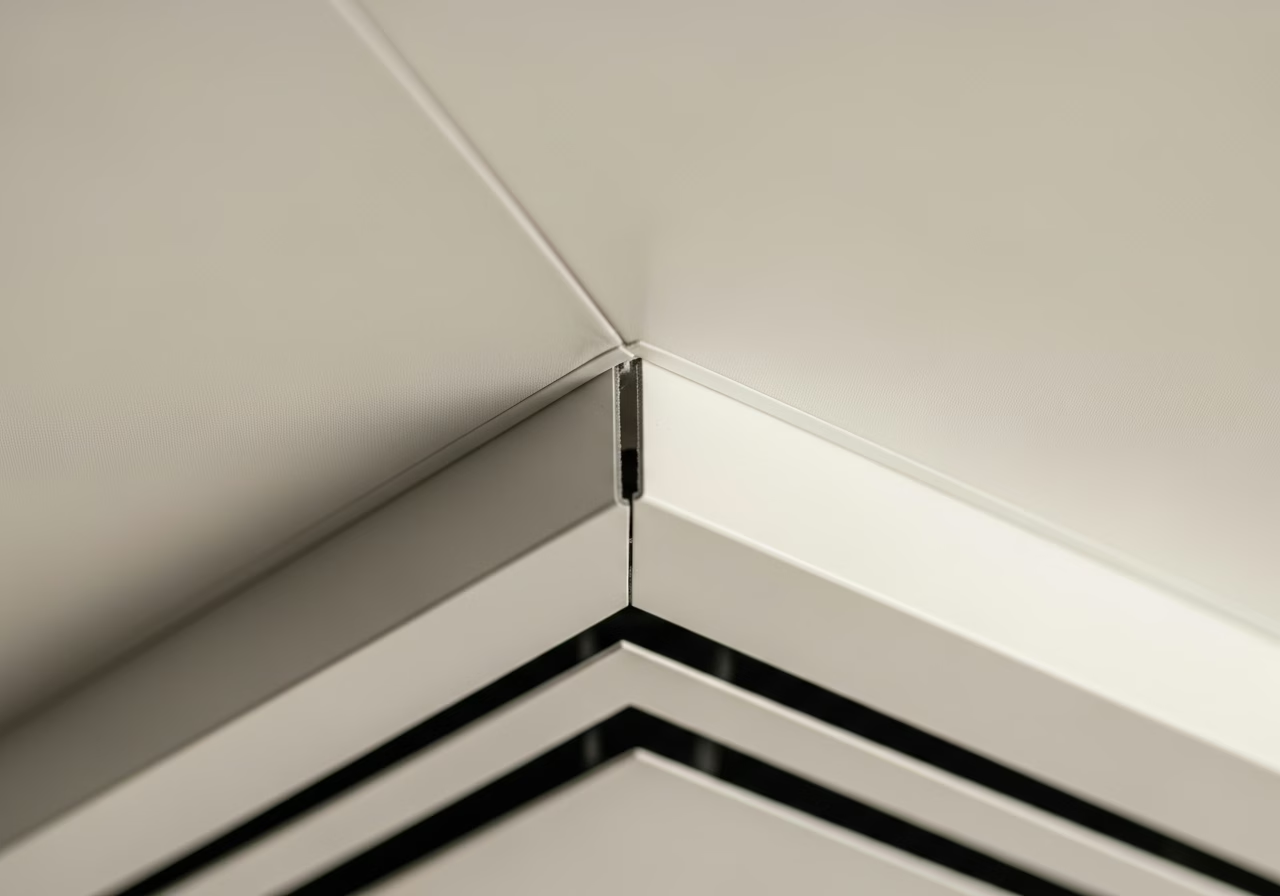
For most residential projects, 0.20-0.22 mm is the sweet spot. Going to 0.28 mm is a nice-to-have, not essential.
What to Specify on Your Quote
Ask your installer to specify:
- Brand (e.g., MSD Premium, Pongs Decoflair)
- Specific product code
- Film thickness in microns or mm
- A+ certification (indoor air)
- Class A fire rating
- Manufacturer test certificate available
A typical compliant spec line:
"MSD Premium glossy white, 0.22 mm (220 microns), A+ certified, Class A fire-rated per ASTM E84."
If the installer cannot answer to this level of detail, the spec is loose - which usually means whatever-is-in-stock will be installed.
How RenoHouse Specifies Thickness
Default specifications by RenoHouse for Toronto residential:
- Bedroom, kids' room: MSD Premium 0.20-0.22 mm
- Master bedroom, living room: MSD Premium 0.22 mm
- Kitchen, bathroom: MSD Premium 0.22-0.25 mm
- Toronto condo with leak risk: MSD Premium 0.22 mm minimum
- Designer/premium project: Clipso PVC 0.22-0.25 mm or Barrisol 0.25 mm
- Star sky / specialty: 0.22-0.28 mm depending on design
We document thickness on every quote. If we substitute (e.g., due to inventory), we notify in writing before install.
Get a stretch ceiling quote with thickness specified in writing for any Toronto, Vaughan, North York, Thornhill, or Markham project.FAQ
Is thicker always better? Generally yes, with diminishing returns above 0.25 mm for residential. What is the minimum thickness I should accept? 0.18 mm for secondary spaces; 0.20 mm for primary residential rooms. Does thickness affect water-holding in a leak? Yes - thicker film has more elastic capacity. The difference between 0.18 mm and 0.25 mm is roughly 30-40 percent more leak capacity. Will I notice the visual difference between 0.18 and 0.22 mm? Subtle on matte; more noticeable on glossy under raking light. Is fabric thickness measured the same way? Fabric is typically measured in grams per square metre (gsm) - 100-220 gsm range - not microns. Different measurement.Continue Reading