RenoHouse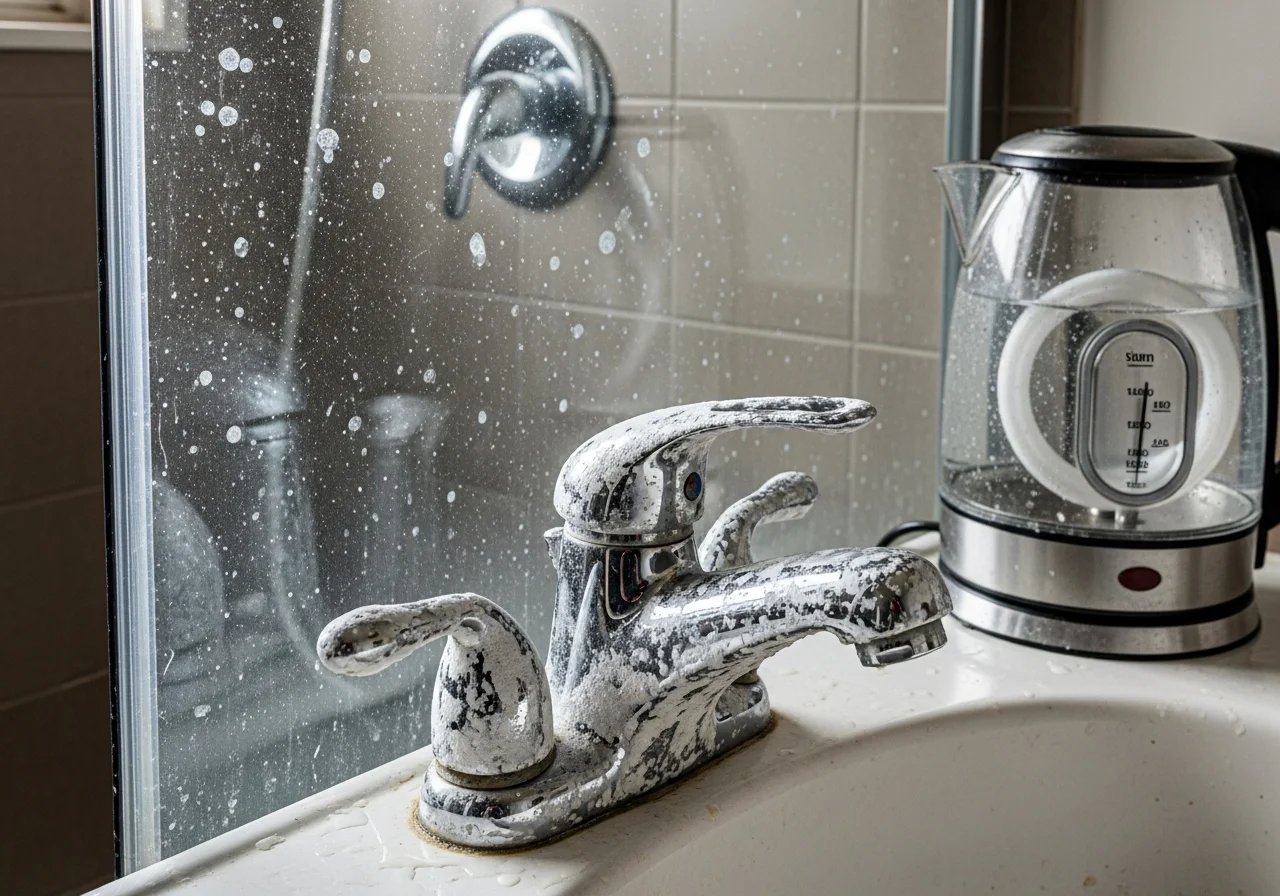

# Hard Water Signs in Toronto Homes: 7 Visual Cues to Watch For
Quick answer. Hard water spots in Toronto are caused by calcium and magnesium in the water — Toronto's tap water sits at 115–126 mg/L of calcium carbonate, which is moderately hard (about 7–7.5 grains per gallon). The signs are everywhere once you know what to look for: kettle crust, dishwasher film, soap that won't lather, dry skin after showers. This guide is a visual checklist of the seven most common hard-water symptoms in GTA homes, and what each one is actually telling you.If multiple signs apply to your home, you don't have a hardness problem to investigate — you have one to solve. We'll cover what each costs to fix at the end.
Why Toronto Has Hard Water
Toronto draws drinking water from Lake Ontario, which has naturally elevated calcium and magnesium levels from limestone bedrock in its watershed. The city's four treatment plants don't soften the water — softening is left to homeowners. The result is consistent municipal water at 115–126 mg/L hardness across the city, with slight variation by neighbourhood and season.
For perspective: water under 60 mg/L is considered "soft," 60–120 is "moderately hard," 120–180 is "hard," and above 180 is "very hard." Toronto sits right at the moderately-hard / hard threshold. Bad enough to cause real damage and visible symptoms, not bad enough to make most homeowners prioritize fixing it — until they see what 10 years of scale does to a water heater.
Sign #1: White Crust Inside Your Kettle
This is the canary in the coal mine. Fill an electric kettle with Toronto tap water, use it daily, and within 4–8 weeks you'll see a white-grey crust forming inside on the heating element and at the waterline.
That crust is calcium carbonate scale — the same stuff that builds up inside your water heater, dishwasher, and washing machine where you can't see it. The kettle is just the visible warning system.
What It's Telling You
If your kettle is scaling, every appliance that heats water in your home is scaling at roughly the same rate. The kettle is easy to descale (white vinegar, 30 minutes). Your water heater is not.
Sign #2: Spots and Film on Glassware After Dishwasher
Pull a wine glass out of the dishwasher and hold it to the light. If you see hazy white spots, water rings, or a milky film — that's hard water. The dishwasher rinses with hot water, the water evaporates, and dissolved minerals are left behind on the glass surface.
Modern dishwashers compensate with rinse aid, but rinse aid is a band-aid. It reduces the visible spots without addressing the cause. Long-term, the same minerals that spot your glasses are coating the dishwasher's heating element and spray arms, reducing efficiency and shortening the appliance's life.
Sign #3: Soap That Won't Lather
Hard water reacts with soap to form soap scum — that grey-white residue you see in the bathtub or shower stall. The chemical reason: calcium and magnesium ions bind with soap's fatty acids, forming insoluble compounds instead of foam.
Symptoms in your daily life:
- You use more shampoo to get the same lather
- Body soap doesn't bubble like it does at hotels in soft-water cities
- Your shower walls develop a chalky film that's hard to scrub off
- Bath toys and soap dishes accumulate buildup faster than they should
A water softener instantly fixes this. People who go from hard to soft water consistently report using 30–50% less soap and shampoo. Over a few years that pays for a meaningful chunk of the softener cost.
Sign #4: Dry Skin and Brittle Hair After Showers
This one is partly hardness, partly the soap scum from Sign #3. Hard water leaves a thin film of soap residue on your skin and hair, even after rinsing. That residue dries out skin and weighs down hair, making it look limp.
Common patient complaints from dermatologists in hard-water cities:
- Eczema flare-ups
- Itchy scalp
- Hair feels "coated" or "heavy" within a day of washing
- Skin feels tight after a shower
Many GTA homeowners report visible improvements in skin and hair within 2–3 weeks of installing a softener. It's the single most common piece of unsolicited feedback we hear from clients post-install.
Sign #5: Reduced Water Heater Efficiency
This is the expensive one. Limescale forms on the heating element of an electric water heater (or the burner-side of a gas tank's combustion chamber wall). Scale is an insulator. The element has to work harder and longer to heat the same volume of water.
| Years Since Install | Efficiency Loss (Hard Water) | Annual Extra Cost* |
|---|---|---|
| Year 1–2 | 2–5% | $10–$30 |
| Year 3–5 | 10–15% | $60–$120 |
| Year 6–8 | 20–25% | $130–$200 |
| Year 9+ | 25%+ | $200+ and tank fails |
The other compounding effect: a tank that should last 12–15 years often fails at 8–10 years on hard water. We see this constantly in GTA basements. Softened water typically extends water heater lifespan by 3–5 years. See water heater maintenance tips for the full care picture.
Sign #6: Scale at Faucet Aerators and Showerheads
Unscrew the aerator from any faucet that's been installed for more than a year. If you see white-grey crusty deposits inside, that's hardness scale. Same goes for showerheads — if water no longer comes out evenly from every nozzle, blocked nozzles are usually scale.
A quick test: soak the aerator or showerhead in white vinegar overnight. If the deposits dissolve and the water flow returns to normal, you've confirmed hard water is the cause.
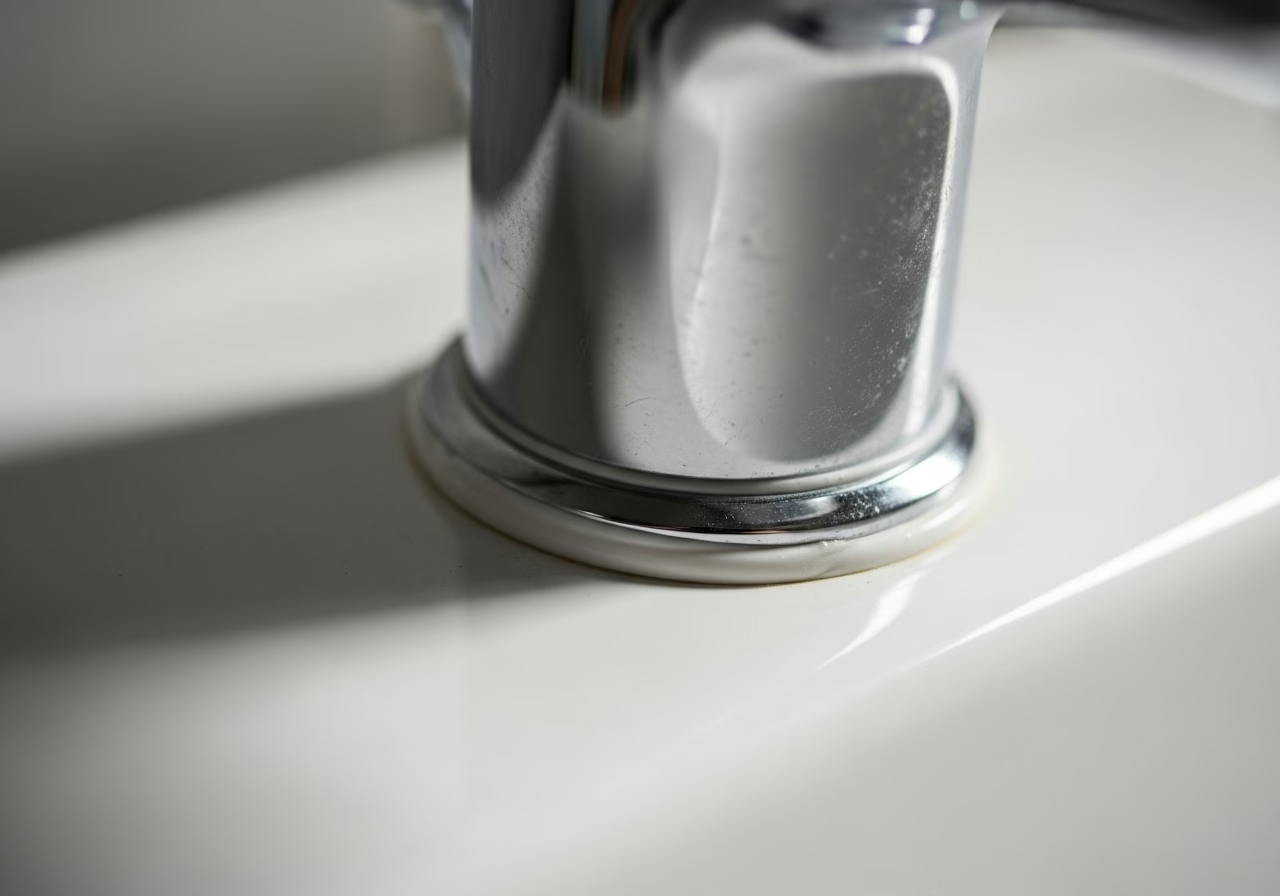
Sign #7: Whitish Film on Black Faucets and Glass Shower Doors
Modern bathrooms have a lot of dark fixtures (matte black faucets, oil-rubbed bronze) and glass shower enclosures. Hard water leaves a chalky white film on both — visible within weeks of installation, increasingly hard to remove without harsh chemicals over time.
Glass shower doors in particular are a hard-water reveal. The film etches into the glass surface over years and eventually becomes permanent. Many GTA homeowners install softeners specifically to protect a recently-renovated bathroom investment.
How Many Signs = a Real Problem
- 1–2 signs: hardness is present but you may not need to act yet
- 3–4 signs: install a softener within 12 months
- 5+ signs: install one now — you're losing money on appliances and energy
If you're unsure, the easy answer is a free water test (we'll get to that).
What It Costs to Fix
A water softener is the standard solution for hardness. Installed cost in the GTA in 2026 runs $1,500–$5,000 depending on system tier and install complexity. Full breakdown at water softener installation cost Toronto.
If you also want premium drinking water at the kitchen tap (separate from softening the whole house), add an under-sink reverse osmosis system. The decision framework for combining both is at reverse osmosis vs water softener.
For a deeper look at what's actually in Toronto tap water (beyond just hardness), see is Toronto tap water safe to drink.
Get a Free Water Test
We offer a free in-home water test in 15 minutes — hardness, TDS, chlorine, and pH measured at your kitchen sink. We tell you the actual numbers and whether you need to do anything. No pressure, no upsell.
Call (647) 360-2000 or reach out via WhatsApp to book. We service Toronto, North York, Etobicoke, Scarborough, Mississauga, Brampton, Vaughan, Markham, Richmond Hill, and Oakville. Full plumbing services listed on our site.
If you've already noticed 3+ of the signs above, you've already done the diagnosis. The test just confirms severity and sizes the system. Call (647) 360-2000 when you're ready.
The 10-Year Cost of Doing Nothing
Most Toronto homeowners delay installing a softener because the upfront cost feels significant ($1,500–$5,000). What that calculation usually misses is the cumulative cost of *not* installing one. Over 10 years, a Toronto home with hard water typically eats:
| Cost Category | Hard Water Impact (10 yr) | Soft Water Equivalent |
|---|---|---|
| Water heater replacement | 1 early replacement (year 8–10) | 0 (lasts 12–15 years) |
| Extra hydro/gas (efficiency loss) | $1,200–$2,000 | $0 |
| Soap, shampoo, detergent (extra) | $600–$1,200 | Saved (30–50% less use) |
| Dishwasher / washing machine repairs | $400–$800 in early failures | Minimal |
| Faucet / showerhead replacement | 2–3 sets prematurely | 1 set (cosmetic) |
| Glass shower door etching | $800–$2,000 (replace or restore) | $0 |
| Total 10-year cost | $5,000–$9,000+ | $2,500–$5,500 (softener + maintenance) |
The math favours installing a softener within the first few years of homeownership. The longer you wait, the more equipment damage compounds.
Where We See the Worst Hard-Water Damage
Patterns we've seen repeatedly across the GTA over the past few years:
- Etobicoke and Mimico — older bathrooms with original 1960s–80s tile and grout. Hard water accelerates grout erosion in showers; we've replaced shower stall tiles where the grout had eroded almost completely behind the membrane.
- North York and Willowdale — high-end recent kitchen renos with quartz countertops and matte black faucets. Hard-water etching on matte black is dramatic and permanent within 18–24 months.
- Vaughan and Markham — large homes with multiple dishwashers, soaker tubs, and high-flow showers. Total household water usage is high, so hard-water symptoms appear faster. Premium homes also show signs faster on glass shower doors and stone surfaces.
- Mississauga and Oakville — same Lake Ontario water, similar profiles to Toronto. We see lots of recent rental-condo conversions where the previous owner never installed a softener and the next owner pays the appliance cost.
- Caledon and King Township well water — entirely different scale. We've seen kitchen faucet aerators that need monthly cleaning, water heaters failing at year 5–6, and orange iron staining requiring tub re-glazing.
The Before-After Test: 30 Days of Soft Water
We tell clients hesitating on a softener: install a temporary unit for 30 days. By the end of the trial, they typically report (in order of how often we hear it):
- 1. Glassware comes out of the dishwasher actually clear — usually within the first week
- 2. Shampoo lasts much longer — noticed by week 2
- 3. Skin feels different after showers — week 2–3
- 4. Kettle stays clean — week 2 onward, no scale forming
- 5. Soap actually lathers — immediate
- 6. Hair feels lighter and less greasy — week 3–4
- 7. Glass shower doors stay clean longer — needs a deep clean first, then visible difference
The weight of evidence after 30 days is usually enough that most clients keep the unit. Hardness is one of those problems you don't realize you've been living with until you stop.
Which System to Pick — Quick Brand Notes
The good news for Toronto homeowners: at our hardness level (7–7.5 gpg), almost any properly sized softener works. The brand decisions are about price, warranty, and ease of service.
- Waterite (Canadian, $1,800–$3,500 installed) — our most-installed mid-tier choice. Parts available locally, 10-year warranty.
- NovoH2O (Canadian, $2,200–$4,500 installed) — solid premium option, smart-WiFi monitoring on higher tier.
- Whirlpool / GE (Costco / Lowe's, $1,500–$2,500 installed) — fine budget tier if you accept shorter warranty and big-box service path.
- Kinetico, Culligan (dealer-only, $4,000–$8,000 installed) — premium, often pushed via rental contracts. Excellent products, but you're paying 50–100% more for the brand.
- Aquasana, Pelican / Pentair — direct-online brands. Solid for DIY-inclined homeowners; we'll install customer-supplied units at flat-rate labour.
What 306A Licensing Means for the Install
Whole-house water softener installation is unambiguously 306A-licensed plumber territory in Ontario. The Ontario Building Code (Section 7) covers any work that ties into your potable water supply. RenoHouse coordinates every softener install through a licensed plumber on file. That's true whether we supply the unit or you bring one from Costco — the install path through us is always code-compliant.
What this looks like in practice:
- Bypass valve installed correctly (so you can service the unit without shutting off the whole house)
- Drain line with proper air-gap to a floor drain or laundry standpipe
- Brine tank overflow plumbed
- Pressure verification before commissioning
- Closeout paperwork for your home insurance file
Frequently Asked Questions
How quickly does hard water damage appear in a new Toronto home?
Visible symptoms (kettle scale, shower spots) appear within 1–3 months. Appliance damage builds gradually — water heater efficiency loss is measurable by year 2–3. Glass shower door etching becomes permanent around year 3–5 if untreated.
Can I just descale my appliances regularly instead of installing a softener?
You can, but it's more work than most people sustain. Quarterly water heater flushes, monthly kettle vinegar runs, monthly faucet aerator cleaning. Most homeowners try this for a few months and then install a softener anyway. The internal damage from heat-cycling hard water also continues even with descaling.
Does hard water cause health problems?
Not directly for healthy adults. Calcium and magnesium are essential minerals. The complaints (dry skin, brittle hair, dishwasher film) are quality-of-life issues, not medical ones. Sodium-restricted diets should drink RO water rather than softened water.
Is Toronto water actually that hard, or am I imagining the problem?
At 7–7.5 gpg, Toronto sits at the moderately hard / hard threshold. It's hard enough to cause every symptom in this article, but not so hard that a budget softener can't handle it. Cities like Las Vegas (17 gpg), Phoenix (15 gpg) and parts of central Florida (20+ gpg) are dramatically harder.
How do I test my actual water hardness?
Three options: (1) free in-home test from RenoHouse — we measure on the spot in 15 minutes; (2) DIY hardness test strips at any pool supply store ($10–$20); (3) lab test through a certified water lab ($80–$150 for a full chemistry panel). For most homeowners, the free in-home test is enough.
Can I install a softener in a small condo?
Most Toronto condo buildings have central softening already, so individual units don't need their own. For condos without central softening, space is the constraint — wall-mount cabinet softeners exist but are expensive and have limited capacity. Usually an under-sink RO at the kitchen is the better play.
Will a softener void my dishwasher or washing machine warranty?
No — most appliance manufacturers actually recommend softened water. Whirlpool, GE, Bosch, LG all reference soft-water performance favourably in their manuals. Dishwasher manuals often include rinse-aid dosing tables based on hardness; softened water dramatically reduces required rinse-aid use.
For pricing the actual install, see our water softener installation cost Toronto deep dive. For the broader filtration program — including the hub comparing softeners against RO, whole-house carbon, and combo systems — see water filtration Toronto.
External references: Health Canada Drinking Water Guidelines and City of Toronto Water Quality.
Continue Reading
- Is Toronto Tap Water Safe to Drink in 2026? An Honest Breakdown
- Water Softener Installation Cost in Toronto (2026): Full GTA Pricing
- Reverse Osmosis vs Water Softener: Which Do You Actually Need?
Related Services