RenoHouse

# Water Softener Installation Cost in Toronto (2026): Full GTA Pricing
Quick answer. Water softener installation cost in Toronto ranges from $1,500 to $5,000 fully installed in 2026. Budget single-tank systems start around $1,500. Mid-range twin-tank or metered systems land at $2,500–$3,500. Premium dealer brands (Kinetico, Culligan, Rainsoft) run $4,000–$8,000. The good news: at Toronto's hardness level (115–126 mg/L CaCO3), even a budget unit will solve 95% of your hard-water problems.This guide breaks down what you're actually paying for, when premium is worth it, and the ongoing costs nobody talks about until after install. We install water softeners across the GTA, so the pricing here is current market data, not stock figures.
Why You Probably Need a Softener in Toronto
Toronto's lake-source water arrives at your home at 115–126 mg/L of calcium carbonate, which works out to about 7–7.5 grains per gallon. The Water Quality Association classifies anything above 7 grains as "hard." Practical signs you have a hardness problem:
- White limescale crust inside your kettle (forms within a few weeks)
- Spots on glassware out of the dishwasher
- Soap doesn't lather well; you use more shampoo
- Reduced water heater efficiency — gas bills creep up over time
- Dry skin, brittle hair after showers
- Scale buildup at faucet aerators and showerheads
These are all symptoms of the same problem: dissolved calcium and magnesium precipitating out as solid scale every time the water is heated or evaporates. A water softener exchanges those minerals for sodium ions, eliminating the precipitation.
For more visual signs of hard water in Toronto homes, see hard water signs Toronto homes.
Cost Breakdown by Tier
| Tier | Equipment | Install | Total | Best For |
|---|---|---|---|---|
| Budget | $1,000–$1,500 | $500–$800 | $1,500–$2,300 | 1–3 person homes, basic needs |
| Mid | $1,500–$2,800 | $800–$1,200 | $2,500–$4,000 | 3–5 person homes, metered systems |
| Premium | $3,000–$5,000 | $1,200–$1,500 | $4,000–$6,500 | Twin-tank, smart features |
| Dealer Premium | $3,500–$8,000 | $1,500–$2,500 | $5,500–$10,000+ | Brand prestige (Kinetico, Culligan) |
What Equipment Tier Actually Buys You
- Budget single-tank, time-clock controlled. Regenerates on a fixed schedule (e.g., every 4 days at 2 AM). Uses more salt and water than necessary, but works. Brands: Whirlpool, GE, Rainfresh.
- Mid-tier metered single-tank. Counts gallons used and only regenerates when needed. Saves 20–40% on salt and water vs. time-clock. Brands: Waterite, NovoH2O, Aquasana.
- Premium twin-tank. Two resin tanks alternate, so you never run out of softened water during regeneration cycles. Smart-WiFi monitoring. Brands: Kinetico (non-electric twin-tank is the benchmark), EcoWater.
- Dealer premium. Same hardware quality as mid/premium tiers, but with a long-term warranty, branded marketing, and an in-home sales process. Often sold on rental contracts.
The diminishing-returns curve hits hard above $3,500. Unless you're in a 5+ person home with 24/7 hot water demand, a metered single-tank handles Toronto hardness perfectly.
Installation Labour: What's Included
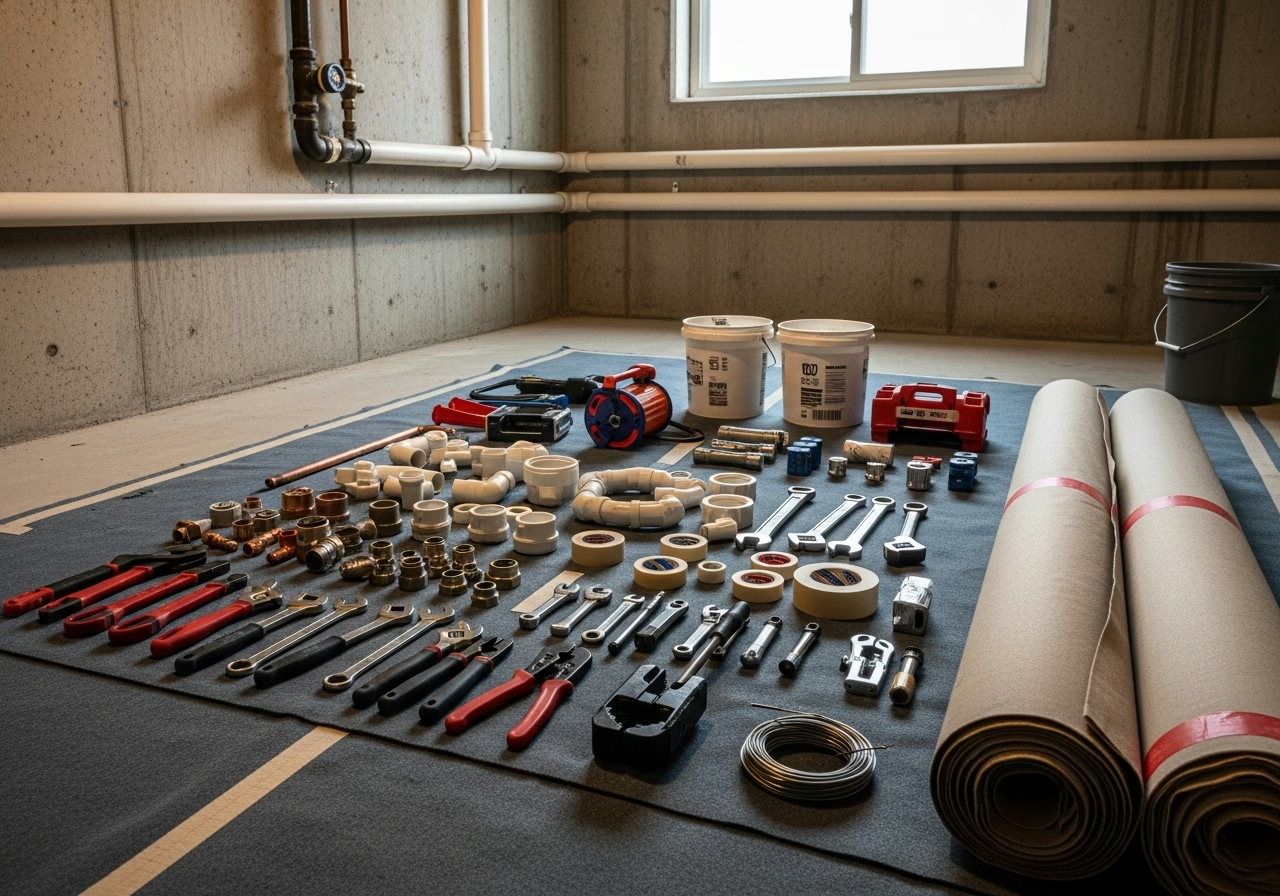
A proper softener install runs 4–6 hours and includes:
- Bypass valve (so you can isolate the unit for service)
- T-connection on the cold water main with shut-off valves on both sides
- Brine tank placement and overflow line to floor drain
- Resin tank connection with control valve programming
- Initial salt fill (1–2 bags)
- System programming based on your hardness and household size
- Test cycle and verification
- 30-minute walkthrough on salt refilling and basic maintenance
Where labour costs creep up:
- No floor drain near install location — adds $200–$400 to run a drain line.
- Main water line is in a finished ceiling/wall — adds $300–$600 for access work.
- Cement-walled basement with no nearby electrical outlet — adds $150–$300 for an electrician.
- Need to relocate water heater or other equipment — adds $300–$1,000.
A flat-rate quote without seeing your basement is worth taking with skepticism. Ask for an in-home estimate.
Ongoing Costs
Salt
A 3-person Toronto household uses roughly 8–12 bags of salt per year at 18kg per bag. Solar salt or pellet salt at Costco runs $10–$14 per bag in 2026. Annual salt cost: $80–$170.
Resin Replacement
Softener resin lasts 10–15 years in Toronto's chlorinated water (chlorine slowly degrades the resin beads). Replacement is $400–$700 in materials and labour, so amortized you're looking at $40–$60/year.
Electricity
A modern softener uses about 25–50 kWh per year — under $10 on your hydro bill.
Total annual ownership: $130–$250. Most homeowners save more than that on water heater efficiency, soap/shampoo usage, and avoided appliance repairs (dishwasher, washing machine, water heater all last longer with soft water).Smart Combo: Softener + Under-Sink RO
If you're going to install a softener, the smartest add-on is an under-sink reverse osmosis system at the kitchen for drinking water. Two reasons:
Need professional plumbing?
Call RenoHouse at 289-212-2345 or get a free estimate today.
Get Free Estimate →- 1. Some people don't like the slightly salty taste of softened water for drinking. RO removes the sodium plus everything else.
- 2. Combined system covers hardness everywhere, plus premium drinking water at the kitchen tap.
Combined cost: $2,100–$7,200 installed. We cover the RO side in detail at reverse osmosis system cost Toronto. For a deeper comparison of when to choose each, see reverse osmosis vs water softener.
Salt-Free "Conditioners" — Worth It?
Salt-free systems use template-assisted crystallization (TAC) or similar tech to alter how minerals behave (so they don't stick to surfaces) without removing them. Cost: $1,300–$3,200 installed.
Honest take: they reduce visible scale buildup but don't actually soften water. Soap still doesn't lather as well, dishwasher spots persist, and skin/hair don't change. Useful if you're on a strict low-sodium diet or your local code prohibits salt discharge (rare in GTA). For everyone else, real softening is worth the salt cost.
Brand Recommendations for GTA Buyers
What we install most often, based on price-to-value:
- Waterite ($1,800–$3,500 installed) — Canadian, parts easy locally, great mid-tier pick.
- NovoH2O ($2,200–$4,500 installed) — Canadian dealer network, solid warranty.
- Whirlpool / GE ($1,500–$2,500 installed) — Costco/Lowe's favorites, decent budget tier.
What we don't recommend chasing:
- Kinetico, Culligan, Rainsoft — excellent products but you're paying 50–100% more for the brand and dealer infrastructure than the hardware justifies.
How RenoHouse Approaches This
We start with a free in-home water test — hardness, chlorine, TDS, pH measured at your kitchen sink. That tells us your actual hardness (which can vary by a few grains depending on neighbourhood and time of year), and lets us size the system properly. Undersized softeners don't keep up with peak demand; oversized ones waste salt.
We carry Waterite and NovoH2O, plus we'll install your customer-supplied unit if you bought from Costco. Standard install is $800–$1,200 for the labour-only path.
Call (647) 360-2000 to book a free water test, or reach out via WhatsApp. We service Toronto, North York, Etobicoke, Mississauga, Brampton, Vaughan, Markham, Richmond Hill, and Oakville. Full plumbing services information available on our site.
For ongoing water heater care under hard-water conditions, see our water heater maintenance tips. Call (647) 360-2000 for any plumbing question.
Sizing a Softener: The Number Most Quotes Get Wrong
Softener capacity is measured in grains of hardness removed between regenerations. The math is simple but most quick-quotes skip it:
> Daily grains needed = (people in household) × (75 gallons/person/day) × (grains per gallon hardness)
For a 4-person Toronto home at 7.5 gpg: 4 × 75 × 7.5 = 2,250 grains/day. Multiplied by the 7-day buffer most metered systems target, that's 15,750 grains between regenerations.
Off-the-shelf softener tank sizes (in grains capacity):
| Tank Size | Capacity (grains) | Right For (Toronto hardness) |
|---|---|---|
| 24,000 grains | 24,000 | 1–2 person condo or small home |
| 32,000 grains | 32,000 | 3-person home (most Toronto installs) |
| 40,000 grains | 40,000 | 4–5 person home, large appliances |
| 48,000–64,000 grains | up to 64,000 | Vaughan/Markham mansions, very hard well water |
A 32,000-grain unit on a Toronto 3-person household regenerates roughly every 10–14 days — efficient on salt and water. The same unit in a 6-person Vaughan home regenerates every 4–5 days, which means more salt cost and faster resin wear.
Where quotes go wrong: "We always install 48,000-grain units." Oversizing wastes salt during regen (the resin bed only loads to about 2/3 capacity per cycle by design). Undersizing stresses the resin and produces hard breakthrough water at peak demand.Toronto vs Rural GTA — Hardness Varies More Than You'd Think
Lake Ontario water at 115–126 mg/L is the GTA municipal baseline. But once you cross municipal boundaries:
- Caledon, King Township, rural Halton — private wells often run 25–40 grains per gallon. We've tested some at 50+ gpg. Standard 32,000-grain tanks need regen every 2–3 days; you typically size up to 48,000–64,000 with twin-tank.
- Stouffville, parts of Whitchurch-Stouffville — partial municipal, partial well. Always test before sizing.
- Etobicoke, Mississauga, Oakville on lake water — same Toronto profile, 7–8 gpg.
- Cottage country (Muskoka, Kawarthas) — wildly variable. Lake-source wells can be soft; drilled wells are usually very hard with iron.
If you're outside the city boundary, never accept a softener quote without an actual water test. Catalogue numbers don't substitute for measured grains.
Salt Type Matters More Than You'd Think
The salt aisle at Costco and Home Depot has 5–6 options. Functionally:
- Solar salt ($10–$12/bag) — evaporated lake salt. Cheapest, works fine, slightly more dust.
- Pellet salt ($12–$14/bag) — clean, low-residue, easier to handle. Most homeowners' default.
- Block salt ($14–$18) — for specific units (some Kinetico models). Don't use unless your softener calls for it.
- Potassium chloride ($30–$40/bag) — for low-sodium households. Costs 3x as much for the same softening effect.
- Rock salt ($6–$8/bag) — cheap, dirty, leaves residue in the brine tank. Avoid.
Mixing salt types is fine; loading rock salt is not. We recommend pellet for the average Toronto homeowner.
What 306A Licensing Means for Softener Installs
Whole-house equipment that ties into your main water supply is unambiguously 306A-licensed plumber territory in Ontario. The Ontario Building Code (Section 7) treats softeners and whole-house filtration the same as any potable-supply alteration.
What this means in practice:
- Bypass valve and shut-offs must be installed correctly. We've seen "professional" installs with no bypass — every filter change requires shutting down water to the entire house.
- Drain line to a floor drain or laundry standpipe must include an air-gap. Direct connections are a backflow violation.
- Brine tank overflow must be plumbed to drain.
- Power tie-in for the control valve (24V transformer plugged into a standard outlet) requires a code-compliant outlet within reach. If your basement doesn't have one, an electrician is added to the job.
Insurance perspective: a softener that fails — split tank, ruptured fitting, or stuck regen cycle that empties the brine into the basement — can dump 200+ gallons before someone notices. Many homeowner policies require licensed installation for this kind of equipment to honour water-damage claims. Don't skip the licensed plumber.
Real-World Toronto Install Examples
- North York 1985 detached, 3-person family. Mid-tier Waterite metered single-tank, 32,000 grain. Easy basement access, existing floor drain 4 feet away. $2,650 installed.
- Etobicoke 1948 home, 2-person retirees. Budget GE 30,400-grain from Home Depot, customer-supplied. Plumbing relocated due to ancient galvanized main, added 90 minutes. $1,150 labour-only on customer-supplied unit.
- Vaughan 4,800 sqft, 5-person family. Premium NovoH2O twin-tank 48,000 grain with smart WiFi monitoring. $5,890 installed including new floor drain run.
- Caledon rural, well water at 32 gpg with iron staining. Twin-tank softener + iron pre-filter + UV sterilizer combo. $7,450 installed.
Frequently Asked Questions
How long does a water softener last in Toronto?
Resin tanks last 12–20 years with proper maintenance. Resin beads themselves degrade faster (10–15 years) due to chlorine in municipal water. A pre-filter carbon stage extends resin life. Control valves are the second weak point — Fleck and Clack are industry-standard for a reason.
Does softened water taste salty?
Slightly. Toronto water at 7–7.5 gpg adds about 12–20 mg of sodium per glass of softened water — less than a slice of bread. Most people don't notice; sodium-restricted diets should drink RO water for cooking and drinking.
Can I install a softener myself?
You shouldn't. The Ontario Building Code requires a 306A-licensed plumber for any work that ties into the cold-water supply main. Insurance often won't honour water-damage claims on unlicensed installs. The labour-only fee through us is $800–$1,200 for a customer-supplied unit — not worth the risk to DIY.
How often does a softener need regen?
Metered systems regen based on actual usage — typically every 7–14 days for a 3-person Toronto home. Time-clock systems regen on a fixed schedule (every 3–5 days) regardless of actual use, wasting salt and water. Always pick metered.
Do salt-free conditioners work?
They reduce visible scale on surfaces (so kettles look cleaner) but don't actually soften water. Soap still doesn't lather, dishwasher spots persist, water heater scale still happens. Useful for homes on strict low-sodium diets, otherwise not a substitute.
What's the difference between a softener and a filter?
A softener exchanges calcium and magnesium for sodium — it does not remove chlorine, lead, fluoride, PFAS, or other contaminants. A filter removes contaminants but does not soften. Most Toronto homes that take water seriously install both.
Will a softener help with my dry skin and eczema?
Most homeowners report meaningful improvement within 2–3 weeks of softener installation. The mechanism is partly hardness removal and partly the soap-scum film reduction. Not a medical claim, but it's the most common piece of unsolicited feedback we get post-install.
For external reference, Health Canada's Guidelines for Canadian Drinking Water Quality and the City of Toronto Drinking Water page cover the regulatory baseline. Our broader water filtration Toronto hub compares softeners against RO, whole-house carbon, and combo systems.
Continue Reading
- Reverse Osmosis System Cost in Toronto (2026): Real Installed Prices
- Reverse Osmosis vs Water Softener: Which Do You Actually Need?
- Is Toronto Tap Water Safe to Drink in 2026? An Honest Breakdown