RenoHouse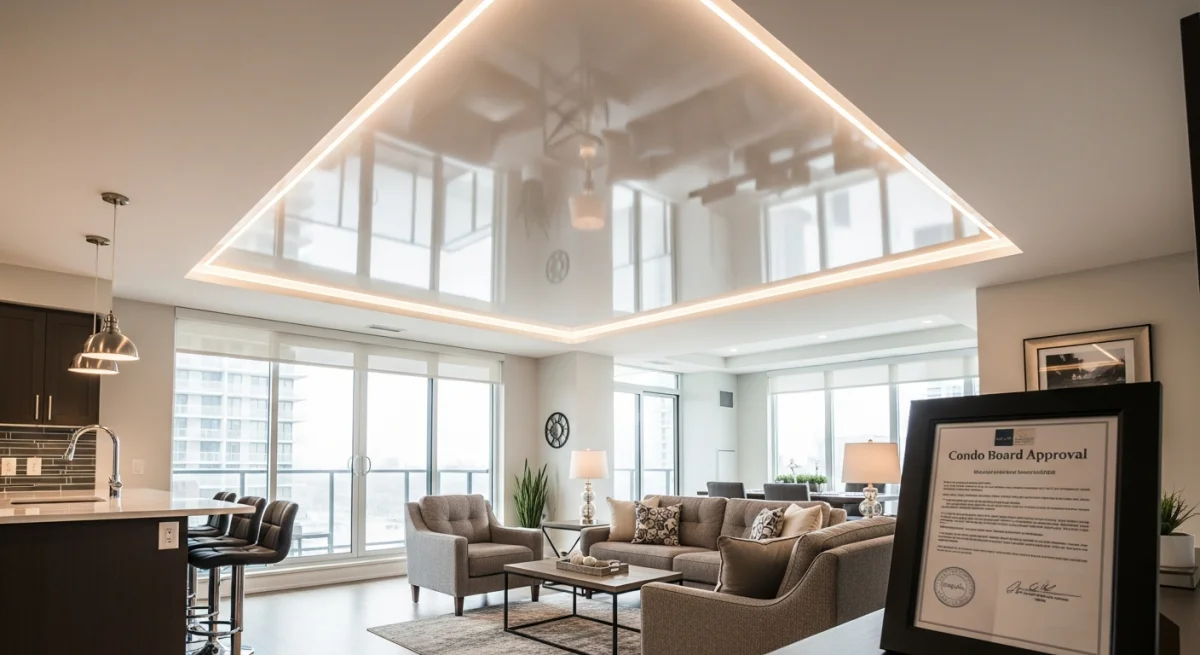

# Stretch Ceiling Condo Board Approval in Toronto: The Realistic Timeline
Quick answer. Most Toronto condo boards do not require formal approval for a stretch ceiling install — it's interior, non-structural, and reversible. But almost all boards require 2 weeks' notice to property management, contractor liability insurance ($2M general liability minimum), WSIB clearance for workers, and elevator booking before work day. Heritage buildings, co-op buildings, and condos under 5 years old are the exceptions where formal board approval *is* required. Total timeline from quote to install in a Toronto condo: 2 to 4 weeks. RenoHouse handles all the paperwork on your behalf.The condo-board step is what trips up most Toronto stretch ceiling projects. Homeowners think it's just a renovation; the building treats it as construction. Here's the realistic process so you can plan your timeline accurately.
For broader install context, see our installation & care pillar. For installation timing once paperwork is cleared, see the 2–3 hour install reality. For the broader Toronto condo renovation framework that includes ceiling work, see our Condo Renovation Toronto Cost Guide.
Why Condo Boards Care
Condo boards aren't being difficult — they're protecting the building. Their concerns, in order:
- 1. Liability for damage to common elements. If a contractor drops a heater on the elevator floor or scratches the lobby tile during equipment movement, the building's insurance pays first and chases reimbursement after.
- 2. Liability for injury. Workers without WSIB coverage who get hurt on-site can file claims that name the condo corporation. Boards require WSIB clearance to keep this risk off them.
- 3. Disturbance to other residents. A 4-hour propane-heater install with workers moving equipment via elevators is noticeable. Boards manage this through scheduled work windows.
- 4. Combustion equipment in the building. Some older buildings genuinely ban propane on upper floors — a fire-code carry-over from older interpretations. This affects hot-stretch PVC installs and may force a switch to cold-stretch fabric.
- 5. Building warranty and developer obligations. Buildings under 5 years old often have active developer warranty that contractor work can void. Boards require notice so they can document.
The Three Categories of Approval
What's required:
- Written notice to property management 2 weeks before install.
- Contractor's $2M general liability certificate.
- WSIB clearance certificate for all on-site workers.
- Elevator booking (some buildings).
- Confirmation of work hours (typically 9 a.m.–5 p.m., weekdays only, no Sundays in older buildings).
What's NOT required:
- Board meeting attendance.
- Plans or drawings.
- Inspection.
- Engineering review.
Buildings in this category: most post-2000 condos in Liberty Village, CityPlace, Yonge & Bloor, North York, Yorkville, and most of Vaughan/Thornhill/Richmond Hill. Property management processes the notice within 2–5 business days.
Category 2: Formal Board Approval (5–8% of Toronto Condos)What's required (in addition to Category 1):
- Submission to the next scheduled board meeting (boards typically meet monthly).
- Brief project description with proposed timeline.
- Contractor profile and references.
- Sometimes a sample of the proposed material (small swatch).
Buildings in this category: heritage-designated buildings on Bay, King, Front, Bloor, College; older co-op buildings (rare but exist in Forest Hill, Don Mills); some boutique condos under 30 units where the board is heavily involved in unit-level decisions.
Timeline impact: 4–6 weeks minimum from quote to install, depending on board meeting cadence.
Need professional renovation?
Call RenoHouse at 289-212-2345 or get a free estimate today.
Get Free Estimate →What's required (in addition to Category 2):
- Engineer's letter confirming no structural impact.
- Detailed plans showing track anchoring and fixture relocation.
- Pre-install inspection.
Buildings in this category: high-end recent buildings (some One Bloor East and similar premium condos), some heritage-designated buildings with stricter clauses, buildings with pending litigation or recent water-damage history (boards become more cautious).
Timeline impact: 6–10 weeks. RenoHouse retains a structural-engineering partner for these cases — letter typically issued in 5 business days for $300–$500.
The Paperwork RenoHouse Files for You
For Category 1 buildings (the 90% case), our installer-network coordination includes:
1. Notice Letter to Property ManagementA formal letter on RenoHouse letterhead explaining:
- Unit number and homeowner name.
- Project description (e.g., "stretch ceiling installation in master bedroom and living room, approximately 350 sqft").
- Proposed install date (with one alternate).
- Anticipated work hours (9 a.m.–4 p.m. typical).
- Contractor identity and contact information.
- Insurance and WSIB references attached.
A Certificate of Insurance from our installer partner showing:
- $2,000,000 general liability minimum.
- $2,000,000 products / completed operations.
- Condo corporation listed as additional insured (most boards require this).
- Policy effective dates spanning the install window.
Active WSIB clearance for the contracting entity, valid through the install date. We refresh this if it's older than 60 days.
4. Elevator BookingSome buildings require advance booking of the service elevator for equipment movement. We submit the booking request to property management with the notice letter. Standard time slots: 9–11 a.m. or 1–3 p.m. on a weekday.
5. Building-Specific FormsMany buildings have proprietary contractor-registration forms. We track these by building and submit as part of the package.
The Timeline Walkthrough
For Category 2 buildings, add 2–4 weeks waiting on the board meeting. For Category 3, add another 2–4 weeks for engineering review.
What's Different About a Toronto Condo Install
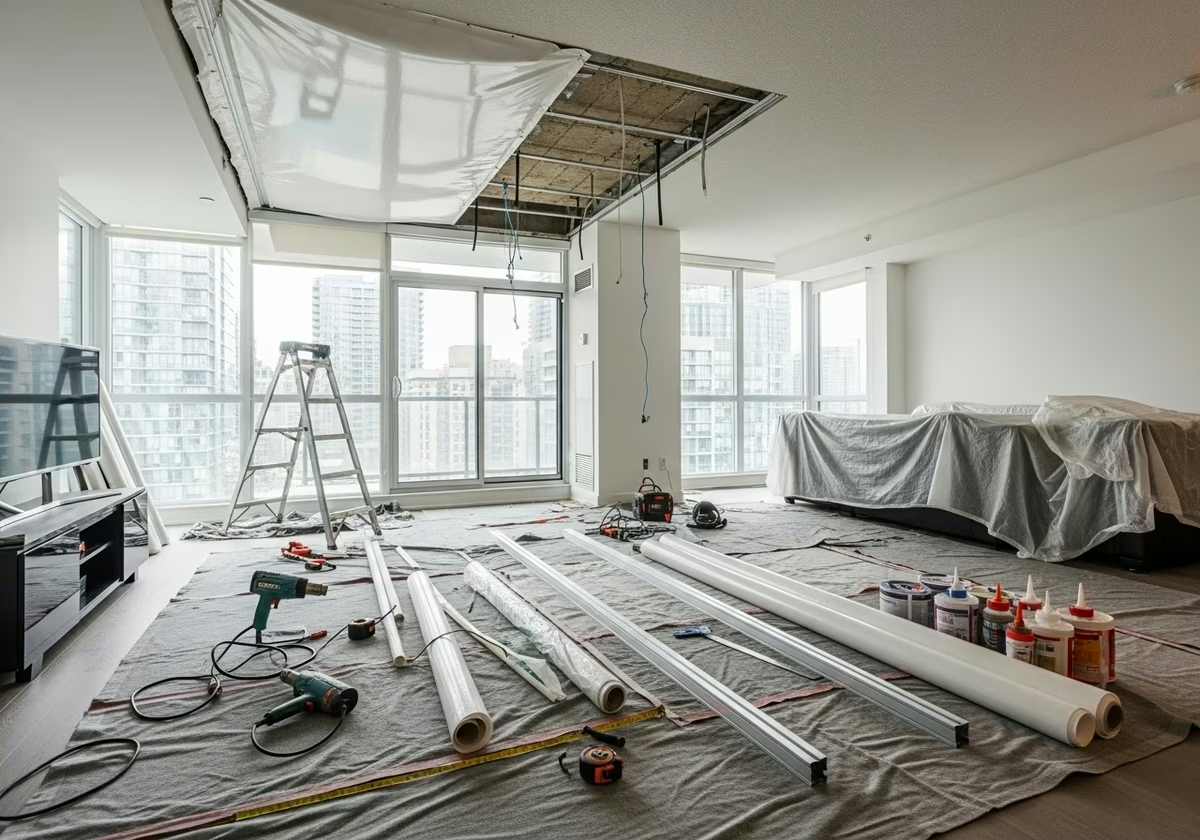
Concrete walls. Anchors are Tapcon 3/16" × 1¾" or Hilti HUS-EZ into the concrete slab perimeter. Pre-drilling with a carbide bit is slower than wood-screw mounting; adds 15–30 min to install. 8-foot ceilings. Most Toronto condos have 2.44 m (8 ft) ceilings. Standard drop is 25–35 mm to preserve headroom. Backlit translucent ceilings (which need 80–150 mm of plenum depth for LED panels) are sometimes ruled out by ceiling height in older condos. Sprinkler heads. Toronto Fire Code requires sprinklers in most condo buildings constructed after 1990. They cannot be moved or covered. Membrane is cut around them with a finishing ring; this is standard and adds $40–$80 per sprinkler to the install. Smoke alarms. Hardwired alarms (mandatory in modern condos) stay live during install. Membrane is cut around them with a finishing ring. The alarm function is unaffected; the trim ring sits flush with the new ceiling. HVAC diffusers. Each diffuser is a fixture pass-through, $40–$80. Older buildings sometimes have unusual diffuser shapes that require custom rings on-site. In-ceiling speakers. If you have hardwired speakers in the existing ceiling, they're either preserved (cut around with rings) or removed and the wires capped. Speakers added after install are not possible without partial membrane removal. No drilling above 8 p.m. or before 9 a.m. Standard Toronto condo bylaw, occasionally extended (no work weekends in older buildings).Specific Toronto Building Patterns
What You Need to Provide
To get your paperwork moving:
- 1. Unit number and building address.
- 2. Property management contact. Usually a property manager's name and email; we'll find them if you don't have them.
- 3. Confirmation of who pays maintenance fees (you, the listed owner).
- 4. Two preferred install dates in a 2–4 week window.
- 5. Any building-specific paperwork you've received from past renovations (plumbing or electrical work — can save us time identifying the building's process).
Common Approval Issues and How They're Resolved
"The board needs more time." Sometimes an unusual install (multi-level, star sky, backlit) triggers extended review. We provide additional documentation — engineer's letter, fire-rating certificates, manufacturer specifications. Adds 1–3 weeks. "We need to see a sample." We deliver a 30×30 cm sample of the proposed material to property management for board review. Adds 5–7 days. "Combustion equipment not allowed." Switch to electric heater (slower install) or to cold-stretch fabric (different system, no heat). See heat-gun vs cold install. "The board only meets quarterly." Rare but happens in small condos. Plan around the next meeting; sometimes a special review can be requested but it's not always granted. "We need a deposit / bond against damage to common elements." Some Yorkville and high-end buildings hold a $500–$2,000 refundable deposit until post-install inspection clears. We coordinate this with the homeowner; deposit is returned 1–2 weeks post-install.What This Service Is Worth
We're often asked: "Can't I just submit the notice myself?" Yes. Here's the realistic effort:
- 2–4 hours assembling the paperwork package.
- Several emails back-and-forth with property management.
- Tracking certificate validity dates.
- Following up if processing stalls.
- Re-submitting if something is wrong.
For most homeowners this is a half-day-equivalent project. For RenoHouse, it's a 30-minute task because we have building-specific templates, an active relationship with several property management firms, and current insurance/WSIB on file. We don't charge separately for it; it's bundled into the install coordination service.
Combine with Other Renovation Work
Many Toronto condo stretch ceiling projects are part of larger renovations. Common combinations:
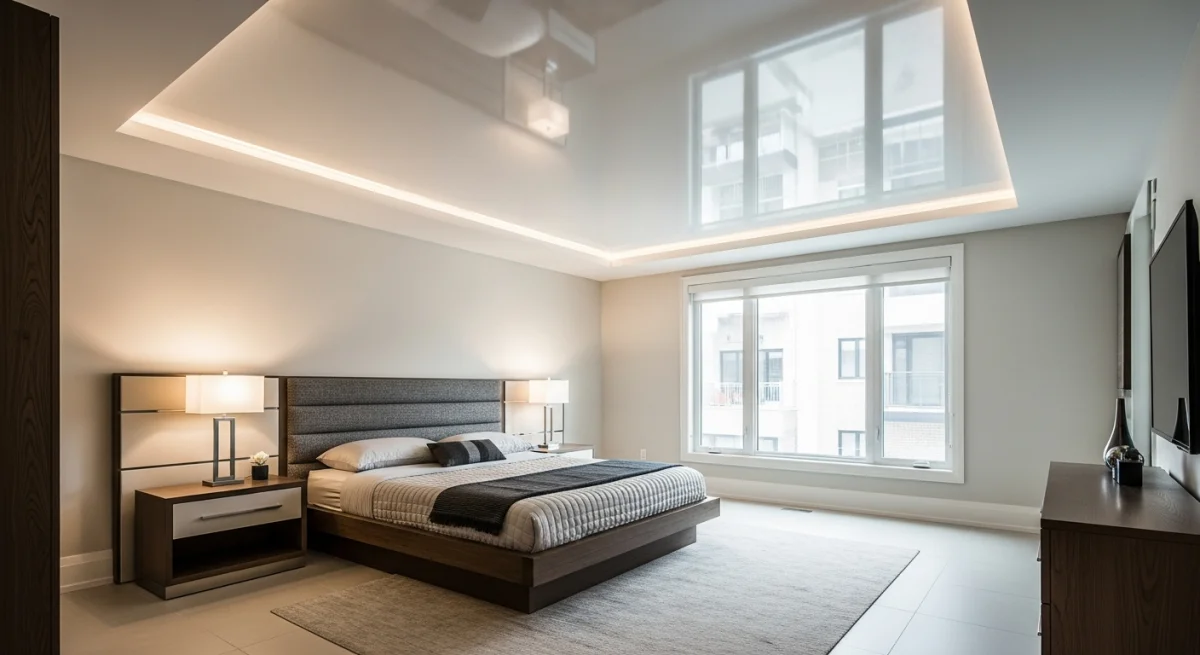
- Master bedroom refresh — stretch ceiling + new flooring + new paint. Sequence: paint walls → install stretch ceiling → install flooring last.
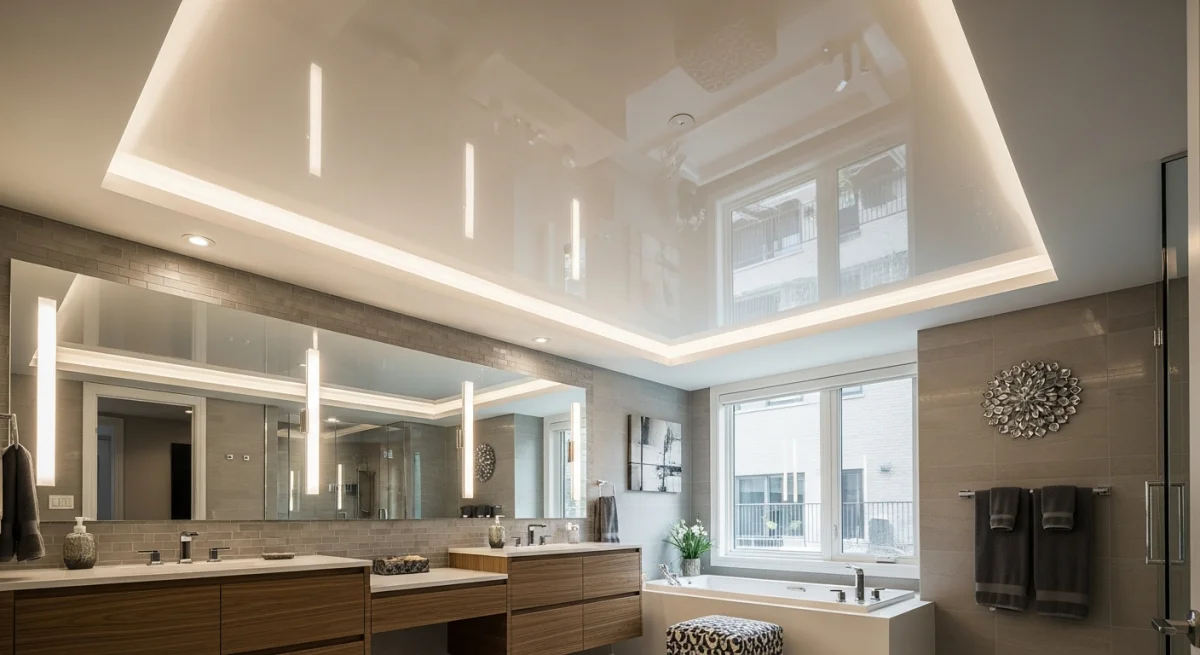
- Bathroom renovation — stretch ceiling installed *after* tile, vanity, and plumbing fixtures are in. The bathroom fan should be operational before the stretch ceiling install.
- Kitchen renovation — stretch ceiling installed *after* cabinets are in but *before* counters and backsplash. Coordinate fixture cut-outs with the lighting plan.
- Whole-condo refresh — ceiling work scheduled mid-project after rough-in trades but before finish carpentry. We sequence the trade calendar.
For broader Toronto condo-renovation cost and sequencing context, see our Condo Renovation Toronto Cost Guide.
Get Started: Free Site Measurement
Book a free condo measurement visit — we'll measure the unit, identify the building's approval category, and start the paperwork the same day. From measurement to ceiling: 2–4 weeks for most buildings.For broader install detail see our installation & care pillar; for the install-day specifics, see step-by-step.