RenoHouse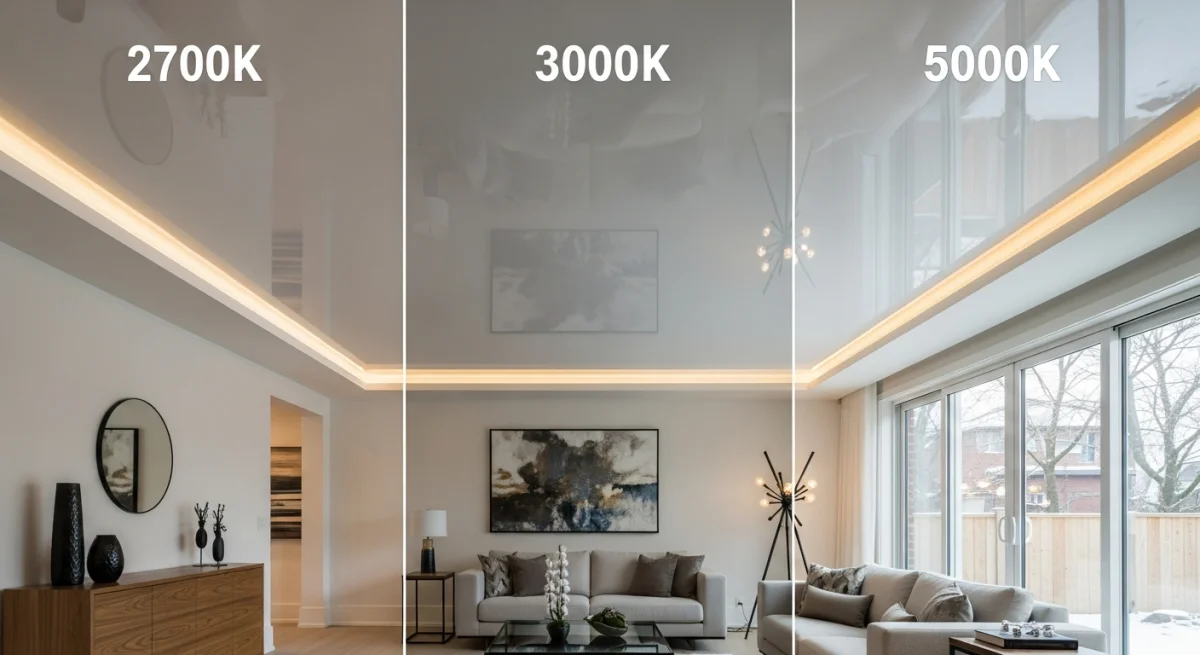

# 2700K vs 3000K vs 5000K for Stretch Ceiling LED: Toronto Color Temperature Guide
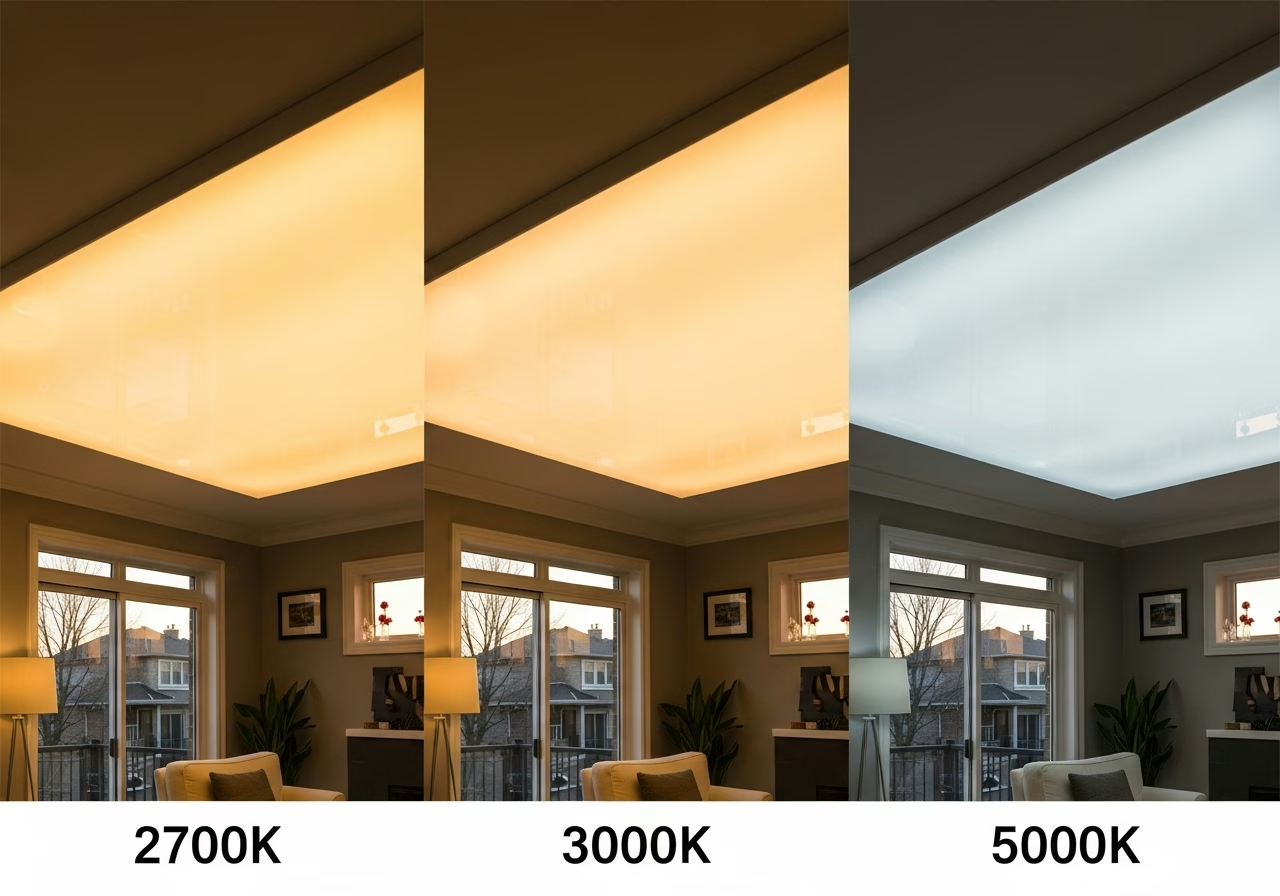
Quick answer. For Toronto residential stretch ceiling cove and backlit LED:- 2700K (warm white) — bedrooms, dining rooms, living rooms, hospitality. Matches incandescent.
- 3000K (warm-neutral) — kitchens, master bathrooms, the universal sweet spot for backlit translucent ceilings.
- 3500–4000K (neutral) — modern kitchens, home offices, basements with daylight emulation.
- 5000K (daylight) — clinical and commercial only; almost never used in Toronto residential.
- 6500K (cool daylight) — used above translucent backlit films because diffusion warms the perception by about 1500K.
Picking the wrong colour temperature is one of the most common — and easiest to avoid — mistakes on Toronto stretch ceiling projects. RenoHouse defaults to 3000K for cove and 4000K above translucent backlit film, with tunable white spec'd for any room where the homeowner wants flexibility.
This article is part of our LED backlit stretch ceiling pillar. For tunable white circadian systems see our tunable white circadian guide.
What Color Temperature Actually Measures
Color temperature is measured in Kelvin (K) and corresponds to the colour of light emitted by a heated black body at that temperature. Lower Kelvin = redder, warmer light. Higher Kelvin = bluer, cooler light. The scale comes from physics, not from marketing.
Reference points:
Need professional renovation?
Call RenoHouse at 289-212-2345 or get a free estimate today.
Get Free Estimate →- 1800K — candle flame.
- 2700K — warm incandescent bulb.
- 3000K — halogen bulb.
- 3500K — neutral white fluorescent.
- 4000K — cool white fluorescent.
- 5000K — overcast daylight.
- 6500K — bright noon sunlight.
- 10000K — clear blue sky.
Your eye is highly adapted to colour temperature. A 2700K room feels relaxing because your circadian system reads it as evening. A 5000K room feels alert because your system reads it as midday. Picking the wrong temperature for the wrong room creates real biological discomfort — homeowners describe it as "the light feels off" without knowing why.
Color Temperature by Room
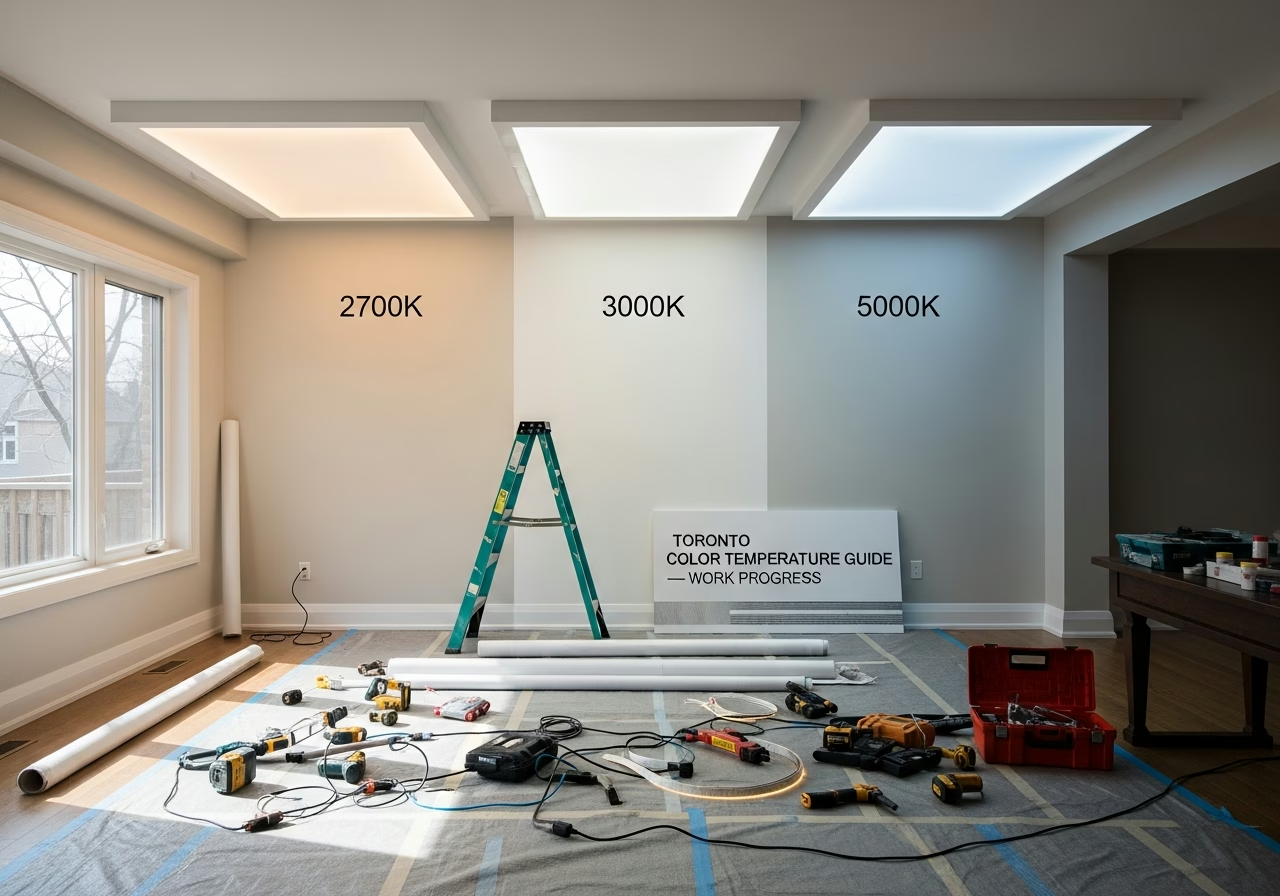
Master Bedroom
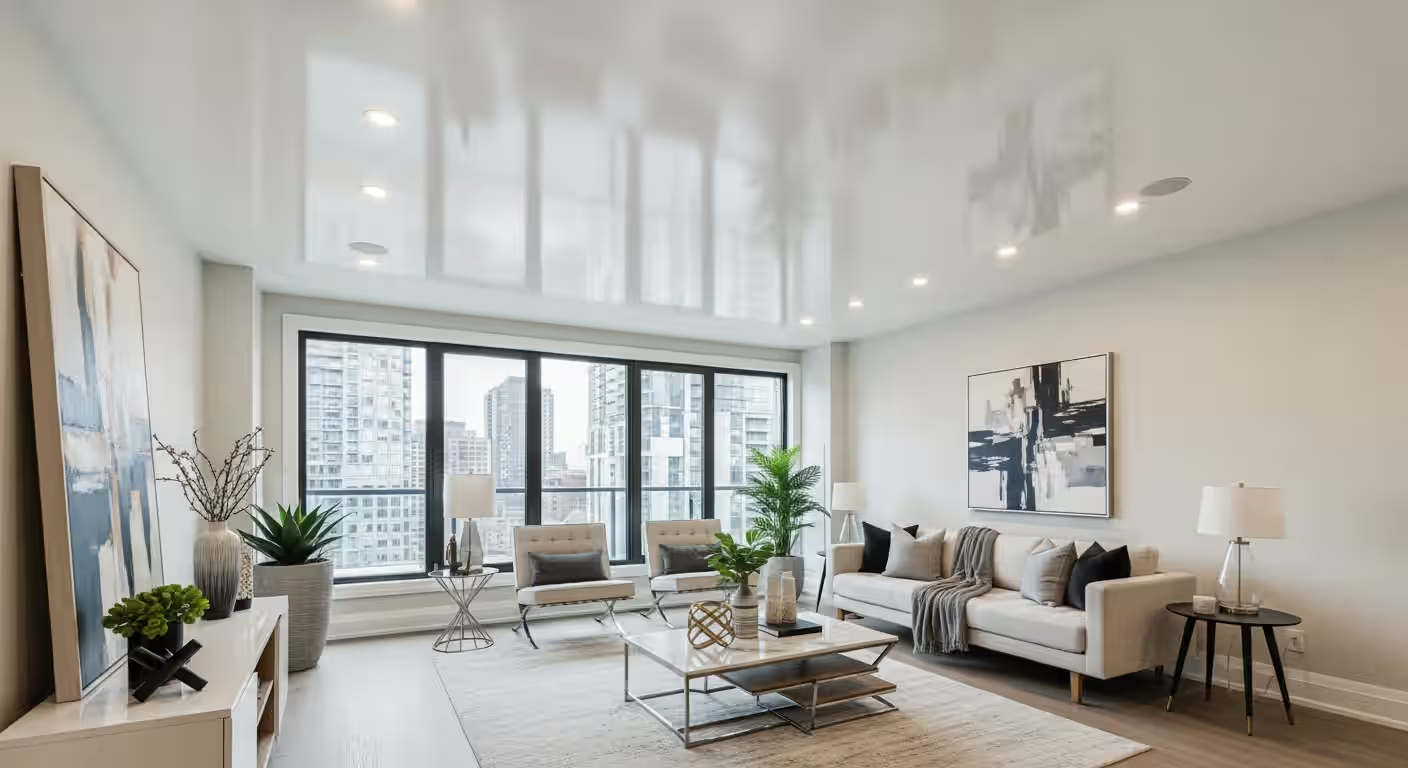
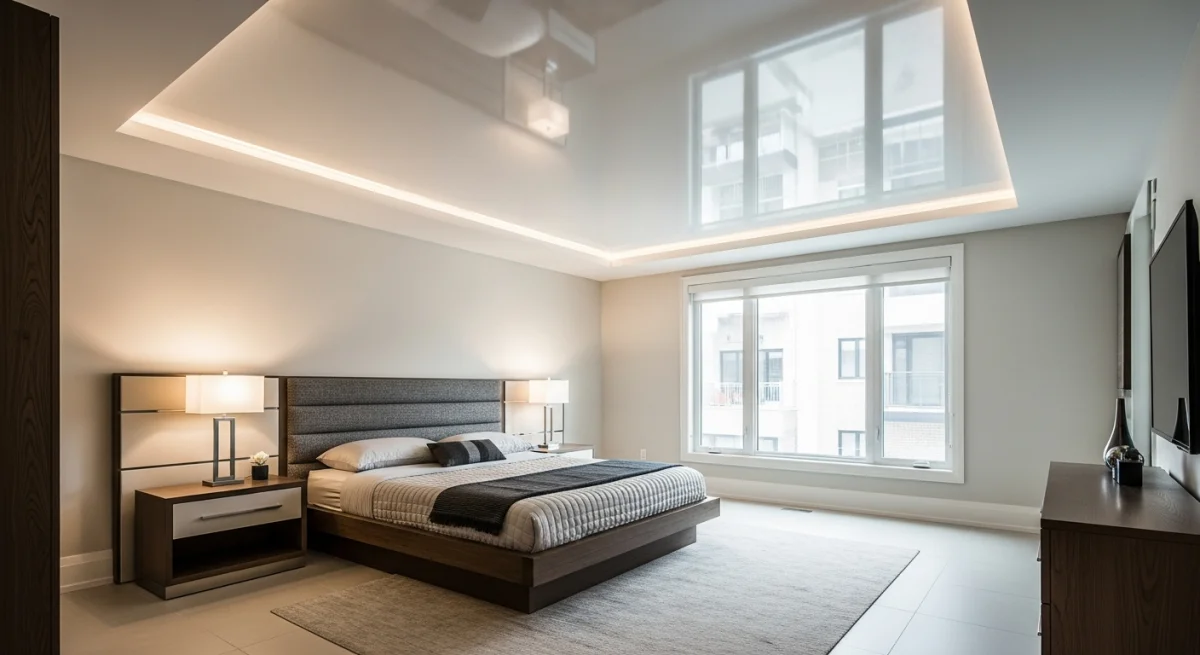
2700K is the default — matches the lamp on the nightstand, supports wind-down circadian cues. For modern minimalist bedrooms, 3000K is acceptable but should not exceed 3500K. Tunable white from 2200K (sleep) to 4000K (morning wake) is the premium spec.Living Room
2700K for traditional aesthetics, 3000K for modern. Matches the warm tones in furniture, art, and accent lighting. Avoid 4000K and above — feels clinical.Kitchen
3000K for warm wood and stone finishes, 3500–4000K for modern white-and-stainless kitchens. Cooking benefits from neutral white because food rendering is best at 3500–4000K. We often spec tunable white so the kitchen can shift from neutral cooking light to warm dining light in the same room.Dining Room
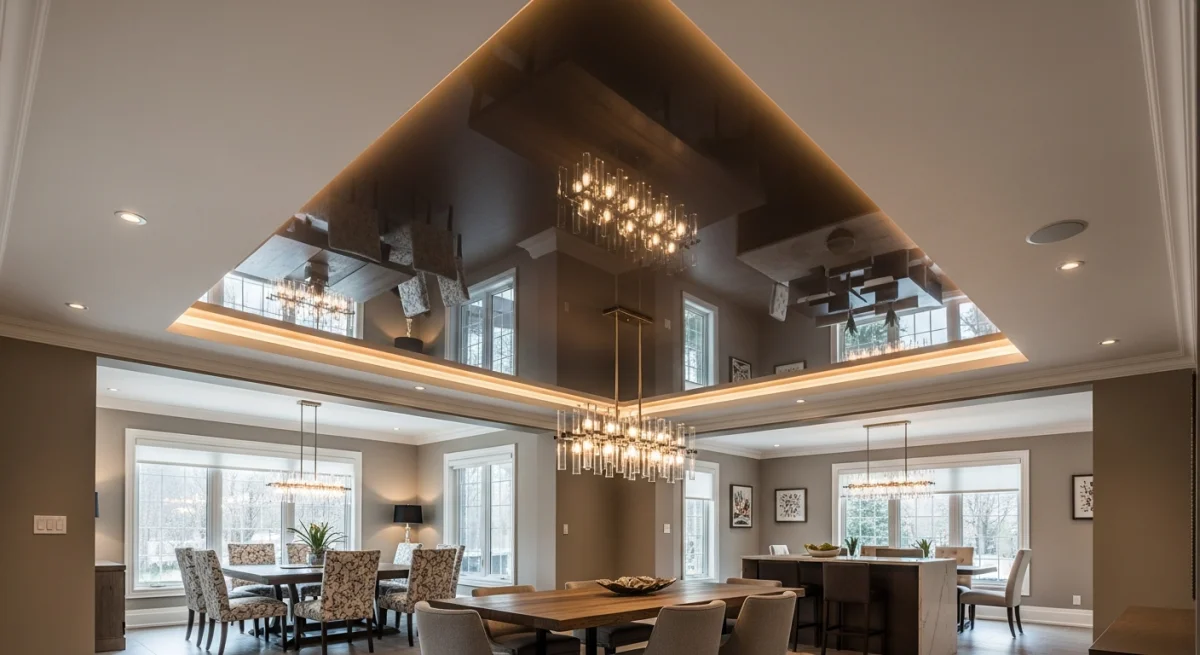
2700K only. Anything higher kills mood. Dimmable, ideally with cove and pendant in the same temperature.Master Bathroom
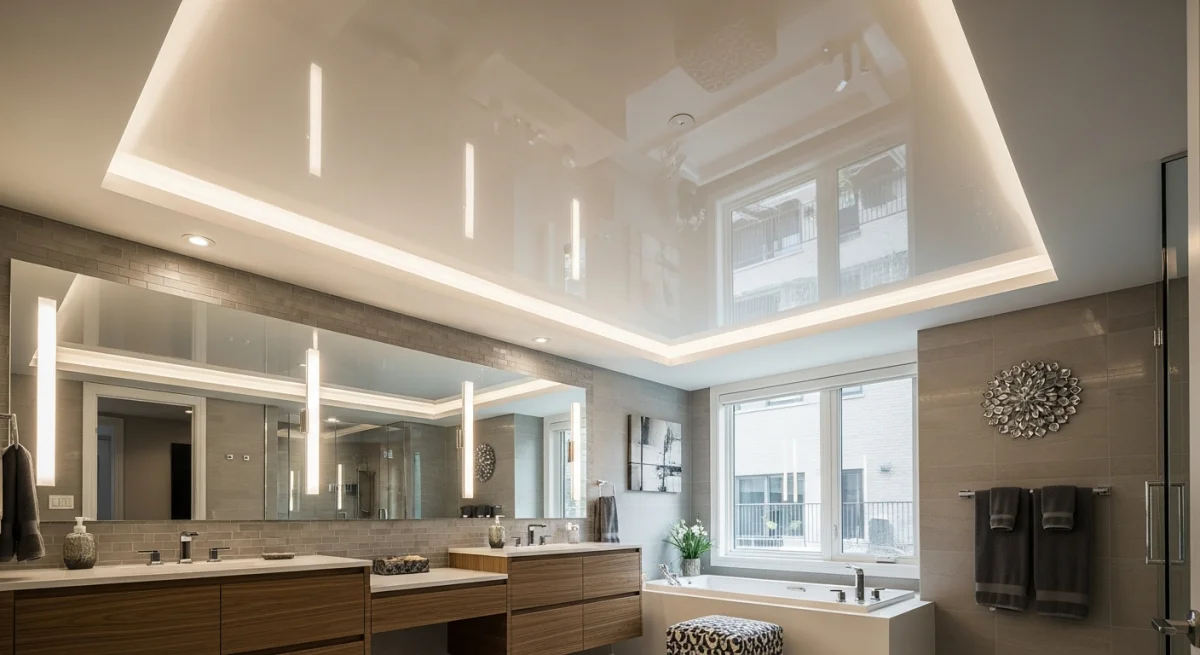
3000K is the universal answer. Matches skin tones for makeup application. Tunable white from 2700K to 4000K is the premium spec for makeup mirrors plus general bath light.Powder Room
2700K for warmth, 3000K for modern. Lower brightness than a master bath — soft glow.Home Office
3500–4000K. Alertness and accurate colour rendering for documents and screens. Avoid 2700K — feels sleepy.Hallway and Entry
2700K for residential warmth, 3000K for modern. Dimmed for evening.Kids' Room
3000K for general light, tunable if you can. Add RGBW for fun scenes.Basement (Living Space)
3000–4000K. Slightly cooler emulates daylight, helps the basement not feel like a cave.Home Theatre
2700K baseline cove, with optional RGBW for bias lighting during movies.Color Temperature for Backlit Translucent Ceilings
Here is where it gets counter-intuitive. The translucent film shifts perceived colour temperature warmer by roughly 1000–1500K because of how diffusion interacts with the spectrum.
| Source LED Above Film | Perceived in Room |
|---|---|
| 2700K | reads as 2200–2400K (too warm, muddy) |
| 3000K | reads as 2500–2700K (warm, conservative) |
| 4000K | reads as 3000–3500K (warm-neutral, the sweet spot) |
| 5000K | reads as 3500–4000K (neutral, modern) |
| 6500K | reads as 4500–5000K (cool, daylight-skylight feel) |
For a "warm skylight" backlit ceiling, spec 4000K LED panels above the film. For a "natural daylight skylight" effect, spec 6500K. For a "muddy yellow" failure, spec 2700K above the film and watch the homeowner ask why their ceiling looks like aged parchment.
CRI and the White-Quality Question
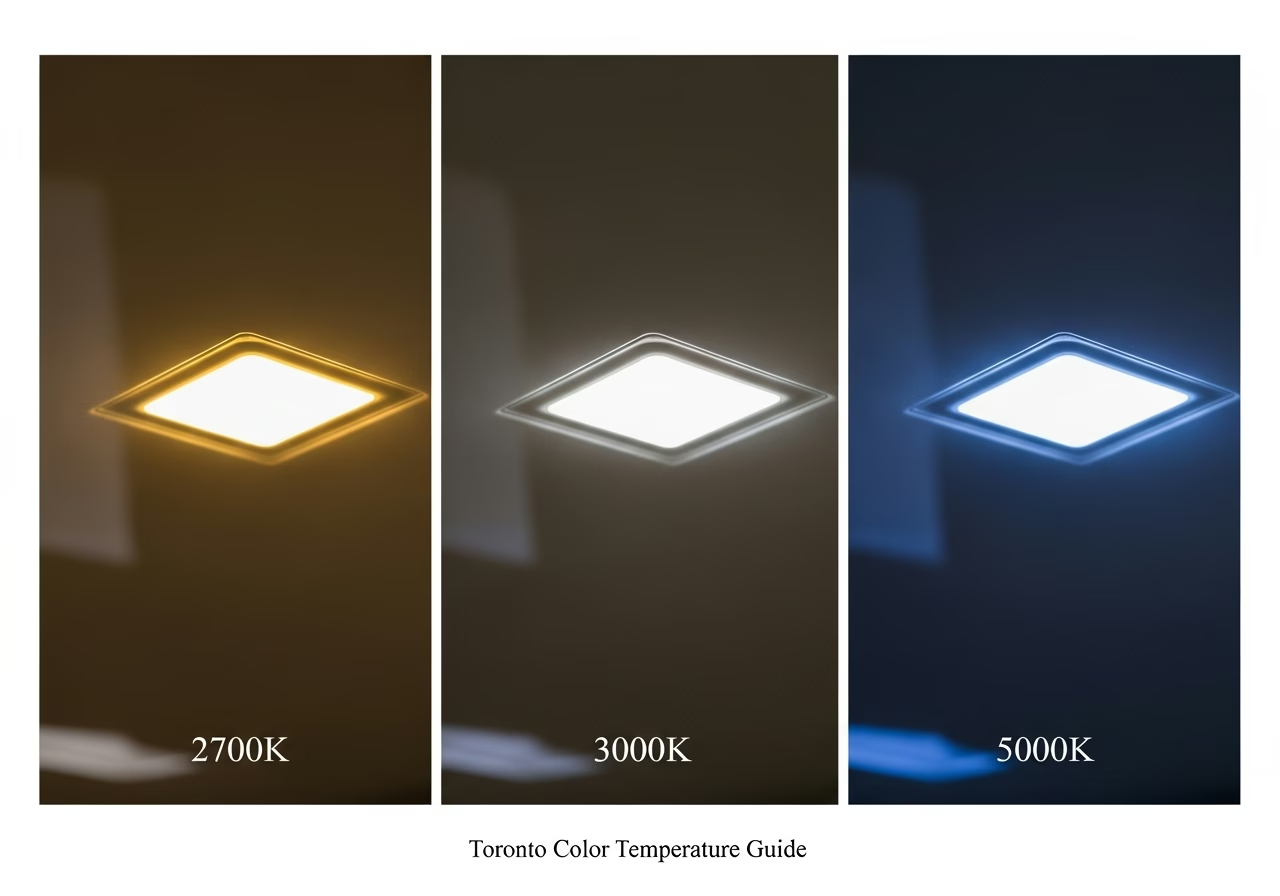
Color temperature is not the only number. CRI (Color Rendering Index) measures how accurately the LED renders objects relative to a reference source.
- CRI 80 — typical consumer LED, acceptable but not great. Skin tones look slightly flat.
- CRI 90+ — premium residential. Skin, food, art look natural.
- CRI 95+ — luxury, museum, retail flagship.
- CRI 60–75 — RGB-derived white. Avoid for primary lighting.
We default to 90+ CRI for any Toronto stretch ceiling LED project. The premium for 95+ CRI strip is modest ($5–10/m extra) and worth it for the master suite and kitchen.
How to Test Before You Commit
Bring temperature samples to your room before signing the spec. We provide three options:
- Temperature reference cards — printed swatches representing 2700K through 6500K under controlled studio lighting.
- Sample strip kit — 30cm strips of 2700K, 3000K, 4000K, and 6500K LED that we plug into a portable driver in your room.
- Tunable white demo strip — single sample strip that ramps from 2200K to 6500K, lets the homeowner see the full range live.
The sample strip kit is the gold standard. We bring it to every consultation and let the homeowner pick the temperature that feels right against their actual walls, furniture, and time-of-day light.
When to Skip Single Temperature and Go Tunable White
- Master bedroom — circadian shift adds genuine wellness benefit.
- Kitchen — different temperatures for cooking versus dining.
- Master bathroom — makeup at 4000K, evening soak at 2700K.
- Home office that doubles as evening living space.
See our tunable white circadian guide for full detail on automation.
Common Toronto Color Temperature Mistakes
- 5000K cove in master bedroom — homeowner cannot sleep. Replaced with 2700K within 3 months.
- 2700K backlit kitchen ceiling — homeowner cannot tell if vegetables are fresh. Replaced with 4000K above the translucent film.
- Mixed 3000K cove with 4000K pot lights in same room — the eye reads the mismatch as "something is wrong" even when neither light is bad.
- No-name strip with claimed CRI 80 measuring at 65 — flat skin tones. Replaced with 90+ CRI premium strip.
Verdict
For Toronto residential stretch ceiling LED:
- Default cove: 3000K, 90+ CRI.
- Default backlit translucent: 4000K above the film, 90+ CRI.
- Tunable white where flexibility is needed.
- Match all lights in a room to within 250K of each other.
- Test in the actual room with a sample strip before committing.